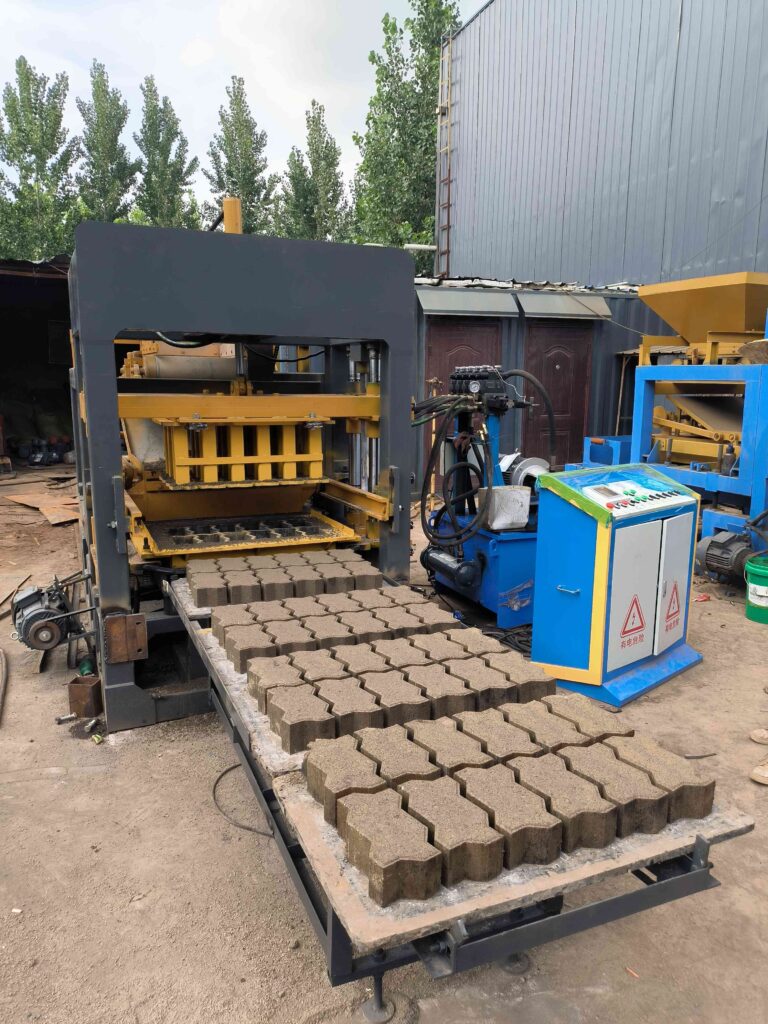
Kasalukuyang Kalagayan ng Pagmamanupaktura at mga Pagkakaiba-iba sa Rehiyon
Ang sektor ng paggawa ng ladrilyo sa India ay nagtataglay ng dalawahang istruktura, na binubuo ng tradisyonal na hindi organisadong sektor at umuusbong na organisadong bahagi. Ang hindi organisadong sektor, na pinangungunahan ng mga maliliit at pana-panahong tagagawa na gumagamit ng manual o semi-awtomatikong makina at clamp kiln, ay bumubuo pa rin ng malaking bahagi ng produksyon, lalo na sa mga rural at semi-urban na lugar. Gayunpaman, ang lumalaking mga regulasyon sa kapaligiran, kakulangan sa manggagawa, at pagiging sensitibo sa kalidad ay nagtutulak sa konsolidasyon at mekanisasyon. Ang organisadong sektor, na gumagamit ng ganap na awtomatikong makina at modernong tunnel kiln, ay mabilis na lumalawak upang matugunan ang mga pangangailangan sa kalidad at dami ng mga korporatong tagapagtayo, proyektong imprastruktura, at konstruksyong nakatuon sa eksport. Ang mga pagkakaiba sa rehiyon ay kapansin-pansin: ang mga hilagang estado tulad ng Punjab at Haryana ay nagpapakita ng mataas na pagtanggap sa makinarya ng fly ash brick dahil sa kalapitan sa mga planta ng thermal power; ang mga timog na estado ay nagpapakita ng mas malakas na pokus sa kalidad na may mas mataas na paggamit ng automation; ang mga silangang rehiyon ay nananatili sa mas matatag na tradisyonal na pamamaraan ngunit unt-unting sumasailalim sa modernisasyon. Ang pag-unawa sa mga pagkakaibang heograpikal na ito ay mahalaga para sa mabisang segmentasyon ng merkado at paglalaan ng mga mapagkukunan.
Mga Pangunahing Salik sa Pamilihan at mga Tagapagpahiwatig ng Paglago
Maraming malalakas na puwersa ang nagbabago sa mga pattern ng pangangailangan para sa makinarya ng paggawa ng ladrilyo sa buong India:
- Momentum sa Pagpapaunlad ng Imprastraktura:Ang mga inisyatibo ng gobyerno kabilang ang Smart Cities Mission, Pabahay para sa Lahat, at mga malawakang proyekto sa pagtatayo ng haywey ay lumilikha ng tuloy-tuloy na pangangailangan para sa pamantayang, de-kalidad na mga ladrilyo. Ang mga proyektong ito ay nangangailangan ng pare-parehong kalidad ng materyales at maaasahang dami ng suplay na tanging mga mekanisadong yunit ng produksyon ang makakatiyak, na siyang lumilikha ng likas na pamilihan para sa mga advanced na makinarya sa paggawa ng ladrilyo.
- Mga Regulasyon sa Kapaligiran at Mga Panggigipit sa Pagsunod:Ang pagpapatupad ng mas mahigpit na pamantayan sa kapaligiran, lalo na hinggil sa polusyon sa hangin mula sa tradisyonal na mga hurno at mga regulasyon na namamahala sa pagkuha ng lupa para sa mga ladrilyong luwad, ay lubos na nagbabago sa industriya. Ang pagtulak na ito sa regulasyon ay nagpapabilis sa paglipat patungo sa teknolohiya ng fly ash brick at naghihikayat sa pamumuhunan sa mas malinis at mas episyenteng mga teknolohiya ng produksyon na sumusunod sa mga pamantayan sa paglabas.
- Urbanisasyon at Paglago ng Real Estate:Ang mabilis na paglawak ng mga lungsod at ang paglago ng organisadong pagpapaunlad ng real estate ay nagtutulak sa pangangailangan para sa mas mataas na kalidad na mga materyales sa konstruksiyon. Ang mga tagapagtayo na naghahangad ng mas mabilis na mga timeline ng konstruksiyon at mas mahusay na kalidad ng tapusan ay lalong tumutukoy sa mga makina-gawang, tumpak sa sukat na mga ladrilyo, na lumilikha ng pataas na pangangailangan para sa mga kagamitang gumagawa ng mga ito.
- Ekonomiya ng Pagkakaroon at Gastos ng PaggawaAng pag-unti ng pagkakaroon ng manwal na paggawa para sa tradisyonal na paggawa ng ladrilyo, kasabay ng pagtaas ng mga sahod, ay nagpapaging mas magagawa ang mga mekanisadong solusyon mula sa pananaw ng ekonomiya. Lumalakas ang kaso para sa awtomasyon sa negosyo bawat taon habang tumataas ang gastos sa paggawa at nagiging mas abot-kaya ang mga presyo ng makina sa pamamagitan ng lokal na pagmamanupaktura.
Teknolohiyang Espetro at Estratehiya ng Portpolyo ng Produkto
Mga Kategorya ng Makinarya at Pag-aayon ng Aplikasyon
Sinusuportahan ng merkado ng India ang iba't ibang uri ng teknolohiya sa paggawa ng ladrilyo, kung saan ang bawat isa ay tumutugon sa magkakaibang mga segment ng customer at pangangailangan sa produksyon.
- Manwal at Semi-Awomatikong Pindutin: These entry-level machines, including egg-laying and table vibrators, remain relevant for micro-enterprises and rural entrepreneurs with limited capital. While offering lower output (500-2,000 bricks per day) and requiring significant manual labor, they provide an accessible entry point to mechanized production. Successful distribution of these units requires extensive dealer networks and financing support to reach bottom-of-pyramid customers.
- Ganap na Awtomatikong Nakatigil na Makinarya: This category represents the growth engine for machinery suppliers targeting the expanding middle market. These systems integrate material handling, mixing, and automated pressing with output capacities ranging from 6,000 to 20,000 bricks per 8-hour shift. They typically serve established brick manufacturers scaling up operations and new entrepreneurs with stronger capital backing. The value proposition centers on labor reduction, quality consistency, and reliable volume production.
- Mobile Production Plants and High-Capacity Systems: For large-scale industrial customers and infrastructure contractors, mobile brick making plants that can be deployed on major project sites offer significant logistics advantages. Similarly, fully integrated stationary plants with automated handling, curing, and palletizing systems serve manufacturers supplying national construction companies and export markets. These high-end solutions require sophisticated technical support and larger investment thresholds.
Emerging Technology Trends and Market Gaps
The technological evolution of brick machinery in India reflects both global trends and local adaptations:
- Raw Material Flexibility and Adaptation: Successful equipment designs increasingly accommodate diverse raw material inputs beyond traditional clay, including fly ash, construction debris, and industrial by-products. Machines that can process variable material compositions with minimal adjustment downtime hold competitive advantage in resource-constrained environments.
- Energy Efficiency and Hybrid Power Options: With electricity costs and reliability varying significantly across regions, machinery incorporating energy-saving features like variable frequency drives and optional hybrid power systems (grid power with generator backup) address critical customer pain points.
- Digital Integration and Remote Monitoring: While still emergent, features enabling production data tracking, remote diagnostics, and predictive maintenance are beginning to differentiate premium equipment offerings, particularly for corporate customers with multiple production facilities.
- After-Sales Service Innovation: Given India’s geographic spread and infrastructure challenges, suppliers who develop innovative service delivery models—including mobile service vans, regional spare parts hubs, and augmented reality-assisted remote support—can establish significant competitive barriers.
Strategic Market Entry and Expansion Framework
Distribution Channel Development and Management
Building effective routes to market is arguably the most critical success factor for machinery suppliers in India:
- Dealer Network Development: A phased approach to distributor recruitment—starting with regional leaders in high-potential states before expanding to secondary markets—allows for focused support and relationship building. Selection criteria should emphasize technical capability, financial strength, and market reputation over mere geographical coverage.
- Hybrid Sales Approaches: Combining direct sales for large corporate accounts and infrastructure projects with dealer networks for serving small and medium enterprises provides market breadth while maintaining focus on high-value opportunities. This requires clear account demarcation and lead management protocols to prevent channel conflict.
- Financing Partnerships and Purchase Facilitation: Given the capital-intensive nature of brick machinery, developing relationships with financial institutions for equipment financing significantly enhances market penetration. Suppliers who can facilitate credit access through tie-ups with banks and non-banking financial companies gain distinct advantage, particularly when serving first-time entrepreneurs.
Competitive Positioning and Value Proposition Development
Success in India’s crowded machinery market requires clear differentiation beyond price:
- Product Localization and Application Engineering: Equipment designed specifically for Indian operating conditions—accounting for material variations, power supply fluctuations, and operator skill levels—outperforms globally standardized products. Features like dust protection, voltage stabilization, and simplified maintenance access provide tangible value.
- Total Cost of Ownership Emphasis: Shifting customer conversations from initial purchase price to lifetime operating costs—factoring in energy consumption, wear part longevity, maintenance requirements, and production yield—helps justify premium positions for higher-quality equipment.
- Training and Knowledge Services: Offering comprehensive operator training, production optimization consulting, and business management guidance creates stickier customer relationships and reduces failure rates that damage brand reputation.
- Sustainability Alignment: Positioning equipment as enabling compliance with environmental regulations, resource conservation through use of industrial by-products, and improved working conditions resonates with both regulatory trends and evolving corporate responsibility expectations.
Konklusyon
The Indian brick making machinery market presents a complex but exceptionally rewarding opportunity for suppliers who approach it with strategic patience, cultural understanding, and long-term commitment. The ongoing transition from informal to organized production, coupled with massive infrastructure investment and regulatory transformation, creates ideal conditions for growth. Success requires a balanced portfolio addressing multiple customer segments, from first-time entrepreneurs to industrial-scale producers. More importantly, it demands business models that combine equipment supply with comprehensive support ecosystems encompassing financing, training, and operational guidance. Suppliers who can master these dimensions while maintaining flexibility to adapt to India’s diverse regional markets will be positioned to capture significant value as the industry continues its modernization journey. The time for strategic investment and focused market development is now, as the foundations for the next decade of industry leadership are being laid.
Mga Madalas Itanong (FAQ)
Q1: What are the key regulatory compliance requirements for brick machinery in India?
Isalin ang teksto sa Filipino. I-output LAMANG ang isinalin na teksto. Compliance requirements vary by state but generally include pollution control board certifications for emissions, Bureau of Indian Standards (BIS) certification for machine safety and performance, and adherence to specific regulations governing fly ash utilization. For bricks themselves, BIS quality standards apply, particularly for supplies to government projects. Environmental compliance related to air and water pollution is increasingly enforced across states.
Q2: How does the financing landscape for brick machinery purchases operate in India?
Isalin ang teksto sa Filipino. I-output LAMANG ang isinalin na teksto. Multiple financing options exist, including traditional bank loans (often requiring substantial collateral), specialized equipment financing from NBFCs (typically with faster processing but higher interest rates), and manufacturer-backed financing programs. Government schemes like Credit Linked Capital Subsidy Scheme for technology upgradation may also be accessible. Financing tenure typically ranges from 3-5 years with 20-30% margin money requirements.
Q3: What is the typical production capacity range for brick machinery across different price segments?
Isalin ang teksto sa Filipino. I-output LAMANG ang isinalin na teksto. Entry-level manual machines (₹1-3 lakhs) produce 500-2,000 bricks per day; semi-automatic models (₹3-8 lakhs) yield 2,000-6,000 bricks daily; fully automatic stationary machines (₹8-25 lakhs) generate 6,000-20,000 bricks per shift; and high-capacity plants (₹25 lakhs+) can exceed 30,000 bricks daily. Actual output varies based on product type, raw materials, and operational efficiency.
Q4: What after-sales service expectations do Indian customers typically have?
Isalin ang teksto sa Filipino. I-output LAMANG ang isinalin na teksto. Indian brick manufacturers expect responsive service with typical response time expectations of 24-48 hours, availability of critical spare parts within their region, comprehensive operator training in local languages, and troubleshooting support via phone/WhatsApp. Service contracts with guaranteed response times are increasingly common for premium equipment segments. The ability to provide quick, effective technical support significantly influences purchase decisions and brand reputation.
Q5: How significant is the fly ash brick segment compared to traditional clay brick production?
Isalin ang teksto sa Filipino. I-output LAMANG ang isinalin na teksto. The fly ash brick segment is growing at approximately 15-20% annually compared to 3-5% for traditional clay bricks, driven by environmental regulations favoring utilization of industrial waste, lower production costs, and superior technical properties like consistent dimensions and higher compressive strength. While clay bricks still dominate volume terms, fly ash technology represents the growth frontier and increasingly attracts entrepreneurial investment and regulatory support.