Peyizan akriyasyon ak varyasyon rejyonal yo
Sektè pwodiksyon brik nan peyi Zend montre yon estrikti dual, ki gen ladan tou de sektè tradisyonèl ki pa òganize ak yon segman òganize k ap parèt. Sektè ki pa òganize a, domine pa ti manifakti sezonye ki itilize machin manyèl oswa semi-otomatik ak fou klemp, toujou reprezante yon pòsyon enpòtan nan pwodiksyon an, patikilyèman nan zòn riral ak semi-iben. Sepandan, règleman anviwònman k ap grandi, mank travayè, ak konsyans kalite ap pouse konsolidasyon ak mekanizasyon. Sektè òganize a, ki itilize machin konplètman otomatik ak fou modèn tunèl, ap agrandi rapidman pou satisfè demann kalite ak volim bòs mason antrepriz, pwojè enfrastrikti, ak konstriksyon ki vize ekspòtasyon. Varyasyon rejyonal yo klè: Eta nan nò tankou Punjab ak Haryana montre yon adopsyon wo nan machin pou brik sann pou chodyè akòz prensip plant elektrik tèmal; Eta nan sid yo montre yon konsantrasyon pi fò sou kalite ak yon adopsyon pi wo nan otomatizasyon; Rejyon lès yo kenbe pratik tradisyonèl pi fò men yo ap fè eksperyans modènizasyon piti piti. Konprann nuan jewografik sa yo enpòtan anpil pou segmentasyon mache efikas ak alokasyon resous.
Faktè Kle nan Mache ak Endikatè Kwasans
Plizy fòs pwisan ap chanje modèl demann pou machin pou fè brik atravè peyi Zend:
- Moman Devlopman Enfrastrikti:Inisyativ gouvènman yo, tankou Misyon Vil Entelijan, Lojman pou Tout Moun, ak gwo pwojè konstriksyon otowout yo, ap kreye yon demann ki dire lontan pou brik ki estanda ak ki gen bon jan kalite. Pwojè sa yo mande pou yon kalite materyèl ki konstan ak yon volim apwovizyon ki serye, ke se sèlman inite pwodiksyon mekanize ki ka garanti, sa ki kreye mache natirèl pou machin brik avanse.
- Règleman anviwònman ak presyon konfòmite yoAplikasyon pi strik nòm anviwònman yo, espesyalman konsènan polisyon lè ki soti nan fou tradisyonèl ak règleman ki gouvène ekstraksyon tè pou brik tè kwit, ap chanje fondamantalman endistri a. Pousad règleman sa a ap akselere chanjman nan direksyon teknoloji brik sann pou chabon epi ap ankouraje envestisman nan teknoloji pwodiksyon pi pwòp ak pi efikas ki konfòme yo ak estanda emisyon yo.
- Ibanizasyon ak Kwasans nan Peyi a:Ekspansyon rapid nan vil yo ak kwasans devlopman òganize nan byen imobilye yo ap ogmante demann pou materyèl konstriksyon pi bon kalite. Konstriktè k ap chèche delè konstriksyon pi rapid ak pi bon kalite fini yo ap de pli zan pli espesifye brik ki fèt ak machin, ki gen mezi egzak, sa ki kreye yon demann dirèk pou ekipman ki pwodui yo.
- Disponibilite ak Ekonomi Pri TravayDiminye disponiblite travay manyèl pou pwodiksyon brik tradisyonèl yo, ansanm ak ogmantasyon salè yo, ap fè solisyon mekanize yo de pli zan pli ekonomikman viab. Ka biznis pou otomatizasyon an vin pi fò chak ane kòm pri travay la ap monte epi pri machin yo vin pi aksesib gras a fabrikasyon lokal yo.
Espect Teknoloji ak Estrateji Pòtfolyo Pwodwi
Kategori Machin ak Alinyeman Aplikasyon
Mache Endyen an sipòte yon pakèt teknoloji pou fè brik, chak adapte pou segman kliyan espesifik ak kondisyon pwodiksyon diferan:
- Pwès Manyèl ak Semi-Otomatik:Machin sa yo ki nan nivo antre, tankou mwayen pou ponn ze ak vibre tab, rete enpòtan pou mikwo-enterpriz ak antrepren nan zòn riral ki gen kapital limite. Malgre yo ofri pwodiksyon pi ba (500-2,000 brik pa jou) epi ki mande anpil travay manyèl, yo bay yon pwen aksesib pou antre nan pwodiksyon mekanize. Distribisyon siksè nan inite sa yo mande rezo revandè anpil ak sipò finansman pou rive jwenn kliyan ki nan fon piramid la.
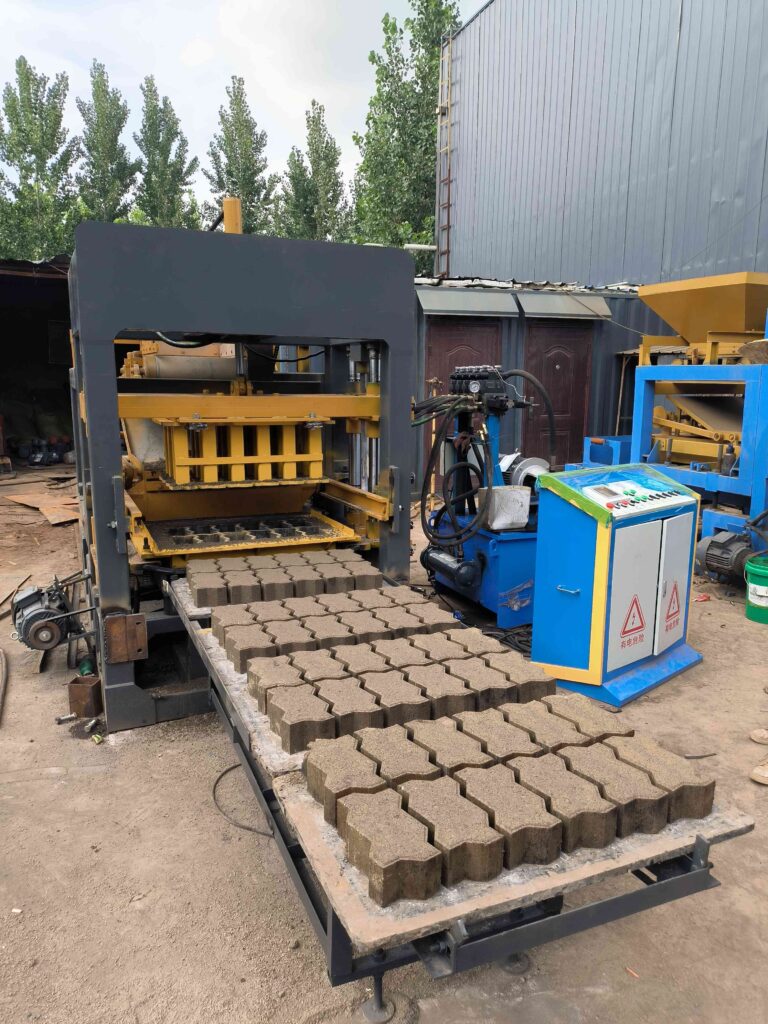
- Machin Otomatik Konplè Estasyonè:Kategori sa a reprezante motè kwasans pou founisè machin ki vize mache mwayen k ap grandi a. Sistèm sa yo entegre manyen materyèl, melanj, ak presyon otomatik ak kapasite pwodiksyon ki soti nan 6,000 a 20,000 brik pou chak sifon 8 èdtan. Yo tipikman sèvi manifaktirè brik etabli k ap ogmante operasyon yo ak nouvo antreprenè ki gen pi gwo kapital. Pwopozisyon valè a konsantre sou rediksyon nan main d'ouvè, konsistans kalite, ak pwodiksyon volim fyab.
- Pwodiksyon Mobil ak Sistèm Kapasite Wo:Pou gwo kliyan endistriyèl ak kontraktè enfrastrikti, plant mobil pou fabrikasyon brik ki ka deplwaye sou sit gwo pwojè yo ofri avantaj lojistik enpòtan. Menm jan an tou, plant estasyonè konplètman entegre ki gen sistèm otomatize pou manyen, sechaj, ak anbalaj sèvi manifakti ki ap apwovizyone konpayi konstriksyon nasyonal yo ak mache ekspòtasyon yo. Solisyon sofistike sa yo mande sipò teknik avanse ak pi gwo nivo envestisman.
Tandans Teknoloji Emerjan ak Twou nan Mache
Evolisyon teknolojik machin brik nan peyi Zend reflete tou de tandans mondyal ak adaptasyon lokal yo.
- Fleksibilite ak Adaptasyon Matyè Premyè: Successful equipment designs increasingly accommodate diverse raw material inputs beyond traditional clay, including fly ash, construction debris, and industrial by-products. Machines that can process variable material compositions with minimal adjustment downtime hold competitive advantage in resource-constrained environments.
- Energy Efficiency and Hybrid Power Options: With electricity costs and reliability varying significantly across regions, machinery incorporating energy-saving features like variable frequency drives and optional hybrid power systems (grid power with generator backup) address critical customer pain points.
- Digital Integration and Remote Monitoring: While still emergent, features enabling production data tracking, remote diagnostics, and predictive maintenance are beginning to differentiate premium equipment offerings, particularly for corporate customers with multiple production facilities.
- After-Sales Service Innovation: Given India’s geographic spread and infrastructure challenges, suppliers who develop innovative service delivery models—including mobile service vans, regional spare parts hubs, and augmented reality-assisted remote support—can establish significant competitive barriers.
Strategic Market Entry and Expansion Framework
Distribution Channel Development and Management
Building effective routes to market is arguably the most critical success factor for machinery suppliers in India:
- Dealer Network Development: A phased approach to distributor recruitment—starting with regional leaders in high-potential states before expanding to secondary markets—allows for focused support and relationship building. Selection criteria should emphasize technical capability, financial strength, and market reputation over mere geographical coverage.
- Hybrid Sales Approaches: Combining direct sales for large corporate accounts and infrastructure projects with dealer networks for serving small and medium enterprises provides market breadth while maintaining focus on high-value opportunities. This requires clear account demarcation and lead management protocols to prevent channel conflict.
- Financing Partnerships and Purchase Facilitation: Given the capital-intensive nature of brick machinery, developing relationships with financial institutions for equipment financing significantly enhances market penetration. Suppliers who can facilitate credit access through tie-ups with banks and non-banking financial companies gain distinct advantage, particularly when serving first-time entrepreneurs.
Competitive Positioning and Value Proposition Development
Success in India’s crowded machinery market requires clear differentiation beyond price:
- Product Localization and Application Engineering: Equipment designed specifically for Indian operating conditions—accounting for material variations, power supply fluctuations, and operator skill levels—outperforms globally standardized products. Features like dust protection, voltage stabilization, and simplified maintenance access provide tangible value.
- Total Cost of Ownership Emphasis: Shifting customer conversations from initial purchase price to lifetime operating costs—factoring in energy consumption, wear part longevity, maintenance requirements, and production yield—helps justify premium positions for higher-quality equipment.
- Training and Knowledge Services: Offering comprehensive operator training, production optimization consulting, and business management guidance creates stickier customer relationships and reduces failure rates that damage brand reputation.
- Sustainability Alignment: Positioning equipment as enabling compliance with environmental regulations, resource conservation through use of industrial by-products, and improved working conditions resonates with both regulatory trends and evolving corporate responsibility expectations.
Konklizyon
The Indian brick making machinery market presents a complex but exceptionally rewarding opportunity for suppliers who approach it with strategic patience, cultural understanding, and long-term commitment. The ongoing transition from informal to organized production, coupled with massive infrastructure investment and regulatory transformation, creates ideal conditions for growth. Success requires a balanced portfolio addressing multiple customer segments, from first-time entrepreneurs to industrial-scale producers. More importantly, it demands business models that combine equipment supply with comprehensive support ecosystems encompassing financing, training, and operational guidance. Suppliers who can master these dimensions while maintaining flexibility to adapt to India’s diverse regional markets will be positioned to capture significant value as the industry continues its modernization journey. The time for strategic investment and focused market development is now, as the foundations for the next decade of industry leadership are being laid.
Kesyon yo poze souvan (FAQ)
Q1: What are the key regulatory compliance requirements for brick machinery in India?
A: Compliance requirements vary by state but generally include pollution control board certifications for emissions, Bureau of Indian Standards (BIS) certification for machine safety and performance, and adherence to specific regulations governing fly ash utilization. For bricks themselves, BIS quality standards apply, particularly for supplies to government projects. Environmental compliance related to air and water pollution is increasingly enforced across states.
Q2: How does the financing landscape for brick machinery purchases operate in India?
A: Multiple financing options exist, including traditional bank loans (often requiring substantial collateral), specialized equipment financing from NBFCs (typically with faster processing but higher interest rates), and manufacturer-backed financing programs. Government schemes like Credit Linked Capital Subsidy Scheme for technology upgradation may also be accessible. Financing tenure typically ranges from 3-5 years with 20-30% margin money requirements.
Q3: What is the typical production capacity range for brick machinery across different price segments?
A: Entry-level manual machines (₹1-3 lakhs) produce 500-2,000 bricks per day; semi-automatic models (₹3-8 lakhs) yield 2,000-6,000 bricks daily; fully automatic stationary machines (₹8-25 lakhs) generate 6,000-20,000 bricks per shift; and high-capacity plants (₹25 lakhs+) can exceed 30,000 bricks daily. Actual output varies based on product type, raw materials, and operational efficiency.
Q4: What after-sales service expectations do Indian customers typically have?
A: Indian brick manufacturers expect responsive service with typical response time expectations of 24-48 hours, availability of critical spare parts within their region, comprehensive operator training in local languages, and troubleshooting support via phone/WhatsApp. Service contracts with guaranteed response times are increasingly common for premium equipment segments. The ability to provide quick, effective technical support significantly influences purchase decisions and brand reputation.
Q5: How significant is the fly ash brick segment compared to traditional clay brick production?
A: The fly ash brick segment is growing at approximately 15-20% annually compared to 3-5% for traditional clay bricks, driven by environmental regulations favoring utilization of industrial waste, lower production costs, and superior technical properties like consistent dimensions and higher compressive strength. While clay bricks still dominate volume terms, fly ash technology represents the growth frontier and increasingly attracts entrepreneurial investment and regulatory support.