
Die Ultieme Gids vir Blokvormmasjiene: Tipes, Pryse en Hoe om te Kies
Inleiding
Die globale konstruksiebedryf se honger na boustene is onversadigbaar. Van behuisingsprojekte tot infrastruktuurontwikkeling, vorm die vraag na konsekwente, hoëgehalte betonblokke die letterlike grondslag van moderne groei. Om aan hierdie vraag doeltreffend te voldoen, bied egter 'n beduidende uitdaging. Tradisionele handmatige vorming is arbeidsintensief, stadig en geneig tot onkonsekwenthede wat strukturele integriteit kan benadeel.
Vir entrepreneurs, bouers en verkrygingsbeamptes kan die navigasie deur die oorvol mark van blokproduksiemasjinerie ewe ontmoedigend wees. Die keuse van die verkeerdeblokvormmasjienkan lei tot verlammende stilstand, ondermaatse produkte, en 'n swak opbrengs op belegging. Hierdie gids dien as jou beslissende hulpbron, wat deur die verwarring sny met duidelike, uitvoerbare insigte.
Gebou op 'n grondslag van bedryfsnavorsing, tegniese spesifikasies en praktiese operasionele ervaring, is hierdie omvattende pos ontwerp om jou betroubare handleiding te wees. Ons sal verkoopsbrochures oorskry om die kennis te verskaf wat jy nodig het om 'n ingeligte besluit te neem. Jy sal leer oor die verschillende tipes masjiene, die kritieke faktore wat prys en werkverrigting beïnvloed verstaan, en praktiese advies oor bedryf en instandhouding verkry. Kom ons bou jou kennis van die grond af op.
Wat is 'n Blokvormmasjien? Kernfunksie en Voordele
At its core, a block moulding machine is a device designed to automate and standardize the production of concrete blocks. It transforms a raw, damp mixture of cement, sand, and aggregates into dense, precisely shaped building units through a combination of compaction and vibration.
Die Masjien Definieer: Van Rou Materiaal tot Voltooide Blok
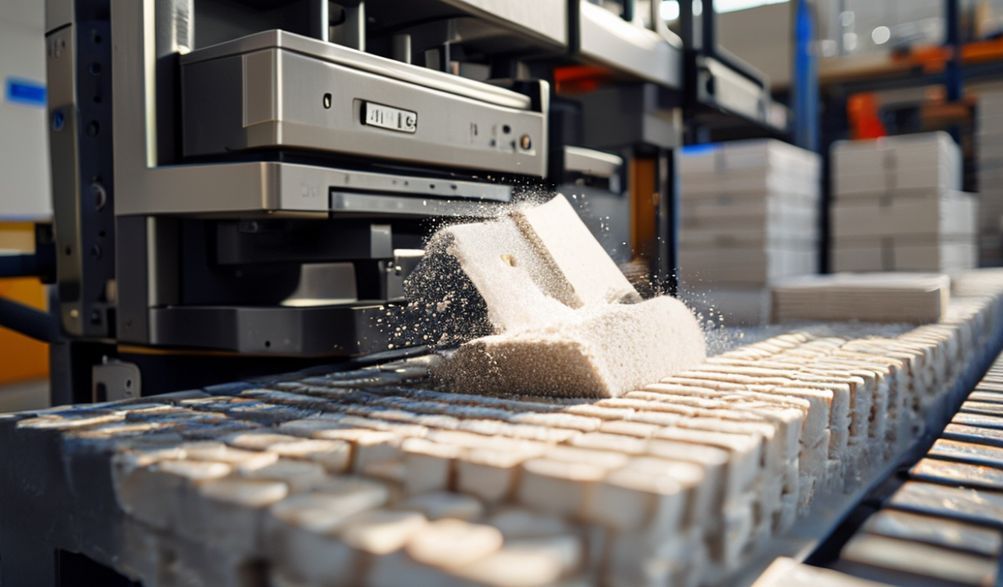
The process is elegantly mechanical. A prepared concrete mix is fed into a hopper. This mix is then directed into a mould cavity, which defines the block’s shape—be it hollow, solid, or interlocking. The machine’s core action takes place here: a combination of hydraulic pressure and high-frequency vibration compresses the mix, forcing out air pockets and ensuring uniform density throughout the block. Once compacted, the block is ejected onto a pallet or the ground, ready for curing. This mechanized cycle replaces the inconsistent hand-tamping of manual methods.
Key Advantages Over Manual Methods
The shift from manual to mechanized production isn’t just a minor upgrade; it’s a transformation in capability and business potential.
- Unmatched Efficiency & Output: A single machine can produce in an hour what might take a manual crew days, dramatically increasing production capacity.
- Superior Consistency and Quality: Every block is identical in dimensions and density. This uniformity is critical for structural strength, ease of laying, and professional finish.
- Beduidende Arbeids- en Koste-besparings: While the initial investment is higher, the reduction in required manpower and the increase in output lead to a much lower cost per block over time.
- Enhanced Block Strength: The controlled, high-pressure compaction creates a denser block with better compressive strength, directly contributing to safer, more durable structures.
- Besigheidskaalbaarheid: With a reliable machine, you can confidently take on larger contracts and scale your production to meet market demand.
Types of Block Moulding Machines: A Detailed Breakdown
Understanding the categories of machines is the first step in aligning technology with your project goals. The spectrum ranges from simple, human-powered units to fully automated production lines.
Handmatige Blokvormmasjiene
These are the most basic type, requiring physical effort to operate the lever or mechanism that compresses the mix in the mould.
- Ideale gebruiksgeleenthede: Perfect for very small-scale projects, community initiatives, or entrepreneurs testing the market with minimal capital. They are also useful for producing specialty blocks in low volumes.
- Voordele: Very low initial cost, minimal maintenance, no power requirement, and highly portable.
- Nadele: Extremely low output (typically 100-400 blocks per day), physically demanding, and product consistency heavily depends on the operator’s skill.
Semi-Automatiese Blokvormmasjiene
This category strikes a balance, mechanizing the critical compaction and vibration processes while requiring manual intervention for feeding mix and removing finished blocks. Common types include static “egg-laying” machines that produce blocks on the ground.
- Ideale gebruiksgeleenthede: Small to medium-sized block production yards, growing businesses, and contractors needing reliable on-site production.
- Voordele: Good output (e.g., 500-2,000 blocks per 8-hour shift), consistent quality, reasonable price point, and often mobile. They represent a strong balance of cost and capability.
- Nadele: Still requires a small crew for operation, output is not continuous.
Volledige Outomatiese Blokvormmasjiene
These are industrial-grade systems. They integrate mix feeding, moulding, compaction, block ejection, and pallet handling into a seamless, computer-controlled cycle with minimal human oversight.
- Ideale gebruiksgeleenthede: Large-scale block manufacturing plants, high-volume suppliers to major construction firms, and operations where labor costs are high and consistency is paramount.
- Voordele: Very high and continuous output (e.g., 4,000-10,000+ blocks per shift), exceptional consistency, minimal labor requirements per block produced.
- Nadele: High capital investment, significant space and foundation requirements, complex maintenance, and requires a steady, high-volume market for a viable ROI.
Mobiele vs. Stasionêre Blokmasjiene
This distinction cuts across automation levels.
- Mobiele Blokmasjiene: Typically semi-automatic “egg-laying” or smaller hydraulic presses mounted on wheels or trailers. Their prime advantage is the ability to produce blocks directly on the construction site, eliminating transport costs for the finished product. Ideal for remote projects or large sites like housing estates.
- Stilstaande Blokmasjiene: These are fixed installations, from large semi-automatic to fully automatic lines. They form the heart of a dedicated block yard or factory, optimized for centralized, high-volume production. They often require concrete foundations and fixed power hookups.
Critical Factors to Consider Before Buying
Choosing a machine is a strategic investment. Rushing this decision based on price alone is the most common and costly mistake. Based on industry feedback and operational experience, here is your essential checklist.
Assessing Your Production Needs: Output Capacity (Blocks per Hour)
Be brutally realistic. Calculate your current and near-future (12-24 month) demand. A machine operating at 20% capacity is a waste, while one running at 110% capacity will break down prematurely. Match the machine’s rated output (e.g., blocks per hour under ideal conditions) to your practical, sustained needs, factoring in downtime for maintenance.
Block Type and Size Versatility: Hollow, Solid, Interlocking, Pavers
What does your market need? A machine that only makes solid 9″x9″ blocks is limiting. Many modern semi-automatic and automatic machines offer interchangeable moulds. Consider the potential for diversifying your product line to include:
* Hollow blocks (for lighter walls)
* Solid blocks (for foundations)
* Interlocking blocks (for dry-stack construction)
* Paving stones (for hardscaping)
Verify the cost and availability of these additional moulds from the supplier.
Power Source: Electric, Diesel, or Hybrid?
Your location’s infrastructure dictates this choice.
* Elektries Cleaner, quieter, and lower operating cost where grid power is stable and affordable. Requires a proper electrical connection.
* Diesel: Essential for sites with no reliable electricity. Offers mobility and consistent power but has higher fuel costs, noise, and emissions.
* Hibried: Some models can switch between power sources, offering valuable flexibility for variable site conditions.
Machine Durability and Key Components
Inspect the build quality. This is where cheap machines fail.
* Raamsterkte The chassis must be heavy-duty steel to withstand constant vibration without cracking or warping.
* Vormkwaliteit: Moulds should be made from hardened, high-chrome steel for longevity and a smooth block finish. Cheap mild steel moulds wear out rapidly.
* Vibrasie Stelsel: This is the heart of the machine. Look for robust, isolated vibration motors with adjustable frequency for optimal compaction of different mixes.
After-Sales Support: Availability of Spare Parts and Technical Service
A machine is a long-term partner. The supplier’s reputation for support is as important as the machine itself. Ask: Do they stock critical spare parts (like moulds, vibration motors, hydraulic seals)? Do they offer training? Is technical assistance just a phone call away, or will you be stranded? Prioritize suppliers with a proven track record of support in your region.
Understanding Block Moulding Machine Prices and Investment
Transparency about cost is key to building trust. Prices vary wildly, and understanding hoekom protects you from overpaying or buying an unfit machine.
Price Range Spectrum: From Manual to Fully Automatic
- Handmatige Masjiene: $500 – $3,000. The cost is in the steel and moulds.
- Halfoutomatiese Masjiene: $3,000 – $25,000. Price increases with output capacity, level of automation (e.g., hydraulic vs. mechanical), and brand reputation.
- Volledig Outomatiese Masjiene: $25,000 – $150,000+. This is for complete production lines. The price reflects the complexity, speed, and degree of automation (e.g., robotic pallet handling).
What Influences the Cost? Brand, Automation, Capacity, and Features
A $5,000 machine and a $15,000 machine may look similar in a photo, but the difference is in the details:
* Brand & Origin: Established brands with quality control command a premium.
* Graad van Outomatisering: Each step automated (feeding, pressing, ejecting) adds cost.
* Produksiekapasiteit: A 1,000-blocks-per-hour machine costs more than a 500-blocks-per-hour model.
* Bougehalte & Komponente: As discussed, the quality of steel, motors, hydraulics, and bearings is a major cost driver.
Calculating Your Return on Investment (ROI)
Think beyond the price tag. A simple ROI framework:
1. Total Investment: Machine cost + delivery + setup + initial spare parts.
2. Operational Cost Per Block: (Cost of materials + labor + power/fuel + maintenance) / Number of blocks produced.
3. Revenue Per Block: Your selling price.
4. Gross Profit Per Block: Revenue – Operational Cost.
5. Break-Even Point: Total Investment / Gross Profit Per Block. This tells you how many blocks you need to sell to recover your machine investment.
Expert Advice: The cheapest machine often has the highest long-term cost due to downtime and low output. Prioritize value—reliability, support, and suitable capacity—over the lowest initial price.
Operation and Maintenance Best Practices
Owning a machine is a commitment to proper care. These best practices, drawn from operator manuals and field experience, will ensure safety, quality, and longevity.
Safe and Efficient Machine Operation: A Step-by-Step Overview
- Pre-Start Check: Inspect for loose bolts, hydraulic leaks, and clear the work area. Ensure all safety guards are in place.
- Mix Preparation: Use a consistent, correct ratio of cement, sand, and aggregate. The moisture content is critical—too dry and blocks crumble; too wet and they slump.
- Machine Warm-up: Run the machine empty for a minute to ensure vibrations and hydraulics are working smoothly.
- Voeding & Vorming: Feed the hopper consistently. Avoid overfilling the mould cavity.
- Regular Monitoring: Check the first few blocks for proper shape, density, and finish. Adjust mix or vibration time if necessary.
Essential Daily and Weekly Maintenance Checklist
- Daily: Clean the machine thoroughly at the end of the shift, removing all concrete residue. Check and tighten any visible loose nuts and bolts. Lubricate all moving parts as per the manual.
- Weekly: Inspect the mould for wear or damage. Check hydraulic oil levels and hose condition. Inspect the vibration motors and their mounts.
Troubleshooting Common Issues
- Poor Block Quality (Crumbling): Usually indicates a dry mix, insufficient vibration time, or low compression pressure.
- Blocks Sticking in Mould: Often caused by a worn mould, insufficient release agent, or a wet mix.
- Uneven Block Height: Can be due to an uneven feeding of the mix, worn mould edges, or an unlevel machine setup.
Maximizing the Lifespan of Your Moulds
Moulds are high-wear items. To extend their life:
* Clean them meticulously after every production run.
* Apply a recommended release agent (like diesel or specialized oil) to prevent concrete adhesion.
* Store them in a dry place to prevent rust when not in use.
* Never use tools to pry blocks out, as this scratches the steel.
Frequently Asked Questions (FAQ)
Q1: What is the average production output of a standard block moulding machine?
There is no single “standard.” Output ranges dramatically: manual machines produce 100-400 blocks per day, semi-automatic machines 500-3,000 per 8-hour shift, and fully automatic lines can produce 5,000-15,000+ blocks in the same period. Always refer to the specific model’s technical sheet.
Q2: Can one machine produce different types and sizes of blocks?
Yes, most semi-automatic and automatic machines are designed with interchangeable moulds. You can purchase additional mould sets for hollow blocks, pavers, etc. However, changing moulds takes time (from 30 minutes to a few hours), so it’s best for batch production, not constant switching.
Q3: What is the typical lifespan of a well-maintained block moulding machine?
A quality machine from a reputable brand, following a strict maintenance regimen, can last 10 to 20 years. Key wear components like moulds, vibration motors, and hydraulic seals will need replacement during this time, but the main frame should endure.
Q4: How much space is required to set up a block production yard with a machine?
For a small to medium semi-automatic operation, you need space for: the machine itself (approx. 4m x 2m), raw material storage (sand, aggregate, cement), a mixing area, and a large, level curing area for the freshly produced blocks. A minimum of 500-1000 square meters is a practical starting point.
Q5: Are there eco-friendly or waste-reusing block moulding machines available?
Absolutely. The process itself is adaptable. Many successful operations use machines to produce blocks from fly ash, crushed construction waste, or laterite soil, stabilized with a small percentage of cement. The machine doesn’t change; the input mix does. This is a significant trend towards sustainable construction.
Conclusion
Die regte keuseblokvormmasjien is a pivotal decision that hinges on a clear understanding of your production scale, budget, and product goals. From the simplicity of a manual press for a startup to the formidable output of a fully automated line for an industrial plant, the correct choice balances your immediate needs with your vision for growth.
Let this guide serve as your foundational checklist. When you engage with suppliers, use the factors outlined here—output, versatility, durability, and support—to ask the right questions. Insist on seeing a machine in operation, if possible, and always calculate the total cost of ownership, not just the purchase price. The most profitable investment is a reliable machine backed by a reliable partner.
As the industry evolves, we see a clear trajectory towards smarter automation and more sustainable material use. By making an informed choice today, you position your operation not just to compete, but to lead in building the future.
<