
Блок қалыптау машиналары туралы жан-жақты нұсқаулық: Түрлері, бағалары және қалай таңдау керек
Кіріспе
Құрылыс саласының жаһандық деңгейдегі құрылыс блоктарына деген қажеттілігі шексіз. Тұрғын үй жобаларынан инфрақұрылымды дамытуға дейін, біркелкі және жоғары сапалы бетон блоктарға деген сұраныс қазіргі заманғы өсудің негізін құрайды. Дегенмен, бұл сұранысты тиімді қанағаттандыру маңызды мәселе болып табылады. Дәстүрлі қолмен қалыптау еңбек сыйымды, баяу және құрылымдық тұтастықты бұзуы мүмкін біркелкі емес өндіріске бейім.
Кәсіпкерлер, құрылысшылар және сатып алушылар үшін блок өндіру машиналарының тар базарында бағдарлау да бірдей қиын болуы мүмкін. Дұрыс емес таңдаублок қалыптау машинасыбұл жұмыстың тоқтап қалуына, өнімнің сапасының төмендеуіне және инвестицияның нашар өтелуіне әкелуі мүмкін. Бұл нұсқаулық сізге сенімді ресурс ретінде қызмет етеді, түсініксіздіктерді анық, іс-әрекетке бағытталған түсініктермен жояды.
Бұл жан-жақты мақала салалық зерттеулерге, техникалық сипаттамаларға және тәжірибелі операциялық тәжірибеге негізделіп, сіздің сенімді нұсқаулығыңыз болуға арналған. Біз сату брошюраларынан асып, сізге негізделген шешім қабылдау үшін қажетті білімді береміз. Сіз әртүрлі станоктардың түрлерімен танысып, баға мен өнімділікке әсер ететін маңызды факторларды түсінесіз, сонымен қатар оларды пайдалану және техникалық қызмет көрсету бойынша практикалық кеңестер аласыз. Біліміңізді негізден бастап құрайық.
Блок қалыптау машинасы дегеніміз не? Негізгі функциясы және артықшылықтары
Оның негізінде, блок қалыптау машинасы - бұл бетон блоктарын өндіруді автоматтандыру және стандарттау үшін жасалған құрылғы. Ол цемент, құм және агрегаттардың шикі, ылғалды қоспасын тығыздау мен дірілді біріктіру арқылы тығыз, дәл пішінделген құрылыс бөлшектеріне айналдырады.
Машинаны Анықтау: Шикізаттан Дайын Блокқа Дейін
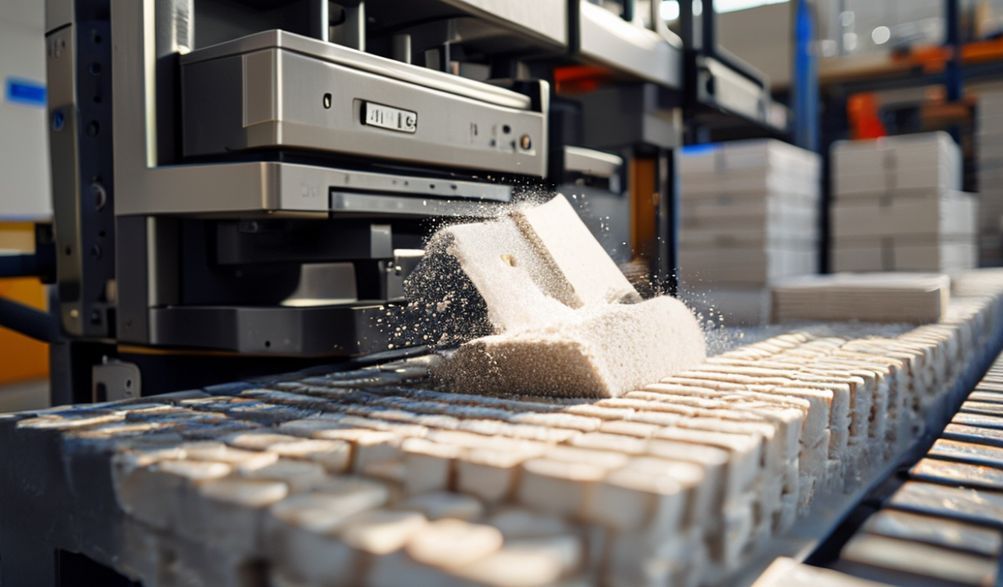
Процесс талғампаз механикалық. Дайындалған бетон қоспасы бункерге беріледі. Содан кейін бұл қоспа қалып қуысына бағытталады, ол блоктың пішінін анықтайды - ол қуыс, қатты немесе бір-бірімен ілінісетін болуы мүмкін. Машинаның негізгі әрекеті осы жерде жүреді: гидравликалық қысым мен жоғары жиілікті дірілдің комбинациясы қоспаны сығады, ауа қабаттарын шығарып, блоктың барлық бөлігінде біркелкі тығыздықты қамтамасыз етеді. Қысылғаннан кейін, блок палетке немесе жерге шығарылып, қатаюға дайын болады. Бұл механикаландырылған цикл қол әдістерінің біркелкі емес қолмен тығыздауын алмастырады.
Қолменгі әдістерге қарағанда негізгі артықшылықтар
Қолдан механикаландырылған өндіріске көшу – бұл жай ғана шағын жаңарту емес, бұл мүмкіндіктер мен бизнес әлеуетіндегі түбегейлі өзгеріс.
- Салыстырмасыз тиімділік пен өнімділік:Бір машина бір сағатта қолмен жұмыс істейтін бригадаға күндер кететін нәрсені шығара алады, бұл өндірістік қуатты айтарлықтай арттырады.
- Үздіксіздік пен сапаның жоғарылығы:Әрбір блок өлшемдері мен тығыздығы бойынша бірдей. Бұл біркелкілік құрылымдық беріктік, төсеу оңайлығы және кәсіби өңдеу үшін өте маңызды.
- Еңбек пен шығындарды айтарлықтай үнемдеу:Бастапқы инвестиция жоғары болғанымен, қажетті жұмыс күшінің азаюы және өнім көлемінің өсуі уақыт өте келіп бір блоктың өзіндік құнын айтарлықтай төмендетеді.
- Күшейтілген блок беріктігі:Басқарылатын жоғары қысымды тығыздау тығыздалған блокты жасап, оның қысу беріктігін арттырады, бұл тікелей қауіпсіз және берік құрылыстарға ықпал етеді.
- Бизнес өлшемділігі:Сенімді машинамен сіз үлкен келісімшарттарды сенімді түрде қабылдай аласыз және өндірісті нарықтық сұранысқа сай масштабтауға болады.
Блок қалыптау машиналарының түрлері: Толық талдау
Машиналардың санаттарын түсіну технологияны жоба мақсаттарыңызбен үйлестірудің алғашқы қадамы болып табылады. Олардың ауқымы қарапайым, адам күшімен жұмыс істейтін құрылғылардан толық автоматтандырылған өндіріс желілеріне дейін созылады.
Қолмен басқарылатын блокты қалыптау машиналары
These are the most basic type, requiring physical effort to operate the lever or mechanism that compresses the mix in the mould.
- Идеалды қолдану жағдайлары: Perfect for very small-scale projects, community initiatives, or entrepreneurs testing the market with minimal capital. They are also useful for producing specialty blocks in low volumes.
- Артықшылықтары: Very low initial cost, minimal maintenance, no power requirement, and highly portable.
- Кемшіліктері: Extremely low output (typically 100-400 blocks per day), physically demanding, and product consistency heavily depends on the operator’s skill.
Semi-Automatic Block Moulding Machines
This category strikes a balance, mechanizing the critical compaction and vibration processes while requiring manual intervention for feeding mix and removing finished blocks. Common types include static “egg-laying” machines that produce blocks on the ground.
- Идеалды қолдану жағдайлары: Small to medium-sized block production yards, growing businesses, and contractors needing reliable on-site production.
- Артықшылықтары: Good output (e.g., 500-2,000 blocks per 8-hour shift), consistent quality, reasonable price point, and often mobile. They represent a strong balance of cost and capability.
- Кемшіліктері: Still requires a small crew for operation, output is not continuous.
Fully Automatic Block Moulding Machines
These are industrial-grade systems. They integrate mix feeding, moulding, compaction, block ejection, and pallet handling into a seamless, computer-controlled cycle with minimal human oversight.
- Идеалды қолдану жағдайлары: Large-scale block manufacturing plants, high-volume suppliers to major construction firms, and operations where labor costs are high and consistency is paramount.
- Артықшылықтары: Very high and continuous output (e.g., 4,000-10,000+ blocks per shift), exceptional consistency, minimal labor requirements per block produced.
- Кемшіліктері: High capital investment, significant space and foundation requirements, complex maintenance, and requires a steady, high-volume market for a viable ROI.
Ұялы және стационарлық блок машиналары
This distinction cuts across automation levels.
- Мобильді блоктық машиналар: Typically semi-automatic “egg-laying” or smaller hydraulic presses mounted on wheels or trailers. Their prime advantage is the ability to produce blocks directly on the construction site, eliminating transport costs for the finished product. Ideal for remote projects or large sites like housing estates.
- Стационарлық блоктық машиналар: These are fixed installations, from large semi-automatic to fully automatic lines. They form the heart of a dedicated block yard or factory, optimized for centralized, high-volume production. They often require concrete foundations and fixed power hookups.
Сатып алмас бұрын ескеруге болатын маңызды факторлар
Choosing a machine is a strategic investment. Rushing this decision based on price alone is the most common and costly mistake. Based on industry feedback and operational experience, here is your essential checklist.
Assessing Your Production Needs: Output Capacity (Blocks per Hour)
Be brutally realistic. Calculate your current and near-future (12-24 month) demand. A machine operating at 20% capacity is a waste, while one running at 110% capacity will break down prematurely. Match the machine’s rated output (e.g., blocks per hour under ideal conditions) to your practical, sustained needs, factoring in downtime for maintenance.
Block Type and Size Versatility: Hollow, Solid, Interlocking, Pavers
What does your market need? A machine that only makes solid 9″x9″ blocks is limiting. Many modern semi-automatic and automatic machines offer interchangeable moulds. Consider the potential for diversifying your product line to include:
* Hollow blocks (for lighter walls)
* Solid blocks (for foundations)
* Interlocking blocks (for dry-stack construction)
* Paving stones (for hardscaping)
Verify the cost and availability of these additional moulds from the supplier.
Power Source: Electric, Diesel, or Hybrid?
Your location’s infrastructure dictates this choice.
* Электрлік: Cleaner, quieter, and lower operating cost where grid power is stable and affordable. Requires a proper electrical connection.
* Дизель: Essential for sites with no reliable electricity. Offers mobility and consistent power but has higher fuel costs, noise, and emissions.
* Гибридтік: Some models can switch between power sources, offering valuable flexibility for variable site conditions.
Machine Durability and Key Components
Inspect the build quality. This is where cheap machines fail.
* Раманың беріктігі The chassis must be heavy-duty steel to withstand constant vibration without cracking or warping.
* Қалып сапасы: Moulds should be made from hardened, high-chrome steel for longevity and a smooth block finish. Cheap mild steel moulds wear out rapidly.
* Діріл жүйесі: This is the heart of the machine. Look for robust, isolated vibration motors with adjustable frequency for optimal compaction of different mixes.
After-Sales Support: Availability of Spare Parts and Technical Service
A machine is a long-term partner. The supplier’s reputation for support is as important as the machine itself. Ask: Do they stock critical spare parts (like moulds, vibration motors, hydraulic seals)? Do they offer training? Is technical assistance just a phone call away, or will you be stranded? Prioritize suppliers with a proven track record of support in your region.
Understanding Block Moulding Machine Prices and Investment
Transparency about cost is key to building trust. Prices vary wildly, and understanding неге protects you from overpaying or buying an unfit machine.
Price Range Spectrum: From Manual to Fully Automatic
- Қол машиналары: $500 – $3,000. The cost is in the steel and moulds.
- Жартылай автоматты машиналар: $3,000 – $25,000. Price increases with output capacity, level of automation (e.g., hydraulic vs. mechanical), and brand reputation.
- Толық автоматты машиналар: $25,000 – $150,000+. This is for complete production lines. The price reflects the complexity, speed, and degree of automation (e.g., robotic pallet handling).
What Influences the Cost? Brand, Automation, Capacity, and Features
A $5,000 machine and a $15,000 machine may look similar in a photo, but the difference is in the details:
* Brand & Origin: Established brands with quality control command a premium.
* Автоматтандыру дәрежесі: Each step automated (feeding, pressing, ejecting) adds cost.
* Өндірістік қуат: A 1,000-blocks-per-hour machine costs more than a 500-blocks-per-hour model.
* Құрастыру сапасы мен компоненттері: As discussed, the quality of steel, motors, hydraulics, and bearings is a major cost driver.
Calculating Your Return on Investment (ROI)
Think beyond the price tag. A simple ROI framework:
1. Total Investment: Machine cost + delivery + setup + initial spare parts.
2. Operational Cost Per Block: (Cost of materials + labor + power/fuel + maintenance) / Number of blocks produced.
3. Revenue Per Block: Your selling price.
4. Gross Profit Per Block: Revenue – Operational Cost.
5. Break-Even Point: Total Investment / Gross Profit Per Block. This tells you how many blocks you need to sell to recover your machine investment.
Expert Advice: The cheapest machine often has the highest long-term cost due to downtime and low output. Prioritize value—reliability, support, and suitable capacity—over the lowest initial price.
Operation and Maintenance Best Practices
Owning a machine is a commitment to proper care. These best practices, drawn from operator manuals and field experience, will ensure safety, quality, and longevity.
Safe and Efficient Machine Operation: A Step-by-Step Overview
- Pre-Start Check: Inspect for loose bolts, hydraulic leaks, and clear the work area. Ensure all safety guards are in place.
- Mix Preparation: Use a consistent, correct ratio of cement, sand, and aggregate. The moisture content is critical—too dry and blocks crumble; too wet and they slump.
- Machine Warm-up: Run the machine empty for a minute to ensure vibrations and hydraulics are working smoothly.
- Тамақтандыру және қалыптау: Feed the hopper consistently. Avoid overfilling the mould cavity.
- Regular Monitoring: Check the first few blocks for proper shape, density, and finish. Adjust mix or vibration time if necessary.
Essential Daily and Weekly Maintenance Checklist
- Күнделікті Clean the machine thoroughly at the end of the shift, removing all concrete residue. Check and tighten any visible loose nuts and bolts. Lubricate all moving parts as per the manual.
- Апталық: Inspect the mould for wear or damage. Check hydraulic oil levels and hose condition. Inspect the vibration motors and their mounts.
Жиі кездесетін мәселелерді шешу
- Poor Block Quality (Crumbling): Usually indicates a dry mix, insufficient vibration time, or low compression pressure.
- Blocks Sticking in Mould: Often caused by a worn mould, insufficient release agent, or a wet mix.
- Uneven Block Height: Can be due to an uneven feeding of the mix, worn mould edges, or an unlevel machine setup.
Maximizing the Lifespan of Your Moulds
Moulds are high-wear items. To extend their life:
* Clean them meticulously after every production run.
* Apply a recommended release agent (like diesel or specialized oil) to prevent concrete adhesion.
* Store them in a dry place to prevent rust when not in use.
* Never use tools to pry blocks out, as this scratches the steel.
Жиі қойылатын сұрақтар (ЖҚС)
Q1: What is the average production output of a standard block moulding machine?
There is no single “standard.” Output ranges dramatically: manual machines produce 100-400 blocks per day, semi-automatic machines 500-3,000 per 8-hour shift, and fully automatic lines can produce 5,000-15,000+ blocks in the same period. Always refer to the specific model’s technical sheet.
Q2: Can one machine produce different types and sizes of blocks?
Yes, most semi-automatic and automatic machines are designed with interchangeable moulds. You can purchase additional mould sets for hollow blocks, pavers, etc. However, changing moulds takes time (from 30 minutes to a few hours), so it’s best for batch production, not constant switching.
Q3: What is the typical lifespan of a well-maintained block moulding machine?
A quality machine from a reputable brand, following a strict maintenance regimen, can last 10 to 20 years. Key wear components like moulds, vibration motors, and hydraulic seals will need replacement during this time, but the main frame should endure.
Q4: How much space is required to set up a block production yard with a machine?
For a small to medium semi-automatic operation, you need space for: the machine itself (approx. 4m x 2m), raw material storage (sand, aggregate, cement), a mixing area, and a large, level curing area for the freshly produced blocks. A minimum of 500-1000 square meters is a practical starting point.
Q5: Are there eco-friendly or waste-reusing block moulding machines available?
Absolutely. The process itself is adaptable. Many successful operations use machines to produce blocks from fly ash, crushed construction waste, or laterite soil, stabilized with a small percentage of cement. The machine doesn’t change; the input mix does. This is a significant trend towards sustainable construction.
Қорытынды
Дұрыс таңдаублок қалыптау машинасы is a pivotal decision that hinges on a clear understanding of your production scale, budget, and product goals. From the simplicity of a manual press for a startup to the formidable output of a fully automated line for an industrial plant, the correct choice balances your immediate needs with your vision for growth.
Let this guide serve as your foundational checklist. When you engage with suppliers, use the factors outlined here—output, versatility, durability, and support—to ask the right questions. Insist on seeing a machine in operation, if possible, and always calculate the total cost of ownership, not just the purchase price. The most profitable investment is a reliable machine backed by a reliable partner.
As the industry evolves, we see a clear trajectory towards smarter automation and more sustainable material use. By making an informed choice today, you position your operation not just to compete, but to lead in building the future.
<