
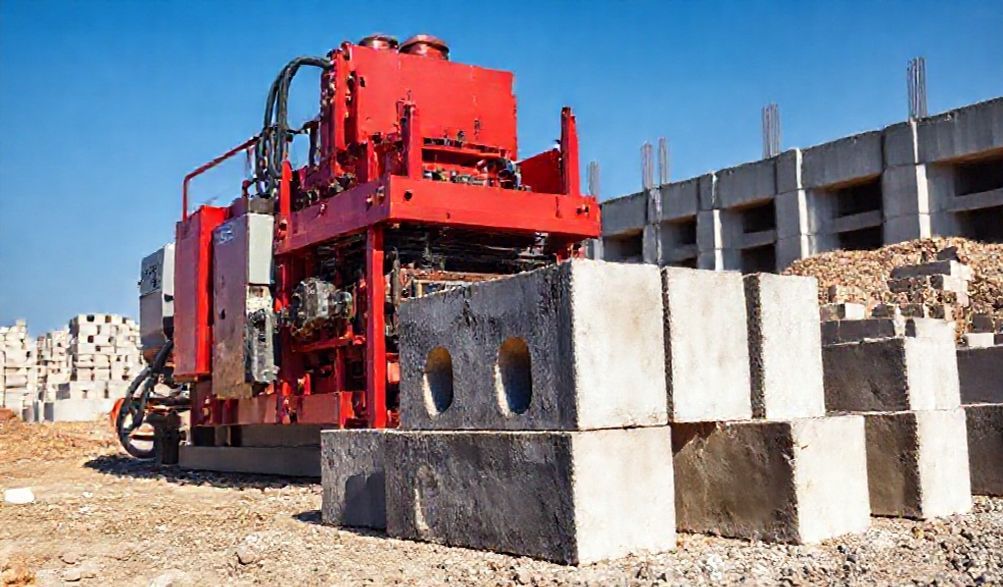
آلة صناعة البلوك QTJ4-40: دليل شامل للميزات والتشغيل والاستثمار
مقدمة
بالنسبة للشركات الإنشائية الصغيرة والمطورين الريفيين ورواد الأعمال، فإن العثور على المعدات المناسبة لإنتاج مواد بناء عالية الجودة دون استثمار رأسمالي ضخم يمثل تحديًا دائمًا. وتعد الحاجة إلى آلات موثوقة وفعالة من حيث التكلفة وسهلة التشغيل أمرًا بالغ الأهمية. إذا كنت تستكشف عالم تصنيع البلوك الخرساني على نطاق يمكن إدارته، فمن المحتمل أنك صادفت آلةآلة كتلة QTJ4-40.
هذا الدليل الشامل مصمم ليكون مصدرك النهائي. بالاعتماد على المواصفات الفنية والمبادئ التشغيلية والرؤى العملية من الصناعة، سنقوم بتشريح هذه الآلة الشائعة. هدفنا هو تجاوز النشرات التسويقية وتزويدك بالوضوح اللازم لاتخاذ قرار مستنير.
بنهاية هذا المقال، سيكون لديك فهم راسخ لقدرات QTJ4-40، وتطبيقاته المثالية، والواقع العملي لتشغيله، ونظرة شاملة على إجمالي الاستثمار والعائد المحتمل. دعنا نحدد ما إذا كانت هذه الآلة هي المحرك المناسب لمشروعك البنائي.
ما هي آلة صنع الطوب الخرساني QTJ4-40؟
قبل الخوض في التفاصيل، من الضروري فهم ماهية هذه الآلة وأين تنتمي في النظام البيئي الأوسع لمعدات إنتاج الكتل.
الوظيفة الأساسية وتسمية المنتج موضحة
يتبع اسم النموذج "QTJ4-40" اتفاقية صناعية شائعة في آلات البناء:
* QT:غالباً ما تشير إلى "كون تيان" أو رمز سلسلة من الشركة المصنعة.
* ج:عادةً ما ترمز إلى "جِي (机)"، الكلمة الصينية التي تعني آلة.
* 4-40:المواصفات الأساسية. عادةً ما يعني ذلك أن الجهاز يمكنه إنتاج4 قطعالطوب المجوف القياسي (400x200x200 ملم)لكل دورة.
في صميمها، آلة QTJ4-40 هي ماكينة تشكيل طوب خرساني. وظيفتها الأساسية هي ضغط خليط خرساني شبه جاف إلى أشكال دقيقة عالية الكثافة. وباستخدام قوالب قابلة للتبديل، يمكنها إنتاج مجموعة متنوعة من المنتجات:
* البلوكات المجوفة (بسمك مختلف)
* كتل صلبة
* بلاطات الرصف
* طوب متشابك لأعمال تنسيق الحدائق
نوع الآلة وسير العمل التشغيلي
تصنف QTJ4-40 على أنهاآلة طوب متنقلة شبه آلية لوضع البيضهذا الوصف أساسي لفهم آلية عمله.
- شبه آليبينما تعمل دورة الضغط والتشكيل الأساسية (عبر الاهتزاز والهيدروليك)، فإن مهام مثل تغذية المواد الخام وإزالة الكتل النهائية تتم يدوياً.
- البيض المتحرك:على عكس المصانع الكبيرة الثابتة، يتم تركيب هذه الآلة على هيكل مزود بعجلات. بعد إنتاج الطوبة، تتحرك قليلاً إلى الأمام، "وضع" الطوبة على الأرض أو على منصة معالجة خلفها، تشبه إلى حد كبير دجاجة تبيض. وهذا يسمح بالإنتاج المستمر مباشرة على أرضية خرسانية أو موقع مُعد مسبقاً.
التدفق الأساسي الدوري للعمل هو:
1. التغذية:يتم تغذية خليط الخرسانة المُعد يدويًا في صندوق القالب.
2. الضغط:الاهتزاز عالي التردد يضغط الخليط لإزالة الجيوب الهوائية وتحقيق الكثافة.
3. رفع القالب:يرفع النظام الهيدروليكي صندوق القالب عموديًا، تاركًا البلوك الطازج المشكل على البليت أو الأرض تحته.
4. حركةتنتقل الآلة إلى الموضع التالي.
5. التداوييبقى البلوك في مكانه لاكتساب القوة الأولية قبل نقله إلى منطقة المعالجة النهائية.
Key Technical Specifications and Features of the QTJ4-40
Understanding the hard data is essential for assessing fit. Here are the core technical aspects that define the QTJ4-40.
Vital Production Metrics
- القدرة الإنتاجية:
- لكل دورة: 4 pieces of 400x200x200mm standard hollow blocks.
- Per Shift: A realistic output for an 8-hour shift, accounting for setup, breaks, and material handling, is between 1,500 to 2,500 blocks. Cycle time is approximately 15-20 seconds, but overall output depends heavily on operator efficiency and workflow.
- Block Sizes (via interchangeable molds):
- Common hollow block sizes: 400x200x200mm, 400x150x200mm, 400x100x200mm.
- Solid blocks, pavers (e.g., 200x100x60mm), and interlocking bricks are also possible.
- متطلبات الطاقة:
- يعمل عادةً على7.5 كيلووات (10 حصان) electric motor.
- Standard voltage is 380V/50Hz (3-phase), which is common for industrial equipment globally. Some models may offer other voltage configurations.
Design and Build Features
- نظام الاهتزاز: The QTJ4-40 usually employs a dual-shaft, high-frequency vibration system. This is the heart of the machine. The synchronized vibrations from two motors ensure even compaction throughout the mold, resulting in blocks with consistent density, sharp edges, and high compressive strength.
- Mold and Pallet System:
- القوالب: Constructed from high-carbon, heat-treated steel for durability and resistance to abrasion. Quality of the mold steel directly impacts block finish and mold lifespan.
- البالتات: The machine can work with or without steel pallets. Using pallets allows for easier block handling and stacking after the initial set.
- Mobility and Structure: Its defining feature is the robust steel frame on wheels. This “egg-laying” design eliminates the need for a complex conveyor system, simplifying the setup and allowing for true on-site production, which reduces block transportation costs for local projects.
التطبيقات المثالية وملاءمة المشروع
A machine is only as good as the job it’s suited for. Let’s connect the specs to real-world scenarios.
Perfect For: Small to Medium-Scale Ventures
The QTJ4-40 shines in environments where flexibility, lower capital cost, and simplicity are valued over sheer, massive output.
- مشاريع الإسكان الريفي وشبه الحضري Ideal for producing blocks directly on the construction site or for a small local block yard supplying a community.
- Small Construction Companies: Allows a company to vertically integrate, producing their own blocks for specific projects and controlling quality and cost.
- المشاريع الريادية الناشئة: A manageable entry point into the block manufacturing business with a lower financial barrier than fully automatic plants.
- Projects with Moderate, Steady Demand: Well-suited for supplying a local market where daily demand is in the range of a few thousand blocks.
Limitations to Consider
Being honest about limitations prevents costly mistakes. The QTJ4-40 is not a one-size-fits-all solution.
- Output Ceiling: Its production is fundamentally limited by its semi-automatic, single-mold design. It cannot compete with the output of a fully automatic multilayer plant.
- Labor Intensive: Requires a dedicated crew of 2-3 people for efficient operation (feeding, controlling, block handling). Labor costs and management are a significant part of the operational equation.
- Scale Limitation: It is not economically or practically suitable for supplying large-scale city developments or high-volume commercial contracts that require tens of thousands of blocks daily.
Operating the QTJ4-40: A Step-by-Step Overview
Success with this machine hinges on proper operation. Here’s a practical overview of the process.
إعداد المواد الخام
The machine can only form blocks as good as the mix you feed it.
- تصميم الخلطة: A standard ratio is 1 part cement, 3 parts sand, and 4-5 parts coarse aggregate (e.g., 3/8″ crushed stone). The exact mix should be tested for local materials.
- محتوى الرطوبة: This is critical. The mixture must be “semi-dry”—just moist enough to hold its shape when squeezed in your hand, but not wet or sloppy. Too much water weakens the block; too little leads to poor compaction.
- Aggregate Size: Must be clean and well-graded, but not exceed the wall thickness of the hollow blocks to ensure proper filling and strength.
The Production Cycle in Detail
- Mixture Feeding: Operators shovel or pour the prepared mix into the mold box, ensuring it is evenly distributed and slightly overfilled.
- Vibration and Compaction: The operator activates the vibration motors for 3-5 seconds. The mold table vibrates intensely, settling and compacting the mixture. A press head may simultaneously apply slight pressure from above.
- Mold Lifting and Block Ejection: The vibration stops, and the hydraulic system lifts the entire mold box vertically. The compacted block remains perfectly formed on the pallet or ground beneath.
- عملية المعالجة: The machine moves forward, and the block is left in place.
- Initial Curing (24-48 hours): Blocks must be kept moist and protected from sun and wind, often by covering with plastic sheeting.
- Final Curing: After initial set, blocks are stacked and kept damp for up to 28 days to achieve full design strength.
Essential Safety and Maintenance Protocols
Daily/Pre-Operation Checks:
* Inspect and tighten all bolts, especially on vibration motors and mold.
* Check hydraulic oil levels and look for leaks.
* Lubricate all moving points as per the manual.
Routine Maintenance:
* Weekly: Clean the machine thoroughly, especially the mold and vibration table.
* Monthly: Inspect hydraulic hoses and electrical connections. Check wear on mold liners.
* Annually: Consider a full professional service, including motor bearing checks.
سلامة المشغل
* Always wear safety glasses, gloves, and steel-toe boots.
* Never place hands in the mold area during the vibration or lifting cycle.
* Ensure the machine is on a level, stable surface before operation.
* Lock out/tag out power before performing any maintenance.
Cost Analysis: Investment and Return on Investment (ROI)
Let’s break down the financials with transparency. Prices vary by region and manufacturer, but the structure remains consistent.
Initial Investment Breakdown
- Machine Cost: The core QTJ4-40 machine typically ranges from $8,000 to $15,000 USD, depending on build quality, brand, and included accessories.
- Additional Essential Costs:
- القوالب: $500 – $1,500 per mold (you’ll need at least one to start).
- البالتات: $20 – $50 each (you may start with 50-100).
- خلاطة الخرسانة: A pan or drum mixer is necessary ($1,000 – $3,000).
- الفضاء Cost of a leveled concrete floor (at least 20m x 10m for production and curing).
Operational Costs
- العمل The largest recurring cost. Budget for 2-3 operators.
- المواد الخام: Cement, sand, and aggregate. This is your Cost of Goods Sold (COGS).
- Utilities: Electricity for the 7.5kW motor and mixer.
- Maintenance Spares: A small ongoing budget for replacement parts like springs, seals, and eventually mold liners.
Calculating Potential Profitability
A simplified model illustrates the potential:
- Cost Per Block: Calculate the total cost of materials (e.g., cement, sand, stone) for one block. Add a pro-rated share of labor, power, and maintenance. Let’s assume a total cost of $0.30 per standard hollow block.
- Selling Price: Research your local market. Let’s assume a conservative selling price of $0.50 per block.
- Gross Profit Per Block: $0.50 – $0.30 = $0.20.
- Daily Gross Profit: At 2,000 blocks/day: 2,000 * $0.20 = $400.
- ROI Timeline: Deduct fixed costs (machine, molds) from daily profit. A $12,000 initial investment would be recouped in approximately 30 productive working days ($12,000 / $400 = 30 days), excluding land and building costs.
Key Factors Affecting ROI: Your actual production efficiency, local material costs, market selling price, and machine uptime will dramatically influence this calculation.
Choosing a Reliable QTJ4-40 Supplier
Your supplier choice is as important as the machine itself. Here’s how to navigate the market.
Manufacturer vs. Local Dealer: Pros and Cons
- Direct from Manufacturer (often overseas):
- مزايا: Lower price, direct technical specifications.
- سلبيات: Potentially complex logistics, unclear after-sales support, language barriers.
- Local Dealer/Distributor:
- مزايا: Local spare parts, on-the-ground technical support, easier communication, may handle import logistics.
- سلبيات: Higher price due to markup.
Key Evaluation Criteria
- جودة التصنيع: Ask for detailed photos and specifications. Focus on steel plate thickness, welding quality, and brand of core components (motors, hydraulic pumps).
- خدمة ما بعد البيع: Do they offer installation guidance, operational training, and troubleshooting support? Is there a detailed manual in your language?
- الضمان وقطع الغيار: What is covered and for how long? Is there a readily available catalog of spare parts?
- Reputation & References: Can they provide contact information for previous customers in your region? Can you visit a working installation?
Red Flags to Avoid
- Too-Good-To-Be-True Pricing: Extremely low prices almost always indicate inferior materials and poor workmanship.
- Lack of Transparency: Unwillingness to provide technical details, company registration, or a physical address.
- Pressure Tactics: High-pressure sales pushing for immediate payment without allowing for due diligence.
- No Service Agreement: A complete lack of discussion about support, training, or warranty.
FAQ Section
Q: What is the production output of the QTJ4-40 per day?
أ: Under efficient, steady operation, you can expect between 1,500 to 2,500 standard blocks in an 8-hour shift. The actual number depends on block type, operator skill, and workflow organization.
Q: Can one person operate the QTJ4-40 machine?
أ: No, efficient and safe operation is not a one-person job. It realistically requires 2-3 people: one to feed the mixer and manage material, one to operate the machine controls and assist with feeding, and one to handle and stack the freshly made blocks.
Q: What is the difference between the QTJ4-40 and a fully automatic block machine?
أ: The key differences are in automation, scale, and cost. The QTJ4-40 is semi-automatic with manual feeding and block handling, has lower output, and requires more labor, but has a much lower capital cost. A fully automatic plant uses computerized controls, robotic handling, and conveyor systems for high-volume, low-labor production at a significantly higher investment.
Q: What kind of after-sales support should I expect?
أ: You should expect and demand: a comprehensive operation and maintenance manual, installation drawings/guidance, basic operational training (often via video call), a clear warranty (typically 1 year on main parts), and access to a spare parts catalog.
Q: How long does it take to learn to operate this machine?
أ: The basic mechanical operation—feeding, pressing buttons, moving blocks—can be learned in 2-3 days. However, mastering the ideal concrete mix design for your local materials, troubleshooting common issues like block cracking, and optimizing the workflow for maximum output can take several weeks of hands-on, practical experience.
خاتمة
الآلة كتلة QTJ4-40 stands as a proven, accessible gateway into concrete block production. It offers a compelling balance of productivity, simplicity, and affordability for small to medium-scale builders and entrepreneurs. Its mobile, semi-automatic design provides the flexibility to produce quality blocks on-site, directly where they are needed.
Remember, the machine is just one component of success. Your diligence in raw material selection, your commitment to proper operation and maintenance, and the soundness of your local market business plan are equally critical. Use this guide as a foundational checklist.
Your Next Step: When you engage with suppliers, ask informed questions based on this overview. Request detailed videos of the machine in operation, ask for customer references, and, if possible, insist on seeing a live demonstration. An informed purchase is the first and most important block in building a successful venture.
<