
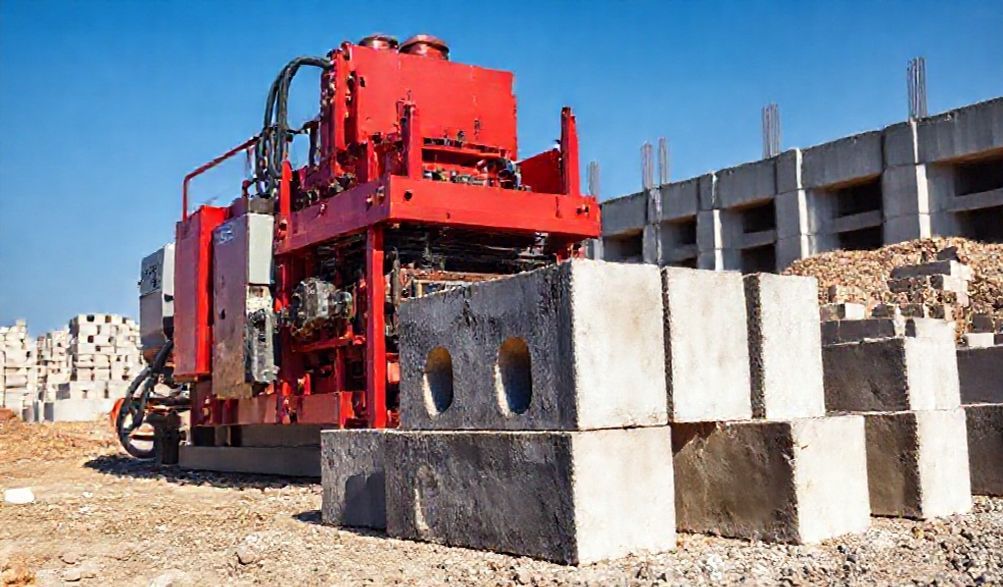
Mesin Blok QTJ4-40: Panduan Komprehensif untuk Fitur, Operasi, & Investasi
Pengantar
Bagi perusahaan konstruksi kecil, pengembang pedesaan, dan pengusaha, menemukan peralatan yang tepat untuk memproduksi bahan bangunan berkualitas tanpa pengeluaran modal besar merupakan tantangan terus-menerus. Kebutuhan akan mesin yang andal, hemat biaya, dan mudah dioperasikan sangatlah penting. Jika Anda menjelajahi dunia pembuatan blok beton dalam skala yang terjangkau, Anda mungkin telah menemukan mesin...Mesin blok QTJ4-40.
Panduan komprehensif ini dirancang sebagai sumber daya definitif Anda. Dengan mengacu pada spesifikasi teknis, prinsip operasional, dan wawasan praktis industri, kami akan membedah mesin populer ini. Tujuan kami adalah melampaui brosur penjualan dan memberi Anda kejelasan yang dibutuhkan untuk membuat keputusan yang tepat.
Di akhir artikel ini, Anda akan memiliki pemahaman yang kuat tentang kemampuan QTJ4-40, aplikasi idealnya, realitas operasional dalam menjalankannya, serta pandangan transparan mengenai total investasi dan potensi pengembaliannya. Mari kita tentukan apakah mesin ini adalah mesin yang tepat untuk usaha konstruksi Anda.
Apa itu Mesin Blok Beton QTJ4-40?
Sebelum menyelami detailnya, penting untuk memahami apa mesin ini dan di mana posisinya dalam ekosistem peralatan produksi blok yang lebih luas.
Fungsi Inti dan Penamaan Produk Dijelaskan
Nama model "QTJ4-40" mengikuti konvensi industri umum dalam mesin blok:
* QT:Sering kali merujuk pada "Qun Tian" atau kode seri dari pabrikan.
* J:Biasanya merujuk pada "Jī (机)," kata dalam bahasa Cina yang berarti mesin.
* 4-40:Spesifikasi inti. Biasanya berarti mesin dapat menghasilkan4 buahblok beton berongga standar (400x200x200mm)per siklus.
Inti dari QTJ4-40 adalah mesin cetak blok beton. Fungsi utamanya adalah memadatkan campuran beton semi-kering menjadi bentuk-bentuk presisi dengan kepadatan tinggi. Dengan cetakan yang dapat diganti, mesin ini dapat menghasilkan berbagai produk:
* Batako (dengan berbagai ketebalan)
* Blok padat
* Blok Paving
* Bata saling mengunci untuk lansekap
Jenis Mesin dan Alur Kerja Operasional
QTJ4-40 diklasifikasikan sebagai sebuahmesin blok bergerak semi-otomatis yang dapat bertelurDeskripsi ini kunci untuk memahami cara kerjanya:
- Semi-Otomatis:Sementara inti pemadatan dan siklus pencetakan digerakkan (melalui getaran dan hidrolik), tugas-tugas seperti memasukkan bahan baku dan mengeluarkan balok jadi dilakukan secara manual.
- Ponsel Bertelur:Berbeda dengan pabrik besar yang stasioner, mesin ini dipasang pada rangka dengan roda. Setelah memproduksi sebuah balok, mesin bergerak maju sedikit, "meletakkan" balok di tanah atau palet curing di belakangnya, mirip seperti ayam bertelur. Hal ini memungkinkan produksi berkelanjutan langsung di lantai beton atau lokasi yang telah disiapkan.
Alur kerja dasar yang bersiklus adalah:
1. Pemberian Makan: The prepared concrete mixture is manually fed into the mold box.
2. Pemadatan: High-frequency vibration compresses the mixture to remove air pockets and achieve density.
3. Mold Lifting: The hydraulic system lifts the mold box vertically, leaving the freshly formed block on the pallet or ground below.
4. Movement: The machine advances to the next position.
5. Menyembuhkan: The block remains in place to gain initial strength before being moved to a final curing area.
Key Technical Specifications and Features of the QTJ4-40
Understanding the hard data is essential for assessing fit. Here are the core technical aspects that define the QTJ4-40.
Vital Production Metrics
- Kapasitas Produksi:
- Per Siklus: 4 pieces of 400x200x200mm standard hollow blocks.
- Per Shift: A realistic output for an 8-hour shift, accounting for setup, breaks, and material handling, is between 1,500 to 2,500 blocks. Cycle time is approximately 15-20 seconds, but overall output depends heavily on operator efficiency and workflow.
- Block Sizes (via interchangeable molds):
- Common hollow block sizes: 400x200x200mm, 400x150x200mm, 400x100x200mm.
- Solid blocks, pavers (e.g., 200x100x60mm), and interlocking bricks are also possible.
- Persyaratan Daya:
- Biasanya beroperasi pada7,5 kW (10 HP) electric motor.
- Standard voltage is 380V/50Hz (3-phase), which is common for industrial equipment globally. Some models may offer other voltage configurations.
Design and Build Features
- Sistem Getaran: The QTJ4-40 usually employs a dual-shaft, high-frequency vibration system. This is the heart of the machine. The synchronized vibrations from two motors ensure even compaction throughout the mold, resulting in blocks with consistent density, sharp edges, and high compressive strength.
- Mold and Pallet System:
- Jamur: Constructed from high-carbon, heat-treated steel for durability and resistance to abrasion. Quality of the mold steel directly impacts block finish and mold lifespan.
- Palet: The machine can work with or without steel pallets. Using pallets allows for easier block handling and stacking after the initial set.
- Mobility and Structure: Its defining feature is the robust steel frame on wheels. This “egg-laying” design eliminates the need for a complex conveyor system, simplifying the setup and allowing for true on-site production, which reduces block transportation costs for local projects.
Aplikasi Ideal dan Kesesuaian Proyek
A machine is only as good as the job it’s suited for. Let’s connect the specs to real-world scenarios.
Perfect For: Small to Medium-Scale Ventures
The QTJ4-40 shines in environments where flexibility, lower capital cost, and simplicity are valued over sheer, massive output.
- Proyek Perumahan Pedesaan dan Semi-Urban: Ideal for producing blocks directly on the construction site or for a small local block yard supplying a community.
- Small Construction Companies: Allows a company to vertically integrate, producing their own blocks for specific projects and controlling quality and cost.
- Startup Kewirausahaan: A manageable entry point into the block manufacturing business with a lower financial barrier than fully automatic plants.
- Projects with Moderate, Steady Demand: Well-suited for supplying a local market where daily demand is in the range of a few thousand blocks.
Limitations to Consider
Being honest about limitations prevents costly mistakes. The QTJ4-40 is not a one-size-fits-all solution.
- Output Ceiling: Its production is fundamentally limited by its semi-automatic, single-mold design. It cannot compete with the output of a fully automatic multilayer plant.
- Labor Intensive: Requires a dedicated crew of 2-3 people for efficient operation (feeding, controlling, block handling). Labor costs and management are a significant part of the operational equation.
- Scale Limitation: It is not economically or practically suitable for supplying large-scale city developments or high-volume commercial contracts that require tens of thousands of blocks daily.
Operating the QTJ4-40: A Step-by-Step Overview
Success with this machine hinges on proper operation. Here’s a practical overview of the process.
Persiapan Bahan Baku
The machine can only form blocks as good as the mix you feed it.
- Desain Campuran: A standard ratio is 1 part cement, 3 parts sand, and 4-5 parts coarse aggregate (e.g., 3/8″ crushed stone). The exact mix should be tested for local materials.
- Kandungan Kelembaban: This is critical. The mixture must be “semi-dry”—just moist enough to hold its shape when squeezed in your hand, but not wet or sloppy. Too much water weakens the block; too little leads to poor compaction.
- Aggregate Size: Must be clean and well-graded, but not exceed the wall thickness of the hollow blocks to ensure proper filling and strength.
The Production Cycle in Detail
- Mixture Feeding: Operators shovel or pour the prepared mix into the mold box, ensuring it is evenly distributed and slightly overfilled.
- Vibration and Compaction: The operator activates the vibration motors for 3-5 seconds. The mold table vibrates intensely, settling and compacting the mixture. A press head may simultaneously apply slight pressure from above.
- Mold Lifting and Block Ejection: The vibration stops, and the hydraulic system lifts the entire mold box vertically. The compacted block remains perfectly formed on the pallet or ground beneath.
- Proses Penyembuhan: The machine moves forward, and the block is left in place.
- Initial Curing (24-48 hours): Blocks must be kept moist and protected from sun and wind, often by covering with plastic sheeting.
- Final Curing: After initial set, blocks are stacked and kept damp for up to 28 days to achieve full design strength.
Essential Safety and Maintenance Protocols
Daily/Pre-Operation Checks:
* Inspect and tighten all bolts, especially on vibration motors and mold.
* Check hydraulic oil levels and look for leaks.
* Lubricate all moving points as per the manual.
Routine Maintenance:
* Weekly: Clean the machine thoroughly, especially the mold and vibration table.
* Monthly: Inspect hydraulic hoses and electrical connections. Check wear on mold liners.
* Annually: Consider a full professional service, including motor bearing checks.
Keselamatan Operator:
* Always wear safety glasses, gloves, and steel-toe boots.
* Never place hands in the mold area during the vibration or lifting cycle.
* Ensure the machine is on a level, stable surface before operation.
* Lock out/tag out power before performing any maintenance.
Cost Analysis: Investment and Return on Investment (ROI)
Let’s break down the financials with transparency. Prices vary by region and manufacturer, but the structure remains consistent.
Initial Investment Breakdown
- Machine Cost: The core QTJ4-40 machine typically ranges from $8,000 to $15,000 USD, depending on build quality, brand, and included accessories.
- Additional Essential Costs:
- Jamur: $500 – $1,500 per mold (you’ll need at least one to start).
- Palet: $20 – $50 each (you may start with 50-100).
- Pengaduk Beton: A pan or drum mixer is necessary ($1,000 – $3,000).
- Ruang Angkasa: Cost of a leveled concrete floor (at least 20m x 10m for production and curing).
Biaya Operasional
- Tenaga Kerja: The largest recurring cost. Budget for 2-3 operators.
- Bahan Baku: Cement, sand, and aggregate. This is your Cost of Goods Sold (COGS).
- Utilities: Electricity for the 7.5kW motor and mixer.
- Maintenance Spares: A small ongoing budget for replacement parts like springs, seals, and eventually mold liners.
Calculating Potential Profitability
A simplified model illustrates the potential:
- Cost Per Block: Calculate the total cost of materials (e.g., cement, sand, stone) for one block. Add a pro-rated share of labor, power, and maintenance. Let’s assume a total cost of $0.30 per standard hollow block.
- Selling Price: Research your local market. Let’s assume a conservative selling price of $0.50 per block.
- Gross Profit Per Block: $0.50 – $0.30 = $0.20.
- Daily Gross Profit: At 2,000 blocks/day: 2,000 * $0.20 = $400.
- ROI Timeline: Deduct fixed costs (machine, molds) from daily profit. A $12,000 initial investment would be recouped in approximately 30 productive working days ($12,000 / $400 = 30 days), excluding land and building costs.
Key Factors Affecting ROI: Your actual production efficiency, local material costs, market selling price, and machine uptime will dramatically influence this calculation.
Choosing a Reliable QTJ4-40 Supplier
Your supplier choice is as important as the machine itself. Here’s how to navigate the market.
Manufacturer vs. Local Dealer: Pros and Cons
- Direct from Manufacturer (often overseas):
- Kelebihan: Lower price, direct technical specifications.
- Kekurangan: Potentially complex logistics, unclear after-sales support, language barriers.
- Local Dealer/Distributor:
- Kelebihan: Local spare parts, on-the-ground technical support, easier communication, may handle import logistics.
- Kekurangan: Higher price due to markup.
Key Evaluation Criteria
- Kualitas Pembuatan: Ask for detailed photos and specifications. Focus on steel plate thickness, welding quality, and brand of core components (motors, hydraulic pumps).
- Layanan Purna Jual: Do they offer installation guidance, operational training, and troubleshooting support? Is there a detailed manual in your language?
- Garansi & Suku Cadang: What is covered and for how long? Is there a readily available catalog of spare parts?
- Reputation & References: Can they provide contact information for previous customers in your region? Can you visit a working installation?
Red Flags to Avoid
- Too-Good-To-Be-True Pricing: Extremely low prices almost always indicate inferior materials and poor workmanship.
- Lack of Transparency: Unwillingness to provide technical details, company registration, or a physical address.
- Pressure Tactics: High-pressure sales pushing for immediate payment without allowing for due diligence.
- No Service Agreement: A complete lack of discussion about support, training, or warranty.
Bagian FAQ
Q: What is the production output of the QTJ4-40 per day?
A: Under efficient, steady operation, you can expect between 1,500 to 2,500 standard blocks in an 8-hour shift. The actual number depends on block type, operator skill, and workflow organization.
Q: Can one person operate the QTJ4-40 machine?
A: No, efficient and safe operation is not a one-person job. It realistically requires 2-3 people: one to feed the mixer and manage material, one to operate the machine controls and assist with feeding, and one to handle and stack the freshly made blocks.
Q: What is the difference between the QTJ4-40 and a fully automatic block machine?
A: The key differences are in automation, scale, and cost. The QTJ4-40 is semi-automatic with manual feeding and block handling, has lower output, and requires more labor, but has a much lower capital cost. A fully automatic plant uses computerized controls, robotic handling, and conveyor systems for high-volume, low-labor production at a significantly higher investment.
Q: What kind of after-sales support should I expect?
A: You should expect and demand: a comprehensive operation and maintenance manual, installation drawings/guidance, basic operational training (often via video call), a clear warranty (typically 1 year on main parts), and access to a spare parts catalog.
Q: How long does it take to learn to operate this machine?
A: The basic mechanical operation—feeding, pressing buttons, moving blocks—can be learned in 2-3 days. However, mastering the ideal concrete mix design for your local materials, troubleshooting common issues like block cracking, and optimizing the workflow for maximum output can take several weeks of hands-on, practical experience.
Kesimpulan
TheMesin blok QTJ4-40 stands as a proven, accessible gateway into concrete block production. It offers a compelling balance of productivity, simplicity, and affordability for small to medium-scale builders and entrepreneurs. Its mobile, semi-automatic design provides the flexibility to produce quality blocks on-site, directly where they are needed.
Remember, the machine is just one component of success. Your diligence in raw material selection, your commitment to proper operation and maintenance, and the soundness of your local market business plan are equally critical. Use this guide as a foundational checklist.
Your Next Step: When you engage with suppliers, ask informed questions based on this overview. Request detailed videos of the machine in operation, ask for customer references, and, if possible, insist on seeing a live demonstration. An informed purchase is the first and most important block in building a successful venture.
<