
La Guía Completa de Máquinas Automáticas para Fabricar Bloques: Redefiniendo la Eficiencia
Se proyecta que la industria de la construcción global alcance la asombrosa cifra de 15.2 billones de dólares para 2030, impulsada por una urbanización implacable y el desarrollo de infraestructura. En el centro de este crecimiento yace una demanda fundamental: la necesidad de materiales de construcción de alto volumen, consistentes y rentables. Para las empresas que producen bloques de concreto, adoquines y ladrillos, satisfacer esta demanda de manera manual ya no es viable. He aquí la potencia tecnológica que está remodelando la producción de materiales: la máquina totalmente automática para fabricar bloques.
Esta guía está diseñada para dueños de negocios visionarios, gerentes de planta, emprendedores en construcción y especialistas en adquisiciones. Si estás evaluando cómomáquinas automáticas para fabricar bloques automáticamentePara elevar la producción, reducir drásticamente los costos operativos y garantizar una calidad uniforme, estás en el lugar correcto. Basándonos en principios de ingeniería establecidos, datos operativos y las mejores prácticas de la industria, este recurso integral te proporcionará el conocimiento para realizar una inversión informada. Analizaremos la tecnología central, cuantificaremos los beneficios, ofreceremos un marco detallado de selección y exploraremos el futuro de la fabricación automatizada de bloques.
¿Qué son las Máquinas Automáticas para Hacer Bloques y Cómo Funcionan?
Una máquina automática para fabricar bloques no es una sola pieza de equipo, sino un sistema de producción sofisticado e integrado. Representa la cúspide de la tecnología de materiales de construcción, diseñada para transformar materias primas—cemento, agregados, arena y agua—en bloques de concreto precisos y curados con mínima intervención humana. A diferencia de las máquinas semiautomáticas o manuales que requieren mano de obra significativa para el manejo y control del proceso, una planta totalmente automática es un sistema de circuito cerrado gestionado por inteligencia computarizada.
Componentes Principales y Sistemas Automatizados
Comprender la máquina comienza con sus componentes clave, cada uno desempeñando un papel vital en el flujo de trabajo automatizado.
- Planta de Dosificación Automática:Pesa y porciona con precisión materias primas utilizando sensores digitales.
- Bandas Transportadoras:Transporte materiales sin problemas entre las diferentes etapas de la línea de producción.
- Mezcladora de PanMezcla completamente los materiales hasta obtener una mezcla uniforme y homogénea.
- Máquina de Bloque Completamente Automática (con PLC):La unidad central. Recibe la mezcla, la distribuye en moldes y utiliza vibración y compactación de alta presión para formar bloques. El Controlador Lógico Programable (PLC) es el cerebro de la máquina.
- Alimentador y Circulador de Tarimas:Suministra automáticamente tarimas a la máquina y mueve las tarimas cargadas con bloques al área de curado.
- Sistema de Curado:Esto puede ser un sistema de estanterías en un patio techado o una cámara sofisticada con control climático que acelera la ganancia de resistencia del concreto.
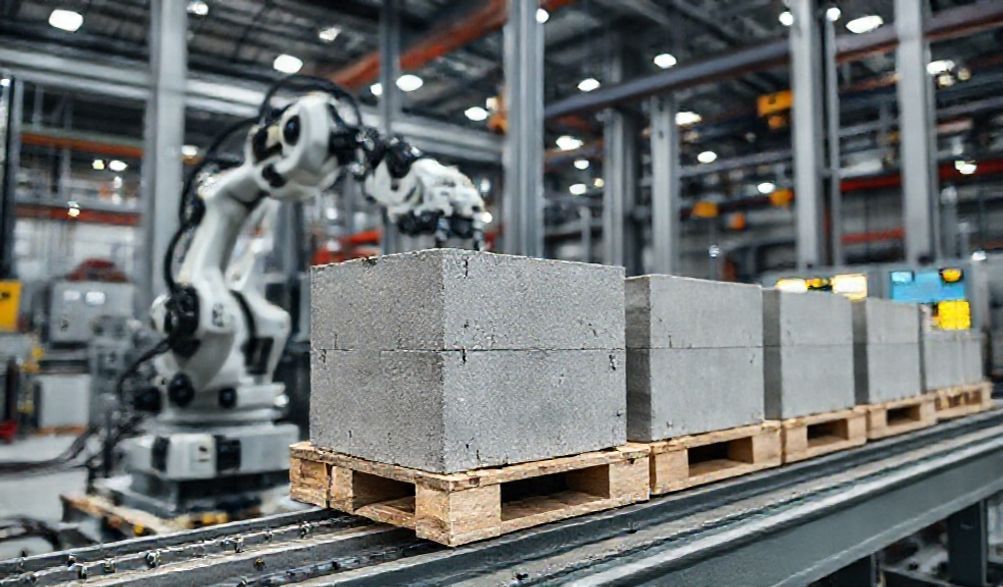
- Apilador Automático:Recolecta robóticamente los bloques curados de los pallets y los apila para almacenamiento o envío.
El Ciclo de Producción Totalmente Automatizado
La magia de la automatización reside en el ciclo fluido y autónomo. Así es cómomáquinas automáticas para fabricar bloques automáticamentecompletar el proceso:
- Alimentación y Dosificación Automática:El PLC inicia el ciclo basándose en una receta preestablecida. La planta de dosificación mide y descarga cantidades exactas de materiales sobre una banda transportadora.
- Mezcla y Transporte Automático:Los materiales se transportan hacia la mezcladora. Después de un tiempo de mezclado establecido, el concreto húmedo se descarga en otra banda transportadora que conduce a la tolva de la máquina de bloques.
- Moldeo y Compactación Automática:El alimentador de la máquina distribuye la mezcla en moldes sobre una paleta. El molde vibra a alta frecuencia bajo presión hidráulica, compactando la mezcla en un bloque denso.
- Manejo Automático de PaletsLos bloques recién moldeados, sobre su palé, se expulsan automáticamente. El circulador de palés los traslada al área de curado, mientras se introduce un palé nuevo y limpio en la máquina, todo sin detenerse.
- Curado y Apilado AutomáticoDespués del período de curado requerido (en bastidores o una cámara), un desapilador automático descarga los bloques. Luego, el apilador los coloca ordenadamente sobre estantes de madera o directamente sobre un camión.
Diferenciadores clave respecto a las máquinas semiautomáticas
| Característica | Máquina Totalmente Automática | Máquina Semiautomática |
| :— | :— | :— |
| Dependencia laboral| Muy Bajo (2-5 operadores para supervisión) | Alto (Requiere operadores para alimentación, manejo de palets, apilado) |
| Output Speed | Very High (1,500 to 10,000+ blocks per hour) | Moderate (500 to 2,500 blocks per hour) |
| Consistencia | Excellent (PLC ensures every parameter is identical) | Good (Subject to operator skill and fatigue) |
| Inversión Inicial| Más alto | Más bajo |
| Long-Term Operational Cost | Lower (due to labor savings and efficiency) | Higher (ongoing high labor costs) |
| Production Scalability | Designed for large-scale, continuous operation | Best for medium-scale or batch production |
Top Benefits of Investing in a Fully Automatic Block Plant
Moving to full automation is a strategic business decision. The benefits translate directly to a stronger competitive edge and improved profitability.
Unmatched Production Efficiency and High Output
These systems are engineered for relentless productivity. By eliminating bottlenecks associated with manual handling, they achieve dramatically reduced cycle times. Plants can operate 20-24 hours a day, producing thousands of uniform blocks per shift. This high-volume capability allows you to fulfill large contracts reliably and scale your business to meet market demand.
Calidad Superior y Consistente del Producto
Human variability is the enemy of product consistency. Automation eradicates this. Every block is produced under identical conditions of pressure, vibration duration, and mix proportion. This results in uniform dimensions, density, and, critically, compressive strength (e.g., a consistent 5MPa, 7MPa, etc.). Consistent quality builds your brand’s reputation, reduces rejection rates from clients, and ensures compliance with building standards.
Reducción Significativa en Costos Laborales y Dependencia
This is often the most compelling financial argument. An automatic plant shifts the requirement from a large crew of manual laborers to a small team of skilled machine operators and supervisors. This drastically reduces long-term wage bills, management overhead, and vulnerability to labor shortages. The return on investment (ROI) is realized through these sustained operational savings.
Seguridad Operacional Mejorada
A factory floor with less manual material handling is inherently safer. Automatic systems enclose moving parts and manage the heavy lifting—transporting pallets, moving raw materials, and stacking finished blocks. This significantly reduces the risk of crush injuries, repetitive strain disorders, and accidents common in manual block yards.
Optimized Raw Material Usage and Waste Reduction
Precision is profitable. The automated batching system measures raw materials with exacting accuracy, eliminating the over-pouring common in manual batching. This precise control minimizes waste of costly cement and ensures an optimal mix design every time, directly improving your material cost per block.
Critical Features to Consider When Choosing Your Machine
Selecting the right machine is paramount. Your choice should be dictated by your business goals, not just the machine’s specifications.
Production Capacity and Machine Model
First, define your output needs. Are you supplying a local market or aiming for regional distribution?
* Plantas Estacionarias: High-output models for large, fixed factories.
* Máquinas Móviles "Ponedoras de Huevos": Lower-capacity machines that produce and cure blocks in one location before moving to the next. Good for on-site production.
* Pregunta Clave: What is your target output in blocks per 8-hour shift? Match the machine’s capacity to your current and projected sales.
Block Types, Molds, and Versatility
Your market opportunities expand with product variety. Ensure the machine can produce what you need to sell:
* Standard Products: Hollow blocks, solid blocks, fly ash bricks.
* Landscaping & Pavement: Interlocking pavers, curbstones, grass grid blocks.
* Critical Feature: A quick mold change system is invaluable. It allows you to switch production between different products in minutes, maximizing plant utilization.
The Heart of Automation: Control Systems (PLC & VFD)
The PLC is what makes máquinas automáticas para fabricar bloques automáticamente intelligent. Don’t underestimate its importance.
* PLC (Controlador Lógico Programable): It stores recipes for different block types, controls every actuator and motor, provides a user-friendly touchscreen interface, and delivers diagnostic data for troubleshooting.
* VFD (Variable Frequency Drive): Controls the speed of motors (like the vibrator). This saves energy, allows fine-tuning of vibration intensity, and reduces mechanical stress on the system.
Robustness and After-Sales Support
The machine must withstand a harsh, dusty, and high-vibration environment.
* Calidad de Construcción: Look for robust steel frames, high-quality hydraulic components, and wear-resistant liners in the mixer and hopper.
* Red de Apoyo: The manufacturer should provide comprehensive installation supervision, operator training, a clear warranty, and—most importantly—readily available spare parts. A machine’s downtime is lost revenue.
Optimizing Your Automatic Block Making Operation
Ownership is just the beginning. Optimal operation ensures you reap the full benefits of your investment.
Raw Material Preparation for Best Results
Garbage in, garbage out. The machine can only work with what you feed it.
* Agregados: Should be clean, hard, and properly graded. Maximum size must suit your block design (typically 6-10mm). Consistent moisture content is crucial for mix stability.
* Cemento: Use fresh, within-specification cement. Store it properly to prevent setting.
* Diseño de Mezcla: Work with your supplier or a concrete technologist to develop the optimal mix for your target strength and machine parameters. The PLC will then replicate it perfectly every time.
Routine Maintenance Checklist for Longevity
Preventive maintenance is non-negotiable for an automatic system.
* Diariamente Clean the mixer, block machine, and conveyors. Check hydraulic oil levels and for leaks. Lubricate all moving points as per the manual.
* Semanal Inspect molds for wear or damage. Check the tension of conveyor belts and chain drives. Inspect vibration motors and mounts.
* Monthly: Thoroughly clean and inspect the entire pallet circulation system. Check electrical connections and sensor alignments. Filter hydraulic oil if required.
Troubleshooting Common Automated System Alerts
The PLC will alert you to issues. Don’t panic—many are simple.
* “Mix Too Dry/Wet” Alert: Check moisture sensors and calibrate your water metering system.
* “Pallet Misalignment” or “Sensor Fault”: Often just requires cleaning an optical sensor or realigning a pallet on the feeder chain.
* Altura de bloque inconsistente: This usually points to an issue with the feed shoe or incorrect mix consistency (too dry/wet).
* Golden Rule: For persistent electrical or hydraulic faults, refer to the manual and contact your supplier’s technical support. Do not attempt major repairs without expertise.
The Future of Automation in Block Manufacturing
The evolution continues. The next generation of machines will be smarter and greener.
Integration with Industry 4.0 and IoT
Imagine managing your plant from a smartphone dashboard. The future lies in connectivity:
* Remote Monitoring & Control: View real-time production data, machine status, and output counts from anywhere.
* Predictive Maintenance: Sensors monitor vibration, temperature, and pressure, predicting component failure before it happens, preventing unplanned downtime.
* Production Analytics: Dashboards analyze efficiency, identify bottlenecks, and optimize production schedules based on data.
Sustainable and Green Manufacturing Trends
Automation and sustainability go hand-in-hand.
* Use of Alternative Materials: Modern machines are increasingly compatible with recycled aggregates, industrial by-products like fly ash, and even certain plastic wastes, supporting circular economy goals.
* Energy and Resource Efficiency: New designs focus on lower-power hydraulic systems, heat recovery in curing chambers, and closed-loop water recycling systems to minimize environmental footprint.
Frequently Asked Questions (FAQ)
Q1: What is the typical price range for a fully automatic block making machine?
A: Prices vary significantly based on capacity, brand, and level of sophistication. A basic line might start around $50,000, while large-scale, high-end systems can exceed $500,000. Always request detailed quotations and focus on the total cost of ownership (including installation, energy use, and maintenance), not just the initial purchase price.
Q2: How much manpower is actually required to run an automatic plant?
A: Typically, a single shift can be managed by 2-5 personnel. Their roles include supervising the control panel, loading raw material hoppers (which can also be automated), and managing the output stacking/shipping. This is a fraction of the 15-20+ workers often needed for equivalent output on semi-automatic lines.
Q3: Can these machines produce different block sizes and designs?
A: Absolutely. This is a key advantage. By changing the mold in the machine, you can produce a wide array of products. Advanced PLCs store the settings (pressure, vibration time) for each mold, allowing the system to automatically adjust when you switch production runs.
Q4: What is the average payback period on such an investment?
A: There’s no single answer, as it depends on your local market demand, selling price, production volume, and labor cost savings. However, with efficient operation and good market conditions, many businesses see a full return on investment within 1.5 to 3 years.
Q5: Are automatic machines suitable for starting a new block business?
A: They can be an excellent foundation, ensuring you start with a reputation for high quality and the capacity to scale. However, the significant capital requirement demands a thorough feasibility study. You must have a clear understanding of your market, distribution channels, and working capital needs before making the leap.
Conclusión
Automatic block making machines automatically redefine what’s possible in construction material manufacturing. They are the engines of efficiency, transforming raw materials into precise, high-quality building components with remarkable consistency and minimal human input. The investment transcends mere equipment purchase; it is a strategic commitment to scaling your business, competing on quality, and future-proofing your operations against rising costs and market demands.
The path forward is clear. Use the insights from this guide as your foundation. Consult with reputable manufacturers, insist on live demonstrations using materials similar to yours, and analyze your specific production goals. By making an informed decision, you’re not just buying a machine—you’re building the automated, profitable future of your block manufacturing business.
<