
Totale Ductor ad Machinas Automatas Laterum Faciendorum: Efficientia Redefinita
Industria aedificatoria globalis ad XV.2 trillionum dollariorum usque ad annum MMXXX pervenire praevidetur, inexorabili urbanizatione et infrastructurae progressione impulsa. In medio huius incrementi postulatio fundamentalis latet: necessitas materiae aedificatoriae magnae quantitatis, constantis, et parvi pretii. Negotia quae lateres concretos, pavimenta, et lateres producunt, hanc postulationem manu implere iam non valent. Ecce potentia technologica quae materiae productionem transformat—machina laterum faciendorum plene automatizata.
Hic dux pro prospectivis negotiorum dominis, officinarum procuratoribus, constructionis redemptoribus, et acquisitionis peritis designatus est. Si aestimas quomodoMachinae automatariae laterum faciendorum automaticeProductionem extolle, sumptus operativos minue, et qualitatem uniformem praesta, in loco recto es. Ex principiis mechanicis confirmatis, datis operativis, et optimis exercitationibus industriae haec comprehensiva facultas te instruet scientia ad collocationem informatum faciendam. Technologiam nuclearem dissecabimus, beneficia metiemur, compagem selectionis explicatam praebebimus, et futurum fabricae automatizatae laterum explorabimus.
Quid sunt Machinae Automatae ad Lateres Faciendos et Quomodo Operantur?
Machina automataria ad lateres conficiendos non est unicum instrumentum, sed ratio productionis subtilis et integra. Culmen technologiae materiae aedificiorum repraesentat, quae ad materias crudas—caementum, congeries, harenam, et aquam—in lateres concretos exactos et curatos cum minimo humano interventu convertendas designata est. Dissimilis machinis semi-automatariis vel manualibus quae multum laboris ad tractationem et processum moderandum requirunt, officina plene automataria est ratio clausa quae intellegentia computatrali regitur.
Nuclei Partes et Systemata Automata
Intellectus machinae ab eius partibus principalibus incipit, quarum unaquaeque munus vitale in opere automato sustinet.
- Automatica Coacervatoria Officina:Materias primas exacte ponderat et partitur sensoriis digitalibus utens.
- Tapes transportatoriae:Materialia inter varios gradus lineae productionis sine impedimento transporta.
- Panmictor:Materias penitus miscet ad mixturam constantem et homogeneam.
- Machina Plena Automata Laterum (cum PLC):Unitas centralis. Mixturam accipit, in formas distribuit, et alta pressione ac vibratione compactioneque lateres format. Moderator Logicus Programmandus (PLC) cerebrum machinae est.
- Palearium et Circumlator:Automate paletas machinae suppeditat et paletas onustas in aream curationis movet.
- Systema Sanandi:Hoc potest esse systema rastellorum in area tecta vel cubiculum temperatum elaboratum quod firmitatem caementi accelerat.
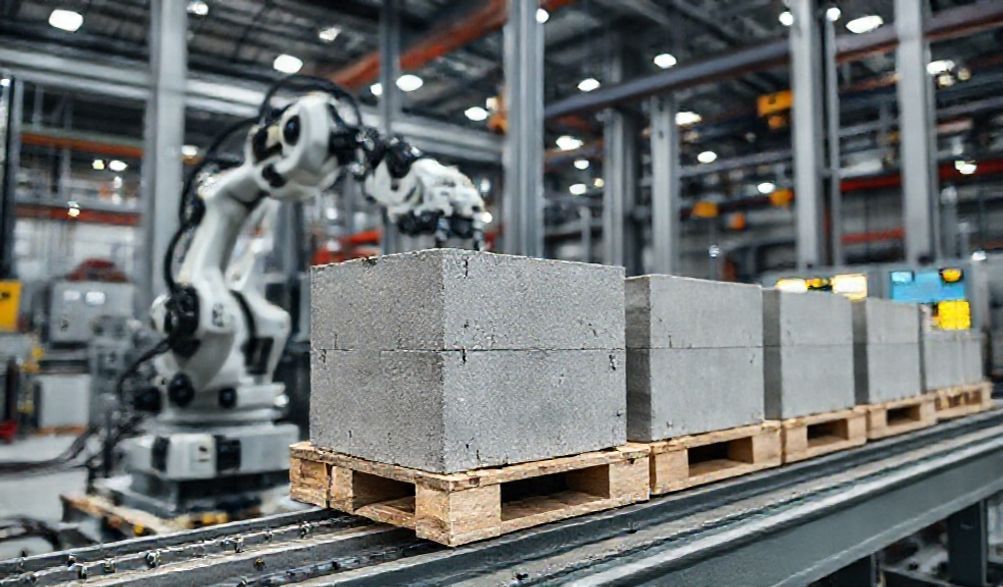
- Automatarius Acervator:Roboticē lateres coctos e palletis colligit et in acervos componit ad reponendum vel advehendum.
Plene Automatus Productio Cyclus
Magica automationis in cyclo continuo et per se perfecto sita est. Sic procedit:Machinae automatariae laterum faciendorum automaticeabsolve processum.
- Cibo & Dosis AutomaticaPLC cyclum secundum formulam praefixam initiat. Officina mensoria materiae quantitates exactas in tabulam versoriam metitur atque emittit.
- Mixtio Automatica et TransvectioMateriae in machinam mixtoriam convehuntur. Post tempus mixtionis statutum, concretum madidum in aliud vehiculum trajectorium ad infundibulum machinae laterariae emittitur.
- Automataria Formatura et Compressio:Machinae infundibulum mixturam in formas in tabula distribuit. Forma sub pressione hydraulica frequentia alta vibrando mixturam in massam densatam compingit.
- Palmarum Tractatio Automatica.Lateres modo formati in pala sua sponte eiciuntur. Circumferens palae eos ad locum curationis movet, dum nova munda pala in machinam immittitur—omnia sine intermissione.
- Curationes & Congestiones AutomaticalesPost tempus curationis necessarium (in cancellis aut camera), destaco automaticus saxa exonerat. Deinde coacervator ea in lignariis repositories seu directo in plaustrum ordinate congerit.
Differentiae claves a machinis semi-automaticis.
Machina Plena Automata | Machina Semi-Automata
| :— | :— | :— |
| Dependentia Laboris| Valde humilis (2-5 operarii ad inspectionem) | Alta (eget operariis ad cibandum, tractandum palos, stratificandum) |
| Celeritas Output| Peraltissimus (1,500 ad 10,000+ globi per horam) | Modicus (500 ad 2,500 globi per horam) |
| Consistency | Excellent (PLC ensures every parameter is identical) | Good (Subject to operator skill and fatigue) |
| Investitio Initialis | Higher | Lower |
| Long-Term Operational Cost | Lower (due to labor savings and efficiency) | Higher (ongoing high labor costs) |
| Production Scalability | Designed for large-scale, continuous operation | Best for medium-scale or batch production |
Top Benefits of Investing in a Fully Automatic Block Plant
Moving to full automation is a strategic business decision. The benefits translate directly to a stronger competitive edge and improved profitability.
Unmatched Production Efficiency and High Output
These systems are engineered for relentless productivity. By eliminating bottlenecks associated with manual handling, they achieve dramatically reduced cycle times. Plants can operate 20-24 hours a day, producing thousands of uniform blocks per shift. This high-volume capability allows you to fulfill large contracts reliably and scale your business to meet market demand.
Superior et Constans Producti Qualitas
Human variability is the enemy of product consistency. Automation eradicates this. Every block is produced under identical conditions of pressure, vibration duration, and mix proportion. This results in uniform dimensions, density, and, critically, compressive strength (e.g., a consistent 5MPa, 7MPa, etc.). Consistent quality builds your brand’s reputation, reduces rejection rates from clients, and ensures compliance with building standards.
Significans Reductio in Laboris Impensis et Dependentia
This is often the most compelling financial argument. An automatic plant shifts the requirement from a large crew of manual laborers to a small team of skilled machine operators and supervisors. This drastically reduces long-term wage bills, management overhead, and vulnerability to labor shortages. The return on investment (ROI) is realized through these sustained operational savings.
Securitas Operandi Amplificata
A factory floor with less manual material handling is inherently safer. Automatic systems enclose moving parts and manage the heavy lifting—transporting pallets, moving raw materials, and stacking finished blocks. This significantly reduces the risk of crush injuries, repetitive strain disorders, and accidents common in manual block yards.
Optimized Raw Material Usage and Waste Reduction
Precision is profitable. The automated batching system measures raw materials with exacting accuracy, eliminating the over-pouring common in manual batching. This precise control minimizes waste of costly cement and ensures an optimal mix design every time, directly improving your material cost per block.
Critical Features to Consider When Choosing Your Machine
Selecting the right machine is paramount. Your choice should be dictated by your business goals, not just the machine’s specifications.
Production Capacity and Machine Model
First, define your output needs. Are you supplying a local market or aiming for regional distribution?
* Plantae Stantes: High-output models for large, fixed factories.
* Machinae Mobilis "Ova Pariendi": Lower-capacity machines that produce and cure blocks in one location before moving to the next. Good for on-site production.
* Quaestio Clavis: What is your target output in blocks per 8-hour shift? Match the machine’s capacity to your current and projected sales.
Block Types, Molds, and Versatility
Your market opportunities expand with product variety. Ensure the machine can produce what you need to sell:
* Standard Products: Hollow blocks, solid blocks, fly ash bricks.
* Landscaping & Pavement: Interlocking pavers, curbstones, grass grid blocks.
* Critical Feature: A quick mold change system is invaluable. It allows you to switch production between different products in minutes, maximizing plant utilization.
The Heart of Automation: Control Systems (PLC & VFD)
The PLC is what makes Machinae automatariae laterum faciendorum automatice intelligent. Don’t underestimate its importance.
* PLC (Programmable Logic Controller): PLC (Programmatica Logica Moderatrix) It stores recipes for different block types, controls every actuator and motor, provides a user-friendly touchscreen interface, and delivers diagnostic data for troubleshooting.
* VFD (Variable Frequency Drive): Controls the speed of motors (like the vibrator). This saves energy, allows fine-tuning of vibration intensity, and reduces mechanical stress on the system.
Robustness and After-Sales Support
The machine must withstand a harsh, dusty, and high-vibration environment.
* Structurae Qualitas: Look for robust steel frames, high-quality hydraulic components, and wear-resistant liners in the mixer and hopper.
* Retis Auxilium The manufacturer should provide comprehensive installation supervision, operator training, a clear warranty, and—most importantly—readily available spare parts. A machine’s downtime is lost revenue.
Optimizing Your Automatic Block Making Operation
Ownership is just the beginning. Optimal operation ensures you reap the full benefits of your investment.
Raw Material Preparation for Best Results
Garbage in, garbage out. The machine can only work with what you feed it.
* Concrementa: Should be clean, hard, and properly graded. Maximum size must suit your block design (typically 6-10mm). Consistent moisture content is crucial for mix stability.
* Cementum Use fresh, within-specification cement. Store it properly to prevent setting.
* Compositio Mixturae: Work with your supplier or a concrete technologist to develop the optimal mix for your target strength and machine parameters. The PLC will then replicate it perfectly every time.
Routine Maintenance Checklist for Longevity
Preventive maintenance is non-negotiable for an automatic system.
* Daily: Clean the mixer, block machine, and conveyors. Check hydraulic oil levels and for leaks. Lubricate all moving points as per the manual.
* Weekly: Inspect molds for wear or damage. Check the tension of conveyor belts and chain drives. Inspect vibration motors and mounts.
* Monthly: Thoroughly clean and inspect the entire pallet circulation system. Check electrical connections and sensor alignments. Filter hydraulic oil if required.
Troubleshooting Common Automated System Alerts
The PLC will alert you to issues. Don’t panic—many are simple.
* “Mix Too Dry/Wet” Alert: Check moisture sensors and calibrate your water metering system.
* “Pallet Misalignment” or “Sensor Fault”: Often just requires cleaning an optical sensor or realigning a pallet on the feeder chain.
* Inconsistent Block Height: This usually points to an issue with the feed shoe or incorrect mix consistency (too dry/wet).
* Golden Rule: For persistent electrical or hydraulic faults, refer to the manual and contact your supplier’s technical support. Do not attempt major repairs without expertise.
The Future of Automation in Block Manufacturing
The evolution continues. The next generation of machines will be smarter and greener.
Integration with Industry 4.0 and IoT
Imagine managing your plant from a smartphone dashboard. The future lies in connectivity:
* Remote Monitoring & Control: View real-time production data, machine status, and output counts from anywhere.
* Praedictiva Sustentatio: Sensors monitor vibration, temperature, and pressure, predicting component failure before it happens, preventing unplanned downtime.
* Production Analytics: Dashboards analyze efficiency, identify bottlenecks, and optimize production schedules based on data.
Sustainable and Green Manufacturing Trends
Automation and sustainability go hand-in-hand.
* Use of Alternative Materials: Modern machines are increasingly compatible with recycled aggregates, industrial by-products like fly ash, and even certain plastic wastes, supporting circular economy goals.
* Energy and Resource Efficiency: New designs focus on lower-power hydraulic systems, heat recovery in curing chambers, and closed-loop water recycling systems to minimize environmental footprint.
Interrogationes Saepius Petitae (ISP)
Q1: What is the typical price range for a fully automatic block making machine?
A: Prices vary significantly based on capacity, brand, and level of sophistication. A basic line might start around $50,000, while large-scale, high-end systems can exceed $500,000. Always request detailed quotations and focus on the total cost of ownership (including installation, energy use, and maintenance), not just the initial purchase price.
Q2: How much manpower is actually required to run an automatic plant?
A: Typically, a single shift can be managed by 2-5 personnel. Their roles include supervising the control panel, loading raw material hoppers (which can also be automated), and managing the output stacking/shipping. This is a fraction of the 15-20+ workers often needed for equivalent output on semi-automatic lines.
Q3: Can these machines produce different block sizes and designs?
A: Absolutely. This is a key advantage. By changing the mold in the machine, you can produce a wide array of products. Advanced PLCs store the settings (pressure, vibration time) for each mold, allowing the system to automatically adjust when you switch production runs.
Q4: What is the average payback period on such an investment?
A: There’s no single answer, as it depends on your local market demand, selling price, production volume, and labor cost savings. However, with efficient operation and good market conditions, many businesses see a full return on investment within 1.5 to 3 years.
Q5: Are automatic machines suitable for starting a new block business?
A: They can be an excellent foundation, ensuring you start with a reputation for high quality and the capacity to scale. However, the significant capital requirement demands a thorough feasibility study. You must have a clear understanding of your market, distribution channels, and working capital needs before making the leap.
Conclusio.
Automatic block making machines automatically redefine what’s possible in construction material manufacturing. They are the engines of efficiency, transforming raw materials into precise, high-quality building components with remarkable consistency and minimal human input. The investment transcends mere equipment purchase; it is a strategic commitment to scaling your business, competing on quality, and future-proofing your operations against rising costs and market demands.
The path forward is clear. Use the insights from this guide as your foundation. Consult with reputable manufacturers, insist on live demonstrations using materials similar to yours, and analyze your specific production goals. By making an informed decision, you’re not just buying a machine—you’re building the automated, profitable future of your block manufacturing business.
<