
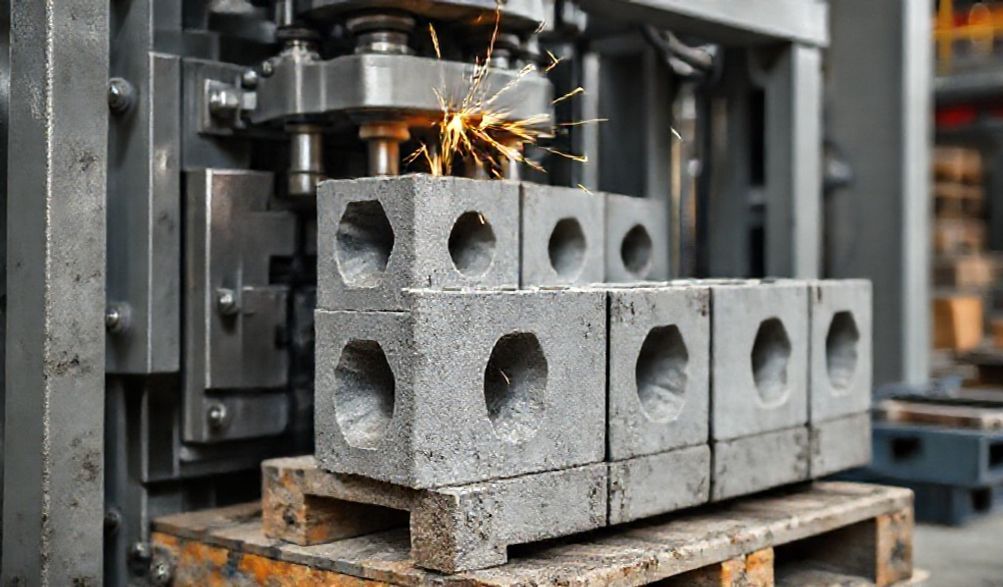
Ultima Ductoria ad Machinas Concreti Cavi Lateris Faciendi: Selectio, Operatio, et Sumptus
Introductio
Industria aedificatoria globalis in certamine perpetuo est ad impensas, celeritatem, et firmitatem aequandum. In medio huius provocationis iacet necessitas fundamentalis: materiae aedificiorum quae et parvi pretii et fideles sunt. Ecce later cava concreti humilis—fundamentum structurae modernae quod vim, efficaciam thermalem, et oeconomiam materialem praebet. Sed post omnem laterem constantem et summae qualitatis machina latet, quae ad exactitudinem et efficientiam fabricata est. Aedificatoribus, redemptoribus, et negotiatoribus, eligere machinam rectam ad lateres cavos concreti faciendos non est mercatus tantum; est investitura crucialis in futurum operum vel negotii tui.
Hoc certum ductorium ab imo excogitatum est ut tibi certum subsidium sit. Specificationes industriales, principia mechanicae artis fundamentalia, et probatae operationis optimae consuetudines collegimus ut strepitum mercatorium transeamus. Intellegentiae hic ex veris machinarum designandi parametris, exemplis linearum producendarum, et protocollis sustentationis hauriuntur, quae successum in fabrica constructionis definiunt.
Propositum nostrum clarum est: ut te instruamus comprehensivo et fideli compage ad intellegendam, eligendam et operandam machinam ad cavos lateres concretos faciendos. Sive parvam inceptam perpendis sive maiorem officinam auges, hic dux aderit ut certum reddat collocationem tuam esse doctam, productionem efficacem, exitusque lucrosos.
Operabimur:
* Mechanica fundamentalia et commoda productionis laterum cavorum.
* Diligens explicatio generum machinarum—a manualibus ad plenam automatam.
* Notae criticae ante emptionem perscrutandae.
* Optimae consuetudines operandi ac tuendi ad machinae vitam maxime producendam.
* Analysis pretii et reditus investitionis perspicua ad consilia mercatoria fundanda.
Intelligentes Machinae ad Concretos Cavos Lateres Faciendos
Antequam in normas et suppeditatores descendimus, necesse est intellegere quid hae machinae faciant et cur earum fructus tam pretiosus sit in aedificatione hodierna.
Quid est Machina ad Lateres Cavos Concretos Faciendos?
Machina ad formandas structuras concretas cavas est systema mechanicum quod formaturam concreti in structuras cavas normatas automata reddit. Methodos manuarias inconstantes et operosas substituit per processum qui uniformitatem, densitatem, et integritatem structuralem per vibrationem pressionemque moderatam efficit.
Nucleus processus productionis plerumque has sequitur gradus:
1. Alimentatio:Materiae crudae (caementum, harena, aggregata) in receptaculum onerantur.
2. Miscens:Materiae cum aqua miscentur ut concretum homogeneum semisiccum efficiatur.
3. Fingere:Massa in cavitatem formae super mensam vibrantem immittitur.
4. Coarctatio:Vibratio altae frequentiae, saepe cum pressione hydraulica vel mechanica coniuncta, aeris cavitates removet et concretum dense compingit.
5. Ejectio et Sanatio:Novus caementicius structus in palletam vel humum eicitur ut criticum curationis processum incipiat, ubi vires acquirit.
Cur Cavi Lateres? Commoda in Aedificatione Hodierna
Designus laterculorum cavorum non est arbitrarius; is realia commoda machinalia et oeconomica praebet quae eorum favorem impellunt.structura oneraria latericiaet muri impleti.
- Materiae Efficientia et Sumptus Efficacia:Cavitates concavae volumen concreti per laterem requisiti minuunt, sumptus materiae et onus mortuum totum structurae demittentes.
- Thermalis et Acustica Insulatio:Cavitates aeris intra saxa claustra naturalia contra calorem sonumque efficient, ad aedificia energiae parciora et silentiora conferentes.
- Efficientia Constructionis:Foramina canaliculos commodos praebent ad ducendos ductus electricos, fistulas plumbeas, et vectes ferreos, processum constructionis insigniter accelerantes.
- Minus structurae onus.Levior pondus eorum in comparatione cum massis solidis permittit fundamenta leviora et oeconomica designare.
Partes Fundamentales et Quomodo Operantur
Intellectus elementorum principalium machinam enodat et ad solvendas difficultates ac emptionis deliberationes adiuvat.
- Hopper & Feeder:Introitus materiarum rudium, saepe cum systemate mensurandi pro magnitudinibus massarum constantibus instructus.
- Miscellator: Blends cement, aggregates, and water to the precise consistency required for optimal compaction.
- Mold (aut Mori): The heart of the machine. This interchangeable steel box defines the block’s size and shape (e.g., 4″, 6″, 8″ blocks). Its quality dictates block finish and longevity.
- Vibrating Table & Press: A motor generates high-frequency vibration transmitted to the mold. In more advanced machines, a hydraulic press applies simultaneous downward pressure. This synergy is critical for achieving high-density, strong blocks.
- Systema Moderandi: Ranges from simple lever-operated mechanisms to programmable logic controllers (PLCs) that automate the entire cycle, ensuring repeatability.
- Palearium Alimentator/Cursus Supplies pallets for the blocks to be cured on (stationary plants) or moves blocks away from the machine.
Types of Concrete Hollow Block Making Machines
The market offers solutions for every scale of operation. Your choice fundamentally impacts your production capacity, labor needs, and capital investment.
Manuale contra Semi-Automatica contra Automata Plena Machina
| Nota | Machina Manualis | Machina Semi-Automatica | Machina Plene Automata |
| :— | :— | :— | :— |
| Productio Capacitas | Low (200-500 blocks/day) | Medium (1000-3000 blocks/8hr shift) | High (5000-20,000+ blocks/8hr shift) |
| Laboris Requisitum | High (4-6 people) | Moderate (2-3 people) | Low (1-2 people for monitoring) |
| Investitio Initialis | Low | Medium | High |
| Automationis Gradus | Human-powered operation, manual mixing. | Mechanized vibration and compaction; manual material feeding and block removal. | Fully automated cycle from feeding to block stacking; PLC-controlled. |
| Ideal Use Case | Very small projects, remote sites with no power. | Small-to-medium businesses, startups, block yards. | Large-scale block manufacturing plants, high-volume infrastructure projects. |
Guidance: A startup or small contractor might begin with a robust semi-automatic model to balance cost and output. A large developer or dedicated block supplier would prioritize the productivity and consistency of a fully automatic plant setup.
Machinae Stationariae ad Lateres Faciendos
These are the workhorses of fixed-location block manufacturing plants.
- Descriptio: Heavy-duty, high-output machines installed on a solid concrete foundation. They produce blocks on pallets, which are then moved to curing racks or chambers via forklift or conveyor systems.
- Pros:
- Highest production output and consistency.
- Superior block density and finish due to powerful, stable vibratory presssystemata.
- Can be integrated into automated production lines.
- Incommodis:
- Requires significant space for the machine, curing area, and storage.
- Higher initial capital investment.
- Requires pallets, which add to operational cost and logistics.
Mobile Block Making Machines (Egg-Laying Type)
These machines bring production directly to the job site.
- Descriptio: As the machine operates, it moves forward on rails or wheels, depositing (“laying”) freshly molded blocks directly onto a level ground surface, much like a chicken laying eggs.
- Pros:
- Eliminates the need for pallets, reducing a major cost component.
- Ideal for on-site production, cutting transport costs for blocks.
- Generally lower initial purchase price than stationary plants.
- Incommodis:
- More labor-intensive for block handling and ground preparation.
- Productio exitus is typically lower and more weather-dependent.
- Block quality can be more variable due to less controlled curing conditions.
Key Features to Consider When Buying
Looking beyond the basic type, these features will determine your long-term satisfaction and profitability.
Productio Capacitas (Cubi Per Hora)
Don’t just look at the peak “blocks per hour” rating. Assess the sustainable 8-hour shift output. Calculate your required capacity based on:
* Project Demand: Average blocks needed per day/week for your contracts.
* Business Plan: Sales targets for a block manufacturing business.
* Crescens Futurum Consider a machine with 20-30% extra capacity to handle growth without immediate reinvestment.
Block Size and Mold Customization
- Magnitudines Normales: Ensure the machine can produce the most in-demand sizes in your market (e.g., 4″, 6″, 8″ thick blocks).
- Formae Mutabiles: The ability to quickly swap molds is essential for product diversification. Check the cost and availability of additional molds for pavers, curbstones, or solid blocks.
- Qualitas Formae Opt for hardened steel molds. They resist wear longer, ensuring consistent block dimensions and a smooth finish over thousands of cycles.
Power Source: Electric, Diesel, or Hybrid?
- Electricus: Cleaner, quieter, and lower operating cost per hour. Requires a stable, high-capacity power grid.
- Diesel: Offers complete independence from the grid, crucial for remote sites or regions with frequent power cuts. Higher fuel and maintenance costs.
- Hybrida: Offers flexibility to switch between power sources, providing a valuable backup but at a higher purchase price.
Gradus Automatizationis et Ratio Moderandi
Higher automation directly impacts:
* Constantia: PLC systems ensure every block receives identical vibration and pressure.
* Reductio Exhaustorum: Precise material measurement minimizes spillage and rejects.
* Labor Skill Requirement: A fully automatic machine reduces physical labor but requires basic technical skills for monitoring and troubleshooting.
Machine Durability and After-Sales Support
This is the most critical factor for fides in your investment.
- Structurae Qualitas: Inspect the frame and critical components. Are they made from heavy-duty, reinforced steel? Thin-gauge steel will flex and wear quickly.
- Cautio: A reputable supplier will offer a clear, comprehensive warranty (e.g., 1 year on the machine, 6 months on wear parts).
- Post-Venalium Subsidium: Hoc non est tractabile. Verify:
- Availability of spare parts locally or via fast shipping.
- Provision of detailed operation and maintenance manuals.
- Access to technical support (phone, online, or in-person).
- A common oversight is choosing a cheap machine from a supplier with no local presence, leading to catastrophic downtime when a simple part fails.
Operating and Maintaining Your Machine for Longevity
Your machine’s performance and lifespan are directly tied to how you operate and care for it.
The Production Process: Step-by-Step
- Materiae Crudae Praeparatio: Use clean, well-graded aggregates. A common starting mix ratio is 1 part cement : 6 parts sand : 4 parts gravel (aggregate). Water should be added to achieve a semi-dry mix that holds its shape when squeezed.
- Operation Cycle: The operator feeds the mix into the machine, initiates the cycle (vibration + compaction), and the block is ejected onto a pallet or the ground.
- Sanatio: This is where blocks gain strength. Keep blocks moist and under cover (e.g., with plastic sheeting) for at least 7 days. Steam curing in a chamber can accelerate this to 24 hours for high-strength blocks.
Essential Safety Protocols
- Exercitatio. Never allow untrained personnel to operate the machine.
- Instrumenta Praesidii Personalis (IPP) Mandatory use of safety glasses, gloves, steel-toe boots, and hearing protection.
- Machine Guards: Ensure all moving parts, especially the vibration mechanism and press, are properly guarded. Lock-out/tag-out procedures must be followed for any maintenance.
Routine Maintenance Checklist
Preventive maintenance is far cheaper than emergency repairs.
- Daily: Clean the machine thoroughly at the end of each shift. Check for loose bolts and nuts. Inspect the hydraulic system for leaks.
- Weekly: Lubricate all moving parts as per the manual. Check the oil level in the vibration motor and hydraulic tank. Inspect mold liners for wear.
- Monthly: Tighten all major structural bolts. Check the alignment of the feeding system and conveyor. Test safety interlocks.
Troubleshooting Common Issues
- Poor Block Strength: Usually caused by incorrect water-cement ratio (too much water), insufficient vibration time, or weak concrete mix. Re-calibrate your mix and compaction cycle.
- Surface Cracks: Often due to improper curing (drying too quickly) or excessive vibration. Ensure blocks are kept moist and adjust vibration duration.
- Machine Jams: Caused by overfilling the mold, overly wet concrete, or foreign objects in the mix. Stop the machine, clear the obstruction, and adjust feeding.
Cost Analysis and Return on Investment (ROI)
A clear financial picture separates a hopeful venture from a viable business.
Breaking Down the Investment Cost
- Machine Price: Ranges from ~$5,000 for a basic manual machine to over $100,000 for a high-end fully automatic line.
- Auxiliary Costs: Don’t forget: cost of additional molds ($500-$2,000 each), installation/commissioning fees, and the initial stockpile of raw materials.
Operational Costs: Raw Materials, Labor, and Power
To find your cost per block, track:
* Material Cost: (Cement + Sand + Aggregate) per block.
* Laboris sumptus: Wages allocated per block produced.
* Utilities & Depreciation: Power/fuel consumption and machine depreciation per block.
* Exemplum. If total costs sum to $0.50 per block and you sell it for $0.80, your gross profit margin is $0.30 per block.
Calculating Your Potential ROI
Use this simplified framework:
ROI Timeframe = Total Investment / (Monthly Profit from Block Sales)
Factors dramatically affecting ROI:
* Local Market Demand & Pricing: What is the selling price in your area?
* Efficacia Operationis: Can you achieve the machine’s rated output with minimal downtime?
* Scala. Higher production spreads fixed costs (like labor) over more blocks, increasing profit margin.
A well-run semi-automatic operation in a market with good demand can often see a full return on investment within 12-24 months.
Interrogationes Saepius Petitae (ISP)
Q1: What is the average production capacity of a standard block making machine?
A: Capacity varies wildly. A small semi-automatic machine may produce 1,000-2,000 blocks in an 8-hour shift, while a large fully automatic plant can produce 10,000+. The key is to discuss “sustainable daily output” with your supplier, not peak theoretical capacity.
Q2: Can I produce different block sizes and designs with one machine?
A: Absolutely, through interchangeable molds. This is a major advantage. However, each mold is a separate purchase, and changing molds requires time (from 30 minutes to a few hours), which temporarily halts production.
Q3: What is the ideal concrete mix ratio for strong hollow blocks?
A: A reliable starting point is a 1:6:4 ratio (Cement: Sand: 3/8″ Gravel). However, the “ideal” ratio depends on the quality and properties of your local sand and aggregates. We strongly recommend conducting trial mixes and compression tests to optimize for your specific materials and machine.
Q4: How much space is required to set up a block manufacturing plant?
A: Consider three zones:
1. Production Shed: To house the machine (~300-500 sq. ft.).
2. Curing Area: A covered, level space 4-5 times larger than the production shed for blocks to gain strength.
3. Raw Material & Finished Block Storage: Additional open or covered space.
A micro plant might need 2,000 sq. ft., while a serious operation requires 10,000+ sq. ft.
Q5: How do I choose a reliable machine supplier?
A: This is the most critical step for your fides and success.
* Check History & Reputation: How long has the company been in business? Search for independent reviews or complaints.
* Request Client References: Ask for contacts of past buyers, preferably in your region, and call them.
* Verify Quality Certifications: Do they have ISO or other relevant manufacturing quality certifications?
* Inspect Warranty & Support Terms: Are they clear, fair, and in writing? Is there a local service agent?
* Visit if Possible: If feasible, visit the supplier’s factory or a client’s working plant to see the machine in action. The quality of assembly and customer service will be evident.
Conclusio.
Choosing and operating a concrete hollow block making machine is a significant technical and financial decision. The path to success lies in carefully matching the machine type—be it manual, semi-automatic, or fully automatic—to your specific production needs and budget. Prioritizing build quality, mold versatility, and, above all, the after-sales support from your supplier will protect your investment for years to come.
Remember, understanding the true operational costs, from raw materials to preventive maintenance, is just as important as the purchase price. This guide has provided the factual information and operational framework to ground your research.
Your Call to Action: Use this guide as a checklist when evaluating machines and speaking with suppliers. Demand detailed demonstrations, scrutinize warranty documents, and always start with a solid business and production plan. With thorough preparation, your investment in a concrete hollow block making machine can become a cornerstone of your construction efficiency or business growth.
<