
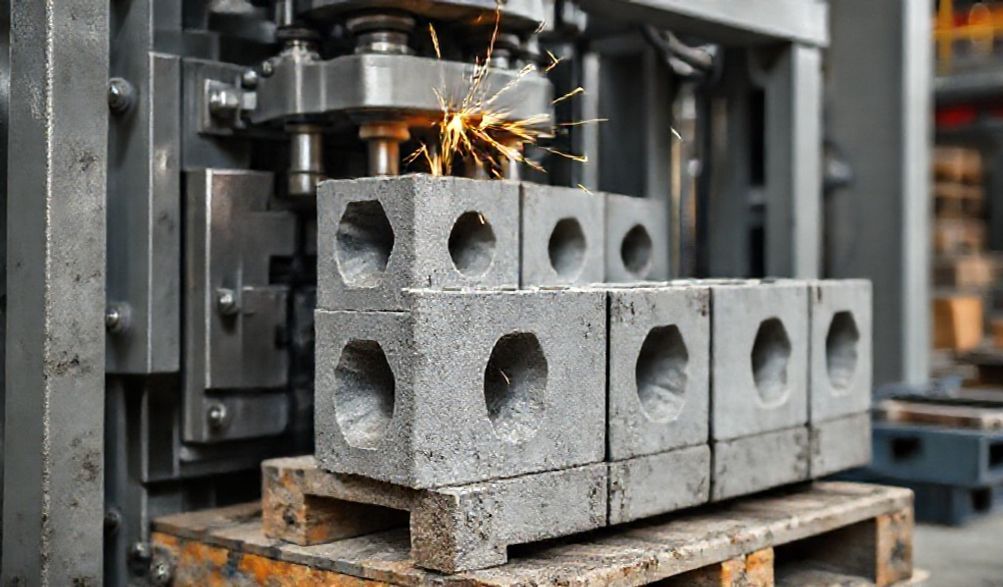
Jagorar Cikakke don Injin Yin Tubalin Ciki na Siminti: Zaɓi, Aiki & Farashi
Gabatarwa
Masana'antar ginin duniya tana cikin tseren dawwama don daidaita farashi, sauri, da karko. A tsakiyar wannan kalubalen akwai buƙata ta asali: kayan gini masu araha, amintattu. Shiga cikin shinge na ciki na siminti - ginshiƙin ginin zamani wanda ke ba da ƙarfi, ingantaccen zafi, da tattalin arzikin kayan. Amma a bayan kowane shinge mai inganci, babban inganci akwai injin da aka ƙera don daidaito da yawan aiki. Ga magina, kwangila, da 'yan kasuwa, zaɓar daidai injin yin shinge na ciki na siminti ba siyayya kawai ba ce; yana da muhimmiyar saka hannun jari a nan gaba na ayyukanku ko kasuwancin ku.
Wannan cikakkiyar jagora an tsara ta tun daga tushe don zama amintaccen albarkatun ku. Mun haɗa ƙayyadaddun masana'antu, ka'idojin injiniyanci na asali, da mafi kyawun ayyuka da aka samu ta hanyar wahala don yanke hayaniyar talla. Abubuwan da ke cikin nan an samo su ne daga ainihin ƙayyadaddun ƙirar injina, nazarin shari'o'in layin samarwa, da ka'idojin kulawa waɗanda ke ayyana nasara a cikin masana'antar gini.
Manufarmu a bayyane yake: don samar muku da cikakkiyar, amintacciyar tsari don fahimta, zaɓi, da sarrafa injin yin bulo na kankare. Ko kuna kimanta ƙaramin kasuwanci ko haɓaka babban masana'anta, wannan jagorar za ta taimaka tabbatar da cewa saka kuwar ku yana da ilimi, samarwar ku yana da inganci, kuma sakamakon ku yana da riba.
Za mu rufe:
* Tsarin aiki na asali da fa'idodin samar da tubalin ramuka.
* Cikakken bayani game da nau'ukan injina—tun daga na hannu zuwa na atomatik gaba ɗaya.
* Abubuwan mahimmanci da za a bincika kafin siye.
* Hanyoyin da suka fi dacewa don aiki da kulawa don ƙaruwa tsawon rayuwar na'ura.
* Wani bayani mai tsabta na farashi da dawowar zuba jari don kafa tsarin kasuwancin ku.
Fahimtar Injinan Yin Tubalin Ciki Wofi na Siminti
Kafin a fara zurfafa cikin cikakkun bayanai da masu samar da kayayyaki, yana da muhimmanci a fahimci abin da waɗannan injinan ke yi da kuma dalilin da yasa samfurinsu ke da matuƙar muhimmanci a cikin gine-ginen zamani.
Menene Injin Yin Hollow Block na Kankare?
Na'urar yin tubalin ciki maras tushe, tsarin injiniya ne da aka tsara don sarrafa gyare-gyaren siminti zuwa daidaitattun tubalan ciki maras tushe. Ta maye gurbin hanyoyin da ba su dace ba da kuma na hannu masu cike da wahala tare da tsarin da ke tabbatar da daidaito, yawa, da ingancin tsarin ta hanyar sarrafa girgiza da matsa lamba.
Tsarin samarwa na asali yakan bi matakai masu zuwa:
1. Ciyarwa:Kayan aiki (siminti, yashi, aggregates) ana ɗora su a cikin hopper.
2. Haɗawa:Ana haɗa kayan tare da ruwa don samun cakuda siminti mai ɗan bushewa daidai gwargwado.
3. Gyare-gyare:Ana cusa cakuda a cikin ramin ƙirar akan tebur mai girgiza.
4. Ƙarfafawa:Girgizar da ake yi akai-akai, sau da yawa tare da matsa lamba na ruwa ko na inji, yana kawar da kusoshin iska kuma yana matsawa kankare sosai.
5. Fitowa & Warkewa:Sabon bulkin da aka kera ana fitar da shi a kan pallet ko ƙasa don fara muhimmin tsarin warkewa, inda yake samun ƙarfi.
Me Yasa Bulo? Fa'idodi a Ginin Zamani
Zanen buloƙan ramuka ba na son zuciya ba ne; yana ba da fa'idodi na aikin injiniya da na tattalin arziki waɗanda ke haifar da shahararsu.katangar ɗaukar nauyida bangon ciki da kuma bangon da ake cika.
- Ingantaccen Amfani da Kayan Aiki da Rage Tsadar Kayayyaki:Ƙofofin da ba su da tushe suna rage girman simintin da ake buƙata a kowace bulo, suna rage farashin kayan aiki da kuma nauyin da ba shi da rai a kan gine-gine.
- Rufin Zafi da Na'urar Kulle Sauti:Ƙwayoyin iska da ke cikin tubalan suna haifar da shamaki na halitta ga zafi da sauti, suna taimakawa wajen samar da gine-gine masu ingancin makamashi da shiru.
- Ingantacciyar Gina Gini:Ƙofofin suna samar da hanyoyi masu dacewa don gudanar da igiyoyin lantarki, bututun ruwa, da sandunan ƙarfafawa, suna hanzarta aikin gini sosai.
- Rageuwar nauyin gine-gine:Idan aka kwatanta nauyi da ɓangarorin da suke da ƙarfi, ƙarancin nauyinsu yana ba da damar ƙirƙirar ginshiƙai marasa nauyi da ƙarancin tsada.
Sassan Tsaki da Yadda Suke Aiki
Fahimtar mahimman abubuwan yana bayyana injin ɗin kuma yana taimakawa wajen gyara matsala da yanke shawarar siye.
- Hopper & Mai Ciyarwa:Wurin shigowar kayan aiki, galibi yana da tsarin aunawa don tabbatar da daidaiton girma na batch.
- Mixer:Sima da aka yi amfani da siminti, tarkace, da ruwa don samun daidaiton tauri da ake buƙata don ingantacciyar tattarawa.
- Mold (ko Mutu):Zuciyar injin. Wannan akwatin ƙarfe mai sauyawa yana bayyana girman da siffar tubali (misali, tubalan 4″, 6″, 8″). Ingancin sa yana tsara gamawar tubali da tsawon rayuwarsa.
- Vibrating Table & Press: A motor generates high-frequency vibration transmitted to the mold. In more advanced machines, a hydraulic press applies simultaneous downward pressure. This synergy is critical for achieving high-density, strong blocks.
- Tsarin Gudanarwa: Ranges from simple lever-operated mechanisms to programmable logic controllers (PLCs) that automate the entire cycle, ensuring repeatability.
- Mai Ciyarwa/Kwakwalwar Pallet: Supplies pallets for the blocks to be cured on (stationary plants) or moves blocks away from the machine.
Types of Concrete Hollow Block Making Machines
The market offers solutions for every scale of operation. Your choice fundamentally impacts your production capacity, labor needs, and capital investment.
Na Hannu vs. Na Rago-da-kai vs. Na Kanta Gabaɗaya
| Fasali | Injin da ake sarrafawa da hannu | Injin Mai Gudanar da Kai Da Hannu | Injin Mai Gudanar da Kai Gabaɗaya |
| :— | :— | :— | :— |
| Ƙarfin Samarwa | Low (200-500 blocks/day) | Medium (1000-3000 blocks/8hr shift) | High (5000-20,000+ blocks/8hr shift) |
| Bukatar Aiki | High (4-6 people) | Moderate (2-3 people) | Low (1-2 people for monitoring) |
| Zuba Jari Na Farko | Low | Medium | High |
| Matakin Sarrafa | Human-powered operation, manual mixing. | Mechanized vibration and compaction; manual material feeding and block removal. | Fully automated cycle from feeding to block stacking; PLC-controlled. |
| Ideal Use Case | Very small projects, remote sites with no power. | Small-to-medium businesses, startups, block yards. | Large-scale block manufacturing plants, high-volume infrastructure projects. |
Guidance: A startup or small contractor might begin with a robust semi-automatic model to balance cost and output. A large developer or dedicated block supplier would prioritize the productivity and consistency of a fully automatic plant setup.
Na'urorin Sake Gina Tubalan Tsaye
These are the workhorses of fixed-location block manufacturing plants.
- Bayanin: Heavy-duty, high-output machines installed on a solid concrete foundation. They produce blocks on pallets, which are then moved to curing racks or chambers via forklift or conveyor systems.
- Abubuwan da suka fi kyau:
- Highest production output and consistency.
- Superior block density and finish due to powerful, stable vibratory presstsarin.
- Can be integrated into automated production lines.
- Rashin Kyau:
- Requires significant space for the machine, curing area, and storage.
- Higher initial capital investment.
- Requires pallets, which add to operational cost and logistics.
Mobile Block Making Machines (Egg-Laying Type)
These machines bring production directly to the job site.
- Bayanin: As the machine operates, it moves forward on rails or wheels, depositing (“laying”) freshly molded blocks directly onto a level ground surface, much like a chicken laying eggs.
- Abubuwan da suka fi kyau:
- Eliminates the need for pallets, reducing a major cost component.
- Ideal for on-site production, cutting transport costs for blocks.
- Generally lower initial purchase price than stationary plants.
- Rashin Kyau:
- More labor-intensive for block handling and ground preparation.
- Samar da kaya is typically lower and more weather-dependent.
- Block quality can be more variable due to less controlled curing conditions.
Key Features to Consider When Buying
Looking beyond the basic type, these features will determine your long-term satisfaction and profitability.
Ƙarfin Samarwa (Tubalan A Sa'a)
Don’t just look at the peak “blocks per hour” rating. Assess the sustainable 8-hour shift output. Calculate your required capacity based on:
* Project Demand: Average blocks needed per day/week for your contracts.
* Business Plan: Sales targets for a block manufacturing business.
* Future Growth: Consider a machine with 20-30% extra capacity to handle growth without immediate reinvestment.
Block Size and Mold Customization
- Matsakaicin Girma: Ensure the machine can produce the most in-demand sizes in your market (e.g., 4″, 6″, 8″ thick blocks).
- Matsalolin da ake iya musanya: The ability to quickly swap molds is essential for product diversification. Check the cost and availability of additional molds for pavers, curbstones, or solid blocks.
- Ingancin Ƙirƙira: Opt for hardened steel molds. They resist wear longer, ensuring consistent block dimensions and a smooth finish over thousands of cycles.
Power Source: Electric, Diesel, or Hybrid?
- Lantarki: Cleaner, quieter, and lower operating cost per hour. Requires a stable, high-capacity power grid.
- Dizal: Offers complete independence from the grid, crucial for remote sites or regions with frequent power cuts. Higher fuel and maintenance costs.
- Hibrid: Offers flexibility to switch between power sources, providing a valuable backup but at a higher purchase price.
Automation Level and Control System
Higher automation directly impacts:
* Daidaito: PLC systems ensure every block receives identical vibration and pressure.
* Ragewar Sharar Gida: Precise material measurement minimizes spillage and rejects.
* Labor Skill Requirement: A fully automatic machine reduces physical labor but requires basic technical skills for monitoring and troubleshooting.
Machine Durability and After-Sales Support
This is the most critical factor for amintacce in your investment.
- Ingancin Gina Inspect the frame and critical components. Are they made from heavy-duty, reinforced steel? Thin-gauge steel will flex and wear quickly.
- Warranty: A reputable supplier will offer a clear, comprehensive warranty (e.g., 1 year on the machine, 6 months on wear parts).
- Tallafin Bayan Siyarwa: Wannan ba za a iya sasantawa ba. Verify:
- Availability of spare parts locally or via fast shipping.
- Provision of detailed operation and maintenance manuals.
- Access to technical support (phone, online, or in-person).
- A common oversight is choosing a cheap machine from a supplier with no local presence, leading to catastrophic downtime when a simple part fails.
Operating and Maintaining Your Machine for Longevity
Your machine’s performance and lifespan are directly tied to how you operate and care for it.
The Production Process: Step-by-Step
- Shirya Kayan Aiki: Use clean, well-graded aggregates. A common starting mix ratio is 1 part cement : 6 parts sand : 4 parts gravel (aggregate). Water should be added to achieve a semi-dry mix that holds its shape when squeezed.
- Operation Cycle: The operator feeds the mix into the machine, initiates the cycle (vibration + compaction), and the block is ejected onto a pallet or the ground.
- Maganin Ciwon Ciki: This is where blocks gain strength. Keep blocks moist and under cover (e.g., with plastic sheeting) for at least 7 days. Steam curing in a chamber can accelerate this to 24 hours for high-strength blocks.
Essential Safety Protocols
- Horarwa: Never allow untrained personnel to operate the machine.
- Kayan Kariya na Mutum (PPE): Mandatory use of safety glasses, gloves, steel-toe boots, and hearing protection.
- Machine Guards: Ensure all moving parts, especially the vibration mechanism and press, are properly guarded. Lock-out/tag-out procedures must be followed for any maintenance.
Jadawalin Kulawa na Yau da Kullum
Preventive maintenance is far cheaper than emergency repairs.
- Kullum: Clean the machine thoroughly at the end of each shift. Check for loose bolts and nuts. Inspect the hydraulic system for leaks.
- Mako-mako: Lubricate all moving parts as per the manual. Check the oil level in the vibration motor and hydraulic tank. Inspect mold liners for wear.
- Kowane wata: Tighten all major structural bolts. Check the alignment of the feeding system and conveyor. Test safety interlocks.
Troubleshooting Common Issues
- Poor Block Strength: Usually caused by incorrect water-cement ratio (too much water), insufficient vibration time, or weak concrete mix. Re-calibrate your mix and compaction cycle.
- Surface Cracks: Often due to improper curing (drying too quickly) or excessive vibration. Ensure blocks are kept moist and adjust vibration duration.
- Machine Jams: Caused by overfilling the mold, overly wet concrete, or foreign objects in the mix. Stop the machine, clear the obstruction, and adjust feeding.
Cost Analysis and Return on Investment (ROI)
A clear financial picture separates a hopeful venture from a viable business.
Breaking Down the Investment Cost
- Machine Price: Ranges from ~$5,000 for a basic manual machine to over $100,000 for a high-end fully automatic line.
- Auxiliary Costs: Don’t forget: cost of additional molds ($500-$2,000 each), installation/commissioning fees, and the initial stockpile of raw materials.
Operational Costs: Raw Materials, Labor, and Power
To find your cost per block, track:
* Material Cost: (Cement + Sand + Aggregate) per block.
* Labor Cost: Wages allocated per block produced.
* Utilities & Depreciation: Power/fuel consumption and machine depreciation per block.
* Misali: If total costs sum to $0.50 per block and you sell it for $0.80, your gross profit margin is $0.30 per block.
Calculating Your Potential ROI
Use this simplified framework:
ROI Timeframe = Total Investment / (Monthly Profit from Block Sales)
Factors dramatically affecting ROI:
* Local Market Demand & Pricing: What is the selling price in your area?
* Ingantacciyar Aiki: Can you achieve the machine’s rated output with minimal downtime?
* Ma'auni: Higher production spreads fixed costs (like labor) over more blocks, increasing profit margin.
A well-run semi-automatic operation in a market with good demand can often see a full return on investment within 12-24 months.
Tambayoyin da ake yawan yi (FAQ)
Q1: What is the average production capacity of a standard block making machine?
A: Capacity varies wildly. A small semi-automatic machine may produce 1,000-2,000 blocks in an 8-hour shift, while a large fully automatic plant can produce 10,000+. The key is to discuss “sustainable daily output” with your supplier, not peak theoretical capacity.
Q2: Can I produce different block sizes and designs with one machine?
A: Absolutely, through interchangeable molds. This is a major advantage. However, each mold is a separate purchase, and changing molds requires time (from 30 minutes to a few hours), which temporarily halts production.
Q3: What is the ideal concrete mix ratio for strong hollow blocks?
A: A reliable starting point is a 1:6:4 ratio (Cement: Sand: 3/8″ Gravel). However, the “ideal” ratio depends on the quality and properties of your local sand and aggregates. We strongly recommend conducting trial mixes and compression tests to optimize for your specific materials and machine.
Q4: How much space is required to set up a block manufacturing plant?
A: Consider three zones:
1. Production Shed: To house the machine (~300-500 sq. ft.).
2. Curing Area: A covered, level space 4-5 times larger than the production shed for blocks to gain strength.
3. Raw Material & Finished Block Storage: Additional open or covered space.
A micro plant might need 2,000 sq. ft., while a serious operation requires 10,000+ sq. ft.
Q5: How do I choose a reliable machine supplier?
A: This is the most critical step for your amintacce and success.
* Check History & Reputation: How long has the company been in business? Search for independent reviews or complaints.
* Request Client References: Ask for contacts of past buyers, preferably in your region, and call them.
* Verify Quality Certifications: Do they have ISO or other relevant manufacturing quality certifications?
* Inspect Warranty & Support Terms: Are they clear, fair, and in writing? Is there a local service agent?
* Visit if Possible: If feasible, visit the supplier’s factory or a client’s working plant to see the machine in action. The quality of assembly and customer service will be evident.
Ƙarshe
Choosing and operating a concrete hollow block making machine is a significant technical and financial decision. The path to success lies in carefully matching the machine type—be it manual, semi-automatic, or fully automatic—to your specific production needs and budget. Prioritizing build quality, mold versatility, and, above all, the after-sales support from your supplier will protect your investment for years to come.
Remember, understanding the true operational costs, from raw materials to preventive maintenance, is just as important as the purchase price. This guide has provided the factual information and operational framework to ground your research.
Your Call to Action: Use this guide as a checklist when evaluating machines and speaking with suppliers. Demand detailed demonstrations, scrutinize warranty documents, and always start with a solid business and production plan. With thorough preparation, your investment in a concrete hollow block making machine can become a cornerstone of your construction efficiency or business growth.
<