
Hagaha Ugu Wanaagsan ee Makiinada Sameynta Boodhka Dheecaanka: Xulashada, Hawlgalka & Qiimaha
Hordhac
Warshada dhismaha caalamku waxay ku jirta tartan joogto ah oo lagu dabaqayo qiime, degdeg, iyo adkaysi. Dhibic ugu muhiimsan ee arrintani waa baahida aasaasiga ah: qalabka dhismaha ee la heli karo oo aamin ah. Halkan waxaa soo galay blookada dhexdhexaadka ah ee simenti - oo ah xarunteeda dhismaha casriga ah ee ka bixisa xoog, waxsoosaar kul, iyo dhaqaale qalab. Laakiin gadaashiin blook kasta oo joogto ah oo tayo sare leh, waxaa jirta makiinad loo habeeyey si sax ah iyo waxsoosaar. Dhismayaasha, qandaraasyada, iyo ganacsatada, doorashada makiinadda saxda ah ee sameynta blookada dhexdhexaadka ah ee simenti ma aha wax iibsasho oo keliya; waa maalgelin muhiim ah oo mustaqbalka mashruucaada ama ganacsigaaga ku saabsan.
Hagee qoraalkan lagu talo galay waxaa laga dhisay sal u si loogu adeego sida ilo aad ku kalsoon tahay. Waxaan ku soo koobnay qeexitaannada warshadaha, mabda’a aasaasiga ah ee injineernimada makaanikada, iyo hababka ugu fiican ee shaqada ee la kasbaday si aan uga tagno qaylad suuq-geyn. Aragtida halkan waxaa laga soo xulay qaababka nidaamka qalabka ee dhabta ah, daraasaadka tusaalooyinka warshadaha soo saarista, iyo habraacyada dayactirka ee ka dhigaya guusha warshadaha dhismaha.
Ujeedadeena waa mid cad: inaan kuu siinno qaab dhismeed buuxda oo aamin ah si aad u fahanto, u doorato, oo u maamusho makiinada sameynta bulookada dhuumaha ah ee laamiga ah. Haddii aad qiimeyneysid mashruuc yar ama aad kor u qaadeyso warshad weyn, hagahan wuxuu kuu caawin doonaa inaad hubiso in maalgashigaagu uu yahay mid aqooneysan, wax soo saarkaagu uu ahaado mid wax ku ool ah, iyo natiijooyinkaagu ay yihiin mid faa'iido leh.
Waxaan ka hadlaynaa:
* Makanikaada aasaasiga ah iyo faa'iidooyinka soo saarista boolooyinka madhow.
* Faahfaahin dhab ah oo ku saabsan noocyada makiinadaha—laga bilaabo kuwa gacanta ah ilaa kuwa si toos ah ugu shaqeeya.
* Astaamaha muhiimka ah ee la baadhayo ka hor iibsashada.
* Hababka ugu fiican ee hawlgalka iyo dayactirka si loo kordhiyo cimri nololeedka mashinka.
* Xisaabinta kharashaadka iyo faa'iidada (ROI) ee la arki karo si aad ugu salaysato qorshahaaga ganacsiga.
Fahamka Makiinadaha Sameynta Boodhka Dheecaanka ee Madow
Kahor inta aadan si faahfaahsan ugu soo gogolomin goobaha iyo wax soo saarayaasha, waa muhiim in la fahmo waxa ay mashiinnadan sameeyaan iyo sababta ay alaabtoodu ugu qalantahay dhismaha casriga ah.
Waa maxay Makiinada Sameynta Boodhka Dhexdhexaadka ah ee Laamiga?
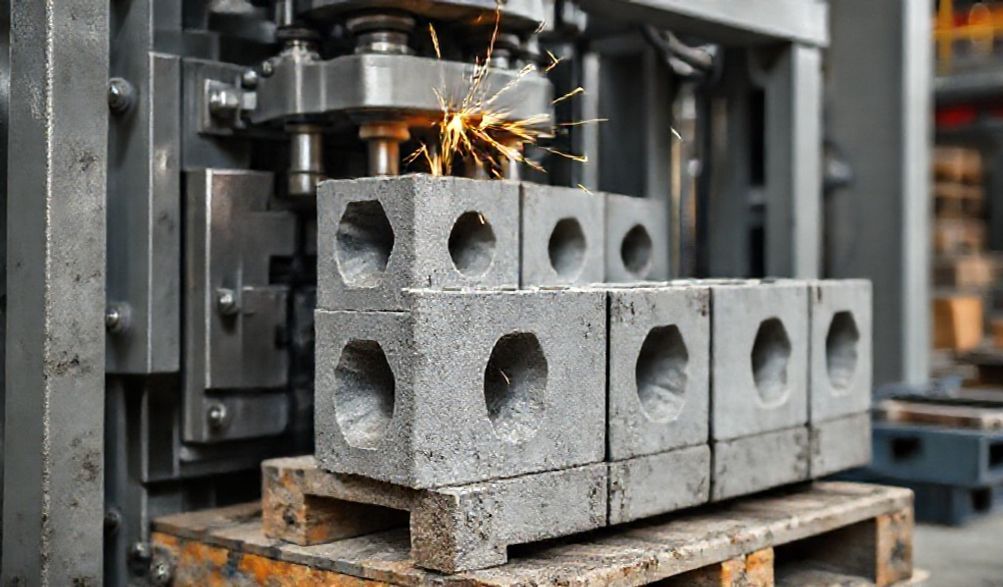
Makiinada sameynta bulookada khaangada ah ee laami ah waa nidaam makiinadeed loo habeeyey si uu u otomaateeyo qaabista laamiyaha si loo sameeyo bulooko khaangad ah oo heer la qoondeeyay. Waxay ku badashaa hababka gacanta ee aan joogto ahayn ee shaqo badan oo ay ku jiraan nidaam ka dhigaya mid joogto ah, cufnaanta, iyo dhismaha qaab-dhismeedka iyadoo la adeegsanayo gariir la maamulo iyo cadaadis.
Habka isha u ah soo saaridda aasaasiga ah waxay caadi ahaan raacda maraahaan:
1. Cunto-siin:Walxaha ceeriin (sibidh, ciid, dhagax) waxaa la geliyaa weelka hoostiisa (hopper).
2. Isku-dhafka:Qalabka waxaa lagu qasaa biyo si loo helo isku dhafka shubka ah oo isku mid ah, qallalan yar.
3. Qaab-dhismeedka:Waxa la shubaa isku darka godka qaabeeyaha oo ku yaal miis gariiraya.
4. Daboolid:Gariirada dhakada sare, oo inta badan lagu daro cadaadiska biyaha ama makaanikada, ayaa meesha ka saarey boodhadhka hawada oo ay si cufan u isku celceliyaan shubka.
5. Bixinta & Daawaynta:Buluke lagu dhawaaqay ayaa lagu tuuraya saan ama dhulka si loo bilaabo habka daaweynta muhiimka ah, halkaas oo uu xoog u helayo.
Sababta Bloogyada Godka leh? Faa'iidooyinka Dhismaha Casriga ah
Nashqadda baloogyada godan ma aha mid aan macquul ahayn; waxay keenaa faa'iidooyin injineernimo iyo dhaqaale oo la taaban karo oo horseeda caannimadoodamasonry-ga xambaarsan and infill walls.
- Material Efficiency & Cost-Effectiveness: The hollow cores reduce the volume of concrete required per block, lowering material costs and the overall dead load on a structure.
- Insulayshiyada Kul iyo Codka. The air pockets within the blocks create natural barriers to heat and sound, contributing to energy-efficient and quieter buildings.
- Hagaajinta Hawlaha Dhismaha: The voids provide convenient channels for running electrical conduits, plumbing pipes, and reinforcement bars, significantly speeding up the construction process.
- Reduced Structural Load: Their lighter weight compared to solid blocks allows for lighter, more economical foundation designs.
Qaybaha Aasaasiga ah iyo Sida ay U Shaqeeyaan
Understanding the key components demystifies the machine and aids in troubleshooting and purchasing decisions.
- Hopper & Feeder: The entry point for raw materials, often equipped with a measuring system for consistent batch sizes.
- Mikser: Blends cement, aggregates, and water to the precise consistency required for optimal compaction.
- Mold (or Die): The heart of the machine. This interchangeable steel box defines the block’s size and shape (e.g., 4″, 6″, 8″ blocks). Its quality dictates block finish and longevity.
- Vibrating Table & Press: A motor generates high-frequency vibration transmitted to the mold. In more advanced machines, a hydraulic press applies simultaneous downward pressure. This synergy is critical for achieving high-density, strong blocks.
- Nidaamka Maamulka: Ranges from simple lever-operated mechanisms to programmable logic controllers (PLCs) that automate the entire cycle, ensuring repeatability.
- Pallet Feeder/Conveyor: Supplies pallets for the blocks to be cured on (stationary plants) or moves blocks away from the machine.
Types of Concrete Hollow Block Making Machines
The market offers solutions for every scale of operation. Your choice fundamentally impacts your production capacity, labor needs, and capital investment.
Qalabka Gacanta ah iyo Kuwa Nus-awtomaatig ah iyo Kuwa Awtoomaatig oo Dhammaystiran
| Astaanta | Makiinada Gacanta | Makiinada Nus-otomaatig ah | Makiinada Otomaatig oo Buuxa |
| :— | :— | :— | :— |
| Qaybinta Wax Soo Saarida | Low (200-500 blocks/day) | Medium (1000-3000 blocks/8hr shift) | High (5000-20,000+ blocks/8hr shift) |
| Baahida Shaqaalaha | High (4-6 people) | Moderate (2-3 people) | Low (1-2 people for monitoring) |
| Lacagta Bilowga | Low | Medium | High |
| Heerka Automation-ka | Human-powered operation, manual mixing. | Mechanized vibration and compaction; manual material feeding and block removal. | Fully automated cycle from feeding to block stacking; PLC-controlled. |
| Ideal Use Case | Very small projects, remote sites with no power. | Small-to-medium businesses, startups, block yards. | Large-scale block manufacturing plants, high-volume infrastructure projects. |
Guidance: A startup or small contractor might begin with a robust semi-automatic model to balance cost and output. A large developer or dedicated block supplier would prioritize the productivity and consistency of a fully automatic plant setup.
Makiinad Qalabka Laamiga ah ee Laamiga ah
These are the workhorses of fixed-location block manufacturing plants.
- Sharaxaad: Heavy-duty, high-output machines installed on a solid concrete foundation. They produce blocks on pallets, which are then moved to curing racks or chambers via forklift or conveyor systems.
- Faaiidooyinka:
- Highest production output and consistency.
- Superior block density and finish due to powerful, stable vibratory pressnidaamada.
- Can be integrated into automated production lines.
- Laba.
- Requires significant space for the machine, curing area, and storage.
- Higher initial capital investment.
- Requires pallets, which add to operational cost and logistics.
Mobile Block Making Machines (Egg-Laying Type)
These machines bring production directly to the job site.
- Sharaxaad: As the machine operates, it moves forward on rails or wheels, depositing (“laying”) freshly molded blocks directly onto a level ground surface, much like a chicken laying eggs.
- Faaiidooyinka:
- Eliminates the need for pallets, reducing a major cost component.
- Ideal for on-site production, cutting transport costs for blocks.
- Generally lower initial purchase price than stationary plants.
- Laba.
- More labor-intensive for block handling and ground preparation.
- Production output is typically lower and more weather-dependent.
- Block quality can be more variable due to less controlled curing conditions.
Key Features to Consider When Buying
Looking beyond the basic type, these features will determine your long-term satisfaction and profitability.
Wax soo saarka (Qalabka Saacadda)
Don’t just look at the peak “blocks per hour” rating. Assess the sustainable 8-hour shift output. Calculate your required capacity based on:
* Project Demand: Average blocks needed per day/week for your contracts.
* Business Plan: Sales targets for a block manufacturing business.
* Future Growth: Consider a machine with 20-30% extra capacity to handle growth without immediate reinvestment.
Block Size and Mold Customization
- Cabbirka Caadiga ah: Ensure the machine can produce the most in-demand sizes in your market (e.g., 4″, 6″, 8″ thick blocks).
- Interchangeable Molds: The ability to quickly swap molds is essential for product diversification. Check the cost and availability of additional molds for pavers, curbstones, or solid blocks.
- Tayada Qalabka Opt for hardened steel molds. They resist wear longer, ensuring consistent block dimensions and a smooth finish over thousands of cycles.
Power Source: Electric, Diesel, or Hybrid?
- Koronto: Cleaner, quieter, and lower operating cost per hour. Requires a stable, high-capacity power grid.
- Dhiisel: Offers complete independence from the grid, crucial for remote sites or regions with frequent power cuts. Higher fuel and maintenance costs.
- Iskudhaf Offers flexibility to switch between power sources, providing a valuable backup but at a higher purchase price.
Automation Level and Control System
Higher automation directly impacts:
* Isku xigxiga: PLC systems ensure every block receives identical vibration and pressure.
* Khasaaraha La Dhimo: Precise material measurement minimizes spillage and rejects.
* Labor Skill Requirement: A fully automatic machine reduces physical labor but requires basic technical skills for monitoring and troubleshooting.
Machine Durability and After-Sales Support
This is the most critical factor for aamin in your investment.
- Qaybta Qaab-dhismeedka Inspect the frame and critical components. Are they made from heavy-duty, reinforced steel? Thin-gauge steel will flex and wear quickly.
- Warranty: A reputable supplier will offer a clear, comprehensive warranty (e.g., 1 year on the machine, 6 months on wear parts).
- Taageerada Ka Dib Iibka: Tani waa aan la gudbin karin. Verify:
- Availability of spare parts locally or via fast shipping.
- Provision of detailed operation and maintenance manuals.
- Access to technical support (phone, online, or in-person).
- A common oversight is choosing a cheap machine from a supplier with no local presence, leading to catastrophic downtime when a simple part fails.
Operating and Maintaining Your Machine for Longevity
Your machine’s performance and lifespan are directly tied to how you operate and care for it.
The Production Process: Step-by-Step
- Diyaarinta Alaabta Asalka ah Use clean, well-graded aggregates. A common starting mix ratio is 1 part cement : 6 parts sand : 4 parts gravel (aggregate). Water should be added to achieve a semi-dry mix that holds its shape when squeezed.
- Operation Cycle: The operator feeds the mix into the machine, initiates the cycle (vibration + compaction), and the block is ejected onto a pallet or the ground.
- Daweynta: This is where blocks gain strength. Keep blocks moist and under cover (e.g., with plastic sheeting) for at least 7 days. Steam curing in a chamber can accelerate this to 24 hours for high-strength blocks.
Essential Safety Protocols
- Training: Never allow untrained personnel to operate the machine.
- Qalabka Ilaalinta Shakhsi ahaaneed (PPE): Mandatory use of safety glasses, gloves, steel-toe boots, and hearing protection.
- Machine Guards: Ensure all moving parts, especially the vibration mechanism and press, are properly guarded. Lock-out/tag-out procedures must be followed for any maintenance.
Routine Maintenance Checklist
Preventive maintenance is far cheaper than emergency repairs.
- Daily: Clean the machine thoroughly at the end of each shift. Check for loose bolts and nuts. Inspect the hydraulic system for leaks.
- Weekly: Lubricate all moving parts as per the manual. Check the oil level in the vibration motor and hydraulic tank. Inspect mold liners for wear.
- Monthly: Tighten all major structural bolts. Check the alignment of the feeding system and conveyor. Test safety interlocks.
Troubleshooting Common Issues
- Poor Block Strength: Usually caused by incorrect water-cement ratio (too much water), insufficient vibration time, or weak concrete mix. Re-calibrate your mix and compaction cycle.
- Surface Cracks: Often due to improper curing (drying too quickly) or excessive vibration. Ensure blocks are kept moist and adjust vibration duration.
- Machine Jams: Caused by overfilling the mold, overly wet concrete, or foreign objects in the mix. Stop the machine, clear the obstruction, and adjust feeding.
Cost Analysis and Return on Investment (ROI)
A clear financial picture separates a hopeful venture from a viable business.
Breaking Down the Investment Cost
- Machine Price: Ranges from ~$5,000 for a basic manual machine to over $100,000 for a high-end fully automatic line.
- Auxiliary Costs: Don’t forget: cost of additional molds ($500-$2,000 each), installation/commissioning fees, and the initial stockpile of raw materials.
Operational Costs: Raw Materials, Labor, and Power
To find your cost per block, track:
* Material Cost: (Cement + Sand + Aggregate) per block.
* Labor Cost: Wages allocated per block produced.
* Utilities & Depreciation: Power/fuel consumption and machine depreciation per block.
* Tusaale: If total costs sum to $0.50 per block and you sell it for $0.80, your gross profit margin is $0.30 per block.
Calculating Your Potential ROI
Use this simplified framework:
ROI Timeframe = Total Investment / (Monthly Profit from Block Sales)
Factors dramatically affecting ROI:
* Local Market Demand & Pricing: What is the selling price in your area?
* Wax-ka-beddelka Hawlaha: Can you achieve the machine’s rated output with minimal downtime?
* Miisaanka: Higher production spreads fixed costs (like labor) over more blocks, increasing profit margin.
A well-run semi-automatic operation in a market with good demand can often see a full return on investment within 12-24 months.
Su'aalaha Inta Badan La Is Weydiiyo (FAQ)
Q1: What is the average production capacity of a standard block making machine?
A: Capacity varies wildly. A small semi-automatic machine may produce 1,000-2,000 blocks in an 8-hour shift, while a large fully automatic plant can produce 10,000+. The key is to discuss “sustainable daily output” with your supplier, not peak theoretical capacity.
Q2: Can I produce different block sizes and designs with one machine?
A: Absolutely, through interchangeable molds. This is a major advantage. However, each mold is a separate purchase, and changing molds requires time (from 30 minutes to a few hours), which temporarily halts production.
Q3: What is the ideal concrete mix ratio for strong hollow blocks?
A: A reliable starting point is a 1:6:4 ratio (Cement: Sand: 3/8″ Gravel). However, the “ideal” ratio depends on the quality and properties of your local sand and aggregates. We strongly recommend conducting trial mixes and compression tests to optimize for your specific materials and machine.
Q4: How much space is required to set up a block manufacturing plant?
A: Consider three zones:
1. Production Shed: To house the machine (~300-500 sq. ft.).
2. Curing Area: A covered, level space 4-5 times larger than the production shed for blocks to gain strength.
3. Raw Material & Finished Block Storage: Additional open or covered space.
A micro plant might need 2,000 sq. ft., while a serious operation requires 10,000+ sq. ft.
Q5: How do I choose a reliable machine supplier?
A: This is the most critical step for your aamin and success.
* Check History & Reputation: How long has the company been in business? Search for independent reviews or complaints.
* Request Client References: Ask for contacts of past buyers, preferably in your region, and call them.
* Verify Quality Certifications: Do they have ISO or other relevant manufacturing quality certifications?
* Inspect Warranty & Support Terms: Are they clear, fair, and in writing? Is there a local service agent?
* Visit if Possible: If feasible, visit the supplier’s factory or a client’s working plant to see the machine in action. The quality of assembly and customer service will be evident.
Gabagabo
Choosing and operating a concrete hollow block making machine is a significant technical and financial decision. The path to success lies in carefully matching the machine type—be it manual, semi-automatic, or fully automatic—to your specific production needs and budget. Prioritizing build quality, mold versatility, and, above all, the after-sales support from your supplier will protect your investment for years to come.
Remember, understanding the true operational costs, from raw materials to preventive maintenance, is just as important as the purchase price. This guide has provided the factual information and operational framework to ground your research.
Your Call to Action: Use this guide as a checklist when evaluating machines and speaking with suppliers. Demand detailed demonstrations, scrutinize warranty documents, and always start with a solid business and production plan. With thorough preparation, your investment in a concrete hollow block making machine can become a cornerstone of your construction efficiency or business growth.
<