
Cikakken Jagora don Injin Yin Tubalan Haɗin Kai da Hannu: Farashi, Tsari da Fa'idodi
Gabatarwa
Ga masu gini, shugabannin al'umma, da masu gidaje a duniya baki ɗaya, mafarkin gine-gine mai araha, mai ɗorewa sau da yawa ya ci karo da wata gaskiya mai tsanani: tsadar farashi da tasirin muhalli na kayan gini na al'ada. Tubalin yumbu da aka gasa yana buƙatar makamashi mai yawa, yana ba da gudummawa ga sare dazuzzuka, kuma sufuri kawai na iya haɓaka kasafin aikin fiye da iyawa. Wannan ƙalubale yana da tsanani musamman a yankuna masu nisa da kuma ga waɗanda ke da ƙaramin jari.
Amma me ya sa idan mafita ba wani samfuri na daban ba ne, sai dai wani tsari na daban – wanda zaka iya sarrafawa? Dangane da gyare-gyaren injiniya na shekaru da yawa da kuma aikace-aikacen fili a cikin gine-ginen dorewa, na’urar yin tubalin haɗin kai ta hannu ta wakilci hakan daidai. Wannan ba fasaha ce ta hasashe ba; tabbatacciyar injin latsawa ce ta hannu wacce ke canza ƙasar da ake da ita a cikin gida zuwa tubalai masu ƙarfi, masu haɗin kai.
Wannan jagora ta zama cikakkiyar albarkatunku. Ko kai mai gini ne da ke binciken hanyoyin rage farashi, ɗan kasuwa mai kallon damar ƙananan kasuwanci, ƙungiyar sa-kai da ke shirin aikin al'umma, ko kuma mai himmar yin kansa da kansa, za mu bayyana wannan kayan aiki mai ƙarfi. Za mu yi bayani dalla-dalla kan yadda ake amfani da shi, fa'idodinsa na zahiri, cikakken tsarin samarwa mataki-mataki, da kuma muhimman abubuwan da ya kamata a yi la'akari kafin saka hannun jari. Manufarmu ita ce samar da ingantaccen bayani mai zurfi da kuke buƙata don yanke shawara mai kyau game da aikin ku da yanayin ku na musamman.
Menene Injin Yin Tubalin Ƙarfafa Hanyar Hannu?
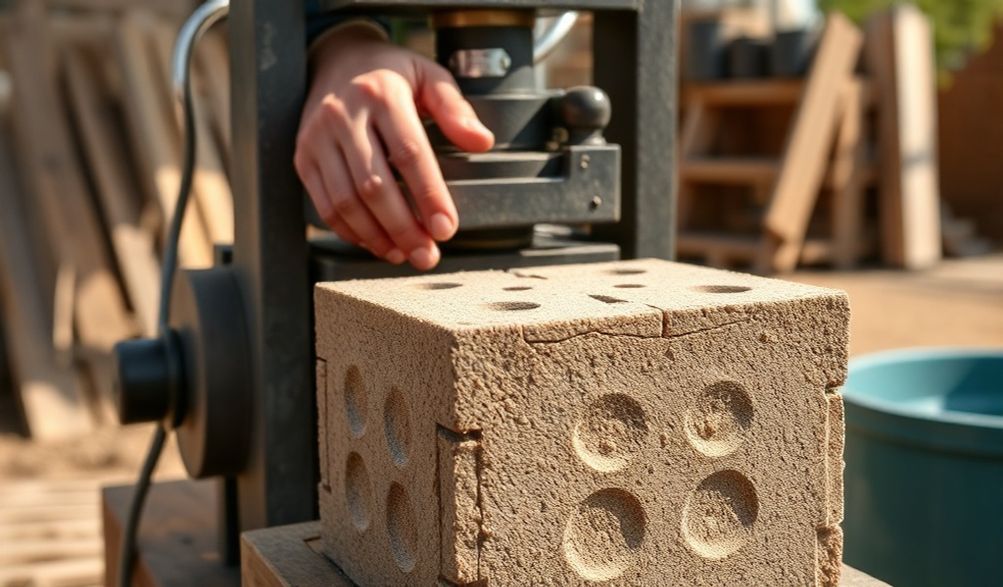
A tsakiyar sa, na'urar yin tubalin haɗin kai ta hannu wata na'ura ce mai amfani da ƙarfin ɗan adam da aka ƙera don matsawa cakuda ƙasa mai ɗanɗano, yashi, da ƙaramin kashi na siminti zuwa cikin tubalan haɗin kai masu yawa da ƙima. Tana kauracewa buƙatar kona kiln, tana ba da hanya mai sauƙi sosai daga ƙasa ɗaya zuwa gabaɗayan ginin gini.
Aiki na Asali da Ƙira
Na'urar wani bincike ne mai kyau game da fa'idar injiniya. Duk da cewa zane-zane sun bambanta, ainihin sassa suna daidaitacce:
- Tsarin Lifi:Doguwar hannun lefa na ƙarfe tana ba da ƙarfin da ake buƙata. Nauyin mai sarrafawa da ƙarfinsa ana haɓaka su ta wannan na'urar mai sauƙi don cimma matsawa mai ƙarfi.
- Kalubale/Kalubale:Wannan shine ramin da ke ba shingen siffarsa. Yawanci ana yin shi da ƙarfe mai tauri don jure matsi da gogewa akai-akai.
- Kwamfani Mai Matsawa:Inda ake ɗora cakuda kayan gini. Wani piston ko kai na latsa, wanda aka motsa ta hanyar leƙo, yana matsar da cakudar a tsaye da ƙarfi mai ƙarfi.
- Tsarin Maɓalli Mai Haɗin Kai:An haɗe shi cikin ƙirar, wannan yana haifar da harsunan alamar tubalan ko ƙugiya da ramuka a saman, ƙasa, da ɓangarorin.
Tsarin yana da zagaye: cika, matsawa, fitarwa. A aikace, ƙwararren ma'aikaci zai iya samar da bulo a ƙasa da minti ɗaya.
Kimiyyar Tubalan Haɗin Kai
Hazakar da wannan tsarin ya ta'allaka ne ba kawai a matsawa ba, amma a haɗin kai. Ƙirar haɗin gwiwar tana haifar da haɗin injiniya tsakanin tubalan.
- Kawar da Turmi:Daidaitaccen haɗin haɗin gwiwa yana kawar da buƙatar haɗin siminti a tsaye. Yawanci ana amfani da siririn gadon siminti a kwance kawai don tabbatar da matakin layi.
- Fa'idodi na Asali:Wannan yana haifar da saurin gini (saboda babu turmi da za a jira), rage dogaro da ƙwararrun masu sana'ar gini, da kuma tanadin kayan aiki mai mahimmanci.
- Tsayayyen Tsari:Tsarin haɗin gwiwa yana haifar da katanga wanda yake aiki a matsayin matrix mai haɗin kai da sassauƙa. Binciken filin a yankunan girgizar ƙasa ya nuna cewa ingantattun katangar tubalin haɗin gwiwa na iya nuna juriya ga tsagewa fiye da ginin gargajiya, domin haɗin gwiwar yana ba da damar motsi kaɗan ba tare da lalacewa mai tsanani ba.
Fa'idodin Amfani da Injin Taba Hanya
Zaɓar injin buga hannu shine yanke shawara mai mahimmanci wanda ke da fa'idodi da yawa, daga tattalin arziki zuwa muhalli da kuma ƙarfafawa.
Ingantacciyar Saurin Kudin
Hujjar kudi tana da karfi, musamman ga kananan da matsakaitan ayyuka.
- Rahon Jarin Jarin Jari:Idan aka kwatanta da masana'antun bulo na mota ko na ruwa da ke da tsada dubbai, na'urar buga hannu mai inganci tana da farashi kaɗan a farko.
- Ragewar Rage Kudi na Kayan Aiki:Babban abun da ake amfani da shi—ƙasa—sau da yawa ana samunsa a wurin ko kuma a gida ba tare da kuɗi ba ko kadan. Amfani da siminti ba shi da yawa (yawanci 5-10% a cikin girma).
- Ciyar da KuɗiKawar da turmi na tsaye yana ceton kusan kashi 30-50% na farashin turmi da aikin da ya danganci hakan.
Dorewar Muhalli da Gina Gidajen da Ba Su Cutar da Muhalli.
Wannan fasahar ta dace sosai da ka'idodin gina gine-gine masu kare muhalli.
- Amfani da Kayan Aiki na Gida Utilizing 70-90% in-situ materials drastically cuts the carbon emissions and cost associated with transporting heavy building materials.
- Ƙarancin Ƙarfin Makamashi Mai Ɗauke da Shi: With no firing process, the energy input is virtually limited to human labor and the small cement fraction. This contrasts sharply with fired bricks, which are major consumers of coal or firewood.
- Non-Toxic & Recyclable: The blocks are made from natural earth and stabilize with cement. At end-of-life, they can be crushed and returned to the earth or re-used as aggregate.
Empowerment and Operational Simplicity
Perhaps the most profound advantage is the shift in control it offers.
- Samarwa Akan Gaggauta: You are no longer at the mercy of supplier schedules or market price fluctuations. Blocks can be produced as needed, on-site.
- Low Technical Barrier: Operation can be learned in a matter of hours. Training focuses more on material preparation than complex machinery operation.
- Ideal for Diverse Contexts: This makes it a tool of choice for self-help housing projects, remote community development, disaster reconstruction (as promoted by organizations like UN-Habitat), and small-scale entrepreneurial ventures.
The Step-by-Step Block Production Process
Success with a manual press hinges on process, not just the machine. Here is the proven workflow, drawn from field-tested best practices.
Stage 1: Material Selection and Preparation
This is the most critical phase. Poor materials guarantee poor blocks.
- Gwajin ƙasa: Not all soil is suitable. You need a balanced mix of clay (as a binder), silt, and sand (for stability). Simple field tests are essential:
- Jar Test: Fill a clear jar with 1/3 soil and 2/3 water, shake vigorously, and let it settle over 24 hours. The layers will reveal the approximate proportions of sand, silt, and clay.
- Ribbon Test: Moisten a handful of soil and try to roll it into a thin ribbon. If it forms a long, flexible ribbon, it’s too clay-rich. If it crumbles immediately, it’s too sandy. A moderate ribbon that breaks is often a good sign.
- Mix Design: A common starting formula is approximately 70% soil, 25% sand, and 5% cement by volume. The sand corrects clay-heavy soil. Moisture content is crucial: The mix must be damp enough to bind, but not wet. The “hand-squeeze test” is key—a squeezed handful should form a ball that holds its shape without crumbling or dripping water.
Stage 2: Compression and Molding
With your properly prepared mix, you move to the machine.
- Load: Fill the compression chamber evenly with the mix. Do not overfill or underfill; consistency is key for uniform block density.
- Tattara: Pull down the lever arm firmly and steadily. You will feel significant resistance as the mix compacts. Apply full pressure. Some machines require a second “locking” press.
- Fitarwa: Release the lever, open any latches, and pull the lever again to raise the piston and eject the fresh “green” block onto a pallet or board.
Stage 3: Curing and Quality Control
Fresh blocks are fragile and must be handled with care.
- Maganin Ciwon Ciki: Stack the green blocks in a shaded area and cover them with a plastic sheet. This traps moisture and allows the cement to hydrate slowly, gaining strength. Light watering for the first 7-10 days is beneficial. Avoid rapid drying in direct sun, which causes cracking.
- Kula da inganci: Perform simple tests:
- Drop Test: After 7 days, lift a block to waist height and drop it onto a firm, flat surface. A good quality block should not break or chip severely.
- Bincike na gani: Check for large cracks, crumbling edges, or uneven shapes, which indicate incorrect mix or compression.
Critical Factors Before You Buy or Use One
A balanced, authoritative guide must address practical realities. Informed preparation prevents costly mistakes.
Assessing Your Project Requirements
Ask yourself these questions first:
- What is my daily block requirement? (A manual press typically produces 80-150 blocks per 8-hour day with a crew).
- What soil types are available on or near my site? (Plan for testing and potential sand purchase).
- Is this for a single home, a community building, or a commercial block-making business? Scale dictates feasibility.
Machine Specifications and Features to Compare
Not all machines are created equal. Scrutinize these aspects:
- Block Size & Design: Common sizes are similar to standard bricks or larger (e.g., 225mm x 110mm x 75mm). Ensure the interlocking pattern is robust.
- Ƙarfin Samarwa: Linked to design efficiency. Test the lever mechanics—the action should be smooth and solid.
- Ingancin Gina Inspect weld points, steel thickness (especially the mold and lever), and overall finish. A heavier machine often indicates more durable steel.
- Support System: Does the supplier offer spare parts (like wear plates for the mold)? Is there technical support available?
Understanding Limitations and Challenges
Acknowledging these builds trust and sets realistic expectations:
- Maƙwabta masu nauyi: High-volume projects (e.g., a large school) require a significant, organized labor force.
- Soil Dependency: If your local soil is purely organic topsoil or gravel, you may need to import suitable material, affecting cost.
- Saurin Samarwa: It cannot match the output of a fully automated electric or hydraulic machine. It is a tool for appropriate-scale projects.
Applications and Project Ideas
The versatility of interlocking blocks opens numerous doors:
- Affordable Housing and Community Projects: This is the primary application. From individual homes to clinics, schools, and community centers, the technology is championed by development organizations globally for its cost-control and community participation potential.
- Landscape and Garden Construction: A perfect pilot project. Build retaining walls, raised garden beds, compost bins, or decorative pathways. It’s a low-risk way to master the process.
- Entrepreneurial Opportunity: Starting a Small Block Yard Business: With one or two machines, you can establish a micro-enterprise, producing and selling blocks to local builders. Focus on consistent quality and educate your market on the benefits.
FAQ Section
Q: How strong are interlocking soil blocks compared to fired bricks?
A: Compressive strength typically ranges from 3 to 7 Megapascals (MPa), which is suitable for load-bearing walls in 1-2 story buildings, as per many building codes. While high-quality fired bricks can be stronger, properly made interlocking blocks provide more than adequate strength for most low-rise residential construction. The key is proper material selection and production.
Q: Can I use pure soil from my backyard?
A: Almost certainly not. Backyard topsoil contains organic matter, which decomposes and compromises block strength. You need mineral subsoil, typically found below the top 300mm. A simple jar test will tell you if it needs sand or clay amendment.
Q: Is a foundation different for interlocking blocks?
A: Yes, and getting it right is non-negotiable. The interlocking system begins above a stable, perfectly level base. A standard concrete strip foundation or a mortared rubble trench foundation is used. The first course of blocks is then laid in a full bed of mortar on this “plinth” to create a level starting point for the dry-stack interlocking system.
Q: What is the typical cost range for a good quality manual machine?
A: Prices vary widely by region, quality, and features. As a general guide, expect a range from approximately $500 to $2,000 USD. Be wary of machines at the very bottom end; they may use inferior steel and wear out quickly. Invest in robust construction from a reputable supplier.
Q: Where can I get training on using the machine?
A: Start with your machine supplier; many offer basic training. Look for NGOs or social enterprises working in sustainable construction (e.g., organizations inspired by the Good Earth Trust or Habitat for Humanity’s techniques). Reputable online video tutorials can also provide excellent visual guidance on the process.
Ƙarshe
The manual interlocking block making machine is far more than a simple tool; it’s an enabler of affordable, sustainable, and community-empowered construction. It shifts the focus from buying expensive materials to understanding and utilizing local resources intelligently.
Our final expert insight is this: the machine’s success is only 50% dependent on its steel and leverage. The other 50% resides in the operator’s knowledge of material science and disciplined process. The true “technology” is the holistic system of soil, water, cement, compression, and care.
Your clear next step is to move from theory to practice. Begin with a simple jar test on your site’s soil. Reach out to local suppliers to inspect machines firsthand. Connect with others who have used this technology. Consider starting with a small, non-critical project like a garden wall. This hands-on experience is invaluable. Remember, prioritize learning and preparation—your first 100 blocks are a learning process that will pave the way to successful, durable construction.
<