
الدليل الشامل لآلات صناعة الطوب المتشابك اليدوي: التكلفة، العملية، والمزايا
مقدمة
للبنائين وقادة المجتمع وأصحاب المنازل في جميع أنحاء العالم، غالباً ما يصطدم حلم البناء الميسور والمتين بواقع قاسٍ: التكلفة الباهظة والآثار البيئية للمواد التقليدية. فالطوب الطيني المحروق يتطلب طاقة كبيرة، ويساهم في إزالة الغابات، كما أن نقله وحده يمكن أن يرفع ميزانيات المشاريع إلى ما يتجاوز القدرة المالية. هذا التحدي حاد بشكل خاص في المناطق النائية ولأولئك ذوي رأس المال المحدود.
ولكن ماذا لو لم يكن الحل مجرد منتج مختلف، بل عملية مختلفة - عملية يمكنك التحكم بها؟ استناداً إلى عقود من التحسين الهندسي والتطبيق الميداني في البناء المستدام، تمثل آلة صنع الطوب المتشابك اليدوية ذلك بالضبط. هذه ليست تقنية افتراضية؛ بل هي مكبس يدوي مجرّب يحول التربة المتاحة محلياً إلى كتل بناء متشابكة متينة.
يعد هذا الدليل مصدرك الشامل. سواء كنت بناءً تستكشف طرقًا لتوفير التكاليف، أو رائد أعمال تتطلع إلى فرصة عمل صغيرة، أو منظمة غير حكومية تخطط لمشروع مجتمعي، أو هاويًا متحمسًا للعمل اليدوي، فإننا سنكشف الغموض عن هذه الأداة القوية. سنغطي بالضبط كيفية عملها، وفوائدها الملموسة، وعملية إنتاج مفصلة خطوة بخطوة، والعوامل الحاسمة التي يجب مراعاتها قبل الاستثمار. هدفنا هو تقديم المعلومات الموثوقة والمتعمقة التي تحتاجها لاتخاذ قرار مستنير لمشروعك وسياقك الخاص.
ما هي آلة صنع الطوب المتشابك اليدوية؟
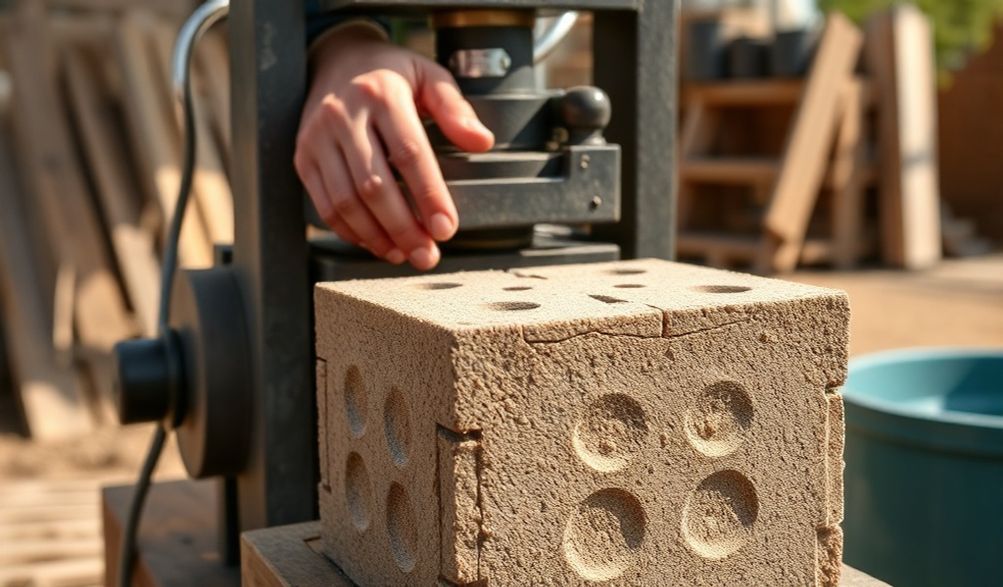
في صميمه، آلة صنع الكتل المتشابكة اليدوية هي جهاز يعمل بالطاقة البشرية مصمم لضغط خليط من التربة الرطبة والرمل ونسبة صغيرة من الأسمنت إلى كتل عالية الكثافة ومتشابكة هندسياً. تتجاوز الحاجة إلى الحرق في الأفران، مما يوفر مساراً مبسطاً جذرياً من الأرض الخام إلى وحدة البناء النهائية.
الوظيفة الأساسية والتصميم
الآلة هي دراسة أنيقة في الميزة الميكانيكية. بينما تختلف التصاميم، فإن المكونات الأساسية تظل ثابتة:
- نظام الرافعةتوفر ذراع رافعة فولاذية طويلة القوة اللازمة، حيث يتم تضخيم وزن المشغل وقوته من خلال هذه الآلة البسيطة لتحقيق ضغط عالٍ.
- قالب/قالب الصب:هذا هو التجويف الذي يعطي الكتلة شكلها. عادةً ما يُصنع من الفولاد المقسى لتحمل الضغط المستمر والتآكل.
- غرفة الضغط:حيث يتم تحميل خليط المواد الخام. يقوم مكبس أو رأس ضغط، مدفوعًا بالرافعة، بضغط الخليط عموديًا بقوة هائلة.
- تصميم المفتاح المتشابكمدمج في القالب، هذا يُشكل اللسان والأخدود المميزين للطوب أو المسامير والتجاويف في الأعلى والأسفل والجوانب.
العملية دورية: ملء، ضغط، طرد. عملياً، يمكن لعامل ماهر إنتاج طوبة في أقل من دقيقة.
علم الكتل المتشابكة
تكمن عبقرية هذا النظام ليس فقط في الضغط، بل في الاتصال. فالتصميم المتشابك يخلق رابطة ميكانيكية بين الكتل.
- القضاء على الهاون:الدقة في التثبيت المتشابك تلغي الحاجة إلى وصلات الملاط العمودية. وعادةً ما تُستخدم طبقة أفقية رقيقة من الملاط لضمان استواء الصف.
- الفوائد الجوهريةيؤدي ذلك إلى سرعة أكبر في البناء (لعدم الحاجة لانتظار المونة)، وتقليل الاعتماد على البنائين ذوي المهارات العالية، وتوفير كبير في المواد.
- سلامة الهيكل:نمط التشابك يُنشئ جدارًا يعمل بشكل أكبر كمصفوفة موحدة ومرنة. أظهرت الملاحظات الميدانية في المناطق الزلزالية أن الجدران المصنوعة من الكتل المتشابكة والمبنية بشكل جيد يمكن أن تبدي مقاومة أفضل للشقوق مقارنة بالبناء التقليدي، حيث يسمح التشابك بحركة طفيفة دون فشل كارثي.
المزايا الرئيسية لاستخدام مكبس البلوك اليدوي
اختيار مكبس يدوي هو قرار استراتيجي يحمل فوائد متعددة الأوجه، تتراوح بين الجوانب الاقتصادية والبيئية والتمكين.
فعالية تكلفة استثنائية
The financial case is compelling, especially for small to medium-scale projects.
- استثمار رأسمالي منخفض Compared to motorized or hydraulic block plants costing tens of thousands, a high-quality manual press represents a minimal upfront cost.
- Radical Material Cost Reduction: The primary ingredient—soil—is often available on-site or locally for little to no cost. Cement usage is minimal (typically 5-10% by volume).
- Ongoing Savings: Eliminating vertical mortar saves approximately 30-50% of mortar costs and related labor.
Sustainability and Eco-Friendly Construction
This technology aligns perfectly with green building principles.
- Localized Material Use: Utilizing 70-90% in-situ materials drastically cuts the carbon emissions and cost associated with transporting heavy building materials.
- طاقة مُتجسِّدة منخفضة: With no firing process, the energy input is virtually limited to human labor and the small cement fraction. This contrasts sharply with fired bricks, which are major consumers of coal or firewood.
- Non-Toxic & Recyclable: The blocks are made from natural earth and stabilize with cement. At end-of-life, they can be crushed and returned to the earth or re-used as aggregate.
Empowerment and Operational Simplicity
Perhaps the most profound advantage is the shift in control it offers.
- الإنتاج حسب الطلب You are no longer at the mercy of supplier schedules or market price fluctuations. Blocks can be produced as needed, on-site.
- Low Technical Barrier: Operation can be learned in a matter of hours. Training focuses more on material preparation than complex machinery operation.
- Ideal for Diverse Contexts: This makes it a tool of choice for self-help housing projects, remote community development, disaster reconstruction (as promoted by organizations like UN-Habitat), and small-scale entrepreneurial ventures.
The Step-by-Step Block Production Process
Success with a manual press hinges on process, not just the machine. Here is the proven workflow, drawn from field-tested best practices.
Stage 1: Material Selection and Preparation
This is the most critical phase. Poor materials guarantee poor blocks.
- اختبار التربة: Not all soil is suitable. You need a balanced mix of clay (as a binder), silt, and sand (for stability). Simple field tests are essential:
- Jar Test: Fill a clear jar with 1/3 soil and 2/3 water, shake vigorously, and let it settle over 24 hours. The layers will reveal the approximate proportions of sand, silt, and clay.
- Ribbon Test: Moisten a handful of soil and try to roll it into a thin ribbon. If it forms a long, flexible ribbon, it’s too clay-rich. If it crumbles immediately, it’s too sandy. A moderate ribbon that breaks is often a good sign.
- تصميم الخلطة: A common starting formula is approximately 70% soil, 25% sand, and 5% cement by volume. The sand corrects clay-heavy soil. Moisture content is crucial: The mix must be damp enough to bind, but not wet. The “hand-squeeze test” is key—a squeezed handful should form a ball that holds its shape without crumbling or dripping water.
Stage 2: Compression and Molding
With your properly prepared mix, you move to the machine.
- Load: Fill the compression chamber evenly with the mix. Do not overfill or underfill; consistency is key for uniform block density.
- ضغط: Pull down the lever arm firmly and steadily. You will feel significant resistance as the mix compacts. Apply full pressure. Some machines require a second “locking” press.
- طرد: Release the lever, open any latches, and pull the lever again to raise the piston and eject the fresh “green” block onto a pallet or board.
Stage 3: Curing and Quality Control
Fresh blocks are fragile and must be handled with care.
- التداوي Stack the green blocks in a shaded area and cover them with a plastic sheet. This traps moisture and allows the cement to hydrate slowly, gaining strength. Light watering for the first 7-10 days is beneficial. Avoid rapid drying in direct sun, which causes cracking.
- مراقبة الجودة: Perform simple tests:
- Drop Test: After 7 days, lift a block to waist height and drop it onto a firm, flat surface. A good quality block should not break or chip severely.
- Visual Inspection: Check for large cracks, crumbling edges, or uneven shapes, which indicate incorrect mix or compression.
Critical Factors Before You Buy or Use One
A balanced, authoritative guide must address practical realities. Informed preparation prevents costly mistakes.
تقييم متطلبات مشروعك
Ask yourself these questions first:
- What is my daily block requirement? (A manual press typically produces 80-150 blocks per 8-hour day with a crew).
- What soil types are available on or near my site? (Plan for testing and potential sand purchase).
- Is this for a single home, a community building, or a commercial block-making business? Scale dictates feasibility.
Machine Specifications and Features to Compare
Not all machines are created equal. Scrutinize these aspects:
- Block Size & Design: Common sizes are similar to standard bricks or larger (e.g., 225mm x 110mm x 75mm). Ensure the interlocking pattern is robust.
- القدرة الإنتاجية: Linked to design efficiency. Test the lever mechanics—the action should be smooth and solid.
- جودة التصنيع: Inspect weld points, steel thickness (especially the mold and lever), and overall finish. A heavier machine often indicates more durable steel.
- Support System: Does the supplier offer spare parts (like wear plates for the mold)? Is there technical support available?
Understanding Limitations and Challenges
Acknowledging these builds trust and sets realistic expectations:
- Labor Intensive: High-volume projects (e.g., a large school) require a significant, organized labor force.
- Soil Dependency: If your local soil is purely organic topsoil or gravel, you may need to import suitable material, affecting cost.
- سرعة الإنتاج It cannot match the output of a fully automated electric or hydraulic machine. It is a tool for appropriate-scale projects.
Applications and Project Ideas
The versatility of interlocking blocks opens numerous doors:
- Affordable Housing and Community Projects: This is the primary application. From individual homes to clinics, schools, and community centers, the technology is championed by development organizations globally for its cost-control and community participation potential.
- Landscape and Garden Construction: A perfect pilot project. Build retaining walls, raised garden beds, compost bins, or decorative pathways. It’s a low-risk way to master the process.
- Entrepreneurial Opportunity: Starting a Small Block Yard Business: With one or two machines, you can establish a micro-enterprise, producing and selling blocks to local builders. Focus on consistent quality and educate your market on the benefits.
FAQ Section
Q: How strong are interlocking soil blocks compared to fired bricks?
أ: Compressive strength typically ranges from 3 to 7 Megapascals (MPa), which is suitable for load-bearing walls in 1-2 story buildings, as per many building codes. While high-quality fired bricks can be stronger, properly made interlocking blocks provide more than adequate strength for most low-rise residential construction. The key is proper material selection and production.
Q: Can I use pure soil from my backyard?
أ: Almost certainly not. Backyard topsoil contains organic matter, which decomposes and compromises block strength. You need mineral subsoil, typically found below the top 300mm. A simple jar test will tell you if it needs sand or clay amendment.
Q: Is a foundation different for interlocking blocks?
أ: Yes, and getting it right is non-negotiable. The interlocking system begins above a stable, perfectly level base. A standard concrete strip foundation or a mortared rubble trench foundation is used. The first course of blocks is then laid in a full bed of mortar on this “plinth” to create a level starting point for the dry-stack interlocking system.
Q: What is the typical cost range for a good quality manual machine?
أ: Prices vary widely by region, quality, and features. As a general guide, expect a range from approximately $500 to $2,000 USD. Be wary of machines at the very bottom end; they may use inferior steel and wear out quickly. Invest in robust construction from a reputable supplier.
Q: Where can I get training on using the machine?
أ: Start with your machine supplier; many offer basic training. Look for NGOs or social enterprises working in sustainable construction (e.g., organizations inspired by the Good Earth Trust or Habitat for Humanity’s techniques). Reputable online video tutorials can also provide excellent visual guidance on the process.
خاتمة
The manual interlocking block making machine is far more than a simple tool; it’s an enabler of affordable, sustainable, and community-empowered construction. It shifts the focus from buying expensive materials to understanding and utilizing local resources intelligently.
Our final expert insight is this: the machine’s success is only 50% dependent on its steel and leverage. The other 50% resides in the operator’s knowledge of material science and disciplined process. The true “technology” is the holistic system of soil, water, cement, compression, and care.
Your clear next step is to move from theory to practice. Begin with a simple jar test on your site’s soil. Reach out to local suppliers to inspect machines firsthand. Connect with others who have used this technology. Consider starting with a small, non-critical project like a garden wall. This hands-on experience is invaluable. Remember, prioritize learning and preparation—your first 100 blocks are a learning process that will pave the way to successful, durable construction.
<