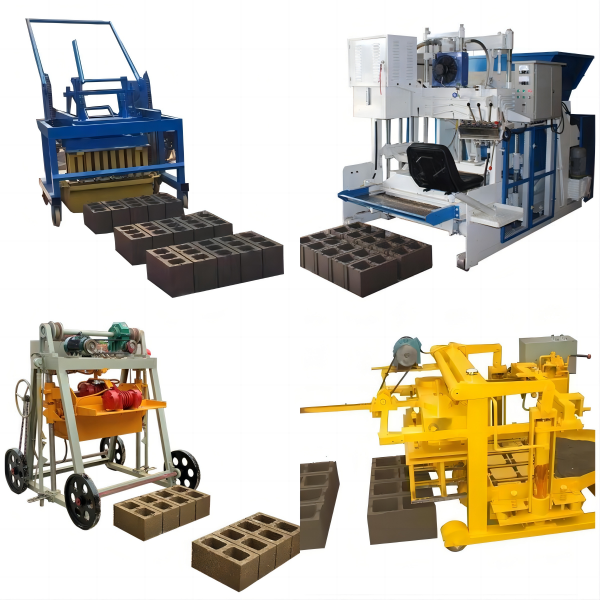
El Tejido del Mercado de Maquinaria para Mampostería en Estados Unidos
Características Distintivas del Paisaje Doméstico
El mercado de maquinaria para bloques de cemento en Estados Unidos está moldeado por varias fuerzas únicas que no siempre están presentes en otras regiones globales. En primer lugar, la escala de operaciones varía drásticamente, desde pequeños patios de fabricación familiares que abastecen a constructores locales hasta plantas automatizadas masivas que sirven a empresas multinacionales de construcción y proyectos de infraestructura gubernamentales. Esta diversidad requiere un portafolio de maquinaria igualmente variado. En segundo lugar, un fuerte sentimiento de "Compre Americano", frecuentemente reforzado por políticas de adquisición federales y estatales para obras públicas, influye en las decisiones de compra. Aunque no siempre es un mandato, un compromiso demostrable con la manufactura doméstica, el ensamblaje local o un extenso soporte de partes y servicios locales proporciona una ventaja competitiva significativa. Además, la vasta extensión geográfica del país crea demandas regionales distintas; la maquinaria para los desarrollos habitacionales de alto volumen y ritmo acelerado en el Sunbelt debe ser robusta y de alta capacidad, mientras que el equipo para proyectos especializados de valor agregado en el Noreste podría priorizar la versatilidad para productos arquitectónicos.
Principales Factores de Demanda e Indicadores Económicos
Comprender qué impulsa al mercado estadounidense es crucial para sincronizar las inversiones y alinear las estrategias de ventas. Los principales impulsores están profundamente entrelazados con la economía nacional.
- Legislación Federal de Infraestructura:El gasto federal a gran escala en carreteras, puentes e instalaciones públicas genera una demanda directa y sostenida de unidades de mampostería de concreto (CMU). Esto se extiende a los fabricantes y distribuidores de maquinaria, ya que los productores de bloques buscan aumentar su capacidad y eficiencia para asegurar estos contratos lucrativos.
- Tendencias del Mercado Inmobiliario:La construcción residencial es un pilar fundamental de la demanda de maquinaria para ladrillo y bloque. Los inicios de construcción de viviendas unifamiliares y multifamiliares se correlacionan directamente con los pedidos de bloques estructurales estándar y productos de revestimiento. El seguimiento de los permisos de vivienda y las tasas hipotecarias proporciona un indicador líder confiable para las ventas de maquinaria.
- Construcción Comercial e Industrial:La salud del sector de bienes raíces comerciales, que incluye edificios de oficinas, almacenes y espacios comerciales, impacta significativamente el mercado. El actual auge en la construcción de centros de logística y distribución, por ejemplo, es un gran consumidor de tipos específicos de bloques de concreto.
- El Sector de Remodelación y Renovación:A menudo pasado por alto, el mercado de reparación y mejora de infraestructura y edificios existentes proporciona una demanda constante y contracíclica. Este sector frecuentemente requiere máquinas más pequeñas y versátiles, capaces de producir unidades personalizadas o que coincidan para la preservación histórica.
Una Taxonomía Detallada de Maquinaria para el Operador Estadounidense
Máquinas Independientes para Fabricar Bloques: La Tecnología Central
El núcleo de cualquier operación de albañilería es la máquina para hacer bloques en sí. En el contexto de Estados Unidos, estas se clasifican según su método de operación y su capacidad de producción.
- Prensas Manuales y Semiautomáticas:Estas máquinas requieren una participación significativa del operador para alimentar materias primas (concreto, arena, pigmento) y retirar los productos terminados. Se caracterizan por una inversión inicial más baja y son adecuadas para pequeñas empresas, fabricantes de productos especializados o para producción en el sitio de proyectos muy grandes. Su producción se mide en cientos de bloques por día.
- Máquinas Estáticas Completamente Automáticas:Estas son la columna vertebral de muchas plantas estadounidenses pequeñas y medianas. Integran la alimentación de material, la mezcla, la compactación a alta presión (vibración e hidráulica) y el curado en un solo sistema estacionario. Aunque aún se necesitan uno o dos operadores, el proceso está en gran parte automatizado, con una producción que va de 1,000 a 5,000 bloques por turno de 8 horas, dependiendo del modelo y del tamaño del bloque.
- Máquinas de Bloques Móviles para Producción en Sitio:Un segmento especializado pero en crecimiento, estas unidades autónomas pueden transportarse a un gran sitio de construcción para producir bloques directamente donde se necesitan. Esto elimina los costos de transporte de productos terminados, reduce el daño al producto y ofrece una flexibilidad inigualable. Son ideales para ubicaciones remotas o proyectos donde una cadena de suministro constante desde una planta fija es logísticamente complicada.
Sistemas de Producción Integrados y Equipos Auxiliares
To achieve the high-volume outputs required by the broader market, standalone machines are just one component. A complete turnkey solution involves a synchronized ecosystem of equipment.
- Material Handling and Batching Systems: These automated systems receive, store, and precisely weigh raw aggregates, cement, and water. They ensure a consistent and correct mix design, which is the absolute foundation of product quality and strength. For U.S. producers, consistency is key to meeting ASTM standards.
- Curing and Drying Solutions: The strength of concrete block is developed through controlled curing. Advanced systems use automated racks and climate-controlled chambers (often called “curing kilns”) that regulate temperature and humidity to accelerate the curing process, freeing up pallets for reuse and dramatically increasing overall plant throughput.
- Palletizing and Packaging Systems: Once cured, blocks must be stacked, banded, and wrapped for storage and shipment. Automated palletizers and robotic arm systems can handle this task with minimal human intervention, reducing labor costs and preventing damage to the finished product. For distributors, offering these ancillary systems can significantly increase the value of a sale.
Navigating the U.S. Regulatory and Compliance Environment
Adherence to ASTM and OSHA Standards
Compliance is not optional in the U.S. market. Machinery must be designed to produce blocks that meet the relevant American Society for Testing and Materials (ASTM) standards, such as ASTM C90 for load-bearing concrete masonry units. This influences machine design, particularly the pressure and vibration systems that determine block density and strength. Furthermore, the machinery itself must comply with stringent safety regulations set forth by the Occupational Safety and Health Administration (OSHA). This includes mandatory safety guards, emergency stop systems, lockout/tagout procedures, and noise level controls. Distributors must verify that their suppliers provide comprehensive documentation proving compliance to avoid liability and facilitate smooth market entry.
Emissions and Environmental Considerations
Environmental regulations, enforced by the Environmental Protection Agency (EPA) and state-level bodies, are increasingly influential. While primarily affecting the block producers themselves, this trickles down to machinery. Plants are seeking equipment that minimizes waste, optimizes energy consumption, and supports the use of recycled materials like fly ash or slag in the concrete mix. Machinery that is demonstrably “greener” through lower energy consumption or water recycling features is becoming a more attractive selling point.
Strategic Sourcing and Procurement for the B2B Sector
Evaluating the Total Cost of Ownership (TCO) in a Competitive Landscape
The initial purchase price is merely one component of the financial calculation. A sophisticated TCO analysis is essential for justifying investment to American clients who are increasingly focused on long-term value.
- Desembolso de Capital Inicial: Includes the machine cost, shipping, import duties (if applicable), and installation/commissioning.
- Costos Operativos: Encompasses energy consumption (a major factor with high-horsepower machines), routine wear parts (molds, mixer blades, hydraulic seals), and labor.
- Mantenimiento y Tiempo de Inactividad: The single largest hidden cost. A reliable machine with excellent domestic service support and readily available spare parts will have a far lower TCO than a cheaper machine prone to unscheduled downtime, which can halt an entire production line.
- Valor de Reventa: Equipment from manufacturers with a strong reputation for durability and support will retain a higher residual value in the robust U.S. secondary market.
Building a Resilient Supply Chain and Support Network
For a distributor, the relationship with the machinery supplier is paramount. Key considerations include:
- Domestic Presence and Support: Does the manufacturer have a warehouse, spare parts depot, or technical support team within the United States? The ability to provide on-the-ground service within 24-48 hours is a critical differentiator.
- Training and Documentation: Comprehensive training for both the distributor’s service technicians and the end-client’s operators is non-negotiable. Documentation must be clear, in English, and cover operation, maintenance, and troubleshooting in detail.
- Financial Stability of the Supplier: The construction equipment industry is cyclical. Partnering with a financially stable manufacturer ensures they will be available to honor warranties and provide support for the lifespan of the machine, which can be a decade or more.
Conclusión
The U.S. market for block brick machinery is a complex but highly rewarding arena for knowledgeable distributors and procurement professionals. Success hinges on a deep, multi-faceted strategy that goes beyond simply offering a machine for sale. It requires an understanding of the macroeconomic drivers, a comprehensive product portfolio that can serve diverse client needs, and an unwavering commitment to the regulatory and compliance standards that define American industry. The most successful players will be those who act as consultants and partners to their clients, offering not just equipment, but complete production solutions backed by robust local support. By focusing on the total cost of ownership, the integrity of the supply chain, and the unique dynamics of the domestic construction sector, B2B stakeholders can position themselves for sustained growth and leadership in this vital and ever-evolving market.
Frequently Asked Questions (FAQ)
Q1: What are the typical power requirements for a mid-range automatic block making machine in the U.S.?
A: A typical fully automatic stationary machine with a production capacity of around 2,000 blocks per 8-hour shift will generally require a robust 3-phase electrical supply, often in the range of 50 to 100 horsepower (approx. 37-75 kW) for the entire system, including the mixer, conveyor, and main press. It is crucial to verify the specific voltage (e.g., 480V) and amperage requirements with the manufacturer prior to installation.
Q2: How critical is local parts inventory for distributors in this market?
A: Extremely critical. Downtime is the enemy of profitability for your clients. Maintaining a local inventory of high-wear parts—such as mold liners, mixer blades, hydraulic hoses, and specific sensors—is a major competitive advantage. It allows for rapid response and repair, often within a single day, which builds immense customer loyalty and justifies premium service contracts.
Q3: Can machinery be customized to produce the specific block sizes and styles popular in different U.S. regions?
A: Absolutely. The ability to customize is a key selling feature. Manufacturers should offer a wide range of standard mold sizes for common U.S. units (e.g., 8x8x16 inch) but also have the engineering capability to produce custom molds for regional specialties, architectural shapes, split-face blocks, or landscaper units. The flexibility to quickly change molds for short production runs is highly valued.
Q4: What is the average lead time from order to delivery for a new machine?
A: Lead times can vary significantly. For a standard model from a supplier with U.S. inventory, delivery might be 4-6 weeks. For a custom-configured machine or a large turnkey plant shipped from overseas, lead times can range from 4 to 8 months, factoring in manufacturing, ocean freight, and customs clearance. Clear communication and a detailed delivery schedule from the supplier are essential.
Q5: Are there financing or leasing options commonly available for this type of equipment in the U.S.?
A: Yes, financing is very common. Many equipment suppliers partner with third-party financial institutions that specialize in commercial and industrial equipment loans and leases. Offering these options to your clients can make a significant capital investment more accessible, especially for small and medium-sized businesses looking to expand. Lease-to-own agreements can be a particularly attractive option.