Tsarin Kasuwannin Injinan Gina Katako na Amurka
Siffofin Musamman na Yanayin Gida
Kasuwannin na'urorin yin tubalin bulo a cikin Amurka yana ƙarƙashin tasirin wasu ƙungiyoyi na musamman da ba koyaushe ake samun su a wasu yankuna na duniya ba. Na farko, sikelin ayyukan ya bambanta sosai, daga ƙananan gidaje na iyali waɗanda ke ba da gine-gine na gida, zuwa manyan masana'antu masu sarrafa kai waɗanda ke hidimar kamfanonin gine-gine na ƙasashen duniya da ayyukan ababen more rayuwa na gwamnati. Wannan bambancin yana buƙatar tarin na'urori masu bambancin iri ɗaya. Na biyu, ƙaƙƙarfan ra'ayi na "Sayi Amurka," wanda sau da yawa ke ƙarfafa ta hanyar manufofin sayayya na tarayya da na jihohi don ayyukan jama'a, yana rinjayar yanke shawarar saye. Duk da cewa ba koyaushe tilas ba ne, tabbataccen sadaukarwa ga masana'antu na cikin gida, taro, ko faɗin tallafin sassa da sabis na gida yana ba da fa'ida mai mahimmanci. Bugu da ƙari, faɗin yankin ƙasar yana haifar da buƙatu na yanki daban-daban; na'urorin da ake amfani da su don haɓakar gidaje masu yawa da sauri a yankin Sunbelt dole ne su zama masu ƙarfi da ƙarfi, yayin da kayan aikin keɓaɓɓen ayyuka masu ƙima a Arewa maso Gabas na iya ba da fifiko ga bambance-bambance don samfuran gine-gine.
Maɓuɓɓukan Buƙatu Masu Muhimmanci da Alamomin Tattalin Arziki
Fahimtar abin da ke haifar da kasuwar Amurka yana da mahimmanci don tsara lokacin saka hannun jari da daidaita dabarun tallace-tallace. Tushen abubuwan motsawa suna da alaƙa sosai da tattalin arzikin ƙasa.
- Dokokin Kayayyakin More Rayuwa na Tarayya:Babban kashe kuɗi na tarayya kan hanyoyi, gadoji, da kayan aikin jama'a yana haifar da buƙatu kai tsaye da dorewa na raka'a na siminti (CMUs). Wannan yana kwararowa zuwa masana'antun injiniyoyi da masu rarrabawa, yayin da masu samar da tubalan ke neman ƙara ƙarfi da inganci don tabbatar da waɗannan kwangiloli masu riba.
- Trends na Kasuwar Gidaje:Ginin gidaje shine tushen buƙatar injinan bulo da tubali. Fara gina gidaje na ɗaya da na yawan iyali suna da alaƙa kai tsaye da odar ingantattun tubalan gini da samfuran rufi. Bin izinin gine-gine da farashin lamuni yana ba da ingantaccen ma'auni na farko don tallace-tallacen injinan.
- Ginin Kasuwanci da Masana'antu:Lafiyar sashin kadarorin kasuwanci, gami da gine-ginen ofis, ɗakunan ajiya, da wuraren kasuwanci, yana tasiri sosai ga kasuwa. Ƙwararrun ginin dabaru da cibiyoyin rarrabawa a halin yanzu, alal misali, babban mai amfani ne da takamaiman nau'ikan tubalan siminti.
- Sashin Gyaran Gine-gine da Sabuntawa:Sau da yawa ana yin watsi da shi, kasuwar gyara da haɓaka abubuwan more rayuwa da gine-gine na yanzu tana ba da tsayayyen buƙatu mai jujjuyawar zagayowar tattalin arziki. Wannan fanni yakan buƙaci ƙananan injuna masu sassauƙa, waɗanda ke iya samar da na al'ada ko daidaitattun raka'a don kiyaye tarihi.
Takamaitaccen Rarrabuwar Kayan Aiki don Ma'aikacin Amurka
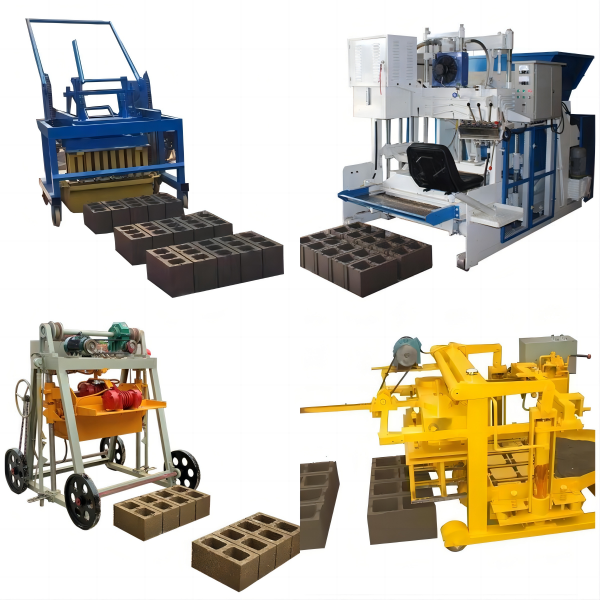
Na'urorin Yin Tubali Na Kadai: Cikin Fasahar Tsakiya
At the heart of any masonry operation is the block making machine itself. In the U.S. context, these are categorized by their operation method and output potential.
- Matsi na Hannu da Matsi na Rago-da-kai: These machines require significant operator involvement for feeding raw materials (concrete, sand, pigment) and removing finished products. They are characterized by a lower initial investment and are suitable for small businesses, specialty product manufacturers, or for on-site production for very large projects. Their output is measured in hundreds of blocks per day.
- Fully Automatic Static Machines: These are the backbone of many small to mid-sized U.S. plants. They integrate material feeding, mixing, high-pressure compaction (vibration and hydraulics), and curing into a single, stationary system. While one or two operators are still needed, the process is largely automated, with outputs ranging from 1,000 to 5,000 blocks per 8-hour shift, depending on model and block size.
- Mobile Block Machines for On-Site Production: A niche but growing segment, these self-contained units can be transported to a large construction site to produce blocks directly where they are needed. This eliminates transportation costs for finished goods, reduces product damage, and provides unparalleled flexibility. They are ideal for remote locations or projects where a consistent supply chain from a fixed plant is logistically challenging.
Integrated Production Systems and Auxiliary Equipment
To achieve the high-volume outputs required by the broader market, standalone machines are just one component. A complete turnkey solution involves a synchronized ecosystem of equipment.
- Material Handling and Batching Systems: These automated systems receive, store, and precisely weigh raw aggregates, cement, and water. They ensure a consistent and correct mix design, which is the absolute foundation of product quality and strength. For U.S. producers, consistency is key to meeting ASTM standards.
- Curing and Drying Solutions: The strength of concrete block is developed through controlled curing. Advanced systems use automated racks and climate-controlled chambers (often called “curing kilns”) that regulate temperature and humidity to accelerate the curing process, freeing up pallets for reuse and dramatically increasing overall plant throughput.
- Palletizing and Packaging Systems: Once cured, blocks must be stacked, banded, and wrapped for storage and shipment. Automated palletizers and robotic arm systems can handle this task with minimal human intervention, reducing labor costs and preventing damage to the finished product. For distributors, offering these ancillary systems can significantly increase the value of a sale.
Navigating the U.S. Regulatory and Compliance Environment
Adherence to ASTM and OSHA Standards
Compliance is not optional in the U.S. market. Machinery must be designed to produce blocks that meet the relevant American Society for Testing and Materials (ASTM) standards, such as ASTM C90 for load-bearing concrete masonry units. This influences machine design, particularly the pressure and vibration systems that determine block density and strength. Furthermore, the machinery itself must comply with stringent safety regulations set forth by the Occupational Safety and Health Administration (OSHA). This includes mandatory safety guards, emergency stop systems, lockout/tagout procedures, and noise level controls. Distributors must verify that their suppliers provide comprehensive documentation proving compliance to avoid liability and facilitate smooth market entry.
Emissions and Environmental Considerations
Environmental regulations, enforced by the Environmental Protection Agency (EPA) and state-level bodies, are increasingly influential. While primarily affecting the block producers themselves, this trickles down to machinery. Plants are seeking equipment that minimizes waste, optimizes energy consumption, and supports the use of recycled materials like fly ash or slag in the concrete mix. Machinery that is demonstrably “greener” through lower energy consumption or water recycling features is becoming a more attractive selling point.
Strategic Sourcing and Procurement for the B2B Sector
Evaluating the Total Cost of Ownership (TCO) in a Competitive Landscape
The initial purchase price is merely one component of the financial calculation. A sophisticated TCO analysis is essential for justifying investment to American clients who are increasingly focused on long-term value.
- Babban Kuɗin Farko: Includes the machine cost, shipping, import duties (if applicable), and installation/commissioning.
- Kudin Aiki: Encompasses energy consumption (a major factor with high-horsepower machines), routine wear parts (molds, mixer blades, hydraulic seals), and labor.
- Kulawa da Dakatarwa: The single largest hidden cost. A reliable machine with excellent domestic service support and readily available spare parts will have a far lower TCO than a cheaper machine prone to unscheduled downtime, which can halt an entire production line.
- Ƙimar Siyarwa: Equipment from manufacturers with a strong reputation for durability and support will retain a higher residual value in the robust U.S. secondary market.
Building a Resilient Supply Chain and Support Network
For a distributor, the relationship with the machinery supplier is paramount. Key considerations include:
- Domestic Presence and Support: Does the manufacturer have a warehouse, spare parts depot, or technical support team within the United States? The ability to provide on-the-ground service within 24-48 hours is a critical differentiator.
- Training and Documentation: Comprehensive training for both the distributor’s service technicians and the end-client’s operators is non-negotiable. Documentation must be clear, in English, and cover operation, maintenance, and troubleshooting in detail.
- Financial Stability of the Supplier: The construction equipment industry is cyclical. Partnering with a financially stable manufacturer ensures they will be available to honor warranties and provide support for the lifespan of the machine, which can be a decade or more.
Ƙarshe
The U.S. market for block brick machinery is a complex but highly rewarding arena for knowledgeable distributors and procurement professionals. Success hinges on a deep, multi-faceted strategy that goes beyond simply offering a machine for sale. It requires an understanding of the macroeconomic drivers, a comprehensive product portfolio that can serve diverse client needs, and an unwavering commitment to the regulatory and compliance standards that define American industry. The most successful players will be those who act as consultants and partners to their clients, offering not just equipment, but complete production solutions backed by robust local support. By focusing on the total cost of ownership, the integrity of the supply chain, and the unique dynamics of the domestic construction sector, B2B stakeholders can position themselves for sustained growth and leadership in this vital and ever-evolving market.
Tambayoyin da ake yawan yi (FAQ)
Q1: What are the typical power requirements for a mid-range automatic block making machine in the U.S.?
A: A typical fully automatic stationary machine with a production capacity of around 2,000 blocks per 8-hour shift will generally require a robust 3-phase electrical supply, often in the range of 50 to 100 horsepower (approx. 37-75 kW) for the entire system, including the mixer, conveyor, and main press. It is crucial to verify the specific voltage (e.g., 480V) and amperage requirements with the manufacturer prior to installation.
Q2: How critical is local parts inventory for distributors in this market?
A: Extremely critical. Downtime is the enemy of profitability for your clients. Maintaining a local inventory of high-wear parts—such as mold liners, mixer blades, hydraulic hoses, and specific sensors—is a major competitive advantage. It allows for rapid response and repair, often within a single day, which builds immense customer loyalty and justifies premium service contracts.
Q3: Can machinery be customized to produce the specific block sizes and styles popular in different U.S. regions?
A: Absolutely. The ability to customize is a key selling feature. Manufacturers should offer a wide range of standard mold sizes for common U.S. units (e.g., 8x8x16 inch) but also have the engineering capability to produce custom molds for regional specialties, architectural shapes, split-face blocks, or landscaper units. The flexibility to quickly change molds for short production runs is highly valued.
Q4: What is the average lead time from order to delivery for a new machine?
A: Lead times can vary significantly. For a standard model from a supplier with U.S. inventory, delivery might be 4-6 weeks. For a custom-configured machine or a large turnkey plant shipped from overseas, lead times can range from 4 to 8 months, factoring in manufacturing, ocean freight, and customs clearance. Clear communication and a detailed delivery schedule from the supplier are essential.
Q5: Are there financing or leasing options commonly available for this type of equipment in the U.S.?
A: Yes, financing is very common. Many equipment suppliers partner with third-party financial institutions that specialize in commercial and industrial equipment loans and leases. Offering these options to your clients can make a significant capital investment more accessible, especially for small and medium-sized businesses looking to expand. Lease-to-own agreements can be a particularly attractive option.