
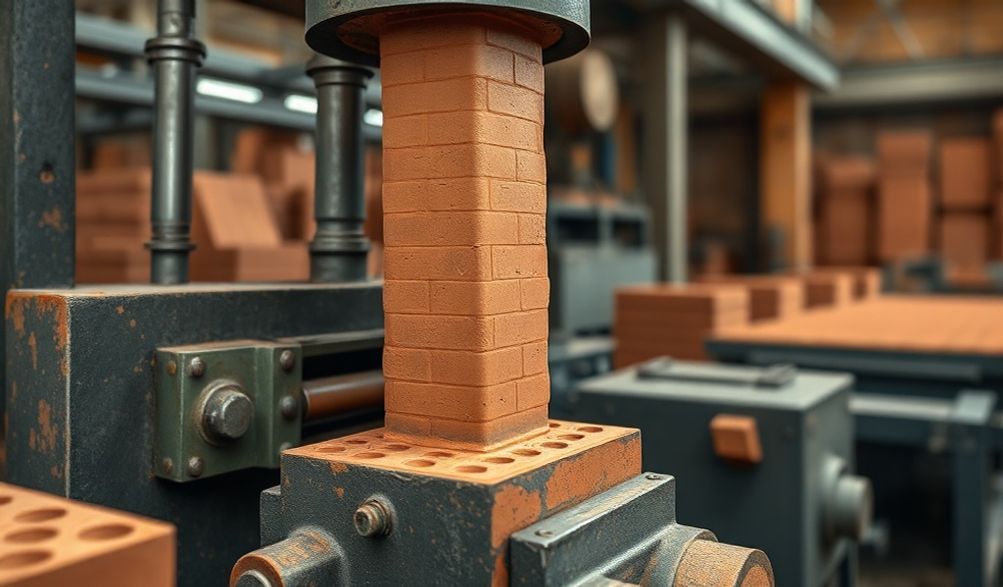
Guía Completa de Máquinas para Fabricar Ladrillos de Terracota: Proceso, Tipos e Inversión
Introducción
Desde la grandeza de los antiguos acueductos romanos hasta las cálidas y terrosas fachadas de las modernas viviendas sostenibles, el ladrillo de terracota ha sido un pilar fundamental de la arquitectura humana durante milenios. Su atractivo eterno reside en una combinación única de belleza natural, durabilidad y masa térmica. Sin embargo, detrás de esta estética perdurable se esconde un desafío de producción: los métodos tradicionales y manuales de fabricación de ladrillos de terracota son profundamente intensivos en mano de obra, propensos a inconsistencias en la calidad y simplemente demasiado lentos para satisfacer las demandas de la construcción contemporánea.
Para los fabricantes, constructores y emprendedores de hoy, la solución se encuentra en la ingeniería moderna.Máquina para fabricar ladrillos de terracotatransforma esta antigua artesanía en un proceso industrial preciso, eficiente y escalable. Esta guía sirve como tu recurso integral e imparcial. Basándonos en el conocimiento de la industria, diseccionaremos todo el ecosistema: desde el proceso central de cocción que define la "terracota", hasta los matices mecánicos de los diferentes tipos de máquinas, consideraciones de inversión y sabiduría operativa. Ya sea que estés investigando para un proyecto o planeando un emprendimiento comercial, esta guía está diseñada para equiparte con la experiencia necesaria para tomar una decisión verdaderamente informada.
Comprensión de la Producción de Ladrillos de Terracota
Antes de adentrarnos en la maquinaria, es crucial entender qué estamos produciendo. El término "terracota" no es solo un color; es un producto cerámico específico con propiedades distintivas.
¿Qué hace que un ladrillo sea "terracota"?
- Definición:Terracota, del italiano "tierra cocida", es un tipo de cerámica a base de arcilla sin esmaltar. Su característico tono rojizo-marrón no proviene de una pintura o esmalte, sino que es un resultado directo de laproceso de cocciónen una atmósfera de horno rica en oxígeno (oxidante).
- Material Clave:El color se origina del óxido de hierro (óxido) presente en la arcilla. Al cocerse, típicamente entre 950°C y 1100°C (1742°F – 2012°F), este hierro se oxida, produciendo el rango de color cálido y permanente que va del rojo anaranjado al marrón profundo. La arcilla en sí debe ser rica en este mineral portador de hierro y tener una plasticidad adecuada para el moldeado.
El Proceso de Fabricación Tradicional vs. Moderno
- Método Tradicional:Esto implica moldear a mano la arcilla en marcos de madera, seguido de días o semanas de secado al sol para eliminar la humedad. Luego, los ladrillos se apilan minuciosamente en un horno de tipo "clamp" o periódico para su cocción, un proceso que requiere supervisión constante y que resulta en una calidad variable debido a la distribución desigual del calor.
- Flujo de Trabajo Mecanizado Moderno:Este es un proceso continuo y optimizado. Comienza con la alimentación de arcilla preparada en una máquina que la moldea y compacta a alta presión. Los ladrillos crudos (sin cocer) luego se secan sistemáticamente en cámaras controladas antes de ser cocidos en hornos túnel o Hoffman altamente eficientes. La máquina para fabricar ladrillos es el primer eslabón crítico en esta cadena moderna, garantizando un producto consistente y de alta calidad listo para las etapas posteriores de secado y cocción.
Cómo Funciona una Máquina para Hacer Ladrillos de Terracota
En esencia, una máquina para hacer ladrillos automatiza el moldeado y compactación de arcilla. Aunque los diseños varían, el proceso mecánico fundamental sigue una secuencia lógica.
El Proceso Mecánico Fundamental: De la Arcilla al Ladrillo
- Preparación y Alimentación de Arcilla:El proceso comienzaantes the machine. Raw clay is first crushed, screened to remove stones, and mixed with water to achieve a uniform, workable consistency (often called “pugged” clay). This prepared material is then fed into the machine’s hopper.
- Molding & Compaction (The Heart of the Machine): This is where the magic happens. An auger (a large screw) drives the clay forward into a de-airing chamber (on advanced models) to remove air pockets, which prevents cracking. The clay is then forced under extreme pressure through a specially designed mold or die. This “extrusion” process creates a continuous column of clay in the desired shape—solid, hollow, or paver.
- Cutting & Stacking: The continuous clay column exits the mold. An automatic wire-cut system or hydraulic cutter slices it into individual bricks of precise length. From here, conveyor belts or robotic arms transfer the “green” bricks to pallets or carts for transport to the drying area.
- Secado y Cocción: While not part of the machine itself, this is the essential next step. The machine’s output must be carefully dried to remove remaining moisture (preventing explosions in the kiln) and then fired in a kiln to achieve the final terracotta hardness and color.
Componentes Clave y Sus Funciones
- Hopper: The entry point for the prepared clay.
- Auger: The rotating shaft that conveys and initially compacts the clay.
- Molde/Matriz: The defining component that shapes the brick. Interchangeable for different products.
- Sistema Hidráulico: Provides the immense pressure (measured in tons) needed for compaction in automatic machines.
- Panel de Control: Houses the PLC or controls for automating pressure, speed, and cut length.
- Bandas Transportadoras: Transport bricks from the cutter to the stacking area.
Types of Terracotta Brick Making Machines
The market offers a spectrum of machines, from simple to fully integrated plants. Your choice depends entirely on scale, budget, and labor availability.
Máquinas Manuales y Semiautomáticas
- Ideal Para: Small-scale production, artisan workshops, startups, or custom brick projects.
- Cómo Funcionan: These often use a lever-operated or small hydraulic press to compact clay placed manually into a mold. The operator removes the green brick and repeats the process.
- Pros: Very low initial investment, simple to operate and maintain, low power consumption.
- Contras: High labor intensity, low output (typically 500-2,000 bricks per day), physical strain on operators, quality can vary with operator skill.
Plantas de Fabricación de Ladrillos Completamente Automáticas
- Ideal Para: Medium to large-scale commercial production supplying construction projects or retailers.
- Cómo Funcionan: These are integrated systems. Clay is automatically fed, extruded, cut, and stacked with minimal human intervention. They often include auto-palletizers and are synchronized with conveyor systems.
- Pros: Very high output (5,000 to 30,000+ bricks per 8-hour shift), exceptional consistency, dramatically reduced labor costs, better working conditions.
- Contras: High capital cost, require stable three-phase power supply, more complex maintenance, need for a larger operating space and infrastructure.
Specialized Machines: Hollow Blocks, Pavers, & Custom Shapes
The versatility of a brick machine lies in its mold. By simply changing the die, a single machine can often produce:
* Bloques Huecos: For lighter weight and improved insulation.
* Paving Bricks (Clay Pavers):Para entradas de vehículos, caminos y patios.
* Special Shapes: Curved bricks, capping units, or decorative elements.
Always verify the machine’s capability for “quick mold change” systems and the cost/availability of different dies.
Key Factors When Choosing a Machine
Selecting the right machine is a strategic decision. Avoid choosing based on price alone by carefully evaluating these factors.
Evaluando Sus Necesidades de Producción
Pregúntate a ti mismo:
* Producción Diaria/Anual: What volume of bricks do I need to produce to meet demand?
* Tipo y Tamaño del Ladrillo: Will I produce only standard solid bricks, or do I need flexibility for hollow blocks or pavers?
* Espacio Disponible: Do I have adequate space for the machine, clay storage, a drying yard, and a kiln?
Clay Quality and Machine Compatibility
This is a critical, often overlooked, expert consideration. The machine must match your clay’s properties.
* Plasticidad: Clay that is too sandy won’t hold shape; clay that is too sticky can jam the auger.
* Shrinkage: Different clays shrink at different rates during drying/firing, affecting final brick size.
* Best Practice: Always conduct a lab test on your clay sample and share the results with machine suppliers. They can recommend the right extrusion pressure, moisture content, and even auger design.
Power Source: Electric, Diesel, or Hybrid?
- Eléctrico: Most common for stationary plants. Requires reliable grid power (often 3-phase). Clean, quiet, and efficient.
- Diésel: Essential for sites without grid power or for mobile operations. Higher fuel costs and maintenance, but offers independence.
- Híbrido: Offers flexibility to switch between power sources, useful in areas with frequent power outages.
Budgeting: Machine Cost vs. Total Investment
The machine’s price tag is just one part of the total capital required. A realistic budget includes:
1. Machine Price & Shipping
2. Installation & Commissioning
3. Raw Material Handling Equipment: Clay crusher, mixer/pugmill, conveyor feeders.
4. Drying Infrastructure: Drying sheds or chambers with controlled airflow.
5. Firing Investment: The kiln (tunnel, Hoffman, etc.) is often a larger investment than the brick machine itself.
6. Spare Parts Kit and initial training.
Benefits of Investing in a Terracotta Brick Machine
The shift from manual to mechanized production offers transformative advantages that go beyond mere speed.
Incomparable Consistencia y Control de Calidad
Every brick is identical in dimensions, density, and weight. This precision is impossible with hand molding and leads to:
* Faster, easier bricklaying.
* Structurally uniform walls.
* Consistent aesthetic appeal across batches.
Eficiencia de Producción Incrementada Dramáticamente
A single semi-automatic machine can outperform 15-20 skilled manual laborers. A fully automatic plant can replace an entire workshop. This allows you to:
* Meet large orders and tight deadlines.
* Scale your business predictably.
* Reallocate human labor to quality control, maintenance, and logistics.
Ahorro de Costos a Largo Plazo y Retorno de la Inversión
While the upfront cost is significant, the long-term economics are compelling:
* Reduced Labor Costs: The largest recurring expense in manual production is drastically cut.
* Lower Waste: Precise control means less clay spoilage and fewer defective bricks.
* Faster Turnover: Quicker production cycles improve cash flow.
Supporting Sustainable Construction
Terracotta is inherently sustainable—a natural, durable, and recyclable material. Mechanization enhances this profile:
* Eficiencia Energética: Modern machines and kilns use less energy per brick produced than traditional methods.
* Abastecimiento Local: Enables local production using local clay, reducing transport carbon footprint.
* Material Health: A pure, chemical-free building product.
Common Challenges and Maintenance Tips
Forewarned is forearmed. Understanding potential pitfalls is key to smooth operation.
Operational Challenges and Solutions
- Varying Clay Quality: Solution: Implement strict quality control for incoming clay and blend different batches for consistency.
- Wear and Tear on Molds & Augers: Solution: Keep spare wear parts (like the auger tip and liner) in stock. Use hardened steel for longer life.
- Initial Setup Hurdles: Solution: Work closely with your supplier during commissioning. Ensure your foundation is perfectly level and power supply is adequate.
Essential Routine Maintenance Schedule
Adhering to a maintenance schedule prevents costly breakdowns.
* Diariamente Clean the machine thoroughly at the end of each shift. Check for loose bolts. Lubricate all moving parts as per the manual.
* Semanal Inspect the wire-cut system, hydraulic hoses for leaks, and the condition of the mold.
* Monthly: Check hydraulic oil level and cleanliness. Inspect electrical connections. Measure wear on the auger and liner.
Maximizing Machine Lifespan
- Proper Operation: Never force the wrong type of clay (e.g., stone-filled) through the machine.
- Refacciones Originales: Always use OEM or high-quality equivalent parts.
- Capacitación de Operadores: Invest in thorough training. A skilled operator who understands the machine’s sounds and rhythms is your first line of defense against major failures.
FAQ: Your Terracotta Machine Questions Answered
Q1: What is the average price range for a terracotta brick making machine?
A: Prices vary dramatically. A basic manual press can start from $3,000 – $8,000. A robust semi-automatic machine may range from $15,000 – $50,000. A fully automatic production line can start from $70,000 and exceed $250,000+, depending on capacity and automation level. The specific configuration, brand, and power source cause significant variation.
Q2: Can one machine produce different sizes and styles of bricks?
A: Yes, absolutely. This is achieved by changing the mold or die at the extrusion outlet. Most suppliers offer a range of interchangeable molds. However, the ease of change varies—some require tools and an hour of work, while advanced models feature quicker changeover systems.
Q3: What is the typical production capacity of these machines?
A: Capacity is measured in bricks per hour. A small semi-automatic might produce 800-2,000 bricks per 8-hour shift. A medium-sized automatic machine can produce 5,000-10,000 bricks per shift. Large-scale plants can exceed 20,000 bricks per shift. Always verify capacity based on the specific brick size and density.
Q4: How important is the clay preparation process before using the machine?
A: It is crucial. Feeding poorly prepared (lumpy, inconsistently moist, or contaminated) clay into even the best machine will result in jams, poor-quality bricks, and accelerated wear. Investing in proper crushing, screening, and mixing/pugging equipment is non-negotiable for professional results.
Q5: What after-sales support should I look for from a supplier?
A: Prioritize suppliers who offer:
* A clear warranty (at least 1 year on core components).
* Ready availability of a spare parts kit and a long-term supply chain for wear parts.
* Detailed installation drawings or, ideally, supervised installation.
* Access to technical support via phone, email, or video call.
* Operator and maintenance training programs.
Conclusión
Investing in a Máquina para fabricar ladrillos de terracota is more than a purchase; it’s a strategic upgrade from an artisanal craft to a modern, viable manufacturing business. It brings control, scale, and profitability to the production of one of the world’s most beloved building materials. As we’ve explored, the “right” machine is not a universal answer but a precise fit based on your clay, your output goals, and your budget.
The final expert guidance is this: move from general research to specific inquiry. Test your clay. Prepare a detailed business plan with realistic output targets. Use that information to request detailed quotations and, most importantly, ask for a live demonstration from shortlisted suppliers to see the machine in action. The growing global emphasis on sustainable, natural building materials positions terracotta perfectly for the future. With the right mechanized partner, you can build a business that is not only profitable but also contributes to a legacy of beautiful, enduring construction.
<