
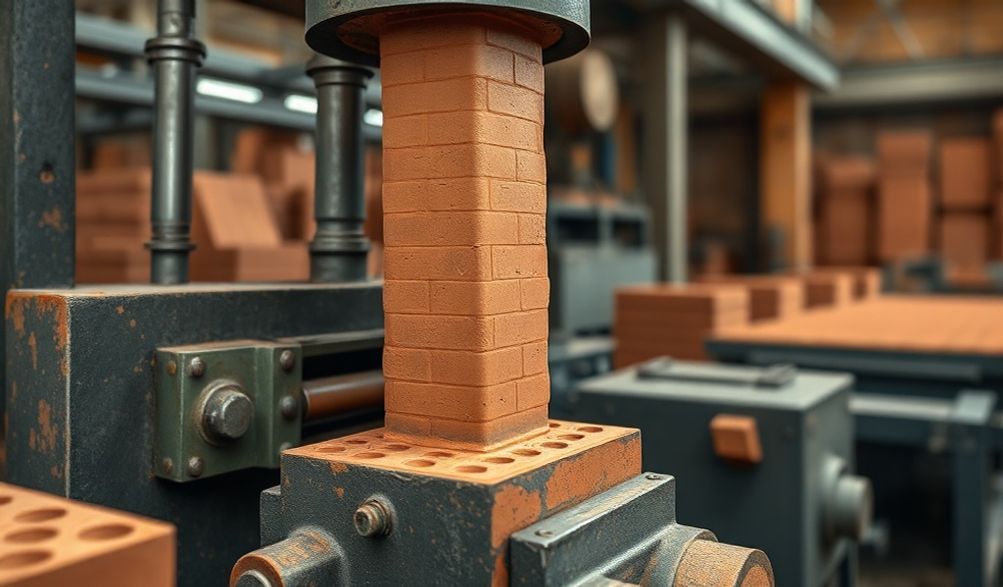
الدليل الشامل لآلات صنع الطوب التراكوتا: العملية، الأنواع والاستثمار
مقدمة
من عظمة قنوات المياه الرومانية القديمة إلى واجهات المنازل المستدامة الحديثة الدافئة والترابية، كان الطوب التراكوتا حجر الزاوية في العمارة البشرية لآلاف السنين. يكمن جاذبيته الخالدة في مزيج فريد من الجمال الطبيعي والمتانة والقدرة الحرارية. ومع ذلك، وراء هذا الجمال الدائم يكمن تحدي إنتاجي: فأساليب صنع الطوب التراكوتا التقليدية اليدوية تتطلب عمالة كثيفة للغاية، وعرضة لعدم اتساق الجودة، وببساطة بطيئة جدًا لتلبية متطلبات البناء المعاصرة.
بالنسبة للمصنعين والبنائين ورواد الأعمال اليوم، يكمن الحل في الهندسة الحديثة.آلة صنع الطوب التراكوتايحول هذا الحرفة القديمة إلى عملية صناعية دقيقة وفعالة وقابلة للتوسع. يعمل هذا الدليل كمورد شامل وحيادي لك. بالاعتماد على المعرفة الصناعية، سنقوم بتشريح النظام البيئي بأكمله - بدءًا من عملية الحرق الأساسية التي تحدد "التراكوتا" وصولاً إلى الفروق الدقيقة الميكانيكية لأنواع الآلات المختلفة، والاعتبارات الاستثمارية، والحكمة التشغيلية. سواء كنت تبحث لمشروع أو تخطط لمشروع تجاري، صمم هذا الدليل لتزويدك بالخبرة اللازمة لاتخاذ قرار مستنير حقًا.
فهم إنتاج الطوب الطيني
قبل الخوض في الآلات، من الضروري فهم ما ننتجه. مصطلح "التراكوتا" ليس مجرد لون؛ إنه منتج خزفي محدد بخصائص متميزة.
ما الذي يجعل الطوب "تراكوتا"؟
- تعريف:التراكوتا، من الإيطالية "الأرض المخبوزة"، هي نوع من السيراميك غير المزجج القائم على الطين. لونها البني المحمر المميز لا يأتي من طلاء أو زجاج، بل هو نتيجة مباشرة لـعملية الإطلاقفي جو فرن غني بالأكسجين (مؤكسد).
- المادة الرئيسيةينشأ اللون من أكسيد الحديد (الصدأ) الموجود في الطين. عند حرقه عادةً بين 950°م و1100°م (1742°ف – 2012°ف)، يتأكسد هذا الحديد منتجاً نطاقاً لونياً دافئاً دائماً يتراوح من البرتقالي المحمر إلى البني الداكن. يجب أن يكون الطين نفسه غنياً بهذا المعدن الحامل للحديد وذا لدونة مناسبة للتشكيل.
العملية التصنيعية التقليدية مقابل الحديثة
- الطريقة التقليدية:يتضمن ذلك تشكيل الطين يدوياً في قوالب خشبية، يتبعها تجفيفه لأيام أو أسابيع تحت أشعة الشمس لإزالة الرطوبة. ثم يتم رص الطوب بدقة في فرن تقليدي أو دوري للحرق—وهي عملية تتطلب إشرافاً مستمراً وتؤدي إلى جودة متفاوتة بسبب التوزيع غير المتساوي للحرارة.
- سير العمل الميكانيكي الحديث:هذه عملية مستمرة ومبسطة. تبدأ بتغذية الطين المُعدّ في آلة تقوم بقولبته وضغطه تحت ضغط عالٍ. ثم تُجفف الطوب الأخضر (غير المحروق) بشكل منهجي في غرف مجهزة بتحكم دقيق قبل حرقه في أفران نفقية أو أفران هوفمان عالية الكفاءة. تُعد آلة صنع الطوب الحلقة الأولى الحاسمة في هذه السلسلة الحديثة، مما يضمن منتجًا متسقًا وعالي الجودة جاهزًا لمراحل التجفيف والحرق اللاحقة.
كيف تعمل آلة صنع الطوب الطيني
في صميمها، تعمل آلة صنع الطوب على أتمتة تشكيل وضغط الطين. وبينما تختلف التصاميم، فإن العملية الميكانيكية الأساسية تتبع تسلسلاً منطقياً.
العملية الميكانيكية الأساسية: من الطين إلى الطوب
- تحضير الطين والتغذية:تبدأ العمليةقبل the machine. Raw clay is first crushed, screened to remove stones, and mixed with water to achieve a uniform, workable consistency (often called “pugged” clay). This prepared material is then fed into the machine’s hopper.
- Molding & Compaction (The Heart of the Machine): This is where the magic happens. An auger (a large screw) drives the clay forward into a de-airing chamber (on advanced models) to remove air pockets, which prevents cracking. The clay is then forced under extreme pressure through a specially designed العفن أو الموت. This “extrusion” process creates a continuous column of clay in the desired shape—solid, hollow, or paver.
- Cutting & Stacking: The continuous clay column exits the mold. An automatic wire-cut system or hydraulic cutter slices it into individual bricks of precise length. From here, conveyor belts or robotic arms transfer the “green” bricks to pallets or carts for transport to the drying area.
- التجفيف والحرق: While not part of the machine itself, this is the essential next step. The machine’s output must be carefully dried to remove remaining moisture (preventing explosions in the kiln) and then fired in a kiln to achieve the final terracotta hardness and color.
المكونات الرئيسية ووظائفها
- هوبر: The entry point for the prepared clay.
- Auger: The rotating shaft that conveys and initially compacts the clay.
- قالب/ماتريس: The defining component that shapes the brick. Interchangeable for different products.
- النظام الهيدروليكي: Provides the immense pressure (measured in tons) needed for compaction in automatic machines.
- لوحة التحكم: Houses the PLC or controls for automating pressure, speed, and cut length.
- أحزمة النقل: Transport bricks from the cutter to the stacking area.
Types of Terracotta Brick Making Machines
The market offers a spectrum of machines, from simple to fully integrated plants. Your choice depends entirely on scale, budget, and labor availability.
الآلات اليدوية وشبه الآلية
- مثالي لـ: Small-scale production, artisan workshops, startups, or custom brick projects.
- كيف تعمل: These often use a lever-operated or small hydraulic press to compact clay placed manually into a mold. The operator removes the green brick and repeats the process.
- مزايا: Very low initial investment, simple to operate and maintain, low power consumption.
- سلبيات: High labor intensity, low output (typically 500-2,000 bricks per day), physical strain on operators, quality can vary with operator skill.
مصانع الطوب الآلية بالكامل
- مثالي لـ: Medium to large-scale commercial production supplying construction projects or retailers.
- كيف تعمل: These are integrated systems. Clay is automatically fed, extruded, cut, and stacked with minimal human intervention. They often include auto-palletizers and are synchronized with conveyor systems.
- مزايا: Very high output (5,000 to 30,000+ bricks per 8-hour shift), exceptional consistency, dramatically reduced labor costs, better working conditions.
- سلبيات: High capital cost, require stable three-phase power supply, more complex maintenance, need for a larger operating space and infrastructure.
Specialized Machines: Hollow Blocks, Pavers, & Custom Shapes
The versatility of a brick machine lies in its mold. By simply changing the die, a single machine can often produce:
* الطوب المجوف: For lighter weight and improved insulation.
* Paving Bricks (Clay Pavers):للممرات والمشايات والتراسات.
* Special Shapes: Curved bricks, capping units, or decorative elements.
Always verify the machine’s capability for “quick mold change” systems and the cost/availability of different dies.
Key Factors When Choosing a Machine
Selecting the right machine is a strategic decision. Avoid choosing based on price alone by carefully evaluating these factors.
تقييم احتياجاتك الإنتاجية
اسأل نفسك:
* الإنتاج اليومي/السنوي: What volume of bricks do I need to produce to meet demand?
* نوع الطوب والحجم: Will I produce only standard solid bricks, or do I need flexibility for hollow blocks or pavers?
* المساحة المتاحة: Do I have adequate space for the machine, clay storage, a drying yard, and a kiln?
Clay Quality and Machine Compatibility
This is a critical, often overlooked, expert consideration. The machine must match your clay’s properties.
* المرونة: Clay that is too sandy won’t hold shape; clay that is too sticky can jam the auger.
* Shrinkage: Different clays shrink at different rates during drying/firing, affecting final brick size.
* Best Practice: Always conduct a lab test on your clay sample and share the results with machine suppliers. They can recommend the right extrusion pressure, moisture content, and even auger design.
مصدر الطاقة: كهربائي، ديزل، أم هجين؟
- كهربائي Most common for stationary plants. Requires reliable grid power (often 3-phase). Clean, quiet, and efficient.
- ديزل Essential for sites without grid power or for mobile operations. Higher fuel costs and maintenance, but offers independence.
- هجين: Offers flexibility to switch between power sources, useful in areas with frequent power outages.
Budgeting: Machine Cost vs. Total Investment
The machine’s price tag is just one part of the total capital required. A realistic budget includes:
1. Machine Price & Shipping
2. Installation & Commissioning
3. Raw Material Handling Equipment: Clay crusher, mixer/pugmill, conveyor feeders.
4. Drying Infrastructure: Drying sheds or chambers with controlled airflow.
5. Firing Investment: The kiln (tunnel, Hoffman, etc.) is often a larger investment than the brick machine itself.
6. Spare Parts Kit and initial training.
Benefits of Investing in a Terracotta Brick Machine
The shift from manual to mechanized production offers transformative advantages that go beyond mere speed.
اتساق لا مثيل له ومراقبة الجودة
Every brick is identical in dimensions, density, and weight. This precision is impossible with hand molding and leads to:
* Faster, easier bricklaying.
* Structurally uniform walls.
* Consistent aesthetic appeal across batches.
زيادة كبيرة في كفاءة الإنتاج
A single semi-automatic machine can outperform 15-20 skilled manual laborers. A fully automatic plant can replace an entire workshop. This allows you to:
* Meet large orders and tight deadlines.
* Scale your business predictably.
* Reallocate human labor to quality control, maintenance, and logistics.
التوفير طويل الأجل في التكاليف والعائد على الاستثمار
While the upfront cost is significant, the long-term economics are compelling:
* Reduced Labor Costs: The largest recurring expense in manual production is drastically cut.
* Lower Waste: Precise control means less clay spoilage and fewer defective bricks.
* Faster Turnover: Quicker production cycles improve cash flow.
Supporting Sustainable Construction
Terracotta is inherently sustainable—a natural, durable, and recyclable material. Mechanization enhances this profile:
* كفاءة الطاقة: Modern machines and kilns use less energy per brick produced than traditional methods.
* التوريد المحلي: Enables local production using local clay, reducing transport carbon footprint.
* Material Health: A pure, chemical-free building product.
Common Challenges and Maintenance Tips
Forewarned is forearmed. Understanding potential pitfalls is key to smooth operation.
Operational Challenges and Solutions
- Varying Clay Quality: Solution: Implement strict quality control for incoming clay and blend different batches for consistency.
- Wear and Tear on Molds & Augers: Solution: Keep spare wear parts (like the auger tip and liner) in stock. Use hardened steel for longer life.
- Initial Setup Hurdles: Solution: Work closely with your supplier during commissioning. Ensure your foundation is perfectly level and power supply is adequate.
Essential Routine Maintenance Schedule
Adhering to a maintenance schedule prevents costly breakdowns.
* Daily: Clean the machine thoroughly at the end of each shift. Check for loose bolts. Lubricate all moving parts as per the manual.
* Weekly: Inspect the wire-cut system, hydraulic hoses for leaks, and the condition of the mold.
* Monthly: Check hydraulic oil level and cleanliness. Inspect electrical connections. Measure wear on the auger and liner.
Maximizing Machine Lifespan
- Proper Operation: Never force the wrong type of clay (e.g., stone-filled) through the machine.
- قطع غيار أصلية: Always use OEM or high-quality equivalent parts.
- Operator Training: Invest in thorough training. A skilled operator who understands the machine’s sounds and rhythms is your first line of defense against major failures.
FAQ: Your Terracotta Machine Questions Answered
Q1: What is the average price range for a terracotta brick making machine?
أ: Prices vary dramatically. A basic manual press can start from 3,000 دولار – 8,000 دولار. A robust semi-automatic machine may range from ١٥٬٠٠٠ – ٥٠٬٠٠٠ دولارًا. A fully automatic production line can start from $70,000 and exceed $250,000+, depending on capacity and automation level. The specific configuration, brand, and power source cause significant variation.
Q2: Can one machine produce different sizes and styles of bricks?
أ: Yes, absolutely. This is achieved by changing the mold or die at the extrusion outlet. Most suppliers offer a range of interchangeable molds. However, the ease of change varies—some require tools and an hour of work, while advanced models feature quicker changeover systems.
Q3: What is the typical production capacity of these machines?
أ: Capacity is measured in bricks per hour. A small semi-automatic might produce 800-2,000 bricks per 8-hour shift. A medium-sized automatic machine can produce 5,000-10,000 bricks per shift. Large-scale plants can exceed 20,000 bricks per shift. Always verify capacity based on the specific brick size and density.
Q4: How important is the clay preparation process before using the machine?
أ: It is crucial. Feeding poorly prepared (lumpy, inconsistently moist, or contaminated) clay into even the best machine will result in jams, poor-quality bricks, and accelerated wear. Investing in proper crushing, screening, and mixing/pugging equipment is non-negotiable for professional results.
Q5: What after-sales support should I look for from a supplier?
أ: Prioritize suppliers who offer:
* A clear warranty (at least 1 year on core components).
* Ready availability of a spare parts kit and a long-term supply chain for wear parts.
* Detailed installation drawings or, ideally, supervised installation.
* Access to technical support via phone, email, or video call.
* Operator and maintenance training programs.
خاتمة
الاستثمار فيآلة صنع الطوب التراكوتا is more than a purchase; it’s a strategic upgrade from an artisanal craft to a modern, viable manufacturing business. It brings control, scale, and profitability to the production of one of the world’s most beloved building materials. As we’ve explored, the “right” machine is not a universal answer but a precise fit based on your clay, your output goals, and your budget.
The final expert guidance is this: move from general research to specific inquiry. Test your clay. Prepare a detailed business plan with realistic output targets. Use that information to request detailed quotations and, most importantly, ask for a live demonstration from shortlisted suppliers to see the machine in action. The growing global emphasis on sustainable, natural building materials positions terracotta perfectly for the future. With the right mechanized partner, you can build a business that is not only profitable but also contributes to a legacy of beautiful, enduring construction.
<