
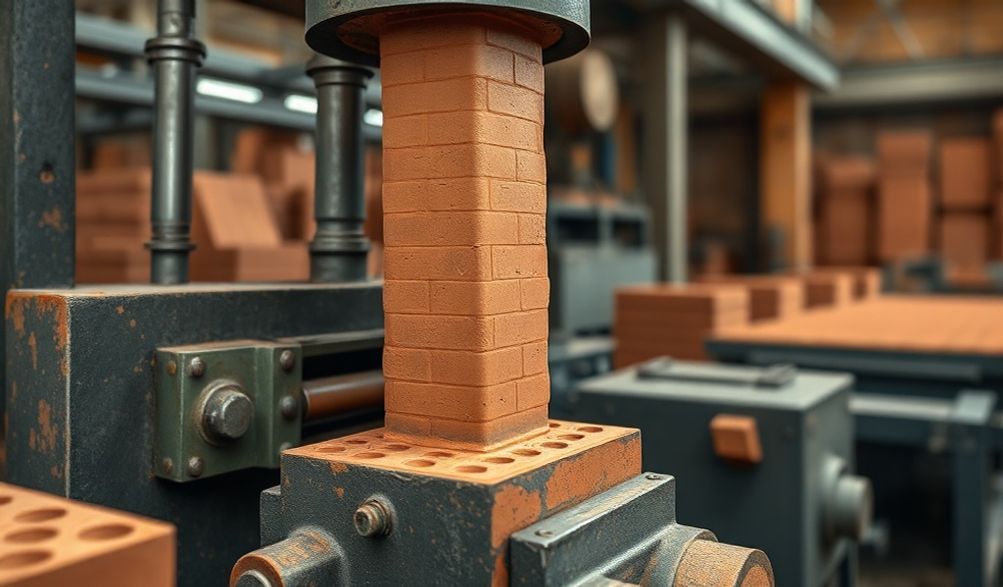
The Complete Guide to Terracotta Brick Making Machines: Process, Types & Investment
Introduction
From the grandeur of ancient Roman aqueducts to the warm, earthy facades of modern sustainable homes, terracotta brick has been a cornerstone of human architecture for millennia. Its timeless appeal lies in a unique blend of natural beauty, durability, and thermal mass. However, behind this enduring aesthetic lies a production challenge: traditional, manual methods of making terracotta bricks are profoundly labor-intensive, prone to quality inconsistencies, and simply too slow to meet contemporary construction demands.
For today’s manufacturers, builders, and entrepreneurs, the solution lies in modern engineering. A terracotta brick making machine transforms this ancient craft into a precise, efficient, and scalable industrial process. This guide serves as your comprehensive, unbiased resource. Drawing on industry knowledge, we will dissect the entire ecosystem—from the core firing process that defines “terracotta” to the mechanical nuances of different machine types, investment considerations, and operational wisdom. Whether you’re investigating for a project or planning a commercial venture, this guide is designed to equip you with the expertise to make a truly informed decision.
Understanding Terracotta Brick Production
Before delving into machinery, it’s crucial to understand what we’re producing. The term “terracotta” isn’t just a color; it’s a specific ceramic product with distinct properties.
What Makes a Brick “Terracotta”?
- Definition: Terracotta, from the Italian for “baked earth,” is a type of clay-based, unglazed ceramic. Its signature reddish-brown hue is not from a paint or glaze but is a direct result of the firing process in an oxygen-rich (oxidizing) kiln atmosphere.
- Key Material: The color originates from the iron oxide (rust) present in the clay. When fired typically between 950°C and 1100°C (1742°F – 2012°F), this iron oxidizes, producing the permanent, warm color range from orange-red to deep brown. The clay itself must be rich in this iron-bearing mineral and have suitable plasticity for molding.
The Traditional vs. Modern Manufacturing Process
- Traditional Method: This involves hand-molding clay into wooden frames, followed by days or weeks of sun-drying to remove moisture. The bricks are then painstakingly stacked in a clamp or periodic kiln for firing—a process requiring constant supervision and resulting in variable quality due to uneven heat distribution.
- Modern Mechanized Workflow: This is a streamlined, continuous process. It begins with prepared clay being fed into a machine that molds and compacts it with high pressure. The green (unfired) bricks are then systematically dried in controlled chambers before being fired in highly efficient tunnel or Hoffman kilns. The brick making machine is the critical first link in this modern chain, ensuring a consistent, high-quality product ready for the downstream drying and firing stages.
How a Terracotta Brick Making Machine Works
At its core, a brick making machine automates the forming and compaction of clay. While designs vary, the fundamental mechanical process follows a logical sequence.
The Core Mechanical Process: From Clay to Brick
- Clay Preparation & Feeding: The process starts before the machine. Raw clay is first crushed, screened to remove stones, and mixed with water to achieve a uniform, workable consistency (often called “pugged” clay). This prepared material is then fed into the machine’s hopper.
- Molding & Compaction (The Heart of the Machine): This is where the magic happens. An auger (a large screw) drives the clay forward into a de-airing chamber (on advanced models) to remove air pockets, which prevents cracking. The clay is then forced under extreme pressure through a specially designed mold or die. This “extrusion” process creates a continuous column of clay in the desired shape—solid, hollow, or paver.
- Cutting & Stacking: The continuous clay column exits the mold. An automatic wire-cut system or hydraulic cutter slices it into individual bricks of precise length. From here, conveyor belts or robotic arms transfer the “green” bricks to pallets or carts for transport to the drying area.
- Drying & Firing: While not part of the machine itself, this is the essential next step. The machine’s output must be carefully dried to remove remaining moisture (preventing explosions in the kiln) and then fired in a kiln to achieve the final terracotta hardness and color.
Key Components and Their Functions
- Hopper: The entry point for the prepared clay.
- Auger: The rotating shaft that conveys and initially compacts the clay.
- Mould/Die: The defining component that shapes the brick. Interchangeable for different products.
- Hydraulic System: Provides the immense pressure (measured in tons) needed for compaction in automatic machines.
- Control Panel: Houses the PLC or controls for automating pressure, speed, and cut length.
- Conveyor Belts: Transport bricks from the cutter to the stacking area.
Types of Terracotta Brick Making Machines
The market offers a spectrum of machines, from simple to fully integrated plants. Your choice depends entirely on scale, budget, and labor availability.
Manual & Semi-Automatic Machines
- Ideal For: Small-scale production, artisan workshops, startups, or custom brick projects.
- How They Work: These often use a lever-operated or small hydraulic press to compact clay placed manually into a mold. The operator removes the green brick and repeats the process.
- Pros: Very low initial investment, simple to operate and maintain, low power consumption.
- Cons: High labor intensity, low output (typically 500-2,000 bricks per day), physical strain on operators, quality can vary with operator skill.
Fully Automatic Brick Making Plants
- Ideal For: Medium to large-scale commercial production supplying construction projects or retailers.
- How They Work: These are integrated systems. Clay is automatically fed, extruded, cut, and stacked with minimal human intervention. They often include auto-palletizers and are synchronized with conveyor systems.
- Pros: Very high output (5,000 to 30,000+ bricks per 8-hour shift), exceptional consistency, dramatically reduced labor costs, better working conditions.
- Cons: High capital cost, require stable three-phase power supply, more complex maintenance, need for a larger operating space and infrastructure.
Specialized Machines: Hollow Blocks, Pavers, & Custom Shapes
The versatility of a brick machine lies in its mold. By simply changing the die, a single machine can often produce:
* Hollow Blocks: For lighter weight and improved insulation.
* Paving Bricks (Clay Pavers): For driveways, walkways, and patios.
* Special Shapes: Curved bricks, capping units, or decorative elements.
Always verify the machine’s capability for “quick mold change” systems and the cost/availability of different dies.
Key Factors When Choosing a Machine
Selecting the right machine is a strategic decision. Avoid choosing based on price alone by carefully evaluating these factors.
Assessing Your Production Needs
Ask yourself:
* Daily/Annual Output: What volume of bricks do I need to produce to meet demand?
* Brick Type & Size: Will I produce only standard solid bricks, or do I need flexibility for hollow blocks or pavers?
* Available Space: Do I have adequate space for the machine, clay storage, a drying yard, and a kiln?
Clay Quality and Machine Compatibility
This is a critical, often overlooked, expert consideration. The machine must match your clay’s properties.
* Plasticity: Clay that is too sandy won’t hold shape; clay that is too sticky can jam the auger.
* Shrinkage: Different clays shrink at different rates during drying/firing, affecting final brick size.
* Best Practice: Always conduct a lab test on your clay sample and share the results with machine suppliers. They can recommend the right extrusion pressure, moisture content, and even auger design.
Power Source: Electric, Diesel, or Hybrid?
- Electric: Most common for stationary plants. Requires reliable grid power (often 3-phase). Clean, quiet, and efficient.
- Diesel: Essential for sites without grid power or for mobile operations. Higher fuel costs and maintenance, but offers independence.
- Hybrid: Offers flexibility to switch between power sources, useful in areas with frequent power outages.
Budgeting: Machine Cost vs. Total Investment
The machine’s price tag is just one part of the total capital required. A realistic budget includes:
1. Machine Price & Shipping
2. Installation & Commissioning
3. Raw Material Handling Equipment: Clay crusher, mixer/pugmill, conveyor feeders.
4. Drying Infrastructure: Drying sheds or chambers with controlled airflow.
5. Firing Investment: The kiln (tunnel, Hoffman, etc.) is often a larger investment than the brick machine itself.
6. Spare Parts Kit and initial training.
Benefits of Investing in a Terracotta Brick Machine
The shift from manual to mechanized production offers transformative advantages that go beyond mere speed.
Unmatched Consistency and Quality Control
Every brick is identical in dimensions, density, and weight. This precision is impossible with hand molding and leads to:
* Faster, easier bricklaying.
* Structurally uniform walls.
* Consistent aesthetic appeal across batches.
Dramatically Increased Production Efficiency
A single semi-automatic machine can outperform 15-20 skilled manual laborers. A fully automatic plant can replace an entire workshop. This allows you to:
* Meet large orders and tight deadlines.
* Scale your business predictably.
* Reallocate human labor to quality control, maintenance, and logistics.
Long-Term Cost Savings and ROI
While the upfront cost is significant, the long-term economics are compelling:
* Reduced Labor Costs: The largest recurring expense in manual production is drastically cut.
* Lower Waste: Precise control means less clay spoilage and fewer defective bricks.
* Faster Turnover: Quicker production cycles improve cash flow.
Supporting Sustainable Construction
Terracotta is inherently sustainable—a natural, durable, and recyclable material. Mechanization enhances this profile:
* Energy Efficiency: Modern machines and kilns use less energy per brick produced than traditional methods.
* Local Sourcing: Enables local production using local clay, reducing transport carbon footprint.
* Material Health: A pure, chemical-free building product.
Common Challenges and Maintenance Tips
Forewarned is forearmed. Understanding potential pitfalls is key to smooth operation.
Operational Challenges and Solutions
- Varying Clay Quality: Solution: Implement strict quality control for incoming clay and blend different batches for consistency.
- Wear and Tear on Molds & Augers: Solution: Keep spare wear parts (like the auger tip and liner) in stock. Use hardened steel for longer life.
- Initial Setup Hurdles: Solution: Work closely with your supplier during commissioning. Ensure your foundation is perfectly level and power supply is adequate.
Essential Routine Maintenance Schedule
Adhering to a maintenance schedule prevents costly breakdowns.
* Daily: Clean the machine thoroughly at the end of each shift. Check for loose bolts. Lubricate all moving parts as per the manual.
* Weekly: Inspect the wire-cut system, hydraulic hoses for leaks, and the condition of the mold.
* Monthly: Check hydraulic oil level and cleanliness. Inspect electrical connections. Measure wear on the auger and liner.
Maximizing Machine Lifespan
- Proper Operation: Never force the wrong type of clay (e.g., stone-filled) through the machine.
- Genuine Spare Parts: Always use OEM or high-quality equivalent parts.
- Operator Training: Invest in thorough training. A skilled operator who understands the machine’s sounds and rhythms is your first line of defense against major failures.
FAQ: Your Terracotta Machine Questions Answered
Q1: What is the average price range for a terracotta brick making machine?
A: Prices vary dramatically. A basic manual press can start from $3,000 – $8,000. A robust semi-automatic machine may range from $15,000 – $50,000. A fully automatic production line can start from $70,000 and exceed $250,000+, depending on capacity and automation level. The specific configuration, brand, and power source cause significant variation.
Q2: Can one machine produce different sizes and styles of bricks?
A: Yes, absolutely. This is achieved by changing the mold or die at the extrusion outlet. Most suppliers offer a range of interchangeable molds. However, the ease of change varies—some require tools and an hour of work, while advanced models feature quicker changeover systems.
Q3: What is the typical production capacity of these machines?
A: Capacity is measured in bricks per hour. A small semi-automatic might produce 800-2,000 bricks per 8-hour shift. A medium-sized automatic machine can produce 5,000-10,000 bricks per shift. Large-scale plants can exceed 20,000 bricks per shift. Always verify capacity based on the specific brick size and density.
Q4: How important is the clay preparation process before using the machine?
A: It is crucial. Feeding poorly prepared (lumpy, inconsistently moist, or contaminated) clay into even the best machine will result in jams, poor-quality bricks, and accelerated wear. Investing in proper crushing, screening, and mixing/pugging equipment is non-negotiable for professional results.
Q5: What after-sales support should I look for from a supplier?
A: Prioritize suppliers who offer:
* A clear warranty (at least 1 year on core components).
* Ready availability of a spare parts kit and a long-term supply chain for wear parts.
* Detailed installation drawings or, ideally, supervised installation.
* Access to technical support via phone, email, or video call.
* Operator and maintenance training programs.
Conclusion
Investing in a terracotta brick making machine is more than a purchase; it’s a strategic upgrade from an artisanal craft to a modern, viable manufacturing business. It brings control, scale, and profitability to the production of one of the world’s most beloved building materials. As we’ve explored, the “right” machine is not a universal answer but a precise fit based on your clay, your output goals, and your budget.
The final expert guidance is this: move from general research to specific inquiry. Test your clay. Prepare a detailed business plan with realistic output targets. Use that information to request detailed quotations and, most importantly, ask for a live demonstration from shortlisted suppliers to see the machine in action. The growing global emphasis on sustainable, natural building materials positions terracotta perfectly for the future. With the right mechanized partner, you can build a business that is not only profitable but also contributes to a legacy of beautiful, enduring construction.