
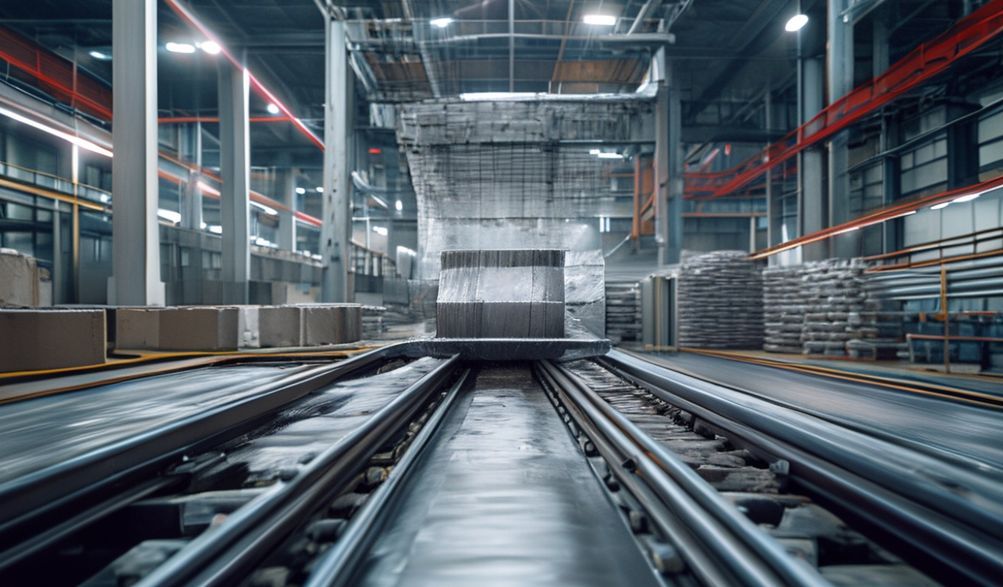
La Guía Definitiva de Máquinas para Hacer Bloques Grandes: Aumenta la Eficiencia y Escala la Producción
Introducción
Imagina esto: acabas de asegurar un contrato para suministrar bloques para un importante desarrollo de viviendas. Tu equipo trabaja día y noche, pero tus pequeñas máquinas manuales no pueden mantener el ritmo. La producción es inconsistente: algunos bloques son débiles, otros tienen el tamaño incorrecto. Los costos de mano de obra se disparan, los plazos se retrasan y te ves obligado a rechazar nuevos negocios. Esta es la implacable realidad de la producción tradicional de bloques a pequeña escala.
Para las empresas constructoras, plantas prefabricadas y desarrolladores de infraestructura, escalar operaciones siempre ha sido un desafío formidable. ¿La solución? Ingeniería de grado industrial: laMáquina grande para hacer bloquesEsto no es solo una mejora; es una transformación completa de tus capacidades de producción, diseñada para satisfacer las enormes demandas de la construcción moderna.
Esta guía definitiva ofrece un desglose integral y dirigido por expertos sobre las máquinas para fabricar bloques grandes. Obtendrás una comprensión clara de cómo funcionan, sus ventajas innegables, los diferentes tipos disponibles y los factores críticos a considerar antes de invertir. Sintetizaremos principios de ingeniería, mejores prácticas operativas y un análisis de costos del mundo real para brindarte el conocimiento necesario para tomar una decisión estratégica y rentable para tu negocio.
¿Qué es una Máquina de Hacer Bloques Grandes? Definiendo la Producción a Escala Industrial
En su esencia, unaMáquina grande para hacer bloqueses un sistema robusto y de alta capacidad diseñado para la fabricación continua y de gran volumen de unidades de mampostería de concreto (CMU). A diferencia de las máquinas manuales o móviles simples, estas son potencias industriales, a menudo estacionarias o semiestacionarias, que automatizan los procesos de llenado, compactación, moldeado y expulsión de bloques con precisión y velocidad.
Aclaremos las distinciones clave con respecto a equipos más pequeños:
* Automatización y Escala:Estas máquinas cuentan con una automatización significativa, desde controladores lógicos programables (PLC) que gestionan el ciclo hasta transportadores y apiladores de paletas integrados. La producción se mide en miles de bloques por turno, no en cientos.
* Tamaño del Bloque y Resistencia:Están diseñadas para producir bloques más grandes y densos, incluyendo bloques huecos, bloques sólidos, bloques para pavimento y bordillos, con una resistencia a la compresión consistentemente alta (a menudo superando los 7 MPa o más, según normas como la ASTM C90).
* Infraestructura Requerida:Operar una es una inversión sistémica. Típicamente requiere un espacio de planta dedicado con un robusto sistema de dosificación de concreto, mesas vibradoras de alta capacidad y áreas organizadas para el curado (como cámaras de vapor) y almacenamiento.
Aplicaciones principalespara este nivel de equipo incluyen:
* Proyectos de vivienda residencial a gran escala y desarrollos de urbanizaciones.
* Complejos comerciales, almacenes industriales y edificios institucionales.
* Infraestructura principal: muros perimetrales, muros de contención y paisajismo a escala cívica.
* Producción de elementos especializados de concreto prefabricado.
Ventajas Clave de Invertir en una Máquina de Hacer Bloques de Gran Capacidad
La transición a maquinaria a escala industrial es una decisión de capital importante. La justificación radica en un conjunto convincente de beneficios operativos y financieros que abordan directamente los puntos críticos de la producción a pequeña escala.
Capacidad y Velocidad de Producción Inigualables
El impacto más inmediato es en tu producción. Una sola máquina grande puede producir10,000 a 30,000+ bloques estándar en un turno de 8 horasdependiendo del modelo y tipo de bloque. Esto se logra mediante tiempos de ciclo rápidos y automatizados—algunas máquinas completan un ciclo (llenar, compactar, moldear, expulsar) en tan solo 10-15 segundos. Esta capacidad es lo que permite abastecer de manera confiable proyectos masivos y cumplir con plazos de construcción ajustados e innegociables, cambiando fundamentalmente la escala de los contratos que se pueden gestionar.
Consistencia Superior y Calidad del Producto
Los procesos manuales son propensos a variaciones. Las máquinas industriales eliminan esto mediante la precisión de la ingeniería.
* Vibración de Alta Frecuencia:Motores de vibración potentes y sincronizados aseguran que la mezcla de concreto se consolide de manera uniforme en todo el molde, eliminando huecos y logrando una densidad homogénea.
* Presión Hidráulica Controlada: Machines apply several hundred tons of hydraulic pressure to compact the mix, directly determining the final block’s strength and durability.
This results in every single block having identical dimensions, finish, and structural integrity. Consistent quality means less waste on-site, fewer rejections, and builds with enhanced longevity.
Ahorros Significativos en Mano de Obra y Costos a Largo Plazo
While the upfront investment is substantial, the long-term economics are transformative.
* Labor Reduction: Automation reduces direct manual labor by up to 70-80% compared to manual operations. One operator can often manage what previously required a large crew.
* Costo Más Bajo por Unidad: At high volumes, the fixed cost of the machine is amortized over thousands of blocks, drastically reducing your cost per unit. Combined with reduced labor and waste, the profit margin per block improves significantly.
* Durabilidad: Built from heavy-duty steel and premium components, these machines are designed for decades of service, providing a long-term return on investment (ROI).
Enhanced Operational Flexibility
Market demands change. A key feature of modern big block machines is quick-change mold systems. Within a short period, you can switch from producing standard hollow blocks to solid blocks, pavers, or specialty shapes like grass blocks. This agility allows your business to cater to diverse projects and customer requests without needing separate, dedicated production lines, maximizing the utility of your capital investment.
Types of Big Block Making Machines: Choosing the Right Model
Not all big block machines are the same. Selecting the right type is crucial for aligning with your production goals, budget, and operational style. Here are the three primary categories:
Máquinas Automáticas para Fabricar Bloques
- Descripción: The pinnacle of automation. These are complete production lines controlled by a central PLC. They integrate automatic material feeding, mixing, block molding, pallet circulation, curing stackers, and sometimes robotic handling. Human intervention is primarily for monitoring and maintenance.
- Mejor Para: Very high-volume precast plants and large block manufacturers supplying regional markets or mega-projects, where maximizing output and minimizing labor costs are paramount.
Máquinas Semiautomáticas para Fabricar Bloques
- Descripción: A powerful balance between automation and cost. The core compaction and molding process is fully automated (hydraulic pressure and vibration), but tasks like feeding empty pallets into the machine or removing finished blocks may be done manually or with simple mechanized aids.
- Mejor Para: Medium to large-scale operations looking to scale up significantly from manual methods without the capital outlay for a fully automatic line. Ideal for businesses with growing but sometimes fluctuating demand.
Máquinas Estacionarias para Hacer Bloques
- Descripción: This refers to the installation type rather than the automation level (they can be semi- or fully-auto). These machines are fixed in one location within a plant, typically fed by a stationary concrete mixer and conveyor system. They are the heart of a dedicated production facility.
- Mejor Para: Established block manufacturers with a consistent, high-volume order book and the space to build a permanent, optimized production layout.
Quick Comparison Table:
| Feature | Fully Automatic | Semi-Automatic | Stationary |
| :— | :— | :— | :— |
| Nivel de Automatización | High (PLC-controlled line) | Medium (automated core) | Varies (fixed installation) |
| Capacidad de Salida | Highest (20,000-40,000+ blocks/day) | High (8,000-20,000 blocks/day) | High (Depends on model) |
| Inversión Inicial | Highest | Moderate | Moderate-High |
| Mano de Obra Requerida | Low (1-2 operators) | Medium (3-5 personnel) | Medium |
Critical Features to Consider Before You Buy
Beyond the machine type, dive into these technical specifications. A common oversight is focusing only on price, not value—these features define long-term performance and reliability.
Production Capacity & Cycle Time
Don’t just look at a “blocks per day” claim. Understand the tiempo de ciclo (seconds per cycle) and the blocks per cycle (how many blocks from one mold). Calculate if this meets your peak demand. A good rule is to choose a machine with 20-30% more capacity than your current maximum need to allow for business growth.
Block Types and Mold Compatibility
Your machine is only as versatile as its mold system. Investigate:
* Does the manufacturer offer a wide catalog of standard molds?
* Can they engineer custom molds for unique designs?
* What is the mold changeover procedure and time? Quick-clamp systems can save hours of downtime.
Machine Power and Pressure System
This is the engine of your block’s strength.
* Presión Hidráulica: Measured in tons (e.g., 150-ton, 300-ton). Higher pressure yields denser, stronger blocks suitable for load-bearing applications.
* Sistema de Vibración: Look for multiple high-frequency, externally mounted vibration motors. Their power (in kW) and frequency (in Hz) are critical for proper compaction, especially for hollow blocks.
Control System and Ease of Operation
A user-friendly interface is vital for efficiency and error reduction.
* Control PLC A modern PLC system allows for precise control over every parameter (vibration time, pressure, lift speed) and stores recipes for different block types.
* Diagnóstico: The system should provide clear fault alerts and diagnostics to minimize troubleshooting downtime.
Build Quality and After-Sales Support
This is where reputable manufacturers separate themselves.
* Construcción: Look for heavy-duty steel frames, hardened guide rails, and cylinders from known brands (e.g., Bosch Rexroth, Parker).
* Componentes Eléctricos: Premium PLCs (Siemens, Schneider Electric) and motors ensure reliability.
* Support: The most critical factor. Does the supplier provide installation supervision, comprehensive operator training, a detailed maintenance manual, and a reliable spare parts supply chain? This support is non-negotiable for protecting your investment.
Optimizing Your Operation: Best Practices for Big Block Machines
Your machine’s performance depends heavily on how you operate and maintain it. Here’s practical advice from industry experience.
Raw Material Preparation (Concrete Mix Design)
The machine can’t fix a bad mix. Consistency is key.
* Agregados: Use well-graded, clean aggregates (crushed stone or gravel). Size should be appropriate for the block type (typically 6mm-10mm for hollow blocks).
* Arena Sharp, coarse sand is preferable to round-grained sand for better interlocking.
* Cemento: Use fresh, standard Portland cement.
* Water-Cement Ratio: This is critical. Too much water reduces strength; too little leads to poor compaction. Aim for a stiff, zero-slump mix. A common starting ratio is 0.4 to 0.5 by weight, but this must be optimized for your local materials.
Routine Maintenance Checklist
Neglect is the fastest way to costly breakdowns. Adhere to a strict schedule:
* Diariamente Clean the machine thoroughly. Check hydraulic oil levels and for leaks. Lubricate all guide rails, bearings, and moving parts as per the manual.
* Semanal Inspect and tighten all bolts and electrical connections. Check wear parts like mold liners and pallet surfaces.
* Monthly: Change hydraulic oil and filters as recommended. Perform a full inspection of vibration motors and the control system.
Efficient Curing and Storage Protocols
Curing is where the block gains its strength. Don’t let poor handling undo perfect production.
* Initial Curing: Keep newly produced blocks under a humidity/temperature-controlled environment (like a steam curing chamber) for 18-24 hours. This accelerates strength gain.
* Secondary Curing: After demolding, blocks should be water-sprayed or stored in a moist environment for several days to achieve their full design strength.
* Storage: Stack blocks on level, stable ground using wooden battens between layers. Organize by batch and type for easy inventory management and shipping.
FAQ Section
Q1: What is the average production output of a big block making machine per day?
A: Output varies widely based on machine type and block size. A semi-automatic machine may produce 8,000-15,000 standard hollow blocks (400x200x200mm) in an 8-hour shift. A fully automatic line can produce 20,000-40,000+. Always refer to the specific machine’s technical specifications for accurate figures based on your desired block type.
Q2: What is the typical power requirement (in kW or HP) for these machines?
A: Most industrial block machines require a significant three-phase power supply. Total connected load typically ranges from 30 kW to 75 kW (40 HP to 100 HP), covering the hydraulic power pack, vibration motors, and control system. Exact requirements must be confirmed with the machine supplier for proper electrical planning.
Q3: Can one machine produce different sizes and types of blocks?
A: Yes, absolutely. This is a major advantage. By changing the mold set, the same machine can produce different block dimensions and profiles (e.g., from hollow blocks to solid pavers). The key is to work with a supplier that offers a versatile mold system and can provide custom molds if needed.
Q4: What is the expected lifespan of a well-maintained big block machine?
A: With proper operation and adherence to maintenance schedules, a high-quality machine built with premium components can have a productive lifespan of 15 to 25 years or more. The longevity is directly tied to build quality and how well it is cared for.
Q5: How much factory space is required for installation and operation?
A: You need space for more than just the machine. A rough guideline is a minimum of 2,000 to 5,000 square feet for a semi-automatic setup. This must accommodate the machine footprint, raw material storage (aggregates, cement), a mixing area, a curing zone, and finished product storage. Fully automatic lines with integrated stackers require even more vertical and horizontal space.
Conclusión
Investing in a Máquina grande para hacer bloques is a strategic decision that moves your business from artisanal production to industrial manufacturing. It is the definitive solution for scaling output, guaranteeing product quality, and achieving superior long-term profitability in the competitive construction materials market.
Success, however, hinges on two critical factors: selecting the right machine for your specific production needs and partnering with a reputable, experienced manufacturer. The right partner doesn’t just sell you equipment; they provide the engineering support, comprehensive training, and reliable after-sales service that ensures your investment pays dividends for years to come.
Ready to transform your block production capability?
[Contact our technical team today] for a free, no-obligation consultation and a detailed quote tailored to your project requirements and business goals.