
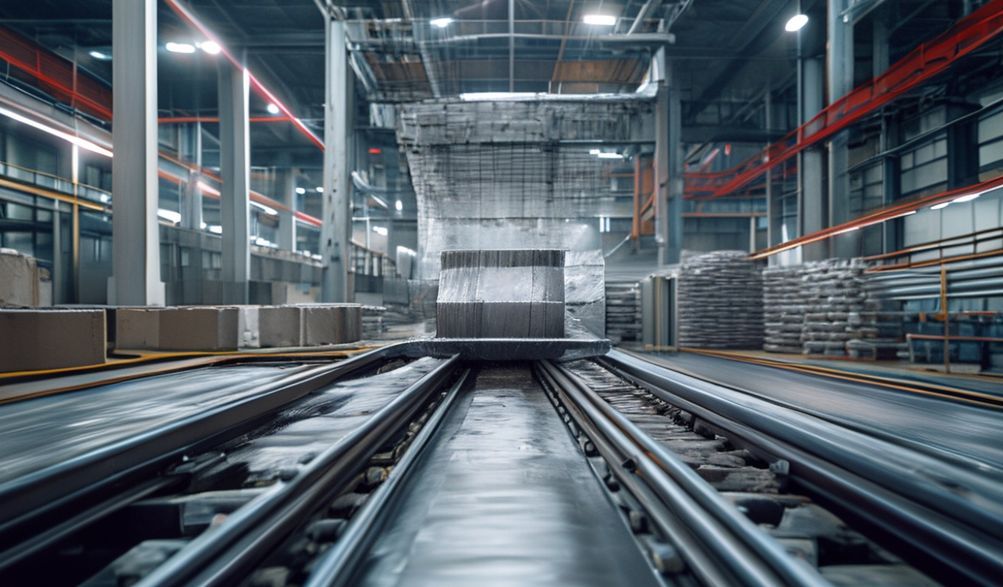
O Guia Definitivo para Máquinas de Blocos Grandes: Aumente a Eficiência e Escale a Produção
Introdução
Imagine isso: você acabou de garantir um contrato para fornecer blocos para um grande novo empreendimento habitacional. Sua equipe está trabalhando dia e noite, mas suas pequenas máquinas manuais não conseguem acompanhar a demanda. A produção é inconsistente—alguns blocos são frágeis, outros têm o tamanho errado. Os custos com mão de obra estão disparando, os prazos estão se atrasando, e você é forçado a recusar novos negócios. Essa é a realidade implacável da produção tradicional de blocos em pequena escala.
Para construtoras, usinas de pré-moldados e desenvolvedores de infraestrutura, escalar operações sempre foi um desafio formidável. A solução? Engenharia de nível industrial: amáquina de fabricação de blocos grandesIsto não é apenas uma atualização; é uma transformação completa das suas capacidades de produção, projetada para atender às enormes demandas da construção moderna.
Este guia definitivo oferece uma análise abrangente e especializada sobre máquinas de fabricação de blocos de grande porte. Você obterá uma compreensão clara de como elas funcionam, suas vantagens inegáveis, os diferentes tipos disponíveis e os fatores críticos a considerar antes de investir. Sintetizaremos princípios de engenharia, melhores práticas operacionais e análises de custos do mundo real para capacitá-lo com o conhecimento necessário para tomar uma decisão estratégica e lucrativa para o seu negócio.
O que é uma Máquina de Blocos de Grande Porte? Definindo a Produção em Escala Industrial
Em sua essência, ummáquina de fabricação de blocos grandesé um sistema robusto e de alta capacidade, projetado para a fabricação contínua e em grande volume de unidades de alvenaria de concreto (CMUs). Diferente de máquinas manuais ou móveis simples, estas são potências industriais, muitas vezes estacionárias ou semiestacionárias, que automatizam os processos de preenchimento, compactação, moldagem e ejeção de blocos com precisão e velocidade.
Vamos esclarecer as principais diferenças em relação aos equipamentos menores:
* Automação e Escala:Essas máquinas apresentam automação significativa, desde controladores lógicos programáveis (CLPs) que gerenciam o ciclo até transportadores de paletes e empilhadeiras integrados. A produção é medida em milhares de blocos por turno, não em centenas.
* Tamanho e Resistência do BlocoEles são construídos para produzir blocos maiores e mais densos — incluindo blocos vazados, blocos maciços, blocos de pavimentação e meio-fios — com resistência à compressão consistentemente alta (frequentemente excedendo 7 MPa ou mais, conforme padrões como a ASTM C90).
* Infraestrutura Necessária:Operar uma é um investimento sistêmico. Normalmente exige um espaço dedicado na fábrica com um sistema robusto de dosagem de concreto, mesas vibratórias de alta capacidade e áreas organizadas para cura (como câmaras de vapor) e armazenamento.
Aplicações primáriaspara este nível de equipamento incluem:
* Projetos habitacionais residenciais em larga escala e desenvolvimento de municípios.
* Complexos comerciais, armazéns industriais e edifícios institucionais.
* Infraestrutura principal: muros de delimitação, muros de contenção e paisagismo em escala cívica.
* Produção de elementos especializados em concreto pré-moldado.
Principais Vantagens de Investir em uma Máquina de Blocos de Grande Porte
A transição para maquinário em escala industrial é uma decisão de capital importante. A justificativa reside em uma série convincente de benefícios operacionais e financeiros que abordam diretamente os pontos problemáticos da produção em menor escala.
Capacidade de Produção e Velocidade Inigualáveis
O impacto mais imediato está na sua produção. Uma única máquina de grande porte pode produzir10.000 a 30.000+ blocos padrão em um turno de 8 horasdependendo do modelo e do tipo de bloco. Isso é alcançado por meio de ciclos rápidos e automatizados — algumas máquinas completam um ciclo (preencher, compactar, moldar, ejetar) em apenas 10 a 15 segundos. Essa capacidade é o que permite fornecer com confiabilidade projetos de grande porte e cumprir prazos de construção apertados e não negociáveis, mudando fundamentalmente a escala dos contratos que você pode buscar.
Consistência Superior e Qualidade do Produto
Processos manuais são propensos a variações. Máquinas industriais eliminam isso através da precisão da engenharia.
* Vibrações de Alta Frequência:Motores de vibração potentes e sincronizados garantem que a mistura de concreto seja consolidada uniformemente por todo o molde, eliminando vazios e alcançando densidade homogênea.
* Pressão Hidráulica Controlada Machines apply several hundred tons of hydraulic pressure to compact the mix, directly determining the final block’s strength and durability.
This results in every single block having identical dimensions, finish, and structural integrity. Consistent quality means less waste on-site, fewer rejections, and builds with enhanced longevity.
Significant Labor and Long-Term Cost Savings
While the upfront investment is substantial, the long-term economics are transformative.
* Labor Reduction: Automation reduces direct manual labor by up to 70-80% compared to manual operations. One operator can often manage what previously required a large crew.
* Custo Mais Baixo por Unidade: At high volumes, the fixed cost of the machine is amortized over thousands of blocks, drastically reducing your cost per unit. Combined with reduced labor and waste, the profit margin per block improves significantly.
* Durabilidade: Built from heavy-duty steel and premium components, these machines are designed for decades of service, providing a long-term return on investment (ROI).
Enhanced Operational Flexibility
Market demands change. A key feature of modern big block machines is quick-change mold systems. Within a short period, you can switch from producing standard hollow blocks to solid blocks, pavers, or specialty shapes like grass blocks. This agility allows your business to cater to diverse projects and customer requests without needing separate, dedicated production lines, maximizing the utility of your capital investment.
Types of Big Block Making Machines: Choosing the Right Model
Not all big block machines are the same. Selecting the right type is crucial for aligning with your production goals, budget, and operational style. Here are the three primary categories:
Máquinas de Fabricação de Blocos Totalmente Automáticas
- Descrição: The pinnacle of automation. These are complete production lines controlled by a central PLC. They integrate automatic material feeding, mixing, block molding, pallet circulation, curing stackers, and sometimes robotic handling. Human intervention is primarily for monitoring and maintenance.
- Melhor Para: Very high-volume precast plants and large block manufacturers supplying regional markets or mega-projects, where maximizing output and minimizing labor costs are paramount.
Máquinas Semi-Automáticas para Fabricação de Blocos
- Descrição: A powerful balance between automation and cost. The core compaction and molding process is fully automated (hydraulic pressure and vibration), but tasks like feeding empty pallets into the machine or removing finished blocks may be done manually or with simple mechanized aids.
- Melhor Para: Medium to large-scale operations looking to scale up significantly from manual methods without the capital outlay for a fully automatic line. Ideal for businesses with growing but sometimes fluctuating demand.
Máquinas Estacionárias para Fabricação de Blocos
- Descrição: This refers to the installation type rather than the automation level (they can be semi- or fully-auto). These machines are fixed in one location within a plant, typically fed by a stationary concrete mixer and conveyor system. They are the heart of a dedicated production facility.
- Melhor Para: Established block manufacturers with a consistent, high-volume order book and the space to build a permanent, optimized production layout.
Quick Comparison Table:
| Feature | Fully Automatic | Semi-Automatic | Stationary |
| :— | :— | :— | :— |
| Automation Level | High (PLC-controlled line) | Medium (automated core) | Varies (fixed installation) |
| Capacidade de Saída | Highest (20,000-40,000+ blocks/day) | High (8,000-20,000 blocks/day) | High (Depends on model) |
| Investimento Inicial | Highest | Moderate | Moderate-High |
| Mão de Obra Necessária | Low (1-2 operators) | Medium (3-5 personnel) | Medium |
Critical Features to Consider Before You Buy
Beyond the machine type, dive into these technical specifications. A common oversight is focusing only on price, not value—these features define long-term performance and reliability.
Production Capacity & Cycle Time
Don’t just look at a “blocks per day” claim. Understand the tempo de ciclo (seconds per cycle) and the blocks per cycle (how many blocks from one mold). Calculate if this meets your peak demand. A good rule is to choose a machine with 20-30% more capacity than your current maximum need to allow for business growth.
Block Types and Mold Compatibility
Your machine is only as versatile as its mold system. Investigate:
* Does the manufacturer offer a wide catalog of standard molds?
* Can they engineer custom molds for unique designs?
* What is the mold changeover procedure and time? Quick-clamp systems can save hours of downtime.
Machine Power and Pressure System
This is the engine of your block’s strength.
* Pressão Hidráulica: Measured in tons (e.g., 150-ton, 300-ton). Higher pressure yields denser, stronger blocks suitable for load-bearing applications.
* Sistema de Vibração: Look for multiple high-frequency, externally mounted vibration motors. Their power (in kW) and frequency (in Hz) are critical for proper compaction, especially for hollow blocks.
Control System and Ease of Operation
A user-friendly interface is vital for efficiency and error reduction.
* PLC Control: A modern PLC system allows for precise control over every parameter (vibration time, pressure, lift speed) and stores recipes for different block types.
* Diagnostics: The system should provide clear fault alerts and diagnostics to minimize troubleshooting downtime.
Build Quality and After-Sales Support
This is where reputable manufacturers separate themselves.
* Construção: Look for heavy-duty steel frames, hardened guide rails, and cylinders from known brands (e.g., Bosch Rexroth, Parker).
* Componentes Elétricos: Premium PLCs (Siemens, Schneider Electric) and motors ensure reliability.
* Support: The most critical factor. Does the supplier provide installation supervision, comprehensive operator training, a detailed maintenance manual, and a reliable spare parts supply chain? This support is non-negotiable for protecting your investment.
Optimizing Your Operation: Best Practices for Big Block Machines
Your machine’s performance depends heavily on how you operate and maintain it. Here’s practical advice from industry experience.
Raw Material Preparation (Concrete Mix Design)
The machine can’t fix a bad mix. Consistency is key.
* Agregados: Use well-graded, clean aggregates (crushed stone or gravel). Size should be appropriate for the block type (typically 6mm-10mm for hollow blocks).
* Areia Sharp, coarse sand is preferable to round-grained sand for better interlocking.
* Cimento: Use fresh, standard Portland cement.
* Relação Água-Cimento: This is critical. Too much water reduces strength; too little leads to poor compaction. Aim for a stiff, zero-slump mix. A common starting ratio is 0.4 to 0.5 by weight, but this must be optimized for your local materials.
Routine Maintenance Checklist
Neglect is the fastest way to costly breakdowns. Adhere to a strict schedule:
* Diário: Clean the machine thoroughly. Check hydraulic oil levels and for leaks. Lubricate all guide rails, bearings, and moving parts as per the manual.
* Semanal: Inspect and tighten all bolts and electrical connections. Check wear parts like mold liners and pallet surfaces.
* Mensalmente: Change hydraulic oil and filters as recommended. Perform a full inspection of vibration motors and the control system.
Efficient Curing and Storage Protocols
Curing is where the block gains its strength. Don’t let poor handling undo perfect production.
* Initial Curing: Keep newly produced blocks under a humidity/temperature-controlled environment (like a steam curing chamber) for 18-24 hours. This accelerates strength gain.
* Secondary Curing: After demolding, blocks should be water-sprayed or stored in a moist environment for several days to achieve their full design strength.
* Storage: Stack blocks on level, stable ground using wooden battens between layers. Organize by batch and type for easy inventory management and shipping.
FAQ Section
Q1: What is the average production output of a big block making machine per day?
A: Output varies widely based on machine type and block size. A semi-automatic machine may produce 8,000-15,000 standard hollow blocks (400x200x200mm) in an 8-hour shift. A fully automatic line can produce 20,000-40,000+. Always refer to the specific machine’s technical specifications for accurate figures based on your desired block type.
Q2: What is the typical power requirement (in kW or HP) for these machines?
A: Most industrial block machines require a significant three-phase power supply. Total connected load typically ranges from 30 kW to 75 kW (40 HP to 100 HP), covering the hydraulic power pack, vibration motors, and control system. Exact requirements must be confirmed with the machine supplier for proper electrical planning.
Q3: Can one machine produce different sizes and types of blocks?
A: Yes, absolutely. This is a major advantage. By changing the mold set, the same machine can produce different block dimensions and profiles (e.g., from hollow blocks to solid pavers). The key is to work with a supplier that offers a versatile mold system and can provide custom molds if needed.
Q4: What is the expected lifespan of a well-maintained big block machine?
A: With proper operation and adherence to maintenance schedules, a high-quality machine built with premium components can have a productive lifespan of 15 to 25 years or more. The longevity is directly tied to build quality and how well it is cared for.
Q5: How much factory space is required for installation and operation?
A: You need space for more than just the machine. A rough guideline is a minimum of 2,000 to 5,000 square feet for a semi-automatic setup. This must accommodate the machine footprint, raw material storage (aggregates, cement), a mixing area, a curing zone, and finished product storage. Fully automatic lines with integrated stackers require even more vertical and horizontal space.
Conclusão
Investing in a máquina de fabricação de blocos grandes is a strategic decision that moves your business from artisanal production to industrial manufacturing. It is the definitive solution for scaling output, guaranteeing product quality, and achieving superior long-term profitability in the competitive construction materials market.
Success, however, hinges on two critical factors: selecting the right machine for your specific production needs and partnering with a reputable, experienced manufacturer. The right partner doesn’t just sell you equipment; they provide the engineering support, comprehensive training, and reliable after-sales service that ensures your investment pays dividends for years to come.
Ready to transform your block production capability?
[Contact our technical team today] for a free, no-obligation consultation and a detailed quote tailored to your project requirements and business goals.