
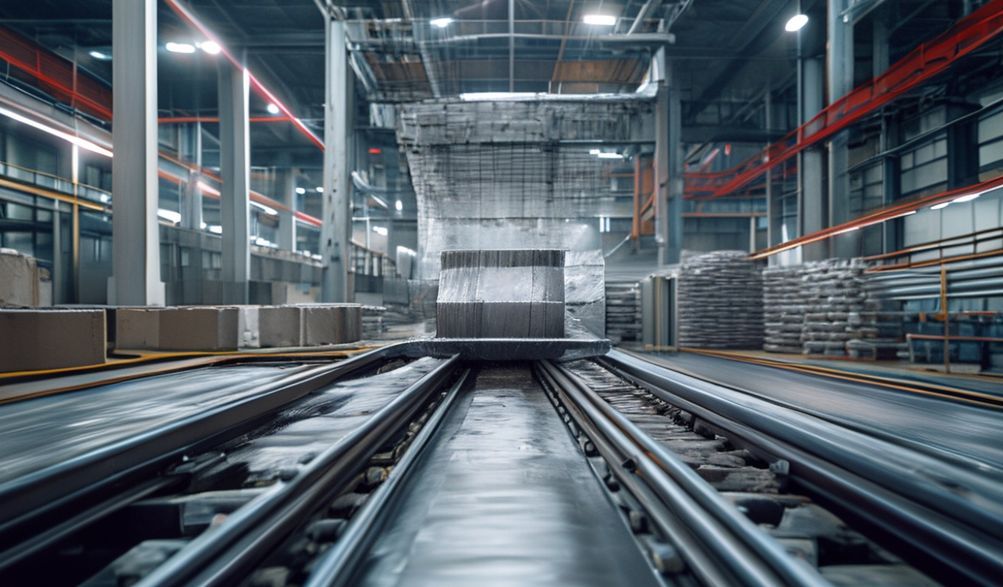
Jagorar Cikakke don Manyan Injunan Yin Tubali: Haɓaka Ƙarfin Aiki & Girman Samarwa
Gabatarwa
Ka yi tunanin wannan: kun sami kwangilar samar da tubali don wani babban ginin gidaje. Ƙungiyarku tana aiki dare da rana, amma ƙananan injinanku na hannu ba za su iya ci gaba ba. Samar da kayayyaki ba su da daidaituwa—wasu tubali suna da rauni, wasu kuma ba su da girman da ake bukata. Kudin aiki yana ƙaruwa sosai, lokutan ƙarshe suna kuskure, kuma dole ne ku ƙi sabbin kasuwanni. Wannan shine gaskiyar da ba ta daina ba na samar da ƙananan tubali na gargajiya.
Ga masana'antun gini, masana'antun kera kayan gini da kuma masu haɓaka ababen more rayuwa, haɓaka girma ya kasance ƙalubale mai tsanani. Mafita? Injiniyanci mai ƙima na masana'antu:babban na'urar yin buloWannan ba haɓakawa kawai ba ce; cikakkiyar sauyi ne na ƙarfin samar da ku, wanda aka tsara don biyan manyan buƙatun gine-ginen zamani.
Wannan cikakken jagora yana ba da cikakken bayani, wanda kwararru ke jagoranta, game da manyan injinan yin bulo. Za ku sami fahimta bayyananne game da yadda suke aiki, fa'idodinsu marasa musantawa, nau'ikan da ake da su, da muhimman abubuwan da ya kamata a yi la'akari da su kafin saka hannun jari. Za mu haɗa ka'idojin injiniya, mafi kyawun ayyuka, da nazarin farashi na ainihi don ba ku ilimin da ake buƙata don yin yanke shawara mai dorewa da riba ga kasuwancin ku.
Menene Babban Na'urar Yin Bulo? Ma'anar Samar da Masana'antu na Girma
A cikinsa,babban na'urar yin buloTsarin ne mai nauyi, mai ƙarfin ɗaukar nauyi wanda aka ƙera don ci gaba da samar da adadi mai yawa na raka'o'in masonry na siminti (CMUs). Ba kamar na'urorin hannu ko na'urorin hannu masu sauƙi ba, waɗannan ƙwararrun masana'antu ne, galibi masu tsayawa ko rabin tsayawa, waɗanda ke sarrafa hanyoyin cikawa, matsawa, gyare-gyare, da fitar da tubalan da daidaito da sauri.
Bari mu fayyace bambance-bambance masu mahimmanci daga ƙananan kayan aiki:
* Kayan Aiki da Girma:Waɗannan injunan suna da gagarumin sarrafa kai, tun daga masu sarrafa hanyoyin sadarwa masu shirye-shirye (PLCs) waɗanda ke kula da zagayowar aikin har zuwa masu jigilar pallet da masu tara su. Ana auna samarwa cikin dubban tubalan a kowane zamu, ba ɗaruruwan ba.
* Girman Block & Ƙarfinsa:An gina su ne don samar da bulo mafi girma da kauri—ciki har da bulo maras ciki, bulo mai cikakke, bulo na ginin tituna, da dutsen gefen titi—tare da ingantaccen ƙarfin matsi (sau da yawa ya wuce 7 MPa ko fiye kamar yadda ma'auni irin su ASTM C90 suka tsara).
* Abubuwan da ake bukata na ababen more rayuwa:Gudanar da ɗaya yana da tsarin saka hannun jari. Yawanci yana buƙatar keɓantaccen sararin masana'antu tare da ingantaccen tsarin haɗa siminti, manyan teburin girgiza masu ƙarfi, da shimfidar wurare don dafawa (kamar ɗakunan tururi) da ajiya.
Aikace-aikace na farkodon kayan aikin sun haɗa da:
* Manyan ayyukan gidaje na zama da ci gaban garuruwa.
* Gine-ginen kasuwanci, ɗakunan ajiya na masana'antu, da gine-ginen hukumomi.
* Manyan abubuwan more rayuwa: bangon iyaka, bangon riƙewa, da kayan ado a kan ma'aunin farar hula.
* Samar da takamaiman abubuwan simintin gyare-gyare na farko.
Fasahohin Muhimman Zuba Jari a Babban Na'urar Yin Bulo
Moving to industrial-scale machinery is a major capital decision. The justification lies in a compelling array of operational and financial benefits that directly address the pain points of smaller-scale production.
Unmatched Production Capacity & Speed
The most immediate impact is on your output. A single big block machine can produce 10,000 to 30,000+ standard blocks in an 8-hour shift, depending on the model and block type. This is achieved through rapid, automated cycle times—some machines complete a cycle (fill, compact, mold, eject) in as little as 10-15 seconds. This capacity is what allows you to reliably supply massive projects and meet tight, non-negotiable construction deadlines, fundamentally changing the scale of contracts you can pursue.
Mafi Girma Daidaito da Ingancin Samfura
Manual processes are prone to variation. Industrial machines eliminate this through engineering precision.
* Girgiza Mai Yawan Maimaitawa: Powerful, synchronized vibration motors ensure the concrete mix is consolidated evenly throughout the mold, eliminating voids and achieving uniform density.
* Sarrafa Matsin Matsi na Hydraulic: Machines apply several hundred tons of hydraulic pressure to compact the mix, directly determining the final block’s strength and durability.
This results in every single block having identical dimensions, finish, and structural integrity. Consistent quality means less waste on-site, fewer rejections, and builds with enhanced longevity.
Significant Labor and Long-Term Cost Savings
While the upfront investment is substantial, the long-term economics are transformative.
* Labor Reduction: Automation reduces direct manual labor by up to 70-80% compared to manual operations. One operator can often manage what previously required a large crew.
* Ƙarancin Farashin Kowane Naúra: At high volumes, the fixed cost of the machine is amortized over thousands of blocks, drastically reducing your cost per unit. Combined with reduced labor and waste, the profit margin per block improves significantly.
* Tsawon rayuwa: Built from heavy-duty steel and premium components, these machines are designed for decades of service, providing a long-term return on investment (ROI).
Enhanced Operational Flexibility
Market demands change. A key feature of modern big block machines is quick-change mold systems. Within a short period, you can switch from producing standard hollow blocks to solid blocks, pavers, or specialty shapes like grass blocks. This agility allows your business to cater to diverse projects and customer requests without needing separate, dedicated production lines, maximizing the utility of your capital investment.
Types of Big Block Making Machines: Choosing the Right Model
Not all big block machines are the same. Selecting the right type is crucial for aligning with your production goals, budget, and operational style. Here are the three primary categories:
Matsarorin Block Masu Sarrafa Kansu Gabaɗaya
- Bayanin: The pinnacle of automation. These are complete production lines controlled by a central PLC. They integrate automatic material feeding, mixing, block molding, pallet circulation, curing stackers, and sometimes robotic handling. Human intervention is primarily for monitoring and maintenance.
- Mafi Kyau Don: Very high-volume precast plants and large block manufacturers supplying regional markets or mega-projects, where maximizing output and minimizing labor costs are paramount.
Matsarori na Yin Tubali na Semi-Automatic
- Bayanin: A powerful balance between automation and cost. The core compaction and molding process is fully automated (hydraulic pressure and vibration), but tasks like feeding empty pallets into the machine or removing finished blocks may be done manually or with simple mechanized aids.
- Mafi Kyau Don: Medium to large-scale operations looking to scale up significantly from manual methods without the capital outlay for a fully automatic line. Ideal for businesses with growing but sometimes fluctuating demand.
Na'urorin Sake Gina Tubalan Tsaye
- Bayanin: This refers to the installation type rather than the automation level (they can be semi- or fully-auto). These machines are fixed in one location within a plant, typically fed by a stationary concrete mixer and conveyor system. They are the heart of a dedicated production facility.
- Mafi Kyau Don: Established block manufacturers with a consistent, high-volume order book and the space to build a permanent, optimized production layout.
Quick Comparison Table:
| Feature | Fully Automatic | Semi-Automatic | Stationary |
| :— | :— | :— | :— |
| Matakin Sarrafa | High (PLC-controlled line) | Medium (automated core) | Varies (fixed installation) |
| Ƙarfin Fitarwa | Highest (20,000-40,000+ blocks/day) | High (8,000-20,000 blocks/day) | High (Depends on model) |
| Zuba Jari Na Farko | Highest | Moderate | Moderate-High |
| Aikin da ake buƙata | Low (1-2 operators) | Medium (3-5 personnel) | Medium |
Critical Features to Consider Before You Buy
Beyond the machine type, dive into these technical specifications. A common oversight is focusing only on price, not value—these features define long-term performance and reliability.
Production Capacity & Cycle Time
Don’t just look at a “blocks per day” claim. Understand the lokacin zagayowar (seconds per cycle) and the blocks per cycle (how many blocks from one mold). Calculate if this meets your peak demand. A good rule is to choose a machine with 20-30% more capacity than your current maximum need to allow for business growth.
Block Types and Mold Compatibility
Your machine is only as versatile as its mold system. Investigate:
* Does the manufacturer offer a wide catalog of standard molds?
* Can they engineer custom molds for unique designs?
* What is the mold changeover procedure and time? Quick-clamp systems can save hours of downtime.
Machine Power and Pressure System
This is the engine of your block’s strength.
* Matsin Ruwa: Measured in tons (e.g., 150-ton, 300-ton). Higher pressure yields denser, stronger blocks suitable for load-bearing applications.
* Tsarin Girgiza: Look for multiple high-frequency, externally mounted vibration motors. Their power (in kW) and frequency (in Hz) are critical for proper compaction, especially for hollow blocks.
Control System and Ease of Operation
A user-friendly interface is vital for efficiency and error reduction.
* Sarrafa PLC A modern PLC system allows for precise control over every parameter (vibration time, pressure, lift speed) and stores recipes for different block types.
* Diagnostics: The system should provide clear fault alerts and diagnostics to minimize troubleshooting downtime.
Build Quality and After-Sales Support
This is where reputable manufacturers separate themselves.
* Gini: Look for heavy-duty steel frames, hardened guide rails, and cylinders from known brands (e.g., Bosch Rexroth, Parker).
* Kayan Lantarki: Premium PLCs (Siemens, Schneider Electric) and motors ensure reliability.
* Support: The most critical factor. Does the supplier provide installation supervision, comprehensive operator training, a detailed maintenance manual, and a reliable spare parts supply chain? This support is non-negotiable for protecting your investment.
Optimizing Your Operation: Best Practices for Big Block Machines
Your machine’s performance depends heavily on how you operate and maintain it. Here’s practical advice from industry experience.
Raw Material Preparation (Concrete Mix Design)
The machine can’t fix a bad mix. Consistency is key.
* Tari: Use well-graded, clean aggregates (crushed stone or gravel). Size should be appropriate for the block type (typically 6mm-10mm for hollow blocks).
* Yashi: Sharp, coarse sand is preferable to round-grained sand for better interlocking.
* Siminti: Use fresh, standard Portland cement.
* Rabin Ruwa da Siminti: This is critical. Too much water reduces strength; too little leads to poor compaction. Aim for a stiff, zero-slump mix. A common starting ratio is 0.4 to 0.5 by weight, but this must be optimized for your local materials.
Jadawalin Kulawa na Yau da Kullum
Neglect is the fastest way to costly breakdowns. Adhere to a strict schedule:
* Kullum: Clean the machine thoroughly. Check hydraulic oil levels and for leaks. Lubricate all guide rails, bearings, and moving parts as per the manual.
* Mako-mako: Inspect and tighten all bolts and electrical connections. Check wear parts like mold liners and pallet surfaces.
* Kowane wata: Change hydraulic oil and filters as recommended. Perform a full inspection of vibration motors and the control system.
Efficient Curing and Storage Protocols
Curing is where the block gains its strength. Don’t let poor handling undo perfect production.
* Initial Curing: Keep newly produced blocks under a humidity/temperature-controlled environment (like a steam curing chamber) for 18-24 hours. This accelerates strength gain.
* Secondary Curing: After demolding, blocks should be water-sprayed or stored in a moist environment for several days to achieve their full design strength.
* Storage: Stack blocks on level, stable ground using wooden battens between layers. Organize by batch and type for easy inventory management and shipping.
FAQ Section
Q1: What is the average production output of a big block making machine per day?
A: Output varies widely based on machine type and block size. A semi-automatic machine may produce 8,000-15,000 standard hollow blocks (400x200x200mm) in an 8-hour shift. A fully automatic line can produce 20,000-40,000+. Always refer to the specific machine’s technical specifications for accurate figures based on your desired block type.
Q2: What is the typical power requirement (in kW or HP) for these machines?
A: Most industrial block machines require a significant three-phase power supply. Total connected load typically ranges from 30 kW to 75 kW (40 HP to 100 HP), covering the hydraulic power pack, vibration motors, and control system. Exact requirements must be confirmed with the machine supplier for proper electrical planning.
Q3: Can one machine produce different sizes and types of blocks?
A: Yes, absolutely. This is a major advantage. By changing the mold set, the same machine can produce different block dimensions and profiles (e.g., from hollow blocks to solid pavers). The key is to work with a supplier that offers a versatile mold system and can provide custom molds if needed.
Q4: What is the expected lifespan of a well-maintained big block machine?
A: With proper operation and adherence to maintenance schedules, a high-quality machine built with premium components can have a productive lifespan of 15 to 25 years or more. The longevity is directly tied to build quality and how well it is cared for.
Q5: How much factory space is required for installation and operation?
A: You need space for more than just the machine. A rough guideline is a minimum of 2,000 to 5,000 square feet for a semi-automatic setup. This must accommodate the machine footprint, raw material storage (aggregates, cement), a mixing area, a curing zone, and finished product storage. Fully automatic lines with integrated stackers require even more vertical and horizontal space.
Ƙarshe
Zuba jari a cikin...babban na'urar yin bulo is a strategic decision that moves your business from artisanal production to industrial manufacturing. It is the definitive solution for scaling output, guaranteeing product quality, and achieving superior long-term profitability in the competitive construction materials market.
Success, however, hinges on two critical factors: selecting the right machine for your specific production needs and partnering with a reputable, experienced manufacturer. The right partner doesn’t just sell you equipment; they provide the engineering support, comprehensive training, and reliable after-sales service that ensures your investment pays dividends for years to come.
Ready to transform your block production capability?
[Contact our technical team today] for a free, no-obligation consultation and a detailed quote tailored to your project requirements and business goals.