
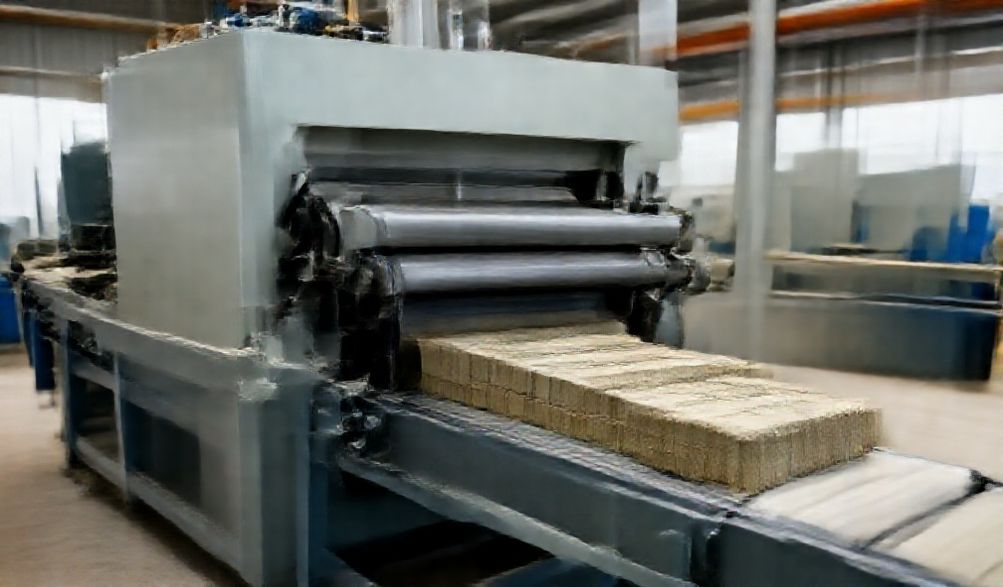
La Guía Definitiva sobre Máquinas para Fabricar Ladrillos de Cemento Arcilloso: Perspectivas de la Fábrica de Bloques FUDA
En una era definida por la rápida urbanización y un impulso global hacia el desarrollo sostenible, la demanda de materiales de construcción duraderos, rentables y respetuosos con el medio ambiente nunca ha sido mayor. En este panorama, los ladrillos de cemento y arcilla han surgido como una solución principal, combinando la resistencia atemporal de la arcilla con el rendimiento mejorado del cemento moderno. Sin embargo, la calidad y la economía de estos ladrillos están fundamentalmente determinadas por la maquinaria que los produce.
Aquí es donde las máquinas automatizadas para fabricar ladrillos de cemento arcilloso se convierten en la piedra angular de la producción moderna de materiales de construcción. Estos sistemas sofisticados transforman materias primas locales en bloques de construcción precisos y de alta resistencia con una eficiencia inigualable. Navegar este equipo especializado requiere el conocimiento de quienes viven y respiran esta tecnología.
Durante más de dos décadas, la Fábrica de Bloques FUDA se ha mantenido a la vanguardia de esta industria. Como líder en el diseño y fabricación de maquinaria robusta para la producción de bloques, FUDA ha cimentado su reputación en una profunda y práctica experiencia en tecnología de arcilla-cemento y un compromiso con la excelencia en ingeniería. Esta guía aprovecha esa extensa experiencia en el campo y conocimiento técnico.
Nuestro objetivo es proporcionar a compradores, propietarios de negocios de construcción y emprendedores una comprensión integral de las máquinas para fabricar ladrillos de cemento arcilloso. Profundizaremos en la tecnología, desglosaremos las características clave e ilustraremos por qué una alianza con un fabricante probado como FUDA Block Making Factory es una inversión estratégica en calidad, rentabilidad y éxito a largo plazo.
Comprensión de la Tecnología de Fabricación de Ladrillos de Cemento Arcilloso
El cambio del trabajo manual a la producción mecanizada representa un salto cuántico en la fabricación de materiales de construcción. Comprender la tecnología central es el primer paso para realizar una inversión informada.
¿Qué es una máquina para fabricar ladrillos de cemento de arcilla?
En esencia, una máquina para fabricar ladrillos de arcilla y cemento es un sistema semiautomático o totalmente automático diseñado para mezclar arcilla, cemento (a menudo como agente estabilizador) y otros agregados como arena o cenizas volantes, y luego moldearlos en ladrillos o bloques de alta densidad bajo una presión mecánica o hidráulica significativa.
El proceso es una sinfonía de etapas precisas:
* Proporcionamiento y Mezcla:Las materias primas se miden con precisión y se mezclan con agua para lograr una mezcla homogénea y manejable.
* Moldeo y Compactación:La mezcla se introduce en un molde (o matriz) donde se somete a alta presión. Esta compactación es crucial: elimina las bolsas de aire y empaqueta densamente las partículas, lo que influye directamente en la resistencia y densidad final del ladrillo.
* Eyección y Curado:El ladrillo recién formado, "verde", es expulsado sobre un palé o una cinta transportadora. Luego entra en un período de curado, donde gana resistencia con el tiempo a través de la hidratación y el secado.
Componentes Clave de una Máquina de Alta Calidad (Basado en los Principios de Diseño de FUDA)
La confiabilidad y el rendimiento de cualquier máquina dependen de la calidad de sus componentes centrales. En FUDA, nuestra filosofía de diseño prioriza la durabilidad y el rendimiento en cada pieza.
- Sistema Hidráulico:El corazón de la máquina. Un sistema hidráulico robusto y de alta presión garantiza una compactación constante y potente. Utilizamos bombas y válvulas de precisión para entregar la fuerza necesaria para una densidad superior de los ladrillos, ciclo tras ciclo.
- Cámara de Moldeo y Matrices:Fabricado con acero endurecido de alta calidad, el molde define la forma y el tamaño del bloque. Los troqueles intercambiables de FUDA son mecanizados con tolerancias exigentes para producir ladrillos con bordes afilados y dimensiones uniformes, minimizando el desperdicio en el sitio.
- Panel de Control y Automatización:Desde la lógica de relés simple hasta los avanzados sistemas PLC (Controlador Lógico Programable), los controles son el cerebro de la máquina. Una interfaz bien diseñada permite una operación sencilla, el ajuste del ciclo y la resolución de problemas.
- Marco y Estructura:Toda la máquina está construida sobre un marco de acero resistente capaz de soportar vibraciones y presión constantes sin deformarse, garantizando una alineación y estabilidad operativa a largo plazo.
- Mezcladoras y Sistemas de Transportadores:Un mezclador potente, de paletas o de doble eje, garantiza una mezcla perfectamente uniforme. Los transportadores integrados optimizan el manejo de materiales, reduciendo el trabajo manual y aumentando la eficiencia general de la línea.
Arcilla-Cemento vs. Bloques Tradicionales de Arcilla o Concreto
¿Por qué elegir un compuesto de arcilla y cemento? La fórmula híbrida ofrece ventajas distintivas que abordan las limitaciones de sus predecesores.
- Fuerza y Durabilidad Superiores:El aglutinante de cemento mejora significativamente la resistencia a la compresión en comparación con los ladrillos de arcilla secados al sol o ligeramente cocidos, haciéndolos adecuados para estructuras portantes.
- Enhanced Water Resistance: The denser matrix and cementitious properties reduce water absorption, improving frost resistance and longevity in diverse climates—a key weakness of traditional clay bricks.
- Improved Thermal & Acoustic Insulation: Clay’s natural insulating properties are retained, often leading to better thermal performance than standard concrete blocks, contributing to energy-efficient buildings.
- Environmental & Economic Benefits: These machines can utilize locally sourced, often subsoil clay, reducing transportation costs and excavation footprint. The process typically requires less energy than firing traditional clay bricks in a kiln.
Why Choose a FUDA Clay Cement Brick Making Machine?
Selecting a manufacturer is as critical as selecting the machine. It’s an investment in a partnership that will impact your productivity for years to come.
Excelencia en Ingeniería y Durabilidad
From our experience on the factory floor and feedback from global clients, we know downtime is the enemy of profitability. Every FUDA machine is built with this in mind.
* We use premium-grade steel plates and sourced components from reputable suppliers.
* Critical wear parts are specially treated for abrasion resistance.
* Our welding and assembly processes follow stringent quality control protocols, resulting in a machine known for its ruggedness and low maintenance requirements.
Models and Specifications for Every Need
FUDA’s product portfolio is designed to scale with your business, from entrepreneurial start-ups to large-scale industrial production.
* Manual & Semi-Automatic Models: Ideal for smaller operations or specialized production, offering a lower entry point with significant labor savings over purely manual methods.
* Líneas Completamente Automáticas: These high-output systems feature automatic material feeding, molding, stacking, and pallet return. They are the choice for large-scale brick yards aiming for maximum output with minimal manual intervention.
* Especificaciones Clave: Capacities can range from 1,000 to over 10,000 blocks per 8-hour shift, depending on the model and block size. We provide clear guidance on power requirements (often a mix of electrical and hydraulic power) and the full range of standard and custom block configurations available.
Efficiency and Profitability Advantages
The business case for a FUDA machine is clear:
* Reducción de Costos Laborales: Automation handles the most labor-intensive tasks. A semi-automatic system can reduce crew size significantly, while a fully automatic line may only require 1-2 operators for monitoring and feeding.
* Consistent Quality & Less Waste: Machine-made bricks are uniform in size and strength. This consistency minimizes mortar use during construction and drastically reduces breakage and rejection rates.
* High Output & Scalability: Meeting large contract deadlines becomes feasible. The reliable output ensures you can fulfill orders on time, building your reputation and allowing for business growth.
* Strong Return on Investment (ROI): While the initial investment is a consideration, the combination of lower per-unit production cost, high output, and premium product quality typically leads to a payback period that our clients find highly attractive.
Características Clave a Buscar en una Máquina para Hacer Ladrillos
As an educated buyer, you should evaluate machines based on these critical parameters.
Automation Level and Control Systems
Your choice depends on budget, labor availability, and production goals.
* Manual: Operator-dependent for most functions; lowest cost, lowest output.
* Semiautomático: The operator initiates cycles and may feed materials, but core processes like compaction and ejection are automated. An excellent balance of cost and efficiency.
* Totalmente Automático: PLC-controlled with integrated material handling. Delivers the highest output and consistency with the least manual labor.
Production Capacity and Versatility
- Match Capacity to Demand: Analyze your current and projected market needs. It’s often wiser to invest in a machine with slightly more capacity than you currently need to accommodate growth.
- The Power of Interchangeable Molds: A machine’s value multiplies if it can produce different products. Ensure the machine can easily switch molds to produce solid blocks, hollow blocks, paving slabs, and even interlocking bricks for landscaping or erosion control. FUDA machines are designed for this versatility.
Energy Efficiency and Sustainability
- Modern machines are designed to optimize power consumption. Inquire about the total connected load and look for features like energy-efficient motors and well-designed hydraulic circuits that minimize heat loss.
- The sustainability story is compelling. By enabling the use of local soil and reducing transport emissions, and by creating a durable, energy-efficient end product, your operation contributes to a greener construction cycle.
Setting Up Your Brick Production Line with FUDA
A successful installation goes beyond just the machine. Here’s practical guidance drawn from our experience setting up countless production lines worldwide.
Site Requirements and Factory Layout Planning
- Espacio: You will need a covered area for the machine and raw material storage, plus a large, level, open yard for curing and drying bricks. A basic layout follows a linear flow: Raw Material Storage -> Mixing Area -> Machine -> Curing Yard.
- Foundation: The machine requires a solid, level concrete foundation to absorb vibrations. We provide detailed foundation drawings with each machine.
- Utilities: Reliable three-phase electrical power is standard. A consistent water source for mixing is essential. Consider drainage in the mixing and curing areas.
Raw Material Selection and Mixing Ratios
- Arcilla: The clay should be reasonably free of organic matter, stones, and debris. Simple field tests can determine suitability.
- Cemento: Use fresh, reputable-brand Portland cement for consistent results.
- Mix Ratios: While the optimal ratio depends on your local clay’s properties, a common starting point is a mix of 70-80% clay, 10-15% cement, and the balance in sand or fine aggregate. Water is added to achieve a “fistable” consistency—where a ball of mix holds its shape without crumbling or dripping. FUDA technicians provide on-site guidance to fine-tune this formula.
Operation, Maintenance, and Safety Protocols
- Operación: Train operators thoroughly on startup, running, and shutdown procedures. Emphasize the importance of keeping the hopper and molds clean.
- Maintenance: Adhere to a strict schedule: daily greasing of bearings, weekly checks of hydraulic fluid and hoses, and periodic inspection of all bolts and electrical connections. This preventative approach is the key to longevity.
- Safety: Always use lock-out/tag-out procedures during maintenance. Operators should wear safety glasses, gloves, and steel-toe boots. Ensure all safety guards are in place on moving parts and conveyors.
Frequently Asked Questions (FAQ)
Q1: What is the average production output of a FUDA semi-automatic clay cement brick machine?
Output varies by block size and model, but a typical FUDA semi-automatic machine can produce between 2,000 to 4,000 standard hollow blocks (e.g., 400x200x200mm) in an 8-hour shift, depending on crew efficiency.
Q2: How long does it take for clay-cement bricks to cure properly after production?
Initial setting occurs within 24 hours. For handling and stacking, 3-7 days of air curing is recommended. The bricks continue to gain strength over 28 days, reaching their optimal compressive strength. Proper curing under shade or with light water sprinkling is beneficial.
Q3: Can the machine produce different shapes and sizes of paving blocks or interlocking bricks?
Absolutely. One of the key advantages of FUDA machines is their versatility with interchangeable molds. You can produce a wide variety of solid, hollow, paving, and interlocking blocks by simply changing the mold box and die.
Q4: What kind of after-sales support and warranty does FUDA factory provide?
FUDA provides a standard warranty on the machine and offers comprehensive after-sales support. This includes detailed operation manuals, installation drawings, remote troubleshooting via video call, and the availability of spare parts. On-site technician dispatch can also be arranged.
Q5: What is the approximate payback period for an investment in a medium-capacity machine?
The payback period depends heavily on local market prices for bricks, raw material costs, and operational efficiency. However, based on client feedback, many businesses see a full return on investment within 12 to 24 months of operation due to the high margin and demand for quality machine-made bricks.
Q6: How does the quality of bricks from an automated machine compare to handmade ones?
Machine-made bricks are vastly superior in consistency. They have uniform dimensions, density, and strength, leading to straighter walls, less mortar usage, and higher structural integrity. Handmade bricks are prone to size and strength variation, which can compromise build quality.
Conclusión
Investing in a reliable clay cement brick making machine is a transformative decision for any construction-related business. It is a commitment to producing superior quality materials, achieving remarkable operational efficiency, and building a foundation for sustainable growth. The technology empowers you to meet modern construction demands while optimizing your profitability.
This journey, however, is best undertaken with a trusted partner. The FUDA Block Making Factory brings decades of specialized experience, a commitment to engineering durability, and a proven track record of supporting clients globally. We don’t just sell machinery; we provide solutions and partnerships that last.
Ready to transform your construction material production and build your future on a solid foundation? Contact the experts at FUDA Block Making Factory today for a personalized consultation and a detailed quote tailored to your specific project needs and local market.
<