
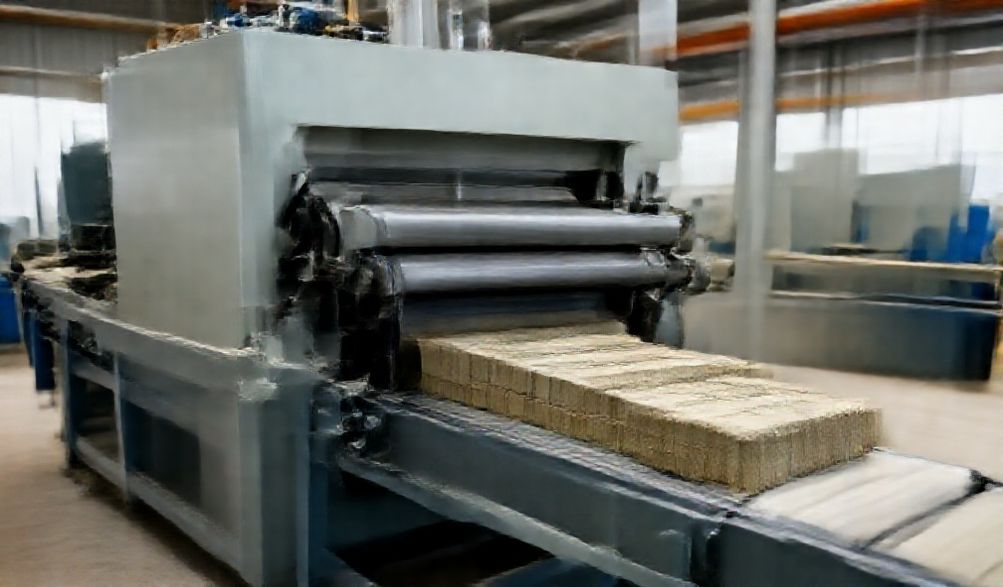
Le Guide Ultime des Machines à Fabriquer des Briques en Ciment Argileux : Perspectives de l'Usine de Fabrication de Blocs FUDA
Dans une ère marquée par une urbanisation rapide et une impulsion mondiale pour le développement durable, la demande de matériaux de construction durables, économiques et respectueux de l'environnement n'a jamais été aussi forte. Dans ce contexte, les briques en ciment argileux sont apparues comme une solution de premier plan, alliant la solidité intemporelle de l'argile aux performances accrues du ciment moderne. Cependant, la qualité et l'aspect économique de ces briques sont fondamentalement déterminés par les machines qui les produisent.
C'est là que les machines automatisées de fabrication de briques en ciment argileux deviennent la pierre angulaire de la production moderne de matériaux de construction. Ces systèmes sophistiqués transforment des matières premières locales en blocs de construction précis et à haute résistance, avec une efficacité inégalée. Maîtriser cet équipement spécialisé exige l'expertise de ceux qui vivent et respirent cette technologie.
Depuis plus de deux décennies, FUDA Block Making Factory se tient à l'avant-garde de cette industrie. En tant que leader dans la conception et la fabrication de machines robustes pour la fabrication de blocs, FUDA a bâti sa réputation sur une expertise pratique approfondie dans la technologie argile-ciment et un engagement envers l'excellence technique. Ce guide s'appuie sur cette vaste expérience de terrain et ce savoir-faire technique.
Notre objectif est de fournir aux acheteurs, propriétaires d'entreprises de construction et entrepreneurs une compréhension complète des machines à fabriquer des briques en ciment argileux. Nous explorerons la technologie, détaillerons les caractéristiques clés et illustrerons pourquoi un partenariat avec un fabricant éprouvé comme FUDA Block Making Factory constitue un investissement stratégique en matière de qualité, de rentabilité et de succès à long terme.
Comprendre la technologie de fabrication de briques en ciment d'argile
Le passage du travail manuel à la production mécanisée représente un saut quantique dans la fabrication des matériaux de construction. Comprendre la technologie de base est la première étape pour réaliser un investissement éclairé.
Qu'est-ce qu'une machine à fabriquer des briques en ciment d'argile ?
À l'essence, une machine à fabriquer des briques en ciment argileux est un système semi-automatique ou entièrement automatique conçu pour mélanger l'argile, le ciment (souvent comme agent stabilisant) et d'autres agrégats comme le sable ou les cendres volantes, puis les mouler en briques ou blocs de haute densité sous une pression mécanique ou hydraulique importante.
Le processus est une symphonie d'étapes précises :
* Dosage & Mélange :Les matières premières sont mesurées avec précision et mélangées à de l'eau pour obtenir un mélange homogène et maniable.
* Moulage & Compactage :Le mélange est introduit dans un moule (ou une filière) où il est soumis à une haute pression. Cette compaction est cruciale : elle élimine les poches d'air et densifie les particules, influençant directement la résistance et la densité finale de la brique.
* Éjection & Durcissement :La brique nouvellement formée, dite "verte", est éjectée sur une palette ou un convoyeur. Elle entre ensuite dans une période de durcissement, où elle acquiert de la résistance au fil du temps grâce à l'hydratation et au séchage.
Composants Clés d'une Machine de Haute Qualité (Basés sur les Principes de Conception de FUDA)
La fiabilité et la production de toute machine dépendent de la qualité de ses composants essentiels. Chez FUDA, notre philosophie de conception privilégie la durabilité et la performance dans chaque pièce.
- Système Hydraulique :Le cœur de la machine. Un système hydraulique robuste et haute pression garantit un compactage constant et puissant. Nous utilisons des pompes et des vannes de précision pour fournir la force nécessaire à une densité de brique supérieure, cycle après cycle.
- Chambre de moulage et matrices :Fabriqué en acier trempé de haute qualité, le moule définit la forme et la taille du bloc. Les matrices interchangeables de FUDA sont usinées avec des tolérances rigoureuses pour produire des briques aux arêtes vives et aux dimensions uniformes, minimisant ainsi les déchets sur le chantier.
- Panneau de contrôle et automatisation :Des simples relais logiques aux systèmes avancés de PLC (Contrôleurs Logiques Programmables), les commandes constituent le cerveau de la machine. Une interface bien conçue permet une exploitation aisée, le réglage des cycles et le dépannage.
- Cadre et Structure :L'ensemble de la machine est construit sur un châssis en acier robuste, capable de résister à des vibrations et pressions constantes sans déformation, garantissant ainsi un alignement durable et une stabilité opérationnelle.
- Systèmes de Mélangeur et de ConvoyeurUn mélangeur puissant, à cuve ou à double arbre, garantit un mélange parfaitement homogène. Des convoyeurs intégrés rationalisent la manutention des matériaux, réduisant le travail manuel et augmentant l'efficacité globale de la ligne.
Blocs d'Argile-Ciment vs. Blocs d'Argile Traditionnels ou Blocs de Béton
Pourquoi choisir un composite argile-ciment ? La formule hybride offre des avantages distincts qui pallient les limites de ses prédécesseurs.
- Supériorité en résistance et durabilité :Le liant ciment améliore considérablement la résistance à la compression par rapport aux briques d'argile séchées au soleil ou légèrement cuites, ce qui les rend adaptées aux structures porteuses.
- Résistance accrue à l'eau :La matrice plus dense et les propriétés cimentaires réduisent l'absorption d'eau, améliorant ainsi la résistance au gel et la longévité dans des climats variés — une faiblesse clé des briques en argile traditionnelles.
- Isolation thermique et acoustique améliorée :Les propriétés isolantes naturelles de l'argile sont conservées, ce qui conduit souvent à de meilleures performances thermiques que les blocs de béton standard, contribuant ainsi à des bâtiments économes en énergie.
- Avantages environnementaux et économiques :Ces machines peuvent utiliser de l'argile provenant de sources locales, souvent du sous-sol, réduisant ainsi les coûts de transport et l'empreinte des excavations. Le procédé nécessite généralement moins d'énergie que la cuisson traditionnelle des briques d'argile dans un four.
Pourquoi choisir une machine de fabrication de briques en ciment d'argile FUDA ?
Choisir un fabricant est aussi crucial que choisir la machine. C'est un investissement dans un partenariat qui aura un impact sur votre productivité pour les années à venir.
Excellence en Ingénierie et Durabilité
D'après notre expérience sur le terrain et les retours de nos clients dans le monde entier, nous savons que les temps d'arrêt sont l'ennemi de la rentabilité. Chaque machine FUDA est conçue en tenant compte de cela.
* Nous utilisons des plaques d'acier de qualité supérieure et des composants provenant de fournisseurs réputés.
Les pièces d'usure critiques sont spécialement traitées pour résister à l'abrasion.
Nos processus de soudage et d'assemblage suivent des protocoles de contrôle qualité stricts, ce qui donne une machine réputée pour sa robustesse et ses faibles besoins d'entretien.
Modèles et Spécifications pour Chaque Besoin
Le portefeuille de produits de FUDA est conçu pour évoluer avec votre entreprise, des start-ups entrepreneuriales à la production industrielle à grande échelle.
* Modèles manuels & semi-automatiques : Ideal for smaller operations or specialized production, offering a lower entry point with significant labor savings over purely manual methods.
* Lignes entièrement automatiques : These high-output systems feature automatic material feeding, molding, stacking, and pallet return. They are the choice for large-scale brick yards aiming for maximum output with minimal manual intervention.
* Caractéristiques clés : Capacities can range from 1,000 to over 10,000 blocks per 8-hour shift, depending on the model and block size. We provide clear guidance on power requirements (often a mix of electrical and hydraulic power) and the full range of standard and custom block configurations available.
Efficiency and Profitability Advantages
The business case for a FUDA machine is clear:
* Réduction des coûts de main-d'œuvre : Automation handles the most labor-intensive tasks. A semi-automatic system can reduce crew size significantly, while a fully automatic line may only require 1-2 operators for monitoring and feeding.
* Qualité constante et moins de déchets. Machine-made bricks are uniform in size and strength. This consistency minimizes mortar use during construction and drastically reduces breakage and rejection rates.
* High Output & Scalability: Meeting large contract deadlines becomes feasible. The reliable output ensures you can fulfill orders on time, building your reputation and allowing for business growth.
* Strong Return on Investment (ROI): While the initial investment is a consideration, the combination of lower per-unit production cost, high output, and premium product quality typically leads to a payback period that our clients find highly attractive.
Caractéristiques clés à rechercher dans une machine à fabriquer des briques
As an educated buyer, you should evaluate machines based on these critical parameters.
Automation Level and Control Systems
Your choice depends on budget, labor availability, and production goals.
* Manuel : Operator-dependent for most functions; lowest cost, lowest output.
* Semi-Automatique : The operator initiates cycles and may feed materials, but core processes like compaction and ejection are automated. An excellent balance of cost and efficiency.
* Entièrement Automatique : PLC-controlled with integrated material handling. Delivers the highest output and consistency with the least manual labor.
Production Capacity and Versatility
- Match Capacity to Demand: Analyze your current and projected market needs. It’s often wiser to invest in a machine with slightly more capacity than you currently need to accommodate growth.
- The Power of Interchangeable Molds: A machine’s value multiplies if it can produce different products. Ensure the machine can easily switch molds to produce solid blocks, hollow blocks, paving slabs, and even interlocking bricks for landscaping or erosion control. FUDA machines are designed for this versatility.
Energy Efficiency and Sustainability
- Modern machines are designed to optimize power consumption. Inquire about the total connected load and look for features like energy-efficient motors and well-designed hydraulic circuits that minimize heat loss.
- The sustainability story is compelling. By enabling the use of local soil and reducing transport emissions, and by creating a durable, energy-efficient end product, your operation contributes to a greener construction cycle.
Setting Up Your Brick Production Line with FUDA
A successful installation goes beyond just the machine. Here’s practical guidance drawn from our experience setting up countless production lines worldwide.
Site Requirements and Factory Layout Planning
- Espace : You will need a covered area for the machine and raw material storage, plus a large, level, open yard for curing and drying bricks. A basic layout follows a linear flow: Raw Material Storage -> Mixing Area -> Machine -> Curing Yard.
- Foundation: The machine requires a solid, level concrete foundation to absorb vibrations. We provide detailed foundation drawings with each machine.
- Utilities: Reliable three-phase electrical power is standard. A consistent water source for mixing is essential. Consider drainage in the mixing and curing areas.
Raw Material Selection and Mixing Ratios
- Argile : The clay should be reasonably free of organic matter, stones, and debris. Simple field tests can determine suitability.
- Ciment : Use fresh, reputable-brand Portland cement for consistent results.
- Mix Ratios: While the optimal ratio depends on your local clay’s properties, a common starting point is a mix of 70-80% clay, 10-15% cement, and the balance in sand or fine aggregate. Water is added to achieve a “fistable” consistency—where a ball of mix holds its shape without crumbling or dripping. FUDA technicians provide on-site guidance to fine-tune this formula.
Operation, Maintenance, and Safety Protocols
- Opération : Train operators thoroughly on startup, running, and shutdown procedures. Emphasize the importance of keeping the hopper and molds clean.
- Maintenance: Adhere to a strict schedule: daily greasing of bearings, weekly checks of hydraulic fluid and hoses, and periodic inspection of all bolts and electrical connections. This preventative approach is the key to longevity.
- Safety: Always use lock-out/tag-out procedures during maintenance. Operators should wear safety glasses, gloves, and steel-toe boots. Ensure all safety guards are in place on moving parts and conveyors.
Foire aux Questions (FAQ)
Q1: What is the average production output of a FUDA semi-automatic clay cement brick machine?
Output varies by block size and model, but a typical FUDA semi-automatic machine can produce between 2,000 to 4,000 standard hollow blocks (e.g., 400x200x200mm) in an 8-hour shift, depending on crew efficiency.
Q2: How long does it take for clay-cement bricks to cure properly after production?
Initial setting occurs within 24 hours. For handling and stacking, 3-7 days of air curing is recommended. The bricks continue to gain strength over 28 days, reaching their optimal compressive strength. Proper curing under shade or with light water sprinkling is beneficial.
Q3: Can the machine produce different shapes and sizes of paving blocks or interlocking bricks?
Absolutely. One of the key advantages of FUDA machines is their versatility with interchangeable molds. You can produce a wide variety of solid, hollow, paving, and interlocking blocks by simply changing the mold box and die.
Q4: What kind of after-sales support and warranty does FUDA factory provide?
FUDA provides a standard warranty on the machine and offers comprehensive after-sales support. This includes detailed operation manuals, installation drawings, remote troubleshooting via video call, and the availability of spare parts. On-site technician dispatch can also be arranged.
Q5: What is the approximate payback period for an investment in a medium-capacity machine?
The payback period depends heavily on local market prices for bricks, raw material costs, and operational efficiency. However, based on client feedback, many businesses see a full return on investment within 12 to 24 months of operation due to the high margin and demand for quality machine-made bricks.
Q6: How does the quality of bricks from an automated machine compare to handmade ones?
Machine-made bricks are vastly superior in consistency. They have uniform dimensions, density, and strength, leading to straighter walls, less mortar usage, and higher structural integrity. Handmade bricks are prone to size and strength variation, which can compromise build quality.
Conclusion
Investing in a reliable clay cement brick making machine is a transformative decision for any construction-related business. It is a commitment to producing superior quality materials, achieving remarkable operational efficiency, and building a foundation for sustainable growth. The technology empowers you to meet modern construction demands while optimizing your profitability.
This journey, however, is best undertaken with a trusted partner. The FUDA Block Making Factory brings decades of specialized experience, a commitment to engineering durability, and a proven track record of supporting clients globally. We don’t just sell machinery; we provide solutions and partnerships that last.
Ready to transform your construction material production and build your future on a solid foundation? Contact the experts at FUDA Block Making Factory today for a personalized consultation and a detailed quote tailored to your specific project needs and local market.
<