
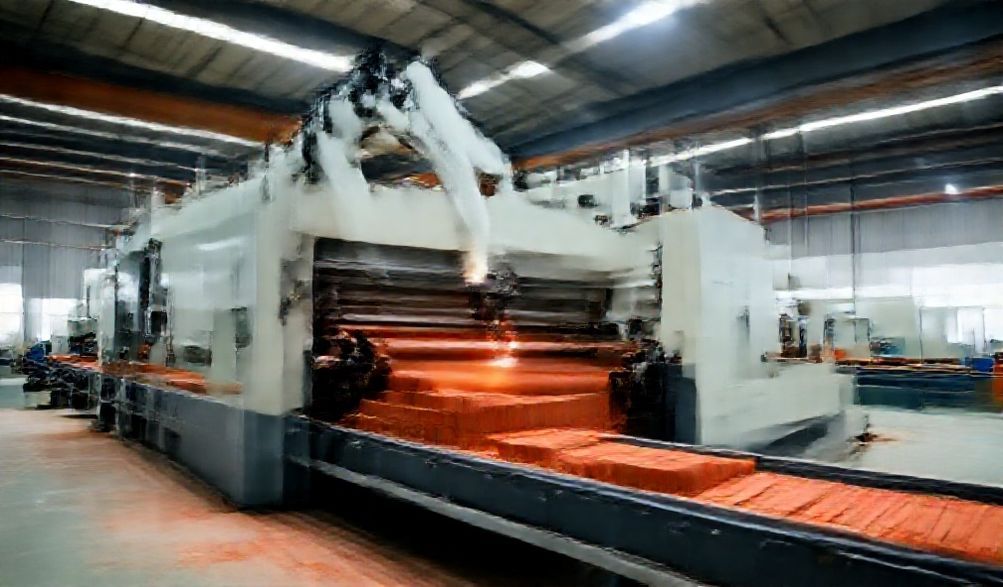
La Guía Definitiva para Encontrar Proveedores Confiables de Máquinas para Hacer Ladrillos en China en 2026
Introducción
La industria de la construcción global se sustenta sobre una base de ladrillos y bloques. A medida que la demanda de materiales de construcción eficientes y rentables se dispara en todo el mundo, la maquinaria que los produce se convierte en un activo crítico. Para las empresas que buscan establecer o modernizar sus líneas de producción, China ha surgido como el centro indiscutible de maquinaria para fabricar ladrillos.
Abastecerse de lo correctoProveedor chino de máquinas para fabricar ladrillosno es simplemente una compra; es una decisión estratégica fundamental. Esta única elección impactará directamente la rentabilidad a largo plazo de su proyecto, la calidad del producto y el cronograma operativo en los años venideros. El mercado es vasto, ofreciendo desde prensas manuales simples hasta fábricas inteligentes completamente automatizadas. Navegar por este panorama requiere más que una búsqueda rápida en una plataforma B2B; exige experiencia y un enfoque sistemático.
Esta guía integral está diseñada para ser tu hoja de ruta autorizada. Aprovecharemos un profundo conocimiento de la industria para eliminar el ruido, ofreciéndote perspectivas prácticas sobre la verificación de proveedores, la tecnología de maquinaria y las consideraciones matizadas de las adquisiciones internacionales. Nuestro objetivo es capacitarte para realizar una inversión informada y confiable, asegurando que tu decisión esté respaldada por el tipo de experiencia práctica y pericia probada que define los emprendimientos exitosos en la adquisición industrial.
了解中国制砖机械市场
Resumen del Mercado y Aglomeraciones Industriales
El poderío manufacturero de China no está distribuido de manera uniforme; se concentra en potentes clústeres industriales. Saber dónde buscar es tu primer paso para encontrar un proveedor de calidad.
- Centros Geográficos:La industria de maquinaria para fabricar ladrillos se centra principalmente en varias provincias clave.
- Provincia de Fujian:Especialmente la ciudad de Quanzhou, es reconocida como un importante centro de fabricación de máquinas para hacer bloques, en particular modelos de prensas hidráulicas y máquinas para ladrillos entrelazados.
- Provincia de Shandong:Una base industrial pesada conocida por sus robustas y grandes líneas de producción de bloques de hormigón y máquinas automáticas.
- Provincia de Guangdong:Un centro de innovación y exportación, que a menudo cuenta con proveedores con sólidas capacidades de I+D en automatización y tecnologías más recientes.
- Tipos de Fabricantes:Te encontrarás con un espectro de proveedores.
- Grandes OEMs a Gran Escala:Estas fábricas producen máquinas estandarizadas en gran volumen y a menudo cuentan con sólidos departamentos de exportación. Ofrecen fiabilidad, pero pueden ser menos flexibles en cuanto a personalización.
- Talleres Especializados:Manufactureres más pequeños y ágiles que a menudo sobresalen en áreas de nicho, como específicasmáquinas para ladrillos de arcillao soluciones personalizadas para materias primas únicas como la ceniza volante.
Ventajas de abastecerse desde China
El atractivo gravitacional del mercado chino para maquinaria de ladrillos está impulsado por varias ventajas convincentes.
- Competitividad en Costos:Las economías de escala sin igual y una cadena de suministro madura para componentes (como sistemas hidráulicos y PLCs) resultan en un gasto de capital significativamente menor en comparación con alternativas occidentales o locales.
- Espectro TecnológicoYa sea que necesites una máquina manual básica para un proyecto comunitario o una línea de producción completamente automática con servicio robótico, los proveedores chinos ofrecen toda la gama. Esto te permite encontrar el equilibrio perfecto entre tecnología y presupuesto.
- Innovación ecológicaLos fabricantes chinos han avanzado rápidamente en la producción de máquinas diseñadas para materiales sostenibles.Máquinas para fabricar ladrillos de ceniza volanteque utilizan residuos industriales, y los sistemas optimizados para ladrillos no cocidos son cada vez más comunes y sofisticados.
Tipos clave de máquinas para hacer ladrillos de China
Máquinas Automáticas para Fabricar Ladrillos
Estos son los caballos de batalla de la producción comercial de alto volumen. Una máquina automática para fabricar ladrillos integra el mezclado, moldeado, curado y apilado/ paletizado con una mínima intervención humana.
- Características: Controlled by PLC systems, with servo motors, synchronized conveyors, and often robotic arms. They feature high-pressure hydraulic systems for consistent brick density.
- Salida: Can produce from 10,000 to over 100,000 bricks or blocks per 8-hour shift, depending on the model and brick size.
- Ideal Use: Large-scale construction projects, dedicated brick supply businesses, and government infrastructure initiatives where output and consistency are paramount.
Semi-Automatic and Manual Brick Machines
This category offers the perfect entry point or solution for specific contexts where full automation isn’t feasible or necessary.
- Cost-Benefit Analysis:
- Inversión Inicial Más Baja: Significantly cheaper to purchase and install.
- Higher Labor Dependency: Require more operators for feeding, removing, and stacking bricks.
- Flexibilidad: Easier to adjust for small batches or custom shapes.
- Ideal Use: Small to medium enterprises (SMEs), startups testing the market, community-led building projects, and production in regions with lower labor costs.
Specialized Brick Making Machines
The raw material defines the machine. Chinese suppliers offer highly specialized equipment.
- Máquinas para Ladrillos de Arcilla: Designed to handle natural soil and clay, often featuring extruders or specific mold designs for traditional fired bricks.
- Máquinas para Bloques de Concreto: The most common type, using a mixture of cement, aggregate, and sand. They produce a wide variety of hollow blocks, solid blocks, and pavers.
- Máquinas para Ladrillos de Encaje: Produce bricks with designed ridges and grooves that lock together without mortar, popular for paving and certain wall systems.
- Hydraulic Press Brick Machines: An advanced technology that uses immense, controlled hydraulic pressure to compact raw material (often soil-cement or fly ash) into extremely dense, strong bricks. Known for high quality and efficiency.
How to Identify and Vet Reliable Suppliers
Essential Supplier Credentials and Certifications
Paperwork is your first filter. A legitimate manufacturer will have its documentation in order.
- Business Licenses: A valid Chinese business registration is non-negotiable. Verify the company name matches across all platforms.
- Certificación ISO: ISO 9001 certification for quality management systems is a strong indicator of a supplier committed to standardized production and process control.
- Industry Associations: Membership in bodies like the China Construction Machinery Association (CCMA) suggests industry recognition and a commitment to professional standards.
Due Diligence: Factory Audits and Site Visits
Seeing is believing. In a post-pandemic world, virtual audits have become a standard and effective tool.
- Request a Live Video Tour: Don’t settle for pre-recorded videos. Ask for a live walkthrough of the workshop, assembly area, and quality control station via video call. This allows you to ask real-time questions.
- Assess Key Areas:
- Manufacturing Capability: Look for organized production lines, modern equipment (CNC machines, welding robots), and raw material inventory.
- Control de Calidad: Ask to see their testing procedures. Do they have a pressure testing machine for sample bricks? Do they check hydraulic system integrity?
- Inversión en I+D: A dedicated R&D office or team is a good sign of a forward-thinking supplier, not just a copycat manufacturer.
Evaluating Online Presence and Reputation
Scrutinize online profiles with a detective’s eye.
- B2B Platform Analysis (Alibaba, Made-in-China):
- Transaction History: Look for verified transaction records, especially for similar machinery.
- Response Time & Quality: Gauge their professionalism from their inquiry responses.
- Photo/Video Authenticity: Be wary of suppliers using generic stock factory images. Request current, specific photos of their facility.
- Identifying Genuine Reviews:
- Look for detailed, specific reviews that mention machine models, project outcomes, and after-sales support.
- Be skeptical of multiple overly generic, 5-star reviews posted in a short timeframe.
- If possible, use the platform’s contact feature to message past buyers directly.
Critical Factors Before Placing Your Order
Technical Specifications and Customization
The devil is in the details. A clear technical agreement prevents future disputes.
- Key Specs to Compare:
- Tiempo de Ciclo: Seconds per cycle. This directly determines output.
- Presión (Tonelaje): The molding pressure (e.g., 200 tons) defines brick strength.
- Requisitos de Energía: Voltage (380V/220V), phase, and total power consumption (KW).
- Brick Size Versatility: What mold sizes are included? How quickly can molds be changed?
- Customization Discussion: Be explicit about your raw materials. Provide samples of your local soil, fly ash, or aggregate for the supplier to test. The machine must be engineered for tu inputs.
Logistics, Shipping, and Incoterms
Heavy machinery logistics require careful planning. Misunderstanding terms can lead to unexpected costs.
- Understanding Incoterms:
- FOB (Franco a Bordo): You pay for the machine loaded onto the ship at the Chinese port. You arrange and pay for sea freight and insurance. Offers more control over shipping costs.
- CIF (Costo, Seguro y Flete): The supplier arranges and pays for shipping and insurance to your nearest port. Simpler for you, but you may pay a premium.
- EXW (En Fábrica): You take responsibility at the supplier’s factory gate. You handle all transportation, export clearance, and shipping. Only for experienced importers.
- Practical Planning: Discuss container loading plans (will the machine be disassembled?), ensure proper wooden crating for protection, and understand who will handle export documentation.
After-Sales Support and Warranty
This is where reliable suppliers separate themselves from the rest.
- Non-Negotiable Elements:
- Garantía Integral: A clear warranty (e.g., 12 months for parts, excluding wear items) covering manufacturing defects.
- Documentación Técnica: Demand complete technical drawings, electrical schematics, and parts lists in English.
- Entrenamiento: Provision of detailed operation manuals and instructional videos. For complex lines, on-site engineer support should be an available option.
- Remote Support: Ensure they offer reliable communication channels (WhatsApp, WeChat, email) for troubleshooting and can supply spare parts promptly.
Navigating Communication and Negotiation
Effective Communication with Chinese Suppliers
Clarity eliminates costly errors.
- Use Visuals: Always communicate using marked-up technical drawings, diagrams, and photos. A picture is worth a thousand words, especially across a language barrier.
- Be Precise and Simple: Avoid idioms and complex sentences. Use bullet points for specifications and requirements.
- Request a Sample or Prototype Mold: For custom brick designs, paying for a sample mold to be made and tested at the factory is an excellent investment to confirm the final product quality before full production.
Price Negotiation and Payment Security
Understand the cost structure to negotiate fairly and protect your funds.
- Cost Structure: A machine’s price includes materials (steel, hydraulics, electrical components), labor, overhead, and profit. Asking for a basic breakdown shows you are a serious buyer.
- Secure Payment Methods:
- Letter of Credit (L/C): A bank-guaranteed payment method common in large industrial transactions. Secure for both parties but involves bank fees.
- Escrow Services (Alibaba Trade Assurance): The platform holds your payment until you confirm satisfactory receipt of the goods. Highly recommended for first-time buyers.
- Staged Payments: A common structure is 30% deposit, 60% against shipping documents, and 10% after successful installation/commissioning.
Common Pitfalls and How to Avoid Them
Quality Compromises and Misrepresented Specifications
- Red Flags: Vague answers to technical questions, reluctance to provide a live factory tour, prices significantly lower than the market average, and pressure to pay via insecure methods like wire transfer to a personal account.
- Solución: Insist on a detailed, signed proforma invoice (PI) that lists every specification. Use third-party inspection services (like SGS or Bureau Veritas) for pre-shipment inspections, especially for large orders.
Hidden Costs and Contractual Ambiguities
- Costos Ocultos: These can include export packing, domestic Chinese transportation to the port, documentation fees, and the cost of optional spare parts packages.
- Solución: Demand a finalized, itemized proforma invoice that clearly states what is included (e.g., “price includes standard molds, standard packing, and FOB Shenzhen charges”). Ask directly: “Are there any other fees not listed here?”
Intellectual Property (IP) Considerations
- The Risk: If you are providing a unique brick design, ensure your proprietary mold design is protected.
- Solución: Have a clear Non-Disclosure Agreement (NDA) in place before sharing detailed designs. Discuss IP ownership clauses in your contract. For critical proprietary technology, consider registering your design in China.
FAQ Section
Q1: What is the average lead time for receiving a brick making machine from China?
A: Lead times typically range from 30-60 days after the deposit is received, depending on machine complexity, customization level, and factory workload. This period covers production, assembly, testing, and packing. Always get the confirmed lead time in writing on your proforma invoice.
Q2: Are Chinese brick making machines compatible with the electrical standards and raw materials in my country?
A: Reputable suppliers routinely customize machines for different voltage standards (e.g., 220V/380V, 50Hz/60Hz). Crucially, they can also engineer the machine to work with your locally available raw materials—this is a key discussion point. Provide material samples for their technical team to analyze.
Q3: How can I verify if a supplier is a real manufacturer and not just a trading company?
A: Request a live video tour of their production floor and ask to see their in-house machining, welding, and assembly areas. Ask specific technical questions about hydraulic system sourcing and PLC programming. Manufacturers have deep technical knowledge; traders often deflect to “I’ll check with the factory.”
Q4: What is the minimum order quantity (MOQ) when sourcing from China?
A: For standard brick making machines, the MOQ is usually 1 unit. For highly customized production lines or specific auxiliary equipment, there may be an MOQ. This should be one of your first questions during initial contact.
Q5: Who is responsible for installing and commissioning the machine at my site?
A: This is a contractual term. Many suppliers provide comprehensive installation manuals and video guides. For full automatic lines, it is common (and highly advisable) to include the cost of sending 1-2 engineers for on-site installation and operator training. Clearly define the scope and duration of this support in your agreement.
Conclusión
Sourcing a brick making machine from China represents a strategic leap toward greater operational efficiency and business growth. The opportunity for value is immense, but it is not without its complexities. Success is not found in choosing the lowest price, but in a process defined by meticulous planning, rigorous supplier vetting, and crystal-clear communication.
By prioritizing suppliers who demonstrate tangible experticia in their engineering, autoridad through legitimate certifications and industry standing, and a proven track record of confiabilidad in their customer relationships, you systematically de-risk your investment. Remember, you are not just buying a machine; you are entering a partnership that will support your production for a decade or more.
Invest the time upfront in thorough due diligence. Insist on comprehensive after-sales terms. Build a relationship with a supplier who views your success as their own. This experienced, analytical approach will ensure your investment lays a solid, profitable foundation for your business far into the future.
<