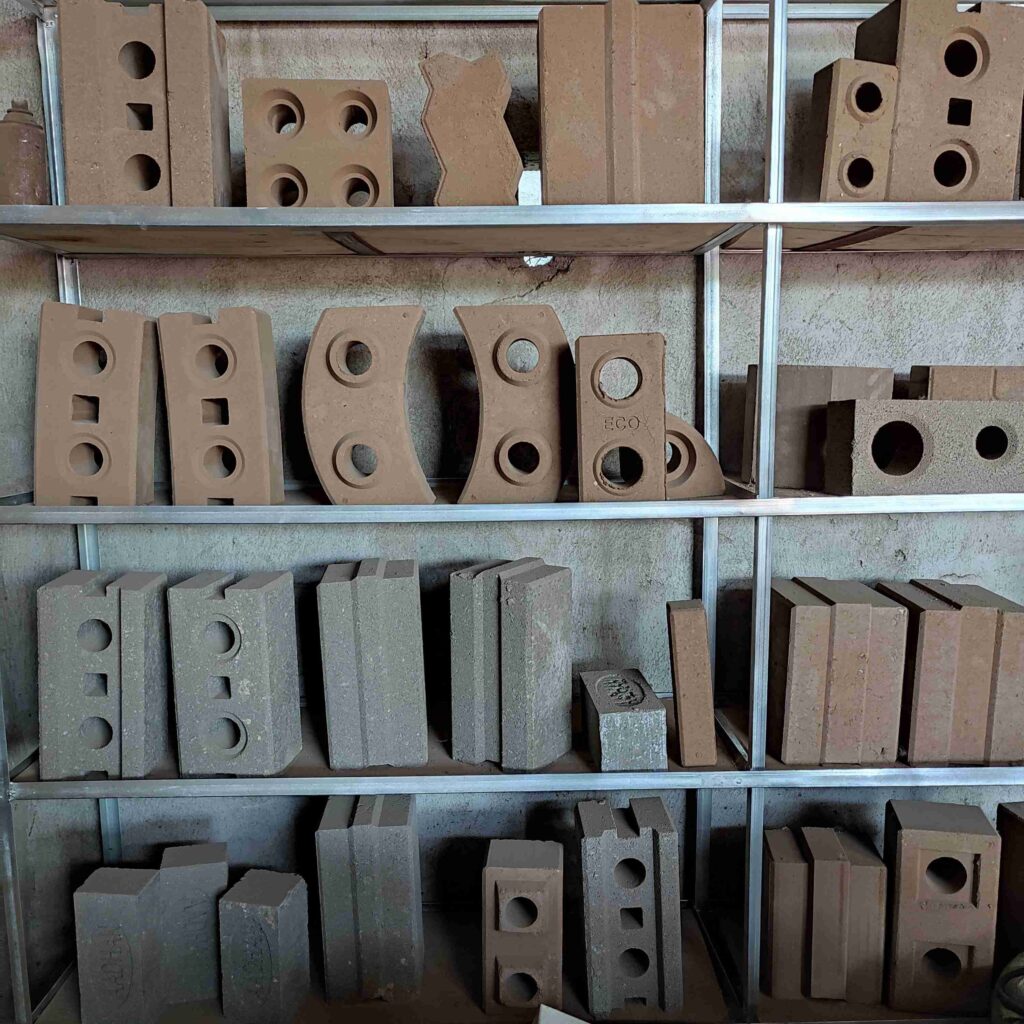
Introducción a la Inversión de Capital en Tecnología de Procesamiento de Arcilla
El mercado global de materiales de construcción continúa mostrando una demanda sólida de productos de ladrillo de arcilla, valorados por su estética natural, durabilidad y rendimiento térmico. Para distribuidores, especialistas en adquisiciones e inversores industriales, comprender la arquitectura financiera detrás de la maquinaria de moldeo y fabricación de ladrillos de arcilla representa un componente crítico de la planificación estratégica empresarial.
Planificación Financiera Estratégica para Equipos de Fabricación de Ladrillos de Arcilla
1.1 Estructura de Inversión de Capital y Niveles de Precios
El costo de adquisición de maquinaria para fabricar ladrillos de arcilla abarca un amplio espectro, determinado principalmente por la metodología de producción, el nivel de automatización y la capacidad operativa. Comprender estos niveles de inversión es fundamental para una selección adecuada del equipo.
- Sistemas de Moldeo Manual de Nivel Básico:Representando el nivel de inversión más accesible, las máquinas manuales para moldear ladrillos de arcilla suelen oscilar entre $2,000 y $15,000. Estos sistemas utilizan palanca mecánica simple o presión hidráulica para formar ladrillos dentro de cajas de molde intercambiables. Aunque ofrecen una producción limitada (300-800 ladrillos por día), sus requisitos mínimos de infraestructura, bajo consumo energético y operación sencilla las hacen viables para microempresas e iniciativas de producción comunitarias. La inversión total debe considerar equipos auxiliares, incluyendo mezcladoras de arcilla y estantes de secado.
- Sistemas de Producción Semiautomatizados:Ocupando el rango de inversión medio de $25,000 a $100,000, estos sistemas integran el manejo mecánico de materiales con funciones de moldeado y apilado asistidas por operador. Con capacidades de producción entre 5,000 y 15,000 ladrillos diarios, incorporan automatización básica en los procesos de transporte de materiales, llenado de moldes y compresión. Esta categoría ofrece el equilibrio óptimo entre inversión de capital y eficiencia productiva para pequeñas y medianas empresas dirigidas a redes de distribución locales y regionales.
- Líneas de Fabricación Industrial Totalmente Automatizadas:Representando niveles de inversión premium desde $150,000 hasta más de $1,000,000, estas soluciones integrales gestionan todo el flujo de trabajo de producción, desde el procesamiento de materias primas hasta el empaquetado del producto terminado. Incorporando controladores lógicos programables (PLC), sistemas de manipulación robótica y tecnología de secado en túnel, logran producciones que superan los 30,000 ladrillos diarios con mínima intervención manual. El desembolso de capital sustancial proporciona economías de escala sin precedentes, consistencia en el producto y eficiencia laboral para operaciones de fabricación a escala industrial.
1.2 Análisis Integral de Costos Más Allá de la Adquisición Inicial
El costo total de propiedad se extiende significativamente más allá del precio de compra de la maquinaria, abarcando numerosos gastos directos e indirectos a lo largo del ciclo de vida del equipo.
- Gastos de Preparación del Sitio e Instalación:La fabricación industrial de ladrillos de arcilla requiere un desarrollo sustancial de infraestructura, incluyendo cimientos de concreto reforzado ($5,000-$30,000), mejoras en el sistema eléctrico ($3,000-$15,000), sistemas de gestión de agua ($2,000-$10,000) y modificaciones en el edificio de la fábrica. Estos costos varían considerablemente según las tarifas locales de construcción y las condiciones del sitio.
- Auxiliary Equipment and System Integration: Complete manufacturing capability requires complementary equipment including clay crushers ($4,000-$20,000), pug mills ($8,000-$35,000), conveyor systems ($5,000-$25,000), and drying infrastructure ($10,000-$50,000). The integration of these components into a synchronized production line represents a significant additional investment.
- Operational Expenditure Structure: Ongoing operational costs include energy consumption ($800-$5,000 monthly depending on production scale), regular maintenance (1-3% of equipment value annually), spare parts inventory (2-4% of equipment value), labor costs, and raw material procurement. These recurring expenses critically impact production economics and profitability.
- Financing Costs and Capital Recovery: For financed acquisitions, interest payments and financing fees substantially increase the total investment. A $200,000 system with 60% financing over five years may incur $25,000-$40,000 in additional financing costs, depending on credit terms and interest rates.
1.3 Key Determinants of Machinery Pricing and Value Retention
Multiple technical and commercial factors influence equipment pricing and long-term economic value.
- Production Capacity and Technological Sophistication: Pricing correlates directly with output capacity, with high-volume systems commanding premium valuations. Additionally, advanced features including automated mould changing, real-time quality monitoring, and energy recovery systems contribute to higher initial costs but deliver superior operational economics.
- Construction Quality and Component Durability: Machinery fabricated from high-grade steel with precision-machined components, industrial-grade hydraulic systems, and premium electric motors commands 20-40% price premiums over equipment utilizing standard components. This investment typically translates to extended service life, reduced maintenance costs, and higher resale value.
- Operational Flexibility and Product Versatility: Systems capable of producing multiple brick types, sizes, and surface textures through quick-change mould systems typically carry 15-30% price premiums over single-product machines. This versatility creates significant commercial advantage by enabling manufacturers to respond to diverse market demands.
- After-Sales Support and Service Infrastructure: Suppliers offering comprehensive training programs, extended warranties, readily available spare parts, and responsive technical support typically price equipment 10-20% higher than those with limited support infrastructure. This premium represents valuable risk mitigation for operational continuity.
1.4 Financial Modeling and Return on Investment Analysis
Strategic investment decisions require rigorous financial analysis projecting equipment performance and economic returns.
- Payback Period Calculation Methodology: Typical payback periods range from 1.5 to 4 years, calculated through comprehensive analysis of production costs, market pricing, capacity utilization, and operational efficiency. Manual systems may achieve quicker payback through minimal investment, while automated systems deliver superior long-term returns through operational scale.
- Total Cost Per Unit Production Analysis: The complete financial model must account for all capital and operational expenditures distributed across total production output. Industrial automated systems typically achieve production costs 30-50% lower than semi-automated alternatives at full capacity utilization, creating compelling economic advantages at scale.
- Sensitivity Analysis and Risk Assessment: Robust financial models evaluate performance under varying conditions including fluctuating energy costs, raw material price volatility, capacity utilization rates, and market price variations for finished products. This analysis identifies operational break-even points and quantifies investment risk exposure.
- Lifecycle Costing and Residual Value Estimation: Premium-quality manufacturing equipment typically maintains 30-50% of initial value after 7-10 years of operation, representing significant recoverable capital. Lifecycle costing models incorporate this residual value alongside maintenance costs and potential productivity improvements.
1.5 Strategic Procurement and Negotiation Framework
Optimizing capital allocation requires strategic approaches to equipment procurement and acquisition.
- Total Value Assessment Versus Initial Price Evaluation: Sophisticated procurement strategies evaluate the total cost of ownership rather than focusing exclusively on purchase price. Equipment with slightly higher initial cost but superior energy efficiency, lower maintenance requirements, and higher productivity may deliver significantly better lifetime value.
- Phased Investment and Scalability Planning: Progressive manufacturers often implement modular acquisition strategies, beginning with core equipment and systematically adding automation and capacity enhancements as business growth justifies additional investment. This approach optimizes capital utilization while maintaining production flexibility.
- Financing Structure Optimization: Strategic financial planning evaluates multiple acquisition methods including outright purchase, equipment leasing, and financing arrangements. Each option presents distinct advantages for cash flow management, tax optimization, and financial risk mitigation.
- Supplier Evaluation and Partnership Development: Beyond technical specifications and pricing, successful procurement requires thorough evaluation of supplier capabilities, industry experience, financial stability, and long-term commitment to product support. Established suppliers with extensive installation experience typically deliver superior project outcomes despite potentially higher initial costs.
Conclusión
The economic landscape of clay brick moulding and manufacturing machinery presents a complex matrix of investment alternatives, each with distinct financial characteristics and business implications. The substantial capital requirements demand meticulous analysis extending far beyond initial purchase price to encompass total cost of ownership, operational economics, and strategic business alignment. For commercial stakeholders, success hinges on selecting equipment that not only matches immediate production requirements but also supports long-term business strategy through operational efficiency, product quality, and economic sustainability. In an increasingly competitive global marketplace, sophisticated understanding of these financial dynamics provides decisive advantage in capital allocation decisions and business development planning.
Frequently Asked Questions (FAQ)
Q1: What represents the typical price ratio between the main manufacturing machine and necessary auxiliary equipment?
A: For a complete production facility, auxiliary equipment typically represents 40-65% of the total equipment investment. A $100,000 primary moulding machine often requires $40,000-$65,000 in supporting equipment including clay preparation machinery, material handling systems, and drying infrastructure. This ratio varies based on automation level and production scale.
Q2: How significantly do operational scale and production volume affect per-unit production costs?
A: Production volume dramatically impacts per-unit economics. A system producing 10,000 bricks daily may achieve per-unit costs 25-35% lower than a system producing 3,000 bricks daily due to improved fixed cost absorption. This economy of scale continues up to the optimal capacity of each equipment tier.
Q3: What are the hidden costs frequently overlooked in initial investment calculations?
A: Commonly underestimated costs include: site modification expenses (15-25% of equipment cost), electrical system upgrades (8-12% of equipment cost), initial spare parts inventory (3-5% of equipment cost), operator training programs (2-4% of equipment cost), and regulatory compliance certifications (1-3% of equipment cost).
Q4: How does equipment financing affect the total investment and payback period?
A: Financing typically increases total equipment cost by 15-30% over the financing term while improving cash flow through payment distribution. This generally extends the payback period by 6-18 months but preserves working capital for other operational requirements. The specific impact depends on interest rates, down payment percentage, and financing term.
Q5: What is the typical lifespan of clay brick manufacturing machinery and how does this impact financial planning?
A: Well-maintained equipment typically delivers 10-15 years of productive service life, with premium systems potentially exceeding 20 years. Financial planning should incorporate a 7-10 year depreciation schedule while accounting for major component replacement between years 8-12, typically representing 20-35% of original equipment cost.
Q6: How do energy consumption patterns differ between various machine types and how does this affect operating costs?
A: Energy requirements vary significantly: manual systems consume minimal electricity ($50-$150 monthly), semi-automated systems typically require $400-$900 monthly, while fully automated industrial lines may incur $1,500-$4,000 monthly. These costs represent 8-15% of total production expenses for automated systems but can be optimized through energy-efficient motor technology and intelligent power management systems.