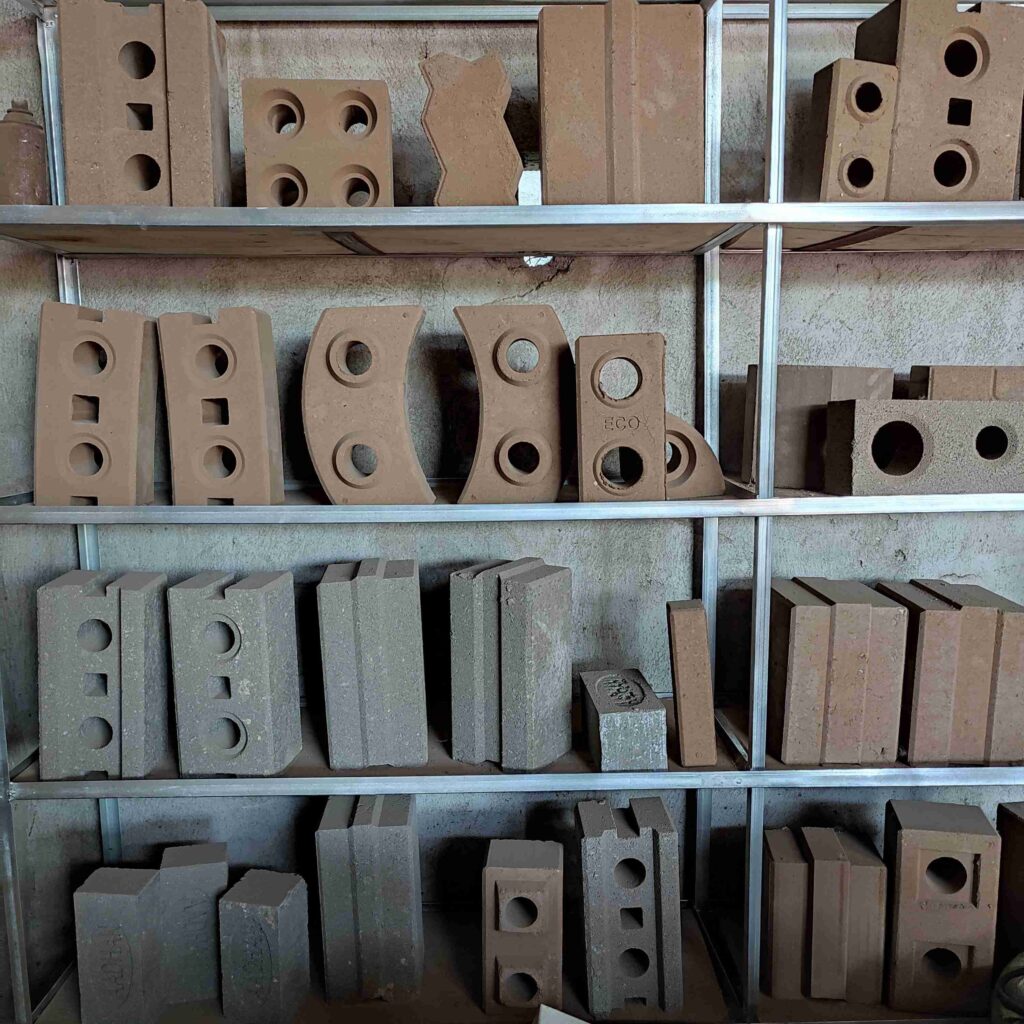
Pengantar Investasi Modal dalam Teknologi Pengolahan Tanah Liat
Pasar bahan konstruksi global terus menunjukkan permintaan yang kuat untuk produk batu bata tanah liat, yang dihargai karena estetika alami, daya tahan, dan kinerja termalnya. Bagi distributor, spesialis pengadaan, dan investor industri, memahami arsitektur keuangan di balik mesin cetak dan produksi batu bata tanah liat merupakan komponen kritis dalam perencanaan bisnis strategis.
Perencanaan Keuangan Strategis untuk Peralatan Manufaktur Batu Bata Tanah Liat
1.1 Struktur Investasi Modal dan Tingkat Harga
Biaya perolehan mesin pembuatan batu bata tanah liat mencakup spektrum yang luas, terutama ditentukan oleh metodologi produksi, tingkat otomatisasi, dan kapasitas operasional. Memahami tingkatan investasi ini merupakan hal mendasar untuk pemilihan peralatan yang tepat.
- Sistem Pencetakan Manual Tingkat Pemula:Mewakili tingkatan investasi yang paling terjangkau, mesin cetak bata tanah liat manual umumnya berkisar antara $2.000 hingga $15.000. Sistem ini memanfaatkan pengungkit mekanis sederhana atau tekanan hidrolik untuk membentuk bata dalam kotak cetakan yang dapat diganti. Meski menawarkan output terbatas (300-800 bata per hari), persyaratan infrastruktur minimal, konsumsi energi rendah, dan pengoperasian sederhana membuatnya layak untuk usaha mikro dan inisiatif produksi berbasis komunitas. Investasi total harus memperhitungkan peralatan pendukung termasuk pengaduk tanah liat dan rak pengering.
- Sistem Produksi Semi-Otomatis:Menempati kisaran investasi menengah $25.000 hingga $100.000, sistem ini mengintegrasikan penanganan material mekanis dengan fungsi pencetakan dan penumpukan berbantuan operator. Dengan kapasitas output antara 5.000 hingga 15.000 bata per hari, sistem ini menggabungkan otomatisasi dasar dalam proses pengangkutan material, pengisian cetakan, dan kompresi. Kategori ini menawarkan keseimbangan optimal antara investasi modal dan efisiensi produksi untuk usaha kecil dan menengah yang menargetkan jaringan distribusi lokal dan regional.
- Lini Produksi Industri yang Sepenuhnya Otomatis:Mewakili tingkatan investasi premium dari $150.000 hingga lebih dari $1.000.000, solusi komprehensif ini mengelola seluruh alur kerja produksi dari pengolahan bahan baku hingga pengemasan produk jadi. Dengan menggabungkan pengendali logika terprogram (PLC), sistem penanganan robotik, dan teknologi pengeringan terowongan, mereka mencapai output melebihi 30.000 bata per hari dengan intervensi manual yang minimal. Pengeluaran modal yang besar memberikan skala ekonomi yang belum pernah ada sebelumnya, konsistensi produk, dan efisiensi tenaga kerja untuk operasi manufaktur skala industri.
1.2 Analisis Biaya Komprehensif Melampaui Akuisisi Awal
Total biaya kepemilikan meluas jauh melampaui harga pembelian mesin, mencakup berbagai pengeluaran langsung dan tidak langsung sepanjang siklus hidup peralatan.
- Biaya Persiapan Situs dan Pemasangan:Pembuatan batu bata tanah liat industri memerlukan pengembangan infrastruktur yang signifikan, termasuk fondasi beton bertulang ($5.000-$30.000), peningkatan sistem kelistrikan ($3.000-$15.000), sistem pengelolaan air ($2.000-$10.000), dan modifikasi bangunan pabrik. Biaya-biaya ini sangat bervariasi tergantung pada tarif konstruksi lokal dan kondisi lokasi.
- Peralatan Bantu dan Integrasi Sistem:Kapabilitas manufaktur yang lengkap memerlukan peralatan pendukung termasuk penghancur tanah liat ($4.000-$20.000), penggiling adonan ($8.000-$35.000), sistem konveyor ($5.000-$25.000), dan infrastruktur pengeringan ($10.000-$50.000). Integrasi komponen-komponen ini ke dalam lini produksi yang tersinkronisasi memerlukan investasi tambahan yang signifikan.
- Struktur Pengeluaran Operasional:Biaya operasional berkelanjutan meliputi konsumsi energi ($800-$5.000 per bulan tergantung skala produksi), perawatan rutin (1-3% dari nilai peralatan per tahun), persediaan suku cadang (2-4% dari nilai peralatan), biaya tenaga kerja, dan pengadaan bahan baku. Biaya berulang ini secara kritis memengaruhi ekonomi produksi dan profitabilitas.
- Biaya Pembiayaan dan Pemulihan Modal:Untuk akuisisi yang dibiayai, pembayaran bunga dan biaya pembiayaan secara signifikan meningkatkan total investasi. Sistem senilai $200.000 dengan pembiayaan 60% selama lima tahun dapat menimbulkan biaya pembiayaan tambahan sebesar $25.000-$40.000, tergantung pada syarat kredit dan suku bunga.
1.3 Faktor Penentu Utama Harga Mesin dan Retensi Nilai
Berbagai faktor teknis dan komersial memengaruhi harga peralatan serta nilai ekonomi jangka panjang.
- Kapasitas Produksi dan Kecanggihan Teknologi:Harga berkorelasi langsung dengan kapasitas produksi, di mana sistem berkapasitas tinggi memiliki valuasi premium. Selain itu, fitur-fitur canggih termasuk penggantian cetakan otomatis, pemantauan kualitas real-time, dan sistem pemulihan energi berkontribusi pada biaya awal yang lebih tinggi, namun memberikan efisiensi operasional yang lebih unggul.
- Kualitas Konstruksi dan Daya Tahan Komponen: Machinery fabricated from high-grade steel with precision-machined components, industrial-grade hydraulic systems, and premium electric motors commands 20-40% price premiums over equipment utilizing standard components. This investment typically translates to extended service life, reduced maintenance costs, and higher resale value.
- Operational Flexibility and Product Versatility: Systems capable of producing multiple brick types, sizes, and surface textures through quick-change mould systems typically carry 15-30% price premiums over single-product machines. This versatility creates significant commercial advantage by enabling manufacturers to respond to diverse market demands.
- After-Sales Support and Service Infrastructure: Suppliers offering comprehensive training programs, extended warranties, readily available spare parts, and responsive technical support typically price equipment 10-20% higher than those with limited support infrastructure. This premium represents valuable risk mitigation for operational continuity.
1.4 Financial Modeling and Return on Investment Analysis
Strategic investment decisions require rigorous financial analysis projecting equipment performance and economic returns.
- Payback Period Calculation Methodology: Typical payback periods range from 1.5 to 4 years, calculated through comprehensive analysis of production costs, market pricing, capacity utilization, and operational efficiency. Manual systems may achieve quicker payback through minimal investment, while automated systems deliver superior long-term returns through operational scale.
- Total Cost Per Unit Production Analysis: The complete financial model must account for all capital and operational expenditures distributed across total production output. Industrial automated systems typically achieve production costs 30-50% lower than semi-automated alternatives at full capacity utilization, creating compelling economic advantages at scale.
- Sensitivity Analysis and Risk Assessment: Robust financial models evaluate performance under varying conditions including fluctuating energy costs, raw material price volatility, capacity utilization rates, and market price variations for finished products. This analysis identifies operational break-even points and quantifies investment risk exposure.
- Lifecycle Costing and Residual Value Estimation: Premium-quality manufacturing equipment typically maintains 30-50% of initial value after 7-10 years of operation, representing significant recoverable capital. Lifecycle costing models incorporate this residual value alongside maintenance costs and potential productivity improvements.
1.5 Strategic Procurement and Negotiation Framework
Optimizing capital allocation requires strategic approaches to equipment procurement and acquisition.
- Total Value Assessment Versus Initial Price Evaluation: Sophisticated procurement strategies evaluate the total cost of ownership rather than focusing exclusively on purchase price. Equipment with slightly higher initial cost but superior energy efficiency, lower maintenance requirements, and higher productivity may deliver significantly better lifetime value.
- Phased Investment and Scalability Planning: Progressive manufacturers often implement modular acquisition strategies, beginning with core equipment and systematically adding automation and capacity enhancements as business growth justifies additional investment. This approach optimizes capital utilization while maintaining production flexibility.
- Financing Structure Optimization: Strategic financial planning evaluates multiple acquisition methods including outright purchase, equipment leasing, and financing arrangements. Each option presents distinct advantages for cash flow management, tax optimization, and financial risk mitigation.
- Supplier Evaluation and Partnership Development: Beyond technical specifications and pricing, successful procurement requires thorough evaluation of supplier capabilities, industry experience, financial stability, and long-term commitment to product support. Established suppliers with extensive installation experience typically deliver superior project outcomes despite potentially higher initial costs.
Kesimpulan
The economic landscape of clay brick moulding and manufacturing machinery presents a complex matrix of investment alternatives, each with distinct financial characteristics and business implications. The substantial capital requirements demand meticulous analysis extending far beyond initial purchase price to encompass total cost of ownership, operational economics, and strategic business alignment. For commercial stakeholders, success hinges on selecting equipment that not only matches immediate production requirements but also supports long-term business strategy through operational efficiency, product quality, and economic sustainability. In an increasingly competitive global marketplace, sophisticated understanding of these financial dynamics provides decisive advantage in capital allocation decisions and business development planning.
Pertanyaan yang Sering Diajukan (FAQ)
Q1: What represents the typical price ratio between the main manufacturing machine and necessary auxiliary equipment?
A: For a complete production facility, auxiliary equipment typically represents 40-65% of the total equipment investment. A $100,000 primary moulding machine often requires $40,000-$65,000 in supporting equipment including clay preparation machinery, material handling systems, and drying infrastructure. This ratio varies based on automation level and production scale.
Q2: How significantly do operational scale and production volume affect per-unit production costs?
A: Production volume dramatically impacts per-unit economics. A system producing 10,000 bricks daily may achieve per-unit costs 25-35% lower than a system producing 3,000 bricks daily due to improved fixed cost absorption. This economy of scale continues up to the optimal capacity of each equipment tier.
Q3: What are the hidden costs frequently overlooked in initial investment calculations?
A: Commonly underestimated costs include: site modification expenses (15-25% of equipment cost), electrical system upgrades (8-12% of equipment cost), initial spare parts inventory (3-5% of equipment cost), operator training programs (2-4% of equipment cost), and regulatory compliance certifications (1-3% of equipment cost).
Q4: How does equipment financing affect the total investment and payback period?
A: Financing typically increases total equipment cost by 15-30% over the financing term while improving cash flow through payment distribution. This generally extends the payback period by 6-18 months but preserves working capital for other operational requirements. The specific impact depends on interest rates, down payment percentage, and financing term.
Q5: What is the typical lifespan of clay brick manufacturing machinery and how does this impact financial planning?
A: Well-maintained equipment typically delivers 10-15 years of productive service life, with premium systems potentially exceeding 20 years. Financial planning should incorporate a 7-10 year depreciation schedule while accounting for major component replacement between years 8-12, typically representing 20-35% of original equipment cost.
Q6: How do energy consumption patterns differ between various machine types and how does this affect operating costs?
A: Energy requirements vary significantly: manual systems consume minimal electricity ($50-$150 monthly), semi-automated systems typically require $400-$900 monthly, while fully automated industrial lines may incur $1,500-$4,000 monthly. These costs represent 8-15% of total production expenses for automated systems but can be optimized through energy-efficient motor technology and intelligent power management systems.