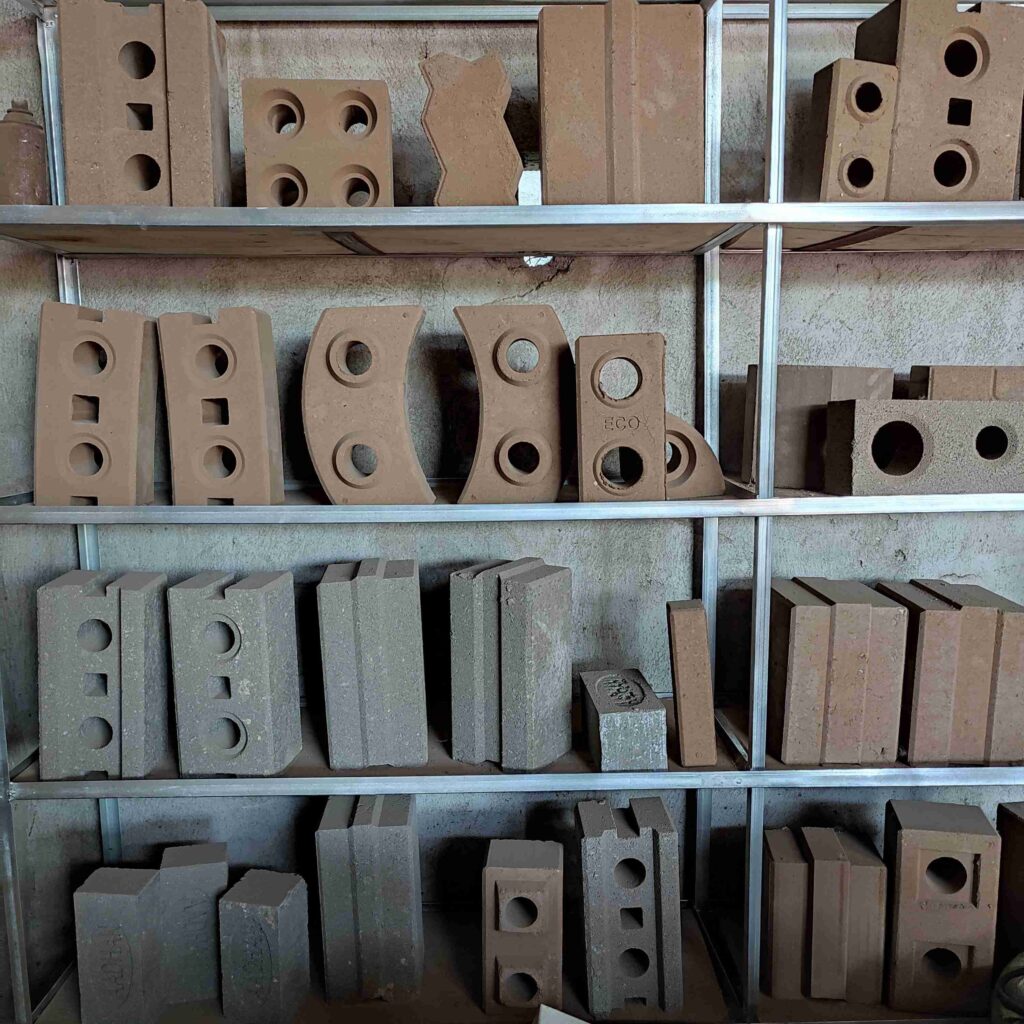
บทนำสู่การลงทุนด้านเทคโนโลยีการแปรรูปดินเหนียว
ตลาดวัสดุก่อสร้างทั่วโลกยังคงแสดงให้เห็นถึงความต้องการที่แข็งแกร่งสำหรับผลิตภัณฑ์อิฐดินเผา ซึ่งมีคุณค่าจากความสวยงามตามธรรมชาติ ความทนทาน และประสิทธิภาพด้านความร้อน สำหรับผู้จัดจำหน่าย ผู้เชี่ยวชาญด้านการจัดซื้อ และนักลงทุนอุตสาหกรรม การทำความเข้าใจโครงสร้างทางการเงินที่อยู่เบื้องหลังเครื่องจักรสำหรับการขึ้นรูปและผลิตอิฐดินเผา ถือเป็นองค์ประกอบสำคัญของการวางแผนธุรกิจเชิงกลยุทธ์
การวางแผนทางการเงินเชิงกลยุทธ์สำหรับอุปกรณ์การผลิตอิฐดินเผา
1.1 โครงสร้างการลงทุนและระดับราคา
ต้นทุนการจัดซื้อเครื่องจักรผลิตอิฐดินเผามีช่วงกว้าง ขึ้นอยู่กับวิธีการผลิต ระดับระบบอัตโนมัติ และกำลังการผลิตเป็นหลัก การทำความเข้าใจระดับการลงทุนเหล่านี้เป็นพื้นฐานสำคัญในการเลือกอุปกรณ์ที่เหมาะสม
- ระบบการขึ้นรูปแม่พิมพ์แบบแมนนวลระดับเริ่มต้นเป็นตัวแทนของระดับการลงทุนที่เข้าถึงได้มากที่สุด เครื่องอัดอิฐดินเผาแบบใช้มือมักมีราคาอยู่ระหว่าง 2,000 ถึง 15,000 ดอลลาร์ ระบบเหล่านี้ใช้กลไกการออกแรงเชิงกลแบบง่ายๆ หรือแรงดันไฮดรอลิกเพื่อขึ้นรูปอิฐภายในกล่องแม่พิมพ์ที่เปลี่ยนได้ แม้จะให้ผลผลิตจำกัด (300-800 ก้อนต่อวัน) แต่ด้วยความต้องการโครงสร้างพื้นฐานที่น้อย การใช้พลังงานต่ำ และการทำงานที่ตรงไปตรงมา ทำให้เครื่องเหล่านี้เหมาะสมสำหรับวิสาหกิจขนาดจิ๋วและโครงการผลิตเชิงชุมชน การลงทุนทั้งหมดต้องคำนึงถึงอุปกรณ์เสริมรวมถึงเครื่องผสมดินและชั้นตากอิฐด้วย
- ระบบการผลิตกึ่งอัตโนมัติ:ระบบเหล่านี้ครอบครองช่วงการลงทุนระดับกลางตั้งแต่ 25,000 ถึง 100,000 ดอลลาร์ โดยผสานการจัดการวัสดุเชิงกลเข้ากับฟังก์ชันการขึ้นรูปและการเรียงซ้อนที่ผู้ปฏิบัติงานช่วยควบคุม ด้วยความสามารถในการผลิตระหว่าง 5,000 ถึง 15,000 ก้อนต่อวัน ระบบดังกล่าวรวมระบบอัตโนมัติพื้นฐานในกระบวนการลำเลียงวัสดุ การเติมแบบพิมพ์ และการอัดกด ประเภทนี้ให้สมดุลที่เหมาะสมที่สุดระหว่างการลงทุนและประสิทธิภาพการผลิตสำหรับวิสาหกิจขนาดเล็กถึงกลางที่มุ่งเป้าไปยังเครือข่ายการกระจายสินค้าในระดับท้องถิ่นและภูมิภาค
- สายการผลิตอุตสาหกรรมแบบอัตโนมัติเต็มรูปแบบ:แทนชั้นการลงทุนระดับพรีเมียมตั้งแต่ 150,000 ดอลลาร์ไปจนถึงกว่า 1,000,000 ดอลลาร์ โซลูชันแบบครบวงจรเหล่านี้จัดการขั้นตอนการผลิตทั้งหมด ตั้งแต่การแปรรูปวัตถุดิบไปจนถึงการบรรจุภัณฑ์ผลิตภัณฑ์สำเร็จรูป ด้วยการผสานเทคโนโลยีคอนโทรลเลอร์ลอจิกที่โปรแกรมได้ (PLC) ระบบจัดการด้วยหุ่นยนต์ และเทคโนโลยีการอบแห้งแบบอุโมงค์ ทำให้สามารถผลิตอิฐได้มากกว่า 30,000 ก้อนต่อวัน โดยใช้แรงงานมนุษย์เพียงน้อยนิด การลงทุนเงินทุนจำนวนมากนี้สร้างผลตอบแทนทางเศรษฐกิจที่ไม่เคยมีมาก่อน ความสม่ำเสมอของผลิตภัณฑ์ และประสิทธิภาพด้านแรงงานสำหรับการดำเนินการผลิตระดับอุตสาหกรรม
1.2 การวิเคราะห์ต้นทุนโดยละเอียดนอกเหนือจากการจัดซื้อเริ่มแรก
ต้นทุนรวมในการเป็นเจ้าของขยายออกไปอย่างมากเกินกว่าราคาซื้อเครื่องจักร โดยครอบคลุมค่าใช้จ่ายทั้งทางตรงและทางอ้อมมากมายตลอดวงจรชีวิตของอุปกรณ์
- ค่าใช้จ่ายในการเตรียมพื้นที่และติดตั้งการผลิตอิฐดินเผาเชิงอุตสาหกรรมจำเป็นต้องมีการพัฒนาระบบโครงสร้างพื้นฐานอย่างมาก ซึ่งรวมถึงการวางฐานรากคอนกรีตเสริมเหล็ก (5,000-30,000 ดอลลาร์) การอัปเกรดระบบไฟฟ้า (3,000-15,000 ดอลลาร์) การจัดการระบบน้ำ (2,000-10,000 ดอลลาร์) และการปรับเปลี่ยนอาคารโรงงาน ค่าใช้จ่ายเหล่านี้มีความแตกต่างกันอย่างมากขึ้นอยู่กับอัตราค่าก่อสร้างในพื้นที่และสภาพของสถานที่ตั้ง
- อุปกรณ์เสริมและระบบการบูรณาการ Complete manufacturing capability requires complementary equipment including clay crushers ($4,000-$20,000), pug mills ($8,000-$35,000), conveyor systems ($5,000-$25,000), and drying infrastructure ($10,000-$50,000). The integration of these components into a synchronized production line represents a significant additional investment.
- Operational Expenditure Structure: Ongoing operational costs include energy consumption ($800-$5,000 monthly depending on production scale), regular maintenance (1-3% of equipment value annually), spare parts inventory (2-4% of equipment value), labor costs, and raw material procurement. These recurring expenses critically impact production economics and profitability.
- Financing Costs and Capital Recovery: For financed acquisitions, interest payments and financing fees substantially increase the total investment. A $200,000 system with 60% financing over five years may incur $25,000-$40,000 in additional financing costs, depending on credit terms and interest rates.
1.3 Key Determinants of Machinery Pricing and Value Retention
Multiple technical and commercial factors influence equipment pricing and long-term economic value.
- Production Capacity and Technological Sophistication: Pricing correlates directly with output capacity, with high-volume systems commanding premium valuations. Additionally, advanced features including automated mould changing, real-time quality monitoring, and energy recovery systems contribute to higher initial costs but deliver superior operational economics.
- Construction Quality and Component Durability: Machinery fabricated from high-grade steel with precision-machined components, industrial-grade hydraulic systems, and premium electric motors commands 20-40% price premiums over equipment utilizing standard components. This investment typically translates to extended service life, reduced maintenance costs, and higher resale value.
- Operational Flexibility and Product Versatility: Systems capable of producing multiple brick types, sizes, and surface textures through quick-change mould systems typically carry 15-30% price premiums over single-product machines. This versatility creates significant commercial advantage by enabling manufacturers to respond to diverse market demands.
- After-Sales Support and Service Infrastructure: Suppliers offering comprehensive training programs, extended warranties, readily available spare parts, and responsive technical support typically price equipment 10-20% higher than those with limited support infrastructure. This premium represents valuable risk mitigation for operational continuity.
1.4 Financial Modeling and Return on Investment Analysis
Strategic investment decisions require rigorous financial analysis projecting equipment performance and economic returns.
- Payback Period Calculation Methodology: Typical payback periods range from 1.5 to 4 years, calculated through comprehensive analysis of production costs, market pricing, capacity utilization, and operational efficiency. Manual systems may achieve quicker payback through minimal investment, while automated systems deliver superior long-term returns through operational scale.
- Total Cost Per Unit Production Analysis: The complete financial model must account for all capital and operational expenditures distributed across total production output. Industrial automated systems typically achieve production costs 30-50% lower than semi-automated alternatives at full capacity utilization, creating compelling economic advantages at scale.
- Sensitivity Analysis and Risk Assessment: Robust financial models evaluate performance under varying conditions including fluctuating energy costs, raw material price volatility, capacity utilization rates, and market price variations for finished products. This analysis identifies operational break-even points and quantifies investment risk exposure.
- Lifecycle Costing and Residual Value Estimation: Premium-quality manufacturing equipment typically maintains 30-50% of initial value after 7-10 years of operation, representing significant recoverable capital. Lifecycle costing models incorporate this residual value alongside maintenance costs and potential productivity improvements.
1.5 Strategic Procurement and Negotiation Framework
Optimizing capital allocation requires strategic approaches to equipment procurement and acquisition.
- Total Value Assessment Versus Initial Price Evaluation: Sophisticated procurement strategies evaluate the total cost of ownership rather than focusing exclusively on purchase price. Equipment with slightly higher initial cost but superior energy efficiency, lower maintenance requirements, and higher productivity may deliver significantly better lifetime value.
- Phased Investment and Scalability Planning: Progressive manufacturers often implement modular acquisition strategies, beginning with core equipment and systematically adding automation and capacity enhancements as business growth justifies additional investment. This approach optimizes capital utilization while maintaining production flexibility.
- Financing Structure Optimization: Strategic financial planning evaluates multiple acquisition methods including outright purchase, equipment leasing, and financing arrangements. Each option presents distinct advantages for cash flow management, tax optimization, and financial risk mitigation.
- Supplier Evaluation and Partnership Development: Beyond technical specifications and pricing, successful procurement requires thorough evaluation of supplier capabilities, industry experience, financial stability, and long-term commitment to product support. Established suppliers with extensive installation experience typically deliver superior project outcomes despite potentially higher initial costs.
สรุป
The economic landscape of clay brick moulding and manufacturing machinery presents a complex matrix of investment alternatives, each with distinct financial characteristics and business implications. The substantial capital requirements demand meticulous analysis extending far beyond initial purchase price to encompass total cost of ownership, operational economics, and strategic business alignment. For commercial stakeholders, success hinges on selecting equipment that not only matches immediate production requirements but also supports long-term business strategy through operational efficiency, product quality, and economic sustainability. In an increasingly competitive global marketplace, sophisticated understanding of these financial dynamics provides decisive advantage in capital allocation decisions and business development planning.
คำถามที่พบบ่อย (FAQ)
Q1: What represents the typical price ratio between the main manufacturing machine and necessary auxiliary equipment?
A: For a complete production facility, auxiliary equipment typically represents 40-65% of the total equipment investment. A $100,000 primary moulding machine often requires $40,000-$65,000 in supporting equipment including clay preparation machinery, material handling systems, and drying infrastructure. This ratio varies based on automation level and production scale.
Q2: How significantly do operational scale and production volume affect per-unit production costs?
A: Production volume dramatically impacts per-unit economics. A system producing 10,000 bricks daily may achieve per-unit costs 25-35% lower than a system producing 3,000 bricks daily due to improved fixed cost absorption. This economy of scale continues up to the optimal capacity of each equipment tier.
Q3: What are the hidden costs frequently overlooked in initial investment calculations?
A: Commonly underestimated costs include: site modification expenses (15-25% of equipment cost), electrical system upgrades (8-12% of equipment cost), initial spare parts inventory (3-5% of equipment cost), operator training programs (2-4% of equipment cost), and regulatory compliance certifications (1-3% of equipment cost).
Q4: How does equipment financing affect the total investment and payback period?
A: Financing typically increases total equipment cost by 15-30% over the financing term while improving cash flow through payment distribution. This generally extends the payback period by 6-18 months but preserves working capital for other operational requirements. The specific impact depends on interest rates, down payment percentage, and financing term.
Q5: What is the typical lifespan of clay brick manufacturing machinery and how does this impact financial planning?
A: Well-maintained equipment typically delivers 10-15 years of productive service life, with premium systems potentially exceeding 20 years. Financial planning should incorporate a 7-10 year depreciation schedule while accounting for major component replacement between years 8-12, typically representing 20-35% of original equipment cost.
Q6: How do energy consumption patterns differ between various machine types and how does this affect operating costs?
A: Energy requirements vary significantly: manual systems consume minimal electricity ($50-$150 monthly), semi-automated systems typically require $400-$900 monthly, while fully automated industrial lines may incur $1,500-$4,000 monthly. These costs represent 8-15% of total production expenses for automated systems but can be optimized through energy-efficient motor technology and intelligent power management systems.