
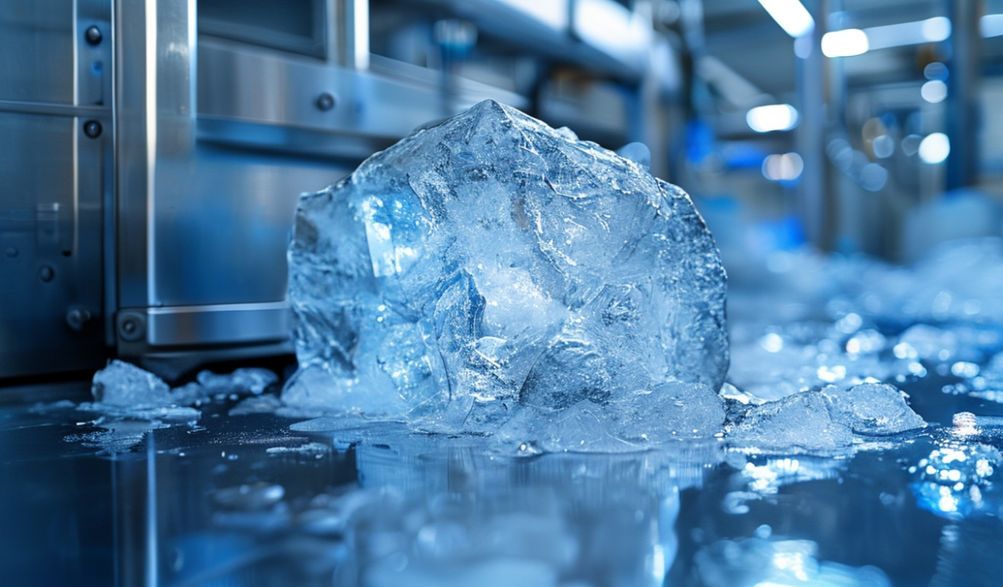
Máquina para Hacer Bloques de Hielo a Precio Personalizado: Tu Guía Definitiva sobre Costo, Características y Selección
Introducción
En industrias donde el control de temperatura no es un lujo sino un requisito operativo estricto, la confiabilidad de su suministro de hielo es primordial. Desde preservar la captura diaria en pesquerías hasta garantizar el curado adecuado del concreto en la construcción, o gestionar procesos químicos críticos, una producción constante de bloques de hielo de alta calidad es el sustento de muchos negocios. Las máquinas estándar a menudo obligan a un compromiso, dejándolo con una unidad que es insuficiente, ineficiente o produce bloques inadecuados para sus sistemas específicos de manipulación y almacenamiento.
Aquí es donde la inversión estratégica en unaMáquina para hacer bloques de hielo a precio personalizadodistingue a los propietarios de negocios proactivos de aquellos atascados en cuellos de botella operativos. El término "precio personalizado" significa más que un número final; representa una solución a medida construida según sus especificaciones exactas. Esta guía integral está diseñada para gerentes de compras, supervisores de planta y propietarios de negocios listos para realizar una inversión de capital. Desentrañaremos las variables que determinan elprecio personalizadoAdéntrese en las características técnicas que puede especificar y proporcione un marco claro y paso a paso para la selección. Nuestro objetivo es capacitarlo para tomar una decisión que equilibre la inversión inicial con la eficiencia operativa a largo plazo, la fiabilidad y el máximo retorno de la inversión (ROI).
Comprender el "Precio Personalizado": Es Más Que Solo el Costo de la Etiqueta
En la maquinaria industrial, un "precio personalizado" refleja una solución configurada, no una etiqueta de venta fija. Es una cifra variable calculada a partir de un costo base central, incrementado por el valor de las personalizaciones elegidas e influenciado por consideraciones de soporte a largo plazo. Comprender este desglose es el primer paso para asegurar que pagas por las capacidades que necesitas—y evitas pagar por las que no.
Componentes Fundamentales que Determinan el Precio Base
Estos son los elementos fundamentales e innegociables de ingeniería que constituyen la mayor parte de su presupuesto.
- Capacidad de Producción (Toneladas por 24 Horas):Este es el principal factor de coste. Una máquina clasificada para 5 toneladas/24h será significativamente menos costosa que una clasificada para 20 toneladas/24h. La capacidad está determinada por el tamaño y la potencia del sistema de refrigeración. Sea realista sobre su demanda máxima, no solo sobre su uso promedio.
- Dimensiones y Peso del Bloque de Hielo:El tamaño físico de los bloques de hielo impacta directamente el diseño de la máquina. Los bloques más grandes y pesados (por ejemplo, 50 kg, 100 kg o 150 kg) requieren moldes más robustos, mecanismos de expulsión más fuertes y un sistema de congelación más potente que los bloques más pequeños (por ejemplo, 25 kg). Especifique sus dimensiones exactas requeridas (Largo x Ancho x Alto).
- Tipo de Sistema de Refrigeración y Marca del Compresor:El corazón de la máquina. Las unidades industriales suelen utilizar un sistema de expansión directa (DX) o de salmuera. La marca y el modelo del compresor (por ejemplo, Bitzer, Copeland, Frascold) son críticos. Los compresores premium, reconocidos internacionalmente, exigen un precio más alto pero ofrecen una fiabilidad probada, eficiencia y capacidad de servicio global.
Características de Personalización que Agregan Valor (y Costo)
Aquí es donde adaptas la máquina a tu flujo de trabajo operativo y a las condiciones del sitio.
- Nivel de Automatización:Este es un diferenciador de precio importante.
- Manual:Requiere intervención del operador para la cosecha y el almacenamiento. Costo más bajo.
- Semiautomático:Automatiza ya sea el ciclo de congelación o el proceso de recolección. Precio de gama media.
- Totalmente Automático:Integra la congelación, la cosecha y, a menudo, el apilado o transporte con control por PLC. Costo inicial más alto, pero costo de mano de obra más bajo y mayor consistencia.
- Mejoras de Materiales:Los marcos y paneles estándar pueden ser de acero con recubrimiento en polvo. Para entornos altamente corrosivos (por ejemplo, cerca del agua de mar en pesquerías), se recomienda actualizar a304 or 316-grade stainless steel for critical components adds cost but dramatically extends the machine’s lifespan.
- Specialized Molds for Unique Block Shapes: Need a block with handles for easy lifting? A specific shape for your bunker? Custom mold design and fabrication is a premium service that solves unique logistical challenges.
The Hidden Factors in Your Final Quote
These are the often-overlooked elements that define the true cost of ownership.
- Energy Efficiency Rating & Long-Term Operating Costs: A machine with a high-efficiency compressor and optimized thermal design may have a 15-20% higher purchase price but can save 30% or more on electricity over its lifetime. Always calculate the operational cost.
- After-Sales Service, Warranty, and Technical Support: A comprehensive warranty (e.g., 5 years on the compressor, 2 years on parts) and access to responsive technical support is invaluable. This security often comes from established manufacturers and factors into the price.
- Logistics, Installation, and Training Requirements: Is the price FOB (Free On Board) at the factory, or does it include delivery to your site? Does the quote cover installation, commissioning, and operator training by a qualified engineer? These services ensure a smooth start-up.
Key Features to Specify for Your Custom Ice Block Maker
Moving beyond price, specifying the right technical features ensures the machine performs its job effectively in your specific context.
Production Capacity & Scalability
Your machine must match your business rhythm.
- Matching Output to Demand: Conduct a detailed audit of your current daily and weekly ice consumption during different seasons. Then, forecast future growth. It’s often wiser to invest in a slightly larger capacity than to run a smaller machine at 100% load constantly, which increases wear.
- Impact of Ambient Conditions: A machine’s rated capacity is typically based on standard conditions (e.g., 90°F ambient temperature, 50°F water inlet). If your plant is in a hotter climate or uses warmer source water, the actual output will be lower. Discuss derating factors with your supplier.
Ice Block Quality and Characteristics
Not all ice is created equal. The machine’s design dictates the ice’s properties.
- Clarity and Hardness: Clear ice is denser and harder, melting slower than cloudy, aerated ice. For fish preservation where meltwater should be minimal, or for concrete cooling where longevity is key, high clarity and hardness are essential. This is achieved through controlled freezing cycles and water treatment.
- Melting Rate: A slow melt rate is critical for transport and extended cooling applications. It is primarily a function of ice hardness and temperature. A well-designed machine produces blocks at a lower core temperature, which melt more slowly.
Operational Efficiency and Control
Modern features that save money and simplify management.
- Sistemas de Control PLC: A Programmable Logic Controller (PLC) is the machine’s brain. It allows for precise control of freeze cycles, automates harvesting, provides diagnostic alerts, and can even offer remote monitoring capabilities. It enhances consistency and reduces operator error.
- Water and Energy Consumption Metrics: Request specific data on kWh per ton of ice produced and water consumption rates. Compare these figures between shortlisted models to understand operational efficiency.
- Ease of Cleaning and Maintenance: Look for design features that simplify upkeep: easy-access panels, removable parts, and drip trays. A machine that is easy to clean and service will have less downtime and better hygiene.
A Step-by-Step Guide to Getting an Accurate Custom Quote
A disciplined approach to procurement prevents costly mistakes and ensures you get a machine that truly fits.
Step 1: Conduct a Thorough Needs Assessment
Before you speak to a single supplier, know your own requirements inside out.
- Audit Your Ice Consumption: Measure actual usage over a representative period. Don’t guess.
- Define Feature Priorities: Create two lists: “Must-Haves” (e.g., 10-ton capacity, 50kg block, stainless steel contact parts) and “Nice-to-Haves” (e.g., full automation, remote monitoring). This clarifies your negotiation stance.
Step 2: Research and Shortlist Reputable Manufacturers
Your partner is as important as the product.
- Verify Credentials: Look for manufacturers with a proven track record in industrial ice making. How long have they been in business? Do they specialize in block ice machines?
- Review Case Studies and Testimonials: Ask for references from clients in a similar industry. A credible manufacturer will have documented projects and willing references.
Step 3: Preparing Your Request for Quotation (RFQ)
A detailed RFQ invites accurate, comparable quotes.
- Essential Questions for Your RFQ Checklist:
- ¿Qué es elexact capacity under my site’s ambient and water conditions?
- Can you provide a detailed breakdown of the price (machine, optional features, shipping, duties, installation)?
- ¿Qué es elfull specification of the compressor and PLC brand/model?
- What does the warranty cover and for how long? What is the response time for technical support?
- Can you provide certificates of compliance (CE, UL, etc.)?
- Comparing Quotes “Apples-to-Apples”: Line up the quotes based on identical specifications. The cheapest initial price may hide lower-quality components or inadequate support, making it the most expensive option over five years.
Maximizing Your Investment: ROI and Long-Term Considerations
View this purchase as a long-term asset, not an expense.
Calculating Total Cost of Ownership (TCO)
The purchase price is just the beginning. TCO includes:
* Costo Inicial: Machine price, shipping, installation.
* Costos Operativos: Electricity, water, water treatment chemicals.
* Costos de Mantenimiento: Routine service, replacement parts, filter changes.
* Costos de Tiempo de Inactividad: The lost productivity if the machine fails.
A machine with a 20% higher purchase price but 35% lower energy use and a robust warranty often has a far better TCO over a 7-10 year lifespan.
Ensuring Reliability and Minimizing Downtime
- Quality Components and Service Networks: The reliability of name-brand compressors and electrical parts is proven. Ensure the manufacturer or their local agent has the technical expertise and spare parts inventory to support you.
- Preventive Maintenance Plan: Adhere strictly to the manufacturer’s recommended maintenance schedule. A simple act like cleaning condensers regularly can prevent major failures.
Safety and Compliance Standards
Do not compromise on safety. Insist that the machine meets the relevant standards for your region.
* Key Certifications: Look for the CE mark (European Conformity) for the European market or UL certification (Underwriters Laboratories) for North America. These indicate the machine has been designed and tested to meet stringent health, safety, and environmental standards.
FAQ Section
Q1: What is the typical price range for a custom ice block making machine?
A: There is no single “typical” price due to the high degree of customization. However, as a broad guideline, a small-capacity (2-5 ton) semi-automatic unit might start around $10,000 – $25,000. Large, fully automated industrial systems (20+ tons) with advanced features can range from $50,000 to well over $150,000. A detailed custom quote based on your specifications is the only way to get an accurate price.
Q2: How long does it take to get a custom machine built and delivered?
A: From order confirmation to delivery, lead times typically range from 8 to 16 weeks. This allows for engineering design, procurement of specific components, manufacturing, factory testing, and sea freight. Complex customizations or global supply chain conditions can extend this timeline.
Q3: Can I customize the size and shape of the ice blocks?
A: Absolutely. This is a primary advantage of a custom machine. You can specify exact dimensions (e.g., 40cm x 20cm x 15cm) and weight. Special shapes, such as blocks with grooves for handling or specific geometries for storage racks, are also possible through custom mold fabrication.
Q4: What are the most important factors for energy efficiency?
A: Focus on three areas: 1) A high-efficiency, name-brand compressor, 2) Superior insulation on the freezing tank and water lines, and 3) An intelligent PLC control system that optimizes the freeze/harvest cycle to avoid unnecessary energy use. Request the machine’s specific energy consumption data (kWh/ton).
Q5: What should I look for in a manufacturer’s warranty?
A: Seek clarity and comprehensiveness. A strong warranty will explicitly cover the compressor for 3-5 years, other core components (evaporator, condenser) for 1-2 years, and include parts and labor. Crucially, understand the process for making a claim and the expected response time from their service team.
Conclusión
Investing in a Máquina para hacer bloques de hielo a precio personalizado is a decisive step toward securing operational independence and efficiency. As we have detailed, the final price is a synthesis of precise engineering, tailored functionality, and the assurance of quality support—it is the cost of a solution, not just a piece of equipment.
By meticulously assessing your needs, understanding the core drivers of cost and value, and partnering with a credible, experienced manufacturer, you transform a capital expenditure into a long-term strategic asset. The most economical machine over its lifetime is the one engineered to perform reliably within the unique parameters of your business.
Use the structured steps in this guide to prepare your specifications and engage in informed, confident discussions with potential suppliers. For final validation of complex technical proposals, consider a consultation with an independent industrial refrigeration expert. Your perfect ice supply solution awaits a clear and detailed specification.
<