
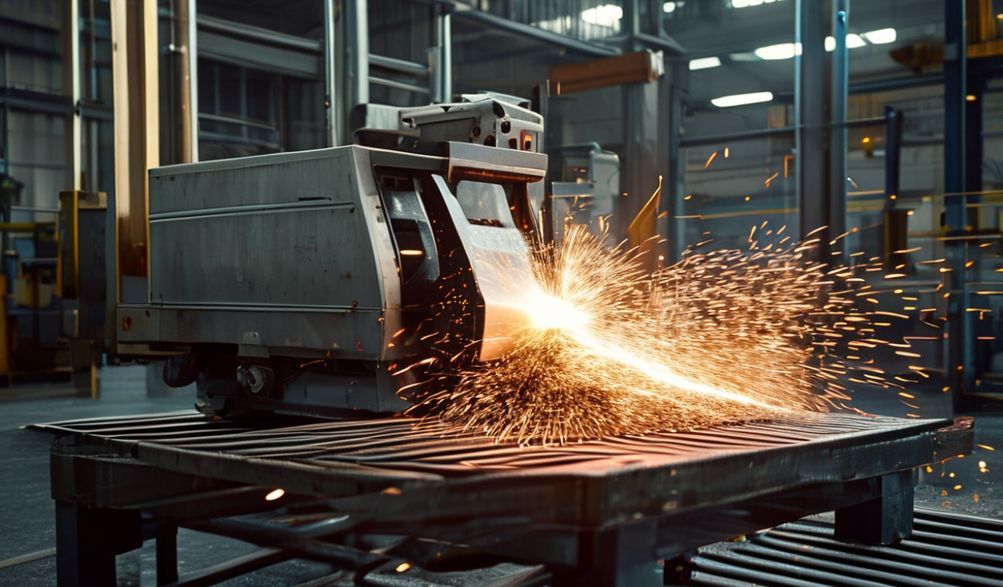
La Guía Definitiva sobre Máquinas para Fabricar Bloques de Bordillo: Selección, Operación y Análisis de Costos
Introducción
Navegar por el mundo de la maquinaria de construcción requiere más que un simple vistazo a una hoja de especificaciones; exige una comprensión forjada en la aplicación práctica. Esta guía integral está escrita para contratistas, ingenieros civiles y propietarios de negocios en la industria de la construcción y el hormigón prefabricado. Basándonos en décadas de experiencia en el sector, atravesamos la jerga de marketing para ofrecer un análisis factual y en profundidad de las máquinas para fabricar bloques de bordillo.
Ya sea que busques mejorar la eficiencia en proyectos municipales, iniciar un negocio de suministros para pavimentación, o comprender la maquinaria detrás de la infraestructura que usas a diario, esta guía ofrece información autorizada y confiable para fundamentar tus decisiones cruciales. Exploraremos no solo cómo funcionan estas máquinas, sino también cómo elegir la adecuada para tus necesidades específicas, presupuesto y objetivos operativos, garantizando que tu inversión sea sólida y tu producción sea superior.
¿Qué es una Máquina para Hacer Bloques de Bordillo? Función Principal y Aplicaciones
En esencia, una máquina para fabricar bloques de bordillo es un equipo industrial de ingeniería de precisión. Su único propósito es transformar una mezcla de concreto crudo en bloques de bordillo perfectamente formados y dimensionalmente consistentes—también conocidos como bordillos, piedras de borde o bordes de jardinería—a una escala y velocidad imposibles con métodos manuales.
Definir el Propósito de la Máquina
Estas máquinas están diseñadas para la producción en masa. Automatizan los procesos críticos de moldeo y compactación, asegurando que cada unidad cumpla con tolerancias dimensionales estrictas y requisitos de densidad. Esta repetibilidad es crucial para proyectos a gran escala donde la consistencia en el ajuste, el acabado y la integridad estructural no es negociable. La máquina no solo fabrica bloques; garantiza uniformidad.
Aplicaciones Principales en la Construcción
Los productos finales son fundamentales para la infraestructura moderna y el paisajismo.
* Proyectos Viales Municipales y Urbanizaciones Residenciales:Para definir los bordes de la carretera, gestionar el drenaje y separar las aceras peatonales del tráfico vehicular.
* Estacionamientos Comerciales y Campus Institucionales:Creando barreras duraderas, delimitando espacios de estacionamiento y protegiendo las áreas verdes del paso de vehículos.
* Jardinería Paisajística y Parques PúblicosProducción de bordes decorativos para caminos, arriates y terrazas en varios colores y acabados.
* Sistemas de Drenaje de Canales:Fabricación de combinaciones especializadas de bordillos y cunetas que dirigen eficientemente la escorrentía de aguas pluviales.
Especificaciones del Producto Final
Las máquinas pueden producir una amplia gama de perfiles para cumplir con los estándares regionales y las demandas estéticas. Las formas comunes incluyen rectas, de radio, de barrera y en pendiente. Los tamaños varían enormemente, pero un bloque de bordillo recto típico podría tener 1000 mm de longitud, 300 mm de altura y 150-250 mm de ancho. Los acabados pueden ser lisos, texturizados, de agregado expuesto o incluso coloreados con pigmentos integrales.
Tipos de Máquinas para Hacer Bloques de Bordillo: Una Comparación Detallada
Elegir el tipo de máquina correcta es su primera y más crucial decisión. La elección depende de su producción requerida, presupuesto y nivel de complejidad operativa.
Máquinas Manuales y Semiautomáticas
Ideal para emprendedores, pequeñas empresas de paisajismo u operaciones con pedidos altamente personalizados y de bajo volumen.
* Operación:Requiere una participación significativa del operador para alimentar concreto, iniciar ciclos y retirar los bloques terminados.
* Capacidad de Salida:Generalmente oscila entre 50 y 300 bloques por hora, dependiendo del tamaño de la cuadrilla y del tiempo del ciclo.
* Requisitos de Mano de Obra:Más alto. Necesita de 2 a 4 operadores dedicados.
* Mejor Para:Baja inversión de capital, flexibilidad para pedidos especiales y producción de nivel básico.
Máquinas Estacionarias Completamente Automáticas
Estas son las potencias de productividad para plantas de prefabricados medianas a grandes y negocios dedicados al suministro de bordillos.
* Operación:Los sistemas integrados automatizan la alimentación, compactación, moldeo, y a menudo el curado (mediante túneles de vapor) y apilado. Controlados por sistemas PLC.
* Capacidad de Salida:Puede superar 1,000 bloques por hora, a menudo funcionando durante múltiples turnos.
* Característica Clave:Utilice un sistema de circulación de paletas, donde los moldes se fijan en paletas que se mueven a través de cada estación en un bucle continuo.
* Mejor Para:Producción de alto volumen y consistente para contratos grandes y suministro a distribuidores.
Mobile Curb Making Machines (Slipform Pavers)
It’s vital to distinguish this technology. Slipform pavers are not block making machines.
* Función: They cast continuous, in-situ concrete curbs directly onto a prepared roadbed. A shaped mold (the “slipform”) is pulled along, forming the curb in one endless length.
* Aplicación: Exclusively for large-scale linear curb installation projects, such as highways and major roads. They do not produce individual, transportable blocks.
Hydraulic vs. Vibration Technology
This is the heart of the compaction process, defining block quality.
* Tecnología de Vibración: Uses high-frequency vibrators attached to the mold table to consolidate the concrete. Effective and energy-efficient for standard mixes. Can sometimes struggle with very stiff, low-slump mixes.
* Hydraulic Press Technology: Applies direct, high-pressure force (measured in tons) to compress the concrete into the mold. Produces extremely dense, low-porosity blocks with superior early strength and finish. Generally more robust but can have higher energy consumption.
* Hybrid Systems: Many modern machines combine both, using vibration for initial consolidation followed by a hydraulic press for final densification, offering the best of both worlds.
Key Features to Consider When Buying a Machine
Look beyond the basic type. These features determine long-term productivity, flexibility, and total cost of ownership.
Production Capacity (Blocks/Hour or Shifts)
Don’t just buy the biggest machine. Match the output to your:
* Project Pipeline: Steady demand from municipal contracts.
* Business Plan: Goals for market share and growth.
* Realistic Assessment: Factor in maintenance, mold changes, and curing time. A machine rated for 800 blocks/hour running one shift produces very differently than one rated for 400 blocks/hour running two shifts.
Mold Versatility and Changeover Time
Your ability to respond to market demands depends on this.
* Sistemas de Cambio Rápido: Look for designs that allow mold boxes to be swapped in minutes, not hours. This minimizes downtime when switching between, for example, a straight curb and a radius curb profile.
* Standardization: Ensure the manufacturer offers a wide catalog of compatible mold designs for future needs.
Automation Level and Control Systems
Automation reduces variability and labor cost.
* PLC & Touchscreen Interfaces: Allow for precise control over cycle times, vibration duration, and pressure. They store recipes for different products and provide diagnostic information.
* Manejo Automatizado de Materiales: Feeders, mixers, and stackers integrated with the main machine create a seamless, efficient production line.
Power Requirements and Energy Efficiency
A major operational expense.
* Eléctrico: Most stationary plants run on robust 3-phase power. Check the total connected load.
* Diésel: An option for sites without grid power, but adds fuel cost and maintenance.
* Eficiencia: Inquire about energy-saving features like variable-speed drives on hydraulic pumps or high-efficiency vibrator motors.
Build Quality and Durability
This dictates lifespan and uptime.
* Construcción del Marco: Look for heavy-duty, welded steel frames, not bolted-light-gauge assemblies.
* Component Brands: Recognizable, industrial-grade brands for hydraulic pumps, valves, vibrator motors, and electrical components (e.g., Siemens, Bosch Rexroth) indicate quality and ease of sourcing spares.
* Protection: Powder-coated or painted surfaces resist corrosion in the damp concrete plant environment.
The Operational Workflow: From Raw Material to Finished Curb
Understanding the full process is key to optimizing your operation and ensuring quality.
Preparación de Materias Primas
The machine is only as good as the concrete it receives.
* Diseño de Mezcla: Requires a low-slump (semi-dry), zero-slump, or plastic mix. A typical design might have a well-graded aggregate (up to 10mm), adequate cement content (e.g., 300-350 kg/m³), and a low water-cement ratio (often below 0.45) for immediate demolding strength.
* Aditivos: Fibers (steel or polypropylene) for crack control, pigments for color, and accelerators for faster early strength gain are common.
The Manufacturing Cycle Step-by-Step
- Alimentación: Concrete is precisely deposited into the mold box, either manually (semi-auto) or via an automated hopper.
- Compactación: The core phase. Vibration, hydraulic pressure, or both are applied to eliminate voids and achieve maximum density.
- Moldeo: The concrete takes the exact shape of the mold profile.
- Curing Initiation: In advanced lines, the block-on-pallet may immediately enter a pre-curing chamber or steam tunnel.
- Desmoldeo: The mold is lifted, leaving a perfectly formed, green-strength block on the pallet or production surface.
Curing and Quality Control
This post-production phase is critical for final strength and durability.
* Proceso de Curado: Blocks must be kept moist and at a controlled temperature for several days (often 3-7) to allow the cement to fully hydrate. Methods include water sprinkling, fogging, or controlled steam curing.
* Quality Tests: Standard practice involves periodic compression testing (e.g., ASTM C140) to ensure blocks meet specified strength grades (e.g., 40 MPa or higher). Dimensional checks are also routine.
Safety Protocols for Operators
A concrete plant is a high-risk environment. Non-negotiable protocols include:
* PPE: Safety glasses, hearing protection, steel-toe boots, and gloves.
* Machine Guarding: All moving parts (conveyors, press heads) must have physical guards.
* Lockout-Tagout (LOTO): A strict procedure for de-energizing and locking machinery during maintenance.
* Manejo de Materiales: Training for safe lifting techniques and operation of forklifts around curing racks.
Investment Analysis: Cost, ROI, and Business Considerations
This is where theory meets the balance sheet. A clear-eyed financial analysis is essential.
Initial Purchase Price Ranges
Prices vary wildly based on type, automation, and origin. Note: These are indicative brackets for context.
* Máquinas Manuales/Semiautomáticas: $15,000 – $60,000.
* Máquinas Estacionarias Completamente Automáticas: $80,000 – $300,000+ for a complete pallet plant line.
* Major Cost Drivers: Brand reputation, level of automation, included molds, and sophistication of the control system.
Costos Operativos y de Mantenimiento
The true cost of ownership lies here:
* Trabajo: Your single largest recurring expense.
* Energy: Electrical or diesel consumption.
* Mold Wear & Spare Parts: Budget for replacing mold liners, wear plates, and hydraulic seals annually.
* Mantenimiento Preventivo: Regular lubrication, cleaning, and part inspections (as per the manual) to prevent catastrophic failure.
Calculating Your Return on Investment (ROI)
Use this framework:
1. Annual Production Volume: (Blocks/Hour) x (Operating Hours/Year).
2. Annual Revenue: Volume x (Selling Price per Block).
3. Annual Operational Cost: Sum of all labor, materials, energy, maintenance, and overhead.
4. Annual Gross Profit: Revenue – Operational Cost.
5. Simple ROI Period (Years): (Total Machine Investment Cost) / (Annual Gross Profit).
Ejemplo: A machine with a $100,000 investment generating $50,000 in annual gross profit has a simple ROI of 2 years.
Supplier Selection and After-Sales Support
This can make or break your investment.
* Reputation & History: Choose established manufacturers with proven installations.
* Soporte Técnico: Is it available locally or via 24/7 remote access?
* Entrenamiento: Do they provide comprehensive on-site training for your operators and maintenance staff?
* Disponibilidad de Repuestos: A supplier with a well-stocked, local parts depot is invaluable for minimizing downtime.
* Garantía: Understand the terms, duration, and what is/is not covered.
Frequently Asked Questions (FAQ)
What is the typical lifespan of a quality curb block making machine?
With proper maintenance, a well-built machine from a reputable manufacturer can last 15-20 years. Key factors are build quality, operating environment, and adherence to maintenance schedules. The core frame may last decades, with periodic overhauls of wear components.
Can one machine produce different sizes and styles of curbs?
Yes, most machines are designed for mold interchangeability. The critical factor is the “mold changeover time,” which varies significantly between manual and automated systems. A quick-change system on an automatic line can switch profiles in under 30 minutes.
What is the required crew size to operate a semi-automatic vs. a fully automatic machine?
A semi-automatic machine may require 2-4 operators for material handling, feeding, and block removal. A fully automatic line integrated with a batching and stacking system might only need 1-2 personnel for monitoring, quality checks, and managing the automated flow.
How important is after-sales service when choosing a manufacturer?
It is paramount. Reliable technical support, available spare parts, and operator training are often more valuable than a slightly lower initial price. They ensure uptime and protect your investment. A machine that is down for weeks waiting for a part generates zero revenue.
What are the most common maintenance issues?
Regular wear items include mold liners, vibration units, hydraulic seals and hoses, and conveyor belts. A preventive maintenance plan focused on lubrication, cleaning, and periodic inspection of these components is essential to avoid unscheduled downtime.
Conclusión
Investing in a curb block making machine is a significant decision that hinges on a clear understanding of your production needs, market, and total cost of ownership. This guide has provided a detailed, experience-based framework to evaluate machine types, features, and the operational reality of running a successful curb production line.
The most successful operations pair robust, appropriate machinery with stringent quality control processes and proactive maintenance. By prioritizing durability, supplier support, and operational efficiency over the lowest sticker price, you lay the foundation for a profitable and sustainable business or project capability. For your next step, we recommend contacting several reputable manufacturers with your specific output and product specifications to receive detailed proposals and, if possible, arrange a visit to a working installation. Seeing a machine in operation is the final, crucial step in making an informed choice.
<