
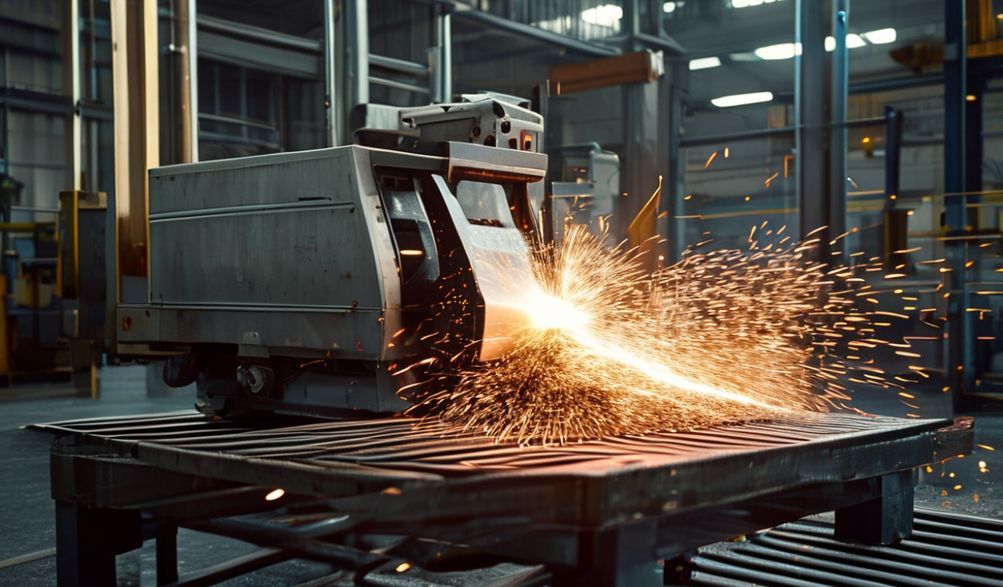
Gid Definitif sou Machin pou Fè Blòk Kòbwès: Seleksyon, Operasyon ak Analiz Pri
Entwodiksyon
Navige nan mond machin konstriksyon an mande plis pase yon ti gade sou yon fiche teknik; li mande yon konpreyansyon ki soti nan aplikasyon reyèl. Gid konplè sa a ekri pou kontraktè, enjenyè sivil, ak pwopriyetè biznis nan endistri konstriksyon ak beton pre-fabrike. Apati plizyè deseni eksperyans nan endistri a, nou koupe nan jagon maketing la pou bay yon analiz faktèl ak apwofondi sou machin pou fè blòk bò wout yo.
Si w ap chèche amelyore efikasite nan pwojè minisipal yo, kòmanse yon biznis ekipman pou pave, oswa konprann machin yo ki dèyè enfrastrikti w ap itilize chak jou, gid sa a ofri enfòmasyon otorize ak serye pou eklere desizyon enpòtan w. N ap eksplore pa sèlman kijan machin sa yo fonksyone, men tou kijan pou w chwazi bon an pou bezwen espesifik ou, bidjè w, ak objektif operasyonèl ou, pou asire envestisman w solid ak pwodiksyon w siperyè.
Ki sa yon Machin Fè Blòk Bò Twotwa? Fonksyon Prensipal ak Aplikasyon
Nan nwayo li, yon machin pou fè blòk bò wout se yon ekipman endistriyèl ki gen anpil presizyon. Objektif prensipal li se transfòme yon melanj beton anvan li fin pran fòm nan blòk bò wout ki byen fòme, ki gen menm mezi yo—ke yo rele tou bò wout, wòch bò, oswa bò jaden—nan yon echèl ak yon vitès ki enposib ak metòd manyèl.
Defini Objektif Machin nan
Machin sa yo fèt pou pwodiksyon an gwo echèl. Yo otomatize pwosesis enpòtan yo nan moule ak konpakte, asire chak inite respekte tolerans dimansyonèl strik ak kondisyon dansite yo. Repetabilite sa a esansyèl pou pwojè ki gen gwo enpòtans, kote konsistans nan adaptasyon, fini ak entegrite estriktirèl se yon kondisyon obligatwa. Machin nan pa senpleman fè blòk; li garanti inifòmite.
Aplikasyon Prensipal nan Konstriksyon
Pwodwi final yo se baz enpòtan pou enfrastrikti modèn ak amenajman peyizaj.
* Pwojè Wout Minisipal yo ak Subdivizyon Rezidansyèl yo:Pou defini bor wout, jere drenaj, ak separe pasaj moun ki ap mache nan sèn nan ak trafik machin yo.
* Pakin Komèsyal ak Kanpis Enstitisyonèl:Kreye baryè ki dire lontan, defini plas pou pake machin, ak pwoteje jaden kont machin ki pase sou li.
* Jaden Peyizaj ak Pak Piblik:Pwodwi bò dekoratif pou chemen, jaden flè, ak teras nan plizyè koulè ak fini.
* Sistèm Drenaj Chanèl:Fabrike konbinezon espesyalize rebò ak kanal ki dirije dlo lapli yo avèk efikasite.
Espesifikasyon Pwodwi Final
Machin yo ka pwodwi yon pakèt fòm pou satisfè estanda rejyonal yo ak demann estetik yo. Fòm komen yo enkli dwat, ron, baryè, ak an pant. Gwosè yo varye anpil, men yon blòk bò dwat tipik ta ka 1000mm nan longè, 300mm nan wotè, ak 150-250mm nan lajè. Fini yo ka lis, teksti, agrega ekspoze, oswa menm kolore ak pigman entegral.
Kalite Machin Fè Blòk Bò Twotwa: Yon Konparezon Detaye
Chwazi bon kalite machin nan se premye desizyon ou epi pi enpòtan an. Chwa a depann de pwodiksyon ou bezwen, bidjè ou, ak nivo konpleksite operasyonèl ou.
Machin Manyèl ak Semi-Otomatik
Ideal pou antreprenè, ti biznis landscaping, oswa operasyon ki gen lòd trè pèsonalize ak volim ki ba.
* Operasyon:Eksije anpil patisipasyon operatè pou bay beton, kòmanse sik, ak retire blòk ki fini.
* Kapasite Pwodiksyon: Typically ranges from 50 to 300 blocks per hour, depending on crew size and cycle time.
* Kondisyon Travay: Higher. Needs 2-4 dedicated operators.
* Pi Bon Pou: Low capital investment, flexibility for special orders, and entry-level production.
Machin Otomatik Konplèt Estasyonè
These are the productivity powerhouses for medium to large precast plants and dedicated curb supply businesses.
* Operasyon: Integrated systems automate feeding, compaction, molding, and often curing (via steam tunnels) and stacking. Controlled by PLC systems.
* Kapasite Pwodiksyon: Can exceed 1,000 blocks per hour, often running over multiple shifts.
* Key Feature: Utilize a pallet circulation system, where molds are fixed on pallets that move through each station in a continuous loop.
* Pi Bon Pou: High-volume, consistent production for large contracts and supplying distributors.
Mobile Curb Making Machines (Slipform Pavers)
It’s vital to distinguish this technology. Slipform pavers are not block making machines.
* Fonksyon: They cast continuous, in-situ concrete curbs directly onto a prepared roadbed. A shaped mold (the “slipform”) is pulled along, forming the curb in one endless length.
* Aplikasyon: Exclusively for large-scale linear curb installation projects, such as highways and major roads. They do not produce individual, transportable blocks.
Hydraulic vs. Vibration Technology
This is the heart of the compaction process, defining block quality.
* Teknoloji Vibrasyon: Uses high-frequency vibrators attached to the mold table to consolidate the concrete. Effective and energy-efficient for standard mixes. Can sometimes struggle with very stiff, low-slump mixes.
* Hydraulic Press Technology: Applies direct, high-pressure force (measured in tons) to compress the concrete into the mold. Produces extremely dense, low-porosity blocks with superior early strength and finish. Generally more robust but can have higher energy consumption.
* Hybrid Systems: Many modern machines combine both, using vibration for initial consolidation followed by a hydraulic press for final densification, offering the best of both worlds.
Key Features to Consider When Buying a Machine
Look beyond the basic type. These features determine long-term productivity, flexibility, and total cost of ownership.
Production Capacity (Blocks/Hour or Shifts)
Don’t just buy the biggest machine. Match the output to your:
* Project Pipeline: Steady demand from municipal contracts.
* Business Plan: Goals for market share and growth.
* Realistic Assessment: Factor in maintenance, mold changes, and curing time. A machine rated for 800 blocks/hour running one shift produces very differently than one rated for 400 blocks/hour running two shifts.
Mold Versatility and Changeover Time
Your ability to respond to market demands depends on this.
* Quick-Change Systems: Look for designs that allow mold boxes to be swapped in minutes, not hours. This minimizes downtime when switching between, for example, a straight curb and a radius curb profile.
* Estandadizasyon: Ensure the manufacturer offers a wide catalog of compatible mold designs for future needs.
Automation Level and Control Systems
Automation reduces variability and labor cost.
* PLC & Touchscreen Interfaces: Allow for precise control over cycle times, vibration duration, and pressure. They store recipes for different products and provide diagnostic information.
* Manipilasyon Materyèl Otomatize: Feeders, mixers, and stackers integrated with the main machine create a seamless, efficient production line.
Power Requirements and Energy Efficiency
A major operational expense.
* Elektrik: Most stationary plants run on robust 3-phase power. Check the total connected load.
* Dizèl: An option for sites without grid power, but adds fuel cost and maintenance.
* Efikasite: Inquire about energy-saving features like variable-speed drives on hydraulic pumps or high-efficiency vibrator motors.
Build Quality and Durability
This dictates lifespan and uptime.
* Konstriksyon Ankadreman Look for heavy-duty, welded steel frames, not bolted-light-gauge assemblies.
* Component Brands: Recognizable, industrial-grade brands for hydraulic pumps, valves, vibrator motors, and electrical components (e.g., Siemens, Bosch Rexroth) indicate quality and ease of sourcing spares.
* Protection: Powder-coated or painted surfaces resist corrosion in the damp concrete plant environment.
The Operational Workflow: From Raw Material to Finished Curb
Understanding the full process is key to optimizing your operation and ensuring quality.
Prepare Matye Premye
The machine is only as good as the concrete it receives.
* Mix Design: Requires a low-slump (semi-dry), zero-slump, or plastic mix. A typical design might have a well-graded aggregate (up to 10mm), adequate cement content (e.g., 300-350 kg/m³), and a low water-cement ratio (often below 0.45) for immediate demolding strength.
* Additives: Fibers (steel or polypropylene) for crack control, pigments for color, and accelerators for faster early strength gain are common.
The Manufacturing Cycle Step-by-Step
- Manje: Concrete is precisely deposited into the mold box, either manually (semi-auto) or via an automated hopper.
- Konpaksyon: The core phase. Vibration, hydraulic pressure, or both are applied to eliminate voids and achieve maximum density.
- Moulaj: The concrete takes the exact shape of the mold profile.
- Curing Initiation: In advanced lines, the block-on-pallet may immediately enter a pre-curing chamber or steam tunnel.
- Demoulaj: The mold is lifted, leaving a perfectly formed, green-strength block on the pallet or production surface.
Curing and Quality Control
This post-production phase is critical for final strength and durability.
* Pwosesis Gerizon: Blocks must be kept moist and at a controlled temperature for several days (often 3-7) to allow the cement to fully hydrate. Methods include water sprinkling, fogging, or controlled steam curing.
* Quality Tests: Standard practice involves periodic compression testing (e.g., ASTM C140) to ensure blocks meet specified strength grades (e.g., 40 MPa or higher). Dimensional checks are also routine.
Safety Protocols for Operators
A concrete plant is a high-risk environment. Non-negotiable protocols include:
* PPE: Safety glasses, hearing protection, steel-toe boots, and gloves.
* Machine Guarding: All moving parts (conveyors, press heads) must have physical guards.
* Lockout-Tagout (LOTO): A strict procedure for de-energizing and locking machinery during maintenance.
* Manipilasyon Materyèl: Training for safe lifting techniques and operation of forklifts around curing racks.
Investment Analysis: Cost, ROI, and Business Considerations
This is where theory meets the balance sheet. A clear-eyed financial analysis is essential.
Initial Purchase Price Ranges
Prices vary wildly based on type, automation, and origin. Note: These are indicative brackets for context.
* Machin Manyèl/Semi-Otomatik: $15,000 – $60,000.
* Machin Otomatik Konplè Estasyonè: $80,000 – $300,000+ for a complete pallet plant line.
* Major Cost Drivers: Brand reputation, level of automation, included molds, and sophistication of the control system.
Depans Operasyonèl ak Antretyen
The true cost of ownership lies here:
* Travay Your single largest recurring expense.
* Energy: Electrical or diesel consumption.
* Mold Wear & Spare Parts: Budget for replacing mold liners, wear plates, and hydraulic seals annually.
* Antretyen Prevantif: Regular lubrication, cleaning, and part inspections (as per the manual) to prevent catastrophic failure.
Kalkile Retou sou Envestisman (ROI) ou
Use this framework:
1. Annual Production Volume: (Blocks/Hour) x (Operating Hours/Year).
2. Annual Revenue: Volume x (Selling Price per Block).
3. Annual Operational Cost: Sum of all labor, materials, energy, maintenance, and overhead.
4. Annual Gross Profit: Revenue – Operational Cost.
5. Simple ROI Period (Years): (Total Machine Investment Cost) / (Annual Gross Profit).
Egzanp: A machine with a $100,000 investment generating $50,000 in annual gross profit has a simple ROI of 2 years.
Supplier Selection and After-Sales Support
This can make or break your investment.
* Reputation & History: Choose established manufacturers with proven installations.
* Sipò Teknik: Is it available locally or via 24/7 remote access?
* Fòmasyon: Do they provide comprehensive on-site training for your operators and maintenance staff?
* Disponiblite Pyès Depo: A supplier with a well-stocked, local parts depot is invaluable for minimizing downtime.
* Garanti: Understand the terms, duration, and what is/is not covered.
Kesyon yo poze souvan (FAQ)
What is the typical lifespan of a quality curb block making machine?
With proper maintenance, a well-built machine from a reputable manufacturer can last 15-20 years. Key factors are build quality, operating environment, and adherence to maintenance schedules. The core frame may last decades, with periodic overhauls of wear components.
Can one machine produce different sizes and styles of curbs?
Yes, most machines are designed for mold interchangeability. The critical factor is the “mold changeover time,” which varies significantly between manual and automated systems. A quick-change system on an automatic line can switch profiles in under 30 minutes.
What is the required crew size to operate a semi-automatic vs. a fully automatic machine?
A semi-automatic machine may require 2-4 operators for material handling, feeding, and block removal. A fully automatic line integrated with a batching and stacking system might only need 1-2 personnel for monitoring, quality checks, and managing the automated flow.
How important is after-sales service when choosing a manufacturer?
It is paramount. Reliable technical support, available spare parts, and operator training are often more valuable than a slightly lower initial price. They ensure uptime and protect your investment. A machine that is down for weeks waiting for a part generates zero revenue.
What are the most common maintenance issues?
Regular wear items include mold liners, vibration units, hydraulic seals and hoses, and conveyor belts. A preventive maintenance plan focused on lubrication, cleaning, and periodic inspection of these components is essential to avoid unscheduled downtime.
Konklizyon
Investing in a curb block making machine is a significant decision that hinges on a clear understanding of your production needs, market, and total cost of ownership. This guide has provided a detailed, experience-based framework to evaluate machine types, features, and the operational reality of running a successful curb production line.
The most successful operations pair robust, appropriate machinery with stringent quality control processes and proactive maintenance. By prioritizing durability, supplier support, and operational efficiency over the lowest sticker price, you lay the foundation for a profitable and sustainable business or project capability. For your next step, we recommend contacting several reputable manufacturers with your specific output and product specifications to receive detailed proposals and, if possible, arrange a visit to a working installation. Seeing a machine in operation is the final, crucial step in making an informed choice.
<