
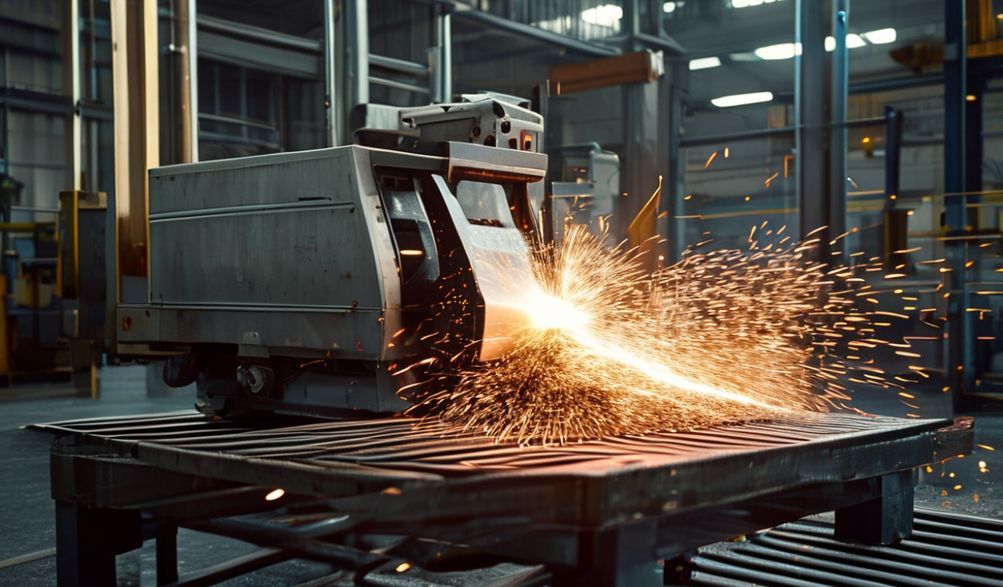
Panduan Utama Mesin Pembuat Blok Pembatas: Pemilihan, Pengoperasian, & Analisis Biaya
Pengantar
Menjelajahi dunia mesin konstruksi membutuhkan lebih dari sekadar melihat lembar spesifikasi; ini memerlukan wawasan yang ditempa dari penerapan di dunia nyata. Panduan komprehensif ini ditulis untuk kontraktor, insinyur sipil, dan pemilik bisnis di industri konstruksi dan beton pracetak. Dengan menggali pengalaman industri selama beberapa dekade, kami menembus jargon pemasaran untuk menyajikan analisis faktual dan mendalam tentang mesin pembuat blok tepi jalan.
Baik Anda ingin meningkatkan efisiensi pada proyek-proyek kota, memulai bisnis suplai bahan perkerasan, atau memahami mesin-mesin di balik infrastruktur yang Anda gunakan sehari-hari, panduan ini menyajikan informasi otoritatif dan terpercaya untuk mendukung keputusan penting Anda. Kami tidak hanya akan membahas cara kerja mesin-mesin ini, tetapi juga bagaimana memilih yang tepat sesuai kebutuhan spesifik, anggaran, dan tujuan operasional Anda, sehingga investasi Anda tepat dan hasilnya optimal.
Apa itu Mesin Pembuat Blok Trotoar? Fungsi Inti dan Aplikasi
Intinya, mesin pembuat blok curb adalah peralatan industri yang dirancang dengan presisi. Tujuannya semata-mata adalah mengubah campuran beton mentah menjadi blok curb yang terbentuk sempurna dan konsisten secara dimensi—juga dikenal sebagai kerb, batu tepi, atau curb lanskap—dalam skala dan kecepatan yang tidak mungkin dicapai dengan metode manual.
Menentukan Tujuan Mesin
Mesin-mesin ini dirancang untuk produksi massal. Mereka mengotomatisasi proses kritis pencetakan dan pemadatan, memastikan setiap unit memenuhi toleransi dimensi dan persyaratan kepadatan yang ketat. Kemampuan pengulangan ini sangat penting untuk proyek skala besar di mana konsistensi dalam pas, penyelesaian, dan integritas struktural tidak bisa ditawar. Mesin ini tidak hanya membuat balok; ia menjamin keseragaman.
Aplikasi Utama dalam Konstruksi
Produk akhirnya merupakan landasan bagi infrastruktur dan penataan lingkungan modern:
* Proyek Jalan Kota & Perbagian Perumahan:Untuk mendefinisikan tepi jalan, mengelola drainase, dan memisahkan trotoar pejalan kaki dari lalu lintas kendaraan.
* Lahan Parkir Komersial & Kampus Institusional:Membuat penghalang yang tahan lama, menentukan tempat parkir, dan melindungi lansekap dari serobotan kendaraan.
* Tata Taman & Taman Umum:Memproduksi pinggiran dekoratif untuk jalur jalan, hamparan bunga, dan teras dalam berbagai warna dan penyelesaian.
* Sistem Drainase Saluran:Memproduksi kombinasi tepi jalan dan selokan khusus yang mengarahkan limpasan air hujan secara efisien.
Spesifikasi Produk Akhir
Mesin dapat menghasilkan beragam profil untuk memenuhi standar regional dan tuntutan estetika. Bentuk umum meliputi lurus, radius, pembatas, dan miring. Ukuran sangat bervariasi, tetapi blok trotoar lurus yang khas mungkin memiliki panjang 1000mm, tinggi 300mm, dan lebar 150-250mm. Finishing dapat berupa halus, bertekstur, agregat terekspos, atau bahkan diberi warna dengan pigmen integral.
Jenis Mesin Pembuat Blok Trotoar: Perbandingan Mendetail
Memilih jenis mesin yang tepat adalah keputusan pertama dan paling kritis Anda. Pilihan ini bergantung pada output yang dibutuhkan, anggaran, dan tingkat kompleksitas operasional.
Mesin Manual dan Semi-Otomatis
Ideal untuk pengusaha, bisnis lansekap kecil, atau operasi dengan pesanan yang sangat disesuaikan dan volume rendah.
* Operasi:Memerlukan keterlibatan operator yang signifikan untuk memasok beton, memulai siklus, dan mengeluarkan blok jadi.
* Kapasitas Output:Biasanya berkisar antara 50 hingga 300 balok per jam, tergantung pada ukuran kru dan waktu siklus.
* Kebutuhan Tenaga Kerja:Lebih tinggi. Membutuhkan 2-4 operator khusus.
* Terbaik Untuk:Investasi modal rendah, fleksibilitas untuk pesanan khusus, dan produksi tingkat pemula.
Mesin Stasioner Sepenuhnya Otomatis
Ini adalah mesin produktivitas unggulan untuk pabrik pracetak menengah hingga besar dan bisnis pasokan curb khusus.
* Operasi:Sistem terintegrasi mengotomatisasi pemberian pakan, pemadatan, pencetakan, dan sering kali pengawetan (melalui terowongan uap) serta penumpukan. Dikendalikan oleh sistem PLC.
* Kapasitas Output:Dapat melebihi 1.000 blok per jam, sering beroperasi dalam beberapa shift.
* Fitur Utama:Gunakan sistem sirkulasi palet, di mana cetakan dipasang pada palet yang bergerak melalui setiap stasiun dalam suatu putaran berkelanjutan.
* Terbaik Untuk:Produksi volume tinggi dan konsisten untuk kontrak besar dan pasokan distributor.
Mesin Pembuat Trotoar Bergerak (Slipform Pavers)
It’s vital to distinguish this technology. Slipform pavers are not block making machines.
* Fungsi: They cast continuous, in-situ concrete curbs directly onto a prepared roadbed. A shaped mold (the “slipform”) is pulled along, forming the curb in one endless length.
* Aplikasi: Exclusively for large-scale linear curb installation projects, such as highways and major roads. They do not produce individual, transportable blocks.
Hydraulic vs. Vibration Technology
This is the heart of the compaction process, defining block quality.
* Teknologi Getaran: Uses high-frequency vibrators attached to the mold table to consolidate the concrete. Effective and energy-efficient for standard mixes. Can sometimes struggle with very stiff, low-slump mixes.
* Hydraulic Press Technology: Applies direct, high-pressure force (measured in tons) to compress the concrete into the mold. Produces extremely dense, low-porosity blocks with superior early strength and finish. Generally more robust but can have higher energy consumption.
* Hybrid Systems: Many modern machines combine both, using vibration for initial consolidation followed by a hydraulic press for final densification, offering the best of both worlds.
Key Features to Consider When Buying a Machine
Look beyond the basic type. These features determine long-term productivity, flexibility, and total cost of ownership.
Production Capacity (Blocks/Hour or Shifts)
Don’t just buy the biggest machine. Match the output to your:
* Project Pipeline: Steady demand from municipal contracts.
* Business Plan: Goals for market share and growth.
* Realistic Assessment: Factor in maintenance, mold changes, and curing time. A machine rated for 800 blocks/hour running one shift produces very differently than one rated for 400 blocks/hour running two shifts.
Mold Versatility and Changeover Time
Your ability to respond to market demands depends on this.
* Sistem Cepat Ganti: Look for designs that allow mold boxes to be swapped in minutes, not hours. This minimizes downtime when switching between, for example, a straight curb and a radius curb profile.
* Standardisasi: Ensure the manufacturer offers a wide catalog of compatible mold designs for future needs.
Automation Level and Control Systems
Automation reduces variability and labor cost.
* PLC & Touchscreen Interfaces: Allow for precise control over cycle times, vibration duration, and pressure. They store recipes for different products and provide diagnostic information.
* Penanganan Material Otomatis: Feeders, mixers, and stackers integrated with the main machine create a seamless, efficient production line.
Power Requirements and Energy Efficiency
A major operational expense.
* Kelistrikan: Most stationary plants run on robust 3-phase power. Check the total connected load.
* Diesel: An option for sites without grid power, but adds fuel cost and maintenance.
* Efisiensi: Inquire about energy-saving features like variable-speed drives on hydraulic pumps or high-efficiency vibrator motors.
Kualitas dan Daya Tahan Bangunan
This dictates lifespan and uptime.
* Konstruksi Rangka: Look for heavy-duty, welded steel frames, not bolted-light-gauge assemblies.
* Component Brands: Recognizable, industrial-grade brands for hydraulic pumps, valves, vibrator motors, and electrical components (e.g., Siemens, Bosch Rexroth) indicate quality and ease of sourcing spares.
* Protection: Powder-coated or painted surfaces resist corrosion in the damp concrete plant environment.
The Operational Workflow: From Raw Material to Finished Curb
Understanding the full process is key to optimizing your operation and ensuring quality.
Persiapan Bahan Baku
The machine is only as good as the concrete it receives.
* Desain Campuran: Requires a low-slump (semi-dry), zero-slump, or plastic mix. A typical design might have a well-graded aggregate (up to 10mm), adequate cement content (e.g., 300-350 kg/m³), and a low water-cement ratio (often below 0.45) for immediate demolding strength.
* Additives: Fibers (steel or polypropylene) for crack control, pigments for color, and accelerators for faster early strength gain are common.
The Manufacturing Cycle Step-by-Step
- Pemberian Makan: Concrete is precisely deposited into the mold box, either manually (semi-auto) or via an automated hopper.
- Pemadatan: The core phase. Vibration, hydraulic pressure, or both are applied to eliminate voids and achieve maximum density.
- Pembentukan: The concrete takes the exact shape of the mold profile.
- Curing Initiation: In advanced lines, the block-on-pallet may immediately enter a pre-curing chamber or steam tunnel.
- Pelepasan Cetakan: The mold is lifted, leaving a perfectly formed, green-strength block on the pallet or production surface.
Curing and Quality Control
This post-production phase is critical for final strength and durability.
* Proses Penyembuhan: Blocks must be kept moist and at a controlled temperature for several days (often 3-7) to allow the cement to fully hydrate. Methods include water sprinkling, fogging, or controlled steam curing.
* Quality Tests: Standard practice involves periodic compression testing (e.g., ASTM C140) to ensure blocks meet specified strength grades (e.g., 40 MPa or higher). Dimensional checks are also routine.
Protokol Keamanan untuk Operator
A concrete plant is a high-risk environment. Non-negotiable protocols include:
* PPE: Safety glasses, hearing protection, steel-toe boots, and gloves.
* Machine Guarding: All moving parts (conveyors, press heads) must have physical guards.
* Lockout-Tagout (LOTO): A strict procedure for de-energizing and locking machinery during maintenance.
* Penanganan Material: Training for safe lifting techniques and operation of forklifts around curing racks.
Investment Analysis: Cost, ROI, and Business Considerations
This is where theory meets the balance sheet. A clear-eyed financial analysis is essential.
Initial Purchase Price Ranges
Prices vary wildly based on type, automation, and origin. Note: These are indicative brackets for context.
* Mesin Manual/Semi-Otomatis: $15,000 – $60,000.
* Mesin Stasioner Sepenuhnya Otomatis: $80,000 – $300,000+ for a complete pallet plant line.
* Major Cost Drivers: Brand reputation, level of automation, included molds, and sophistication of the control system.
Biaya Operasional dan Pemeliharaan
The true cost of ownership lies here:
* Tenaga Kerja: Your single largest recurring expense.
* Energy: Electrical or diesel consumption.
* Mold Wear & Spare Parts: Budget for replacing mold liners, wear plates, and hydraulic seals annually.
* Pemeliharaan Preventif: Regular lubrication, cleaning, and part inspections (as per the manual) to prevent catastrophic failure.
Calculating Your Return on Investment (ROI)
Use this framework:
1. Annual Production Volume: (Blocks/Hour) x (Operating Hours/Year).
2. Annual Revenue: Volume x (Selling Price per Block).
3. Annual Operational Cost: Sum of all labor, materials, energy, maintenance, and overhead.
4. Annual Gross Profit: Revenue – Operational Cost.
5. Simple ROI Period (Years): (Total Machine Investment Cost) / (Annual Gross Profit).
Contoh: A machine with a $100,000 investment generating $50,000 in annual gross profit has a simple ROI of 2 years.
Supplier Selection and After-Sales Support
This can make or break your investment.
* Reputation & History: Choose established manufacturers with proven installations.
* Dukungan Teknis: Is it available locally or via 24/7 remote access?
* Pelatihan: Do they provide comprehensive on-site training for your operators and maintenance staff?
* Ketersediaan Suku Cadang: A supplier with a well-stocked, local parts depot is invaluable for minimizing downtime.
* Garansi: Understand the terms, duration, and what is/is not covered.
Pertanyaan yang Sering Diajukan (FAQ)
What is the typical lifespan of a quality curb block making machine?
With proper maintenance, a well-built machine from a reputable manufacturer can last 15-20 years. Key factors are build quality, operating environment, and adherence to maintenance schedules. The core frame may last decades, with periodic overhauls of wear components.
Can one machine produce different sizes and styles of curbs?
Yes, most machines are designed for mold interchangeability. The critical factor is the “mold changeover time,” which varies significantly between manual and automated systems. A quick-change system on an automatic line can switch profiles in under 30 minutes.
What is the required crew size to operate a semi-automatic vs. a fully automatic machine?
A semi-automatic machine may require 2-4 operators for material handling, feeding, and block removal. A fully automatic line integrated with a batching and stacking system might only need 1-2 personnel for monitoring, quality checks, and managing the automated flow.
How important is after-sales service when choosing a manufacturer?
It is paramount. Reliable technical support, available spare parts, and operator training are often more valuable than a slightly lower initial price. They ensure uptime and protect your investment. A machine that is down for weeks waiting for a part generates zero revenue.
What are the most common maintenance issues?
Regular wear items include mold liners, vibration units, hydraulic seals and hoses, and conveyor belts. A preventive maintenance plan focused on lubrication, cleaning, and periodic inspection of these components is essential to avoid unscheduled downtime.
Kesimpulan
Investing in a curb block making machine is a significant decision that hinges on a clear understanding of your production needs, market, and total cost of ownership. This guide has provided a detailed, experience-based framework to evaluate machine types, features, and the operational reality of running a successful curb production line.
The most successful operations pair robust, appropriate machinery with stringent quality control processes and proactive maintenance. By prioritizing durability, supplier support, and operational efficiency over the lowest sticker price, you lay the foundation for a profitable and sustainable business or project capability. For your next step, we recommend contacting several reputable manufacturers with your specific output and product specifications to receive detailed proposals and, if possible, arrange a visit to a working installation. Seeing a machine in operation is the final, crucial step in making an informed choice.
<