
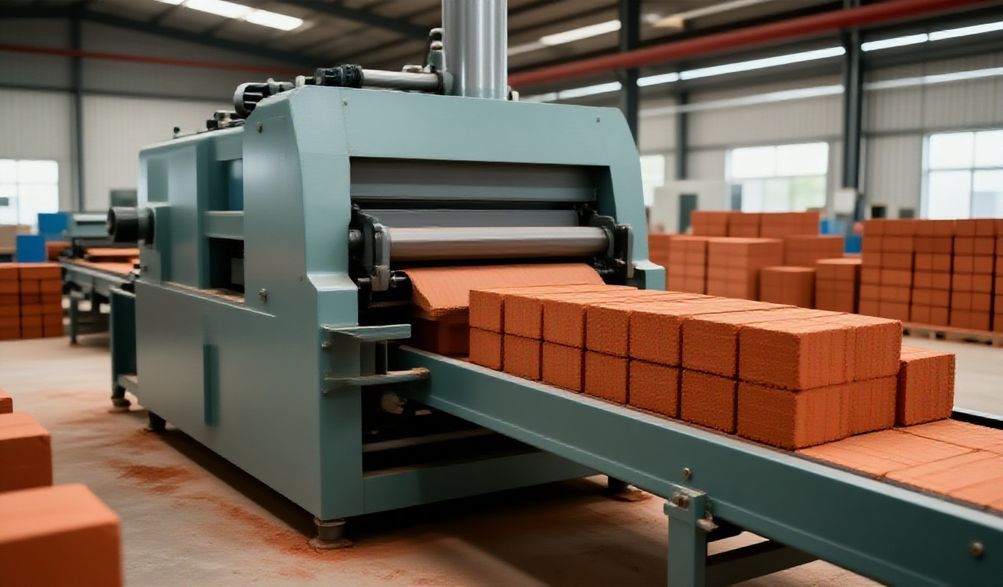
Tu Guía Definitiva para Máquinas de Fabricación de Ladrillos de Arcilla en Malasia | Experiencia de la Fábrica FUDA
Introducción
En el dinámico panorama de la construcción en Malasia, desde las imponentes torres del KLCC hasta las resistentes viviendas en regiones propensas a los monzones, la demanda de materiales de construcción duraderos, sostenibles y rentables nunca ha sido mayor. En medio de este crecimiento, el humilde ladrillo de arcilla sigue siendo una piedra angular, valorado por su resistencia atemporal y sus propiedades de aislamiento natural. Sin embargo, la calidad, la eficiencia y la rentabilidad de la producción de ladrillos dependen de un factor crítico:Máquina para hacer ladrillos de arcilla.
Elegir la maquinaria adecuada no es simplemente una compra; es una inversión en los cimientos de su proyecto o negocio. Esta decisión afecta todo, desde la producción diaria y los costos laborales hasta la integridad estructural final de los edificios que usted suministra.
Esta guía integral está diseñada para desentrañar la complejidad. Se basa directamente en la experiencia práctica y sobre el terreno deFábrica de Bloques FUDANuestro objetivo es proporcionar a los constructores, contratistas, desarrolladores y emprendedores de Malasia el conocimiento necesario para tomar una decisión informada. Exploraremos los tipos de máquinas, sus beneficios para la construcción local y los factores cruciales específicos del entorno único de Malasia.
En FUDA, con más de 15 años fabricando, suministrando y dando servicio a soluciones para la fabricación de bloques en toda Malasia Peninsular y Oriental, hemos sido testigos de primera mano del impacto transformador que la máquina adecuada tiene en el éxito de un proyecto, su rentabilidad y la calidad final. Esta guía condensa esa experiencia práctica y ganada con esfuerzo para ayudarle a construir de manera más inteligente.
Comprensión de las Máquinas para Fabricar Ladrillos de Arcilla: Tipos y Tecnologías
Navegar por el mundo de la maquinaria para fabricar ladrillos comienza con la comprensión de los procesos fundamentales y las diferentes tecnologías disponibles. Las máquinas modernas han evolucionado mucho más allá de los moldes manuales, ofreciendo distintos grados de automatización para adaptarse a cualquier escala de operación.
¿Cómo funciona una máquina moderna para fabricar ladrillos de arcilla?
Aunque los diseños de las máquinas varían, las etapas fundamentales de producción se mantienen consistentes.
- Preparación de la arcilla:La arcilla cruda se introduce en un mezclador, donde se combinan agua y otros aditivos (como arena o ceniza) para lograr la plasticidad y consistencia perfectas para el moldeo.
- Moldeo/Compactación:Este es el corazón del proceso. La arcilla preparada se introduce en una cavidad de molde y se somete a una presión hidráulica o mecánica intensa. Esta compactación a alta presión garantiza un ladrillo denso, de forma uniforme y con bordes definidos.
- Expulsión y Configuración:El ladrillo recién formado, "verde", es expulsado suavemente sobre una plataforma o cinta transportadora. Estos ladrillos aún están blandos y deben manejarse con cuidado antes del curado.
- Secado y Curado:Los ladrillos verdes se trasladan a un área de secado para reducir lentamente el contenido de humedad. Para ciertos tipos de ladrillos (como los ladrillos cocidos), luego se hornean en un horno a altas temperaturas para alcanzar la máxima resistencia y durabilidad. Algunas máquinas modernas producen bloques estabilizados de alta resistencia que curan mediante secado al aire o reacción química, eliminando la necesidad de cocción.
Tipos clave de máquinas para el mercado malasio
Máquinas Manuales y Semiautomáticas para Ladrillos
- Mejor Para:Proyectos a pequeña escala, iniciativas de vivienda rural, emprendedores emergentes y negocios con menor gasto de capital.
- Operación:Estas máquinas requieren más intervención manual para alimentar la arcilla y retirar los ladrillos terminados. La compactación suele ser alimentada por un motor diésel o eléctrico.
- Salida:Por lo general, varía de 800 a 3,000 ladrillos por turno de 8 horas.
- Perspectiva de FUDA: From our projects in Kelantan and Sabah, we’ve found these machines ideal for community-based projects or where the primary goal is to utilize on-site clay for cost-saving, without the need for massive volume.
Plantas de Fabricación de Ladrillos Completamente Automáticas
- Mejor Para: Large-scale commercial production, supplying major construction projects, and established brick manufacturing businesses.
- Operación: These are integrated systems with automated feeders, conveyors, stackers, and palletizers. They often feature programmable logic controllers (PLC) for precision and consistency.
- Salida: Can produce from 10,000 to over 50,000 bricks per day with minimal manual labor.
- Perspectiva de FUDA: For clients supplying large township developments or industrial projects, the consistency in brick dimension and density offered by a fully automatic plant is non-negotiable for meeting engineering standards and speeding up construction timelines.
Máquinas Móviles para Fabricar Ladrillos
- Mejor Para: Large, remote construction sites (e.g., plantation housing, resort development, infrastructure projects) where transporting vast quantities of bricks is logistically challenging and expensive.
- Operación: Mounted on a trailer, these machines can be driven directly to the project site. They use the local soil (after testing and minor modification), producing bricks right where they are needed.
- Perspectiva de FUDA: We’ve deployed mobile units for plantation housing in Sarawak, drastically cutting transport costs by over 60% and ensuring a seamless, on-demand supply chain for the contractor.
Why Choose Clay Bricks? Benefits for Malaysian Construction
Beyond tradition, clay bricks offer a suite of performance benefits that align perfectly with Malaysia’s climatic and economic needs.
Unmatched Durability and Longevity in Tropical Climates
Clay bricks are inherently resistant to moisture, humidity, and the relentless tropical heat. Unlike some materials that degrade, warp, or foster mold, properly fired clay bricks stand resilient against monsoon rains and high humidity, ensuring structures last for generations with minimal maintenance.
Excellent Thermal Insulation for Energy Efficiency
This is a critical advantage for Malaysia’s climate. Clay bricks have high thermal mass, meaning they absorb heat slowly and release it slowly. This natural regulation helps maintain cooler indoor temperatures, reducing the thermal load on air conditioning systems. The result is significantly lower energy consumption and utility bills—a major selling point for both residential and commercial buildings.
Fire Resistance and Structural Integrity
Clay bricks are non-combustible, providing a superior fire rating that enhances building safety—a key consideration in compliance with Malaysia’s Uniform Building By-Laws (UBBL). Their compressive strength also contributes to the overall structural integrity and load-bearing capacity of a building.
Sustainability and Local Sourcing
As environmental consciousness grows, clay bricks shine. They are made from abundant natural materials (clay and shale). Their long lifecycle, recyclability, and potential for using locally sourced clay reduce the carbon footprint associated with transportation. This supports local economies and promotes sustainable construction practices.
Critical Factors When Selecting a Machine in Malaysia
Your local context is everything. A machine perfect for a factory in Europe might fail in a Malaysian village. Here are the key, location-specific factors to weigh, based on our field experience.
Assessing Your Production Needs: Scale and Output
Be realistic about your demand.
* Are you supplying bricks for your own 20-unit housing project?
* Or are you starting a business to supply the wider market?
Calcula lo que necesitas.bricks per day and consider future growth. A common mistake is under-sizing a machine, which creates bottlenecks, or over-investing in a giant plant that sits underutilized.
Raw Material Compatibility: Malaysian Clay Varieties
This is perhaps the most crucial technical factor. Malaysian soil varies dramatically from the sandy loams of the east coast to the heavier clay soils found elsewhere.
* FUDA’s Experience: From our work with clients in Johor and Perak, we know that clay plasticity, sand content, and mineral composition directly affect brick quality and machine performance. A machine must be configured—through adjustable pressure, mixer design, and sometimes additive systems—to handle your specific local clay. We always recommend and often conduct preliminary soil testing.
Power Requirements and Utility Infrastructure
Consider your site’s utilities:
* 3-Phase vs. Single-Phase: Larger automatic machines typically require a stable 3-phase electrical supply. For areas with unreliable grids or no 3-phase power, diesel-engine driven models are a robust alternative.
* Water Supply: A consistent water source for clay mixing is essential. Machines have different water consumption rates, which should be factored in.
After-Sales Support, Parts, and Service in Malaysia
Never underestimate this. The true cost of a machine isn’t just its purchase price.
* Soporte Técnico Local: When a critical component fails, can you get a technician on site within days, not weeks or months? FUDA maintains a network of local service engineers.
* Spare Parts Inventory: Ensure your supplier stocks common wear parts (like mold liners, hydraulic seals) locally to avoid costly production downtime waiting for international shipments.
* Entrenamiento de Operadores: Proper training is vital for safety, output quality, and machine longevity. A trustworthy supplier will provide comprehensive training.
The FUDA Factory Advantage: More Than Just a Machine Supplier
Our role extends far beyond a simple transaction. We are your local partner in building production capacity.
Our Journey and Expertise in the Malaysian Market
For over 15 years, FUDA has been deeply embedded in Malaysia’s construction ecosystem. We’ve evolved from a local supplier to a solutions provider, learning from hundreds of client projects across every state. This accumulated portfolio gives us unparalleled insight into what works—and what doesn’t—on Malaysian soil.
Tailored Solutions, Not Just Off-the-Shelf Products
We don’t believe in a one-size-fits-all approach. Our process starts with a consultation to understand your goals, followed by:
* Site & Material Assessment: Evaluating your space, infrastructure, and clay source.
* Machine Configuration: Recommending and customizing a machine setup (mold type, pressure settings, automation level) that matches your unique parameters.
Comprehensive Support from Installation to Production
Your success is our success. Our support package includes:
* Supervised Installation: Our engineers ensure your machine is set up correctly from day one.
* Hands-On Operator Training: We train your team until they are confident.
* Detailed Maintenance Manuals & Service Hotline: Ongoing support is just a phone call away.
Quality Commitment and Machine Durability
We build and source machines with robustness in mind, using high-grade steel and wear-resistant components for critical parts. This focus on durability minimizes downtime and ensures your investment pays back over a long, productive lifespan, backed by clear warranty terms.
FAQ: Clay Brick Making Machines in Malaysia
Q1: What is the approximate price range for a clay brick making machine in Malaysia?
A: Prices vary widely based on automation and capacity. A small manual machine can start from around RM 15,000, while semi-automatic models range from RM 40,000 to RM 150,000. Fully automatic production lines begin around RM 200,000 and can exceed RM 1 million. The most accurate way is to get a customized quote based on your specific output needs and configuration.
Q2: Can the machine use the clay available on my site?
A: In most cases, yes. Malaysian local clays are often suitable. As part of our service, we frequently conduct free preliminary soil testing for serious clients. If needed, we can recommend simple and cost-effective additives (like sand or cement) to optimize the mix for perfect brick quality.
Q3: What kind of space and foundation is required for the machine?
A: A semi-automatic machine might need a covered workshop of about 150-300 sq. ft. with a level, reinforced concrete foundation. A full automatic plant requires a larger factory space (1,000+ sq. ft.) with significant foundation work to handle vibration and load. We provide detailed layout and foundation plans upon quotation.
Q4: How many operators are needed to run a semi-automatic/automatic machine?
A: For a semi-automatic machine, 2-3 operators per shift are typical. A fully automatic plant may require 3-5 personnel to manage feeding, monitoring, and handling finished bricks, showcasing a significant reduction in labor per brick produced.
Q5: Does FUDA provide financing options or assistance?
A: Yes, we understand that capital investment is significant. FUDA partners with several reputable financial institutions in Malaysia to help qualified clients access equipment financing and leasing options, making it easier to acquire the right machinery for your growth.
Conclusión
Selecting the ideal clay brick making machine for your Malaysian operation is a multi-faceted decision. It requires balancing your production scale with the characteristics of your local clay, your site’s infrastructure, and—most importantly—the long-term reliability of your supplier’s support.
The right machine is a powerhouse for profit and progress; the wrong one can be a source of constant cost and delay.
At FUDA Block Making Factory, we combine technical expertise with deep, practical experience in the Malaysian market. We are committed to being your partner, not just your vendor, ensuring you have a solution engineered for success in our unique environment.
Ready to explore the right clay brick making solution for your project? Contact the FUDA team today for a no-obligation consultation. Let’s discuss your site, your clay, and your goals. With our experience, we’ll help you build a more efficient, profitable, and sustainable future, brick by brick.
Visit our factory in Selangor to see our machines in operation and speak directly with our engineering team. We welcome you to witness the FUDA difference firsthand.
<