
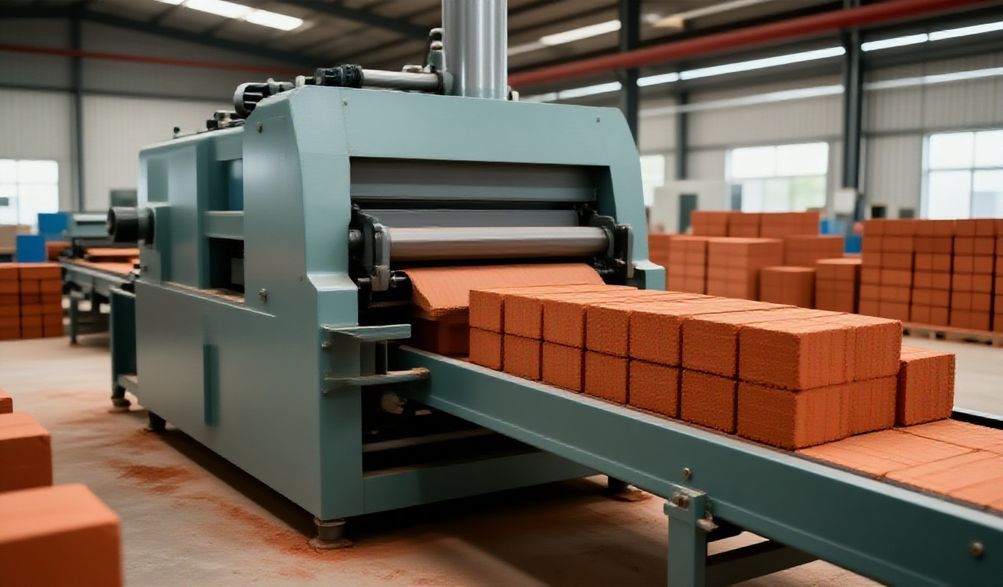
Votre Guide Ultime des Machines à Fabriquer des Briques en Argile en Malaisie | L'Expertise de l'Usine FUDA
Introduction
Dans le paysage dynamique de la construction en Malaisie, des tours imposantes de KLCC aux habitations résilientes des régions sujettes à la mousson, la demande de matériaux de construction durables, écologiques et rentables n'a jamais été aussi forte. Au cœur de cette croissance, la modeste brique d'argile demeure une pierre angulaire, appréciée pour sa résistance intemporelle et ses propriétés isolantes naturelles. Cependant, la qualité, l'efficacité et la rentabilité de la production de briques dépendent d'un facteur critique :Machine à fabriquer des briques en terre cuite.
Choisir la bonne machinerie ne représente pas un simple achat ; c'est un investissement dans les fondations de votre projet ou de votre entreprise. Cette décision influence tout, du rendement quotidien et des coûts de main-d'œuvre jusqu'à l'intégrité structurelle finale des bâtiments que vous fournissez.
Ce guide complet est conçu pour démêler la complexité. Il s'appuie directement sur l'expérience pratique et terrain deUsine de Fabrication de Blocs FUDANous visons à doter les constructeurs, entrepreneurs, promoteurs et chefs d'entreprise malaisiens des connaissances nécessaires pour prendre une décision éclairée. Nous explorerons les types de machines, leurs avantages pour la construction locale, et les facteurs cruciaux spécifiques à l'environnement unique de la Malaisie.
Chez FUDA, avec plus de 15 ans d'expérience dans la fabrication, la fourniture et la maintenance de solutions de fabrication de blocs à travers la Malaisie péninsulaire et orientale, nous avons constaté directement l'impact transformateur qu'une machine adaptée peut avoir sur le succès d'un projet, son efficacité économique et la qualité finale. Ce guide condense cette expertise pratique et durement acquise pour vous aider à construire plus intelligemment.
Comprendre les machines de fabrication de briques en terre cuite : types et technologies
Naviguer dans le monde des machines à fabriquer des briques commence par comprendre les processus fondamentaux et les différentes technologies disponibles. Les machines modernes ont évolué bien au-delà des moules manuels, offrant divers degrés d'automatisation adaptés à toutes les échelles d'exploitation.
Comment fonctionne une machine moderne de fabrication de briques en terre cuite ?
Bien que les conceptions des machines varient, les étapes fondamentales de production restent les mêmes.
- Préparation de l'argile :L'argile brute est introduite dans un mélangeur, où de l'eau et d'autres additifs (comme du sable ou des cendres) sont combinés pour obtenir la plasticité et la consistance parfaites pour le moulage.
- Moulage/Compactage :Voici le cœur du processus. L'argile préparée est introduite dans une cavité de moule et soumise à une pression hydraulique ou mécanique intense. Cette compaction sous haute pression garantit une brique dense, de forme uniforme et aux arêtes vives.
- Éjection et Réglage :La brique fraîchement formée, « verte », est doucement éjectée sur une palette ou un tapis roulant. Ces briques sont encore molles et doivent être manipulées avec précaution avant le durcissement.
- Séchage et durcissement :Les briques vertes sont déplacées vers une zone de séchage pour réduire lentement leur teneur en humidité. Pour certains types de briques (comme les briques cuites), elles sont ensuite cuites dans un four à haute température pour atteindre une résistance et une durabilité maximales. Certaines machines modernes produisent des blocs stabilisés à haute résistance qui durcissent par séchage à l'air ou par réaction chimique, éliminant ainsi le besoin de cuisson.
Principaux types de machines pour le marché malaisien
Machines à Briques Manuelles & Semi-Automatiques
- Idéal pour :Projets à petite échelle, initiatives de logement rural, entrepreneurs en démarrage et entreprises à faible dépense en capital.
- Opération :Ces machines nécessitent davantage d'intervention manuelle pour alimenter l'argile et retirer les briques finies. Le compactage est souvent assuré par un moteur diesel ou un moteur électrique.
- Sortie :Varie généralement de 800 à 3 000 briques par quart de travail de 8 heures.
- Perspective de FUDA :Depuis nos projets à Kelantan et à Sabah, nous avons constaté que ces machines sont idéales pour des projets communautaires ou lorsque l'objectif principal est d'utiliser l'argile sur place pour réduire les coûts, sans avoir besoin d'un volume massif.
Usines de fabrication de briques entièrement automatiques
- Idéal pour :Production commerciale à grande échelle, approvisionnement de grands projets de construction et entreprises établies de fabrication de briques.
- Opération :Il s'agit de systèmes intégrés dotés de distributeurs automatiques, de convoyeurs, d'empileurs et de palettiseurs. Ils sont souvent équipés de contrôleurs logiques programmables (PLC) pour la précision et la constance.
- Sortie :Peut produire de 10 000 à plus de 50 000 briques par jour avec un minimum de travail manuel.
- Perspective de FUDA :Pour les clients qui fournissent de grands développements de lotissements ou des projets industriels, la cohérence des dimensions et de la densité des briques offerte par une usine entièrement automatisée est indispensable pour respecter les normes d'ingénierie et accélérer les délais de construction.
Machines à Briques Mobiles
- Idéal pour : Large, remote construction sites (e.g., plantation housing, resort development, infrastructure projects) where transporting vast quantities of bricks is logistically challenging and expensive.
- Opération : Mounted on a trailer, these machines can be driven directly to the project site. They use the local soil (after testing and minor modification), producing bricks right where they are needed.
- Perspective de FUDA : We’ve deployed mobile units for plantation housing in Sarawak, drastically cutting transport costs by over 60% and ensuring a seamless, on-demand supply chain for the contractor.
Why Choose Clay Bricks? Benefits for Malaysian Construction
Beyond tradition, clay bricks offer a suite of performance benefits that align perfectly with Malaysia’s climatic and economic needs.
Unmatched Durability and Longevity in Tropical Climates
Clay bricks are inherently resistant to moisture, humidity, and the relentless tropical heat. Unlike some materials that degrade, warp, or foster mold, properly fired clay bricks stand resilient against monsoon rains and high humidity, ensuring structures last for generations with minimal maintenance.
Excellent Thermal Insulation for Energy Efficiency
This is a critical advantage for Malaysia’s climate. Clay bricks have high thermal mass, meaning they absorb heat slowly and release it slowly. This natural regulation helps maintain cooler indoor temperatures, reducing the thermal load on air conditioning systems. The result is significantly lower energy consumption and utility bills—a major selling point for both residential and commercial buildings.
Fire Resistance and Structural Integrity
Clay bricks are non-combustible, providing a superior fire rating that enhances building safety—a key consideration in compliance with Malaysia’s Uniform Building By-Laws (UBBL). Their compressive strength also contributes to the overall structural integrity and load-bearing capacity of a building.
Sustainability and Local Sourcing
As environmental consciousness grows, clay bricks shine. They are made from abundant natural materials (clay and shale). Their long lifecycle, recyclability, and potential for using locally sourced clay reduce the carbon footprint associated with transportation. This supports local economies and promotes sustainable construction practices.
Critical Factors When Selecting a Machine in Malaysia
Your local context is everything. A machine perfect for a factory in Europe might fail in a Malaysian village. Here are the key, location-specific factors to weigh, based on our field experience.
Assessing Your Production Needs: Scale and Output
Be realistic about your demand.
* Are you supplying bricks for your own 20-unit housing project?
* Or are you starting a business to supply the wider market?
Calculer votre requisbricks per day and consider future growth. A common mistake is under-sizing a machine, which creates bottlenecks, or over-investing in a giant plant that sits underutilized.
Raw Material Compatibility: Malaysian Clay Varieties
This is perhaps the most crucial technical factor. Malaysian soil varies dramatically from the sandy loams of the east coast to the heavier clay soils found elsewhere.
* FUDA’s Experience: From our work with clients in Johor and Perak, we know that clay plasticity, sand content, and mineral composition directly affect brick quality and machine performance. A machine must be configured—through adjustable pressure, mixer design, and sometimes additive systems—to handle your specific local clay. We always recommend and often conduct preliminary soil testing.
Power Requirements and Utility Infrastructure
Consider your site’s utilities:
* 3-Phase vs. Single-Phase: Larger automatic machines typically require a stable 3-phase electrical supply. For areas with unreliable grids or no 3-phase power, diesel-engine driven models are a robust alternative.
* Water Supply: A consistent water source for clay mixing is essential. Machines have different water consumption rates, which should be factored in.
After-Sales Support, Parts, and Service in Malaysia
Never underestimate this. The true cost of a machine isn’t just its purchase price.
* Assistance technique locale : When a critical component fails, can you get a technician on site within days, not weeks or months? FUDA maintains a network of local service engineers.
* Spare Parts Inventory: Ensure your supplier stocks common wear parts (like mold liners, hydraulic seals) locally to avoid costly production downtime waiting for international shipments.
* Formation des opérateurs : Proper training is vital for safety, output quality, and machine longevity. A trustworthy supplier will provide comprehensive training.
The FUDA Factory Advantage: More Than Just a Machine Supplier
Our role extends far beyond a simple transaction. We are your local partner in building production capacity.
Our Journey and Expertise in the Malaysian Market
For over 15 years, FUDA has been deeply embedded in Malaysia’s construction ecosystem. We’ve evolved from a local supplier to a solutions provider, learning from hundreds of client projects across every state. This accumulated portfolio gives us unparalleled insight into what works—and what doesn’t—on Malaysian soil.
Tailored Solutions, Not Just Off-the-Shelf Products
We don’t believe in a one-size-fits-all approach. Our process starts with a consultation to understand your goals, followed by:
* Site & Material Assessment: Evaluating your space, infrastructure, and clay source.
* Machine Configuration: Recommending and customizing a machine setup (mold type, pressure settings, automation level) that matches your unique parameters.
Comprehensive Support from Installation to Production
Your success is our success. Our support package includes:
* Supervised Installation: Our engineers ensure your machine is set up correctly from day one.
* Hands-On Operator Training: We train your team until they are confident.
* Detailed Maintenance Manuals & Service Hotline: Ongoing support is just a phone call away.
Quality Commitment and Machine Durability
We build and source machines with robustness in mind, using high-grade steel and wear-resistant components for critical parts. This focus on durability minimizes downtime and ensures your investment pays back over a long, productive lifespan, backed by clear warranty terms.
FAQ: Clay Brick Making Machines in Malaysia
Q1: What is the approximate price range for a clay brick making machine in Malaysia?
A: Prices vary widely based on automation and capacity. A small manual machine can start from around RM 15,000, while semi-automatic models range from RM 40,000 to RM 150,000. Fully automatic production lines begin around RM 200,000 and can exceed RM 1 million. The most accurate way is to get a customized quote based on your specific output needs and configuration.
Q2: Can the machine use the clay available on my site?
A: In most cases, yes. Malaysian local clays are often suitable. As part of our service, we frequently conduct free preliminary soil testing for serious clients. If needed, we can recommend simple and cost-effective additives (like sand or cement) to optimize the mix for perfect brick quality.
Q3: What kind of space and foundation is required for the machine?
A: A semi-automatic machine might need a covered workshop of about 150-300 sq. ft. with a level, reinforced concrete foundation. A full automatic plant requires a larger factory space (1,000+ sq. ft.) with significant foundation work to handle vibration and load. We provide detailed layout and foundation plans upon quotation.
Q4: How many operators are needed to run a semi-automatic/automatic machine?
A: For a semi-automatic machine, 2-3 operators per shift are typical. A fully automatic plant may require 3-5 personnel to manage feeding, monitoring, and handling finished bricks, showcasing a significant reduction in labor per brick produced.
Q5: Does FUDA provide financing options or assistance?
A: Yes, we understand that capital investment is significant. FUDA partners with several reputable financial institutions in Malaysia to help qualified clients access equipment financing and leasing options, making it easier to acquire the right machinery for your growth.
Conclusion
Selecting the ideal clay brick making machine for your Malaysian operation is a multi-faceted decision. It requires balancing your production scale with the characteristics of your local clay, your site’s infrastructure, and—most importantly—the long-term reliability of your supplier’s support.
The right machine is a powerhouse for profit and progress; the wrong one can be a source of constant cost and delay.
At FUDA Block Making Factory, we combine technical expertise with deep, practical experience in the Malaysian market. We are committed to being your partner, not just your vendor, ensuring you have a solution engineered for success in our unique environment.
Ready to explore the right clay brick making solution for your project? Contact the FUDA team today for a no-obligation consultation. Let’s discuss your site, your clay, and your goals. With our experience, we’ll help you build a more efficient, profitable, and sustainable future, brick by brick.
Visit our factory in Selangor to see our machines in operation and speak directly with our engineering team. We welcome you to witness the FUDA difference firsthand.
<