
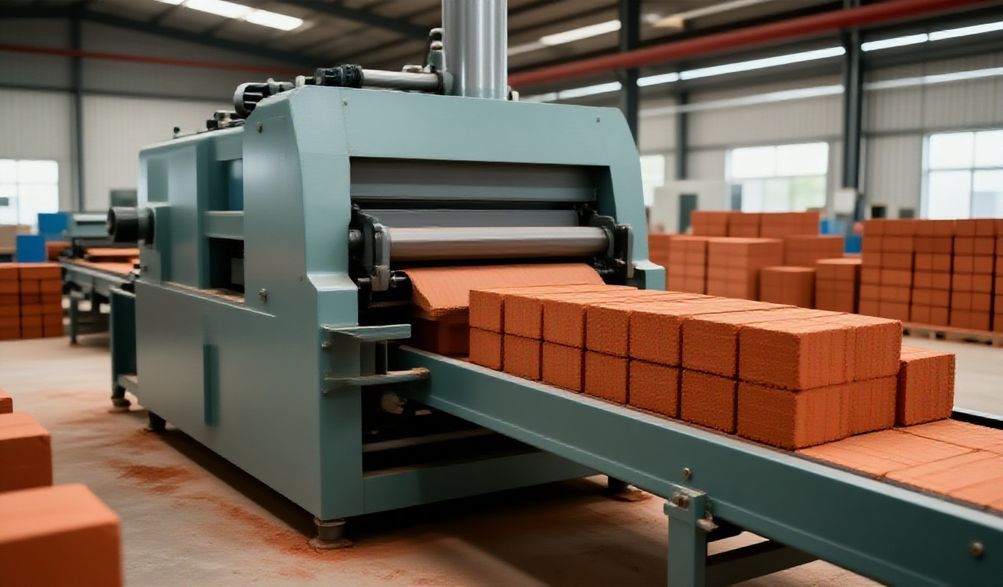
Panduan Utama Anda untuk Mesin Pembuat Bata Tanah Liat di Malaysia | Kepakaran dari Kilang FUDA
Pengenalan
Dalam landskap pembinaan Malaysia yang dinamik, dari menara pencakar langit KLCC hingga rumah-rumah kukuh di kawasan kerap dilanda monsun, permintaan terhadap bahan binaan yang tahan lasak, lestari, dan kos efektif tidak pernah setinggi ini. Di tengah pertumbuhan ini, bata tanah liat yang sederhana kekal sebagai tunjang utama, dihargai kerana kekuatannya yang abadi dan sifat penebat semula jadi. Namun, kualiti, kecekapan, dan keuntungan pengeluaran bata bergantung pada satu faktor kritikal:mesin pembuatan bata tanah liat.
Memilih jentera yang sesuai bukan sekadar pembelian; ia adalah pelaburan dalam asas projek atau perniagaan anda. Keputusan ini memberi kesan kepada segala-galanya daripada output harian dan kos buruh, sehingga integriti struktur akhir bangunan yang anda bekalkan.
Panduan komprehensif ini direka untuk memotong kerumitan. Berpandukan terus daripada pengalaman langsung dan praktikal di lapanganKilang Blok FUDAkami bertujuan untuk melengkapkan pembina, kontraktor, pemaju, dan usahawan Malaysia dengan pengetahuan untuk membuat keputusan yang tepat. Kami akan meneroka jenis-jenis mesin, manfaatnya untuk pembinaan tempatan, dan faktor-faktor penting yang spesifik kepada persekitaran unik Malaysia.
Di FUDA, dengan lebih 15 tahun pengalaman dalam pembuatan, pembekalan, dan perkhidmatan penyelesaian pembuatan blok di seluruh Semenanjung dan Malaysia Timur, kami telah menyaksikan sendiri kesan transformatif mesin yang tepat terhadap kejayaan projek, kecekapan kos, dan kualiti akhir. Panduan ini merumuskan kepakaran praktikal yang diperoleh dengan susah payah untuk membantu anda membina dengan lebih bijak.
Memahami Mesin Pembuatan Batu Bata Tanah Liat: Jenis dan Teknologi
Memahami dunia mesin pembuatan bata bermula dengan memahami proses teras dan pelbagai teknologi yang ada. Mesin moden telah berkembang jauh melebihi acuan manual, menawarkan pelbagai tahap automasi yang sesuai untuk setiap skala operasi.
Bagaimana Mesin Pembuatan Bata Tanah Liat Moden Berfungsi?
Walaupun reka bentuk mesin berbeza-beza, peringkat pengeluaran asas tetap konsisten:
- Penyediaan Tanah Liat:Tanah liat mentah dimasukkan ke dalam pengadun, di mana air dan bahan tambahan lain (seperti pasir atau abu) dicampur untuk mencapai keplastikan dan konsistensi yang sempurna untuk pengacuan.
- Pengacuan/PemadatanIni adalah teras proses. Tanah liat yang telah disediakan dimasukkan ke dalam rongga acuan dan dikenakan tekanan hidraulik atau mekanikal yang kuat. Pemadatan tekanan tinggi ini memastikan bata yang padat, berbentuk seragam dengan tepi yang tajam.
- Pengeluaran dan Penetapan:Bata “hijau” yang baru terbentuk dialirkan secara perlahan ke atas palet atau tali sawat. Bata ini masih lembut dan perlu dikendalikan dengan berhati-hati sebelum proses pengawetan.
- Pengeringan dan Pengawetan:Bata hijau dipindahkan ke kawasan pengeringan untuk mengurangkan kandungan lembapan secara perlahan. Bagi jenis bata tertentu (seperti bata bakar), ia kemudiannya dibakar di dalam tanur pada suhu tinggi untuk mencapai kekuatan dan ketahanan muktamad. Sesetengah mesin moden menghasilkan blok stabil berkekuatan tinggi yang diawet melalui pengeringan udara atau tindak balas kimia, menghapuskan keperluan untuk pembakaran.
Key Types of Machines for the Malaysian Market
Mesin Bata Manual & Semi-Automatik
- Terbaik Untuk: Small-scale projects, rural housing initiatives, startup entrepreneurs, and businesses with lower capital expenditure.
- Operasi: These machines require more manual intervention for feeding clay and removing finished bricks. The compaction is often powered by a diesel engine or electric motor.
- Output: Typically ranges from 800 to 3,000 bricks per 8-hour shift.
- FUDA Insight: From our projects in Kelantan and Sabah, we’ve found these machines ideal for community-based projects or where the primary goal is to utilize on-site clay for cost-saving, without the need for massive volume.
Loji Pembuatan Batu Bata Sepenuhnya Automatik
- Terbaik Untuk: Large-scale commercial production, supplying major construction projects, and established brick manufacturing businesses.
- Operasi: These are integrated systems with automated feeders, conveyors, stackers, and palletizers. They often feature programmable logic controllers (PLC) for precision and consistency.
- Output: Can produce from 10,000 to over 50,000 bricks per day with minimal manual labor.
- FUDA Insight: For clients supplying large township developments or industrial projects, the consistency in brick dimension and density offered by a fully automatic plant is non-negotiable for meeting engineering standards and speeding up construction timelines.
Mesin Pembuatan Bata Mudah Alih
- Terbaik Untuk: Large, remote construction sites (e.g., plantation housing, resort development, infrastructure projects) where transporting vast quantities of bricks is logistically challenging and expensive.
- Operasi: Mounted on a trailer, these machines can be driven directly to the project site. They use the local soil (after testing and minor modification), producing bricks right where they are needed.
- FUDA Insight: We’ve deployed mobile units for plantation housing in Sarawak, drastically cutting transport costs by over 60% and ensuring a seamless, on-demand supply chain for the contractor.
Why Choose Clay Bricks? Benefits for Malaysian Construction
Beyond tradition, clay bricks offer a suite of performance benefits that align perfectly with Malaysia’s climatic and economic needs.
Unmatched Durability and Longevity in Tropical Climates
Clay bricks are inherently resistant to moisture, humidity, and the relentless tropical heat. Unlike some materials that degrade, warp, or foster mold, properly fired clay bricks stand resilient against monsoon rains and high humidity, ensuring structures last for generations with minimal maintenance.
Excellent Thermal Insulation for Energy Efficiency
This is a critical advantage for Malaysia’s climate. Clay bricks have high thermal mass, meaning they absorb heat slowly and release it slowly. This natural regulation helps maintain cooler indoor temperatures, reducing the thermal load on air conditioning systems. The result is significantly lower energy consumption and utility bills—a major selling point for both residential and commercial buildings.
Fire Resistance and Structural Integrity
Clay bricks are non-combustible, providing a superior fire rating that enhances building safety—a key consideration in compliance with Malaysia’s Uniform Building By-Laws (UBBL). Their compressive strength also contributes to the overall structural integrity and load-bearing capacity of a building.
Sustainability and Local Sourcing
As environmental consciousness grows, clay bricks shine. They are made from abundant natural materials (clay and shale). Their long lifecycle, recyclability, and potential for using locally sourced clay reduce the carbon footprint associated with transportation. This supports local economies and promotes sustainable construction practices.
Critical Factors When Selecting a Machine in Malaysia
Your local context is everything. A machine perfect for a factory in Europe might fail in a Malaysian village. Here are the key, location-specific factors to weigh, based on our field experience.
Assessing Your Production Needs: Scale and Output
Be realistic about your demand.
* Are you supplying bricks for your own 20-unit housing project?
* Or are you starting a business to supply the wider market?
Calculate your required bricks per day and consider future growth. A common mistake is under-sizing a machine, which creates bottlenecks, or over-investing in a giant plant that sits underutilized.
Raw Material Compatibility: Malaysian Clay Varieties
This is perhaps the most crucial technical factor. Malaysian soil varies dramatically from the sandy loams of the east coast to the heavier clay soils found elsewhere.
* FUDA’s Experience: From our work with clients in Johor and Perak, we know that clay plasticity, sand content, and mineral composition directly affect brick quality and machine performance. A machine must be configured—through adjustable pressure, mixer design, and sometimes additive systems—to handle your specific local clay. We always recommend and often conduct preliminary soil testing.
Power Requirements and Utility Infrastructure
Consider your site’s utilities:
* 3-Phase vs. Single-Phase: Larger automatic machines typically require a stable 3-phase electrical supply. For areas with unreliable grids or no 3-phase power, diesel-engine driven models are a robust alternative.
* Water Supply: A consistent water source for clay mixing is essential. Machines have different water consumption rates, which should be factored in.
After-Sales Support, Parts, and Service in Malaysia
Never underestimate this. The true cost of a machine isn’t just its purchase price.
* Sokongan Teknikal Tempatan: When a critical component fails, can you get a technician on site within days, not weeks or months? FUDA maintains a network of local service engineers.
* Spare Parts Inventory: Ensure your supplier stocks common wear parts (like mold liners, hydraulic seals) locally to avoid costly production downtime waiting for international shipments.
* Latihan Pengendali: Proper training is vital for safety, output quality, and machine longevity. A trustworthy supplier will provide comprehensive training.
The FUDA Factory Advantage: More Than Just a Machine Supplier
Our role extends far beyond a simple transaction. We are your local partner in building production capacity.
Our Journey and Expertise in the Malaysian Market
For over 15 years, FUDA has been deeply embedded in Malaysia’s construction ecosystem. We’ve evolved from a local supplier to a solutions provider, learning from hundreds of client projects across every state. This accumulated portfolio gives us unparalleled insight into what works—and what doesn’t—on Malaysian soil.
Tailored Solutions, Not Just Off-the-Shelf Products
We don’t believe in a one-size-fits-all approach. Our process starts with a consultation to understand your goals, followed by:
* Site & Material Assessment: Evaluating your space, infrastructure, and clay source.
* Machine Configuration: Recommending and customizing a machine setup (mold type, pressure settings, automation level) that matches your unique parameters.
Comprehensive Support from Installation to Production
Your success is our success. Our support package includes:
* Supervised Installation: Our engineers ensure your machine is set up correctly from day one.
* Hands-On Operator Training: We train your team until they are confident.
* Detailed Maintenance Manuals & Service Hotline: Ongoing support is just a phone call away.
Quality Commitment and Machine Durability
We build and source machines with robustness in mind, using high-grade steel and wear-resistant components for critical parts. This focus on durability minimizes downtime and ensures your investment pays back over a long, productive lifespan, backed by clear warranty terms.
FAQ: Clay Brick Making Machines in Malaysia
Q1: What is the approximate price range for a clay brick making machine in Malaysia?
A: Prices vary widely based on automation and capacity. A small manual machine can start from around RM 15,000, while semi-automatic models range from RM 40,000 to RM 150,000. Fully automatic production lines begin around RM 200,000 and can exceed RM 1 million. The most accurate way is to get a customized quote based on your specific output needs and configuration.
Q2: Can the machine use the clay available on my site?
A: In most cases, yes. Malaysian local clays are often suitable. As part of our service, we frequently conduct free preliminary soil testing for serious clients. If needed, we can recommend simple and cost-effective additives (like sand or cement) to optimize the mix for perfect brick quality.
Q3: What kind of space and foundation is required for the machine?
A: A semi-automatic machine might need a covered workshop of about 150-300 sq. ft. with a level, reinforced concrete foundation. A full automatic plant requires a larger factory space (1,000+ sq. ft.) with significant foundation work to handle vibration and load. We provide detailed layout and foundation plans upon quotation.
Q4: How many operators are needed to run a semi-automatic/automatic machine?
A: For a semi-automatic machine, 2-3 operators per shift are typical. A fully automatic plant may require 3-5 personnel to manage feeding, monitoring, and handling finished bricks, showcasing a significant reduction in labor per brick produced.
Q5: Does FUDA provide financing options or assistance?
A: Yes, we understand that capital investment is significant. FUDA partners with several reputable financial institutions in Malaysia to help qualified clients access equipment financing and leasing options, making it easier to acquire the right machinery for your growth.
Kesimpulan
Selecting the ideal clay brick making machine for your Malaysian operation is a multi-faceted decision. It requires balancing your production scale with the characteristics of your local clay, your site’s infrastructure, and—most importantly—the long-term reliability of your supplier’s support.
The right machine is a powerhouse for profit and progress; the wrong one can be a source of constant cost and delay.
At FUDA Block Making Factory, we combine technical expertise with deep, practical experience in the Malaysian market. We are committed to being your partner, not just your vendor, ensuring you have a solution engineered for success in our unique environment.
Ready to explore the right clay brick making solution for your project? Contact the FUDA team today for a no-obligation consultation. Let’s discuss your site, your clay, and your goals. With our experience, we’ll help you build a more efficient, profitable, and sustainable future, brick by brick.
Visit our factory in Selangor to see our machines in operation and speak directly with our engineering team. We welcome you to witness the FUDA difference firsthand.
<