
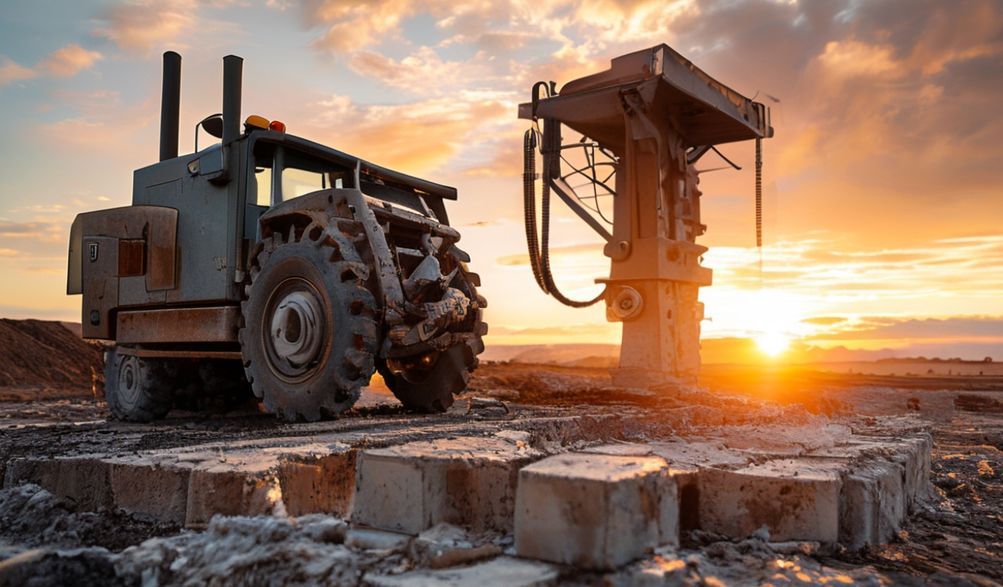
Guide complet des machines à fabriquer des blocs de ponte diesel : analyse de l'efficacité et des coûts
Introduction
Imaginez ceci : Vous avez un projet de construction prometteur dans une zone rurale ou une périphérie urbaine en développement. La demande de logements abordables est élevée, mais le coût des briques traditionnelles l'est tout autant. Pour aggraver les choses, le réseau électrique est soit inexistant, soit frappé par des pannes quotidiennes et imprévisibles. Le transport de blocs finis depuis une usine éloignée grève vos marges déjà minces. Ce scénario est une réalité quotidienne pour d'innombrables entrepreneurs et promoteurs de construction à petite et moyenne échelle dans le monde entier.
Si cela vous parle, ce guide complet est votre ressource essentielle. Nous vous offrirons une analyse approfondie et impartiale d'un outil essentiel pour la construction hors réseau et soucieuse des coûts : leMachine à fabriquer des blocs de ponte au dieselCompilé à partir de spécifications industrielles détaillées, de données directes des fabricants et d’informations pratiques épurées issues de l’exploitation, ce guide est conçu pour percer le bruit marketing.
Notre objectif est simple : vous armer des connaissances nécessaires pour prendre une décision d'investissement éclairée et en toute confiance. Nous ne promouvrons pas une marque spécifique. Au lieu de cela, nous examinerons minutieusement les avantages, les inconvénients, les coûts opérationnels réels et les critères de sélection essentiels de ces machines robustes. À la fin, vous saurez si unMachine à blocs de ponte fonctionnant au dieselest-ce le bon moteur pour votrerentable, construction hors réseauentreprise
Qu'est-ce qu'une machine à fabriquer des blocs de ponte diesel ?
Au cœur de cette machine se trouve une usine mobile et autonome pour produire des blocs de béton. Elle combine un moteur diesel à un système unique de moulage de blocs, offrant ainsi une solution polyvalente pour la production sur site de matériaux de construction essentiels.
Fonction principale et mécanisme de « ponte d'œufs » expliqués
Le nom « pondeuse » est une analogie parfaite pour son fonctionnement. Contrairement aux machines à fabriquer des blocs stationnaires qui nécessitent des palettes en bois ou en acier pour transporter et faire durcir chaque bloc, cette machine forme le bloc puis le dépose directement sur une surface de sol plane et préparée, un peu comme une poule pond un œuf.
Voici le processus de base :
1. Un mélange de béton (ciment, sable, agrégat, eau) est introduit manuellement dans la trémie de la machine.
Le mélange est acheminé dans un moule (de forme spécifique de bloc) monté sur une table vibrante.
Le puissant moteur diesel entraîne un vibrateur, qui compacte le mélange de béton avec une fréquence et une amplitude élevées.
Simultanément, un vérin hydraulique ou mécanique applique une pression par le haut.
5. Une fois compacté, le moule se soulève verticalement, laissant le bloc fraîchement formé bien en place sur le sol.
La machine est ensuite déplacée manuellement ou tirée au treuil vers l’avant jusqu’à l’emplacement suivant, et le cycle se répète.
Ce système sans palette est la clé de sa simplicité, de son coût initial inférieur et de sa portabilité.
Le Rôle du Moteur Diesel
Le moteur diesel est le cœur de l'autonomie de cette machine. Il remplit un double rôle :
* Source d'alimentation principale :Il fournit toute l'énergie mécanique nécessaire pour faire fonctionner le système hydraulique, entraîner le vibrateur et alimenter le mécanisme d'alimentation en matériaux. Cela élimine toute dépendance aux réseaux électriques triphasés ou monophasés.
* Couple élevé pour la qualité :Les moteurs diesel sont reconnus pour leur couple élevé, particulièrement à bas régime. Cela se traduit par des vibrations puissantes et constantes, essentielles pour produire des blocs denses et à haute résistance, avec un minimum de vides. Cette puissance constante est vitale pour assurer une qualité uniforme des blocs tout au long d'une série de production.
Sorties courantes et types de blocs
Une machine à pondre diesel standard est très polyvalente. Avec un simple changement de moule, elle peut produire une variété de blocs, y compris :
* Blocs creux : The most common output (e.g., 4″, 5″, 6″ thickness).
* Blocs pleins : For foundations and high-load applications.
* Paving Blocks / Interlocking Pavers:Pour les entrées de garage, les allées et l'aménagement paysager.
* Curved Blocks and other specialty shapes.
The machine’s output is typically measured in blocks per cycle (e.g., 3-4 blocks) and cycles per hour, leading to common production figures like 800-1500 blocks per standard 8-hour shift, depending on model and labor efficiency.
Key Advantages of Choosing a Diesel-Powered Model
Choosing a diesel engine over an electric model is a strategic decision that offers several compelling benefits, particularly in specific operational environments.
Unmatched Operational Independence
This is the paramount advantage. A Machine à fabriquer des blocs de ponte au diesel is completely immune to power cuts, low voltage issues, or the complete absence of an electrical grid. This makes it the undisputed champion for:
* Remote rural construction projects.
* Regions with unreliable infrastructure.
* Disaster recovery and rapid deployment construction.
Your production schedule depends on fuel availability, not the utility company.
Robust Power and Consistent Performance
Diesel engines are built for heavy-duty, continuous operation. They deliver:
* High Compression Force: Ensures blocks are well-compacted from the first to the last of the day.
* Stable Vibration: The engine’s consistent RPM under load leads to uniform vibration frequency, which is critical for the structural integrity and aesthetic finish of every block.
* Durabilité : Well-maintained diesel engines (e.g., Lister-type, Changfa) are known for decades of service, outlasting many electric motors in harsh, dusty site conditions.
Portability and On-Site Production
The combination of a diesel engine (no power cords) and the egg laying design creates unparalleled mobility. You can produce blocks exactly where they are needed. This eliminates:
* Transport costs for finished blocks from a central plant.
* Handling damage during transit.
* Logistical delays.
The machine can be towed by a tractor or truck to different locations on a large site or between projects.
Long-Term Durability and Lower Maintenance (When Properly Serviced)
While the initial maintenance regimen is strict, the fundamental mechanics of a diesel engine are robust. With proper, timely servicing—regular oil changes, filter replacements, and coolant management—the core power unit can have a very long operational life with relatively predictable maintenance costs compared to complex electrical systems that can be vulnerable to moisture and dust.
Important Considerations and Potential Drawbacks
A trustworthy analysis must present a balanced view. Understanding these challenges is key to successful ownership.
Higher Operational Noise and Emissions
- Noise: Diesel engines are loud. Operating one in a densely populated urban area may lead to noise complaints and is often regulated. Ear protection for operators is mandatory.
- Emissions: The machine produces exhaust fumes. Adequate ventilation is crucial if operating in semi-enclosed spaces, and it is an environmental consideration.
Fuel Cost and Availability Factors
Your operational cost is directly tied to the diesel market.
* Price Volatility: Fluctuating diesel prices can impact your block production cost and profit margins.
* Supply Chain: You must ensure a reliable, on-site fuel supply. Running out of fuel halts production immediately. Secure storage for fuel is also a safety requirement.
Manual Handling and Labor Requirements
Do not mistake “semi-automatic” for “fully automatic.” These machines require significant manual labor:
* Feeding raw materials (sand, aggregate, cement) into the hopper.
* Mixing the concrete (often done in a separate pan mixer).
* Handling and stacking the freshly laid “green” blocks for curing.
* Moving the machine after each cycle (on some models).
A typical setup requires 3-4 workers for efficient, continuous operation.
Initial Investment and Comparison with Electric Models
Generally, the diesel version of an egg laying machine has a higher upfront cost than its equivalent electric model due to the cost of the engine itself. The decision is a trade-off:
* Electric Model: Lower upfront cost, lower per-hour “fuel” cost (electricity), but total dependence on a stable, powerful grid.
* Diesel Model: Higher upfront cost, higher per-hour fuel cost, but complete operational independence.
The right choice is purely determined by your site conditions and access to reliable, affordable electricity.
How to Choose the Right Machine for Your Project
Selecting the correct machine is where due diligence pays off for years. Use this framework for your evaluation.
Assessing Your Production Capacity Needs (Blocks Per Hour/Day)
Match the machine to your project’s scale and timeline.
* Small Projects/Startups: A machine producing 600-800 blocks/8-hour shift may suffice.
* Medium-Scale Commercial Projects: Look for models in the 1000-1500 blocks/shift range.
* Question clé : Does the supplier’s claimed output account for realistic manual feeding and handling times, or is it a theoretical maximum?
Evaluating Diesel Engine Specifications
The engine is your primary investment. Scrutinize it.
* Marque et Réputation : Established brands (e.g., Changfa, Deutz, Lombardini) often have better parts availability.
* Horsepower (HP): 12HP to 24HP is common. More HP generally means more vibration power and the ability to handle stiffer mixes for faster demolding.
* Cylindres : Single-cylinder engines are simpler; multi-cylinder engines often run smoother.
* Cooling System: Air-cooled is simpler; water-cooled may offer better temperature regulation in very hot climates.
Critical Machine Components to Inspect
Look beyond the engine. The machine’s construction determines block quality and longevity.
* Système de vibromasseur : It should be a high-frequency, externally mounted eccentric vibrator. Ask about the bearing quality.
* Moisissures : Check the steel thickness and hardness. Thicker, hardened steel molds resist wear and deformation, ensuring consistent block dimensions for thousands of cycles.
* Frame & Chassis: Must be heavy-duty welded steel to withstand constant vibration without cracking.
* Système de mixage : If it includes a mixer, check the paddle design and gearbox. Many operators prefer a separate, dedicated pan mixer for better mix consistency.
Verifying Supplier Reputation and After-Sales Support
This is the most critical step to mitigate risk.
* History: How long has the supplier/manufacturer been in business? Can they provide client references?
* Pièces de rechange : Are wear-and-tear parts (molds, vibrator bearings, engine filters) readily available? Request a spare parts list and price catalog.
* Garantie : What is covered (engine vs. machine frame)? What are the terms and duration?
* Support technique : Do they offer installation guidance, operational training, and troubleshooting help? A reputable supplier will be willing to video call to help diagnose an issue.
Operational Best Practices and Maintenance Checklist
Success lies in daily discipline. Following these procedures will maximize uptime and machine life.
Daily Startup and Shutdown Procedures
- Startup: Check all fluid levels (engine oil, coolant, hydraulic oil). Ensure no tools or debris are in or around the mold. Run the engine at idle for a few minutes to warm up before engaging the vibrator.
- Shutdown: Let the engine idle for a minute to cool down. Clean all concrete residue from the mold, hopper, and feed system with water immediately after the last block. A hardened mix is incredibly difficult to remove.
Essential Routine Maintenance for the Diesel Engine
Follow the engine manufacturer’s manual strictly. Key tasks include:
* Checking and changing engine oil at recommended intervals.
* Cleaning or replacing air filters frequently (dusty sites demand daily checks).
* Replacing fuel filters.
* Checking coolant levels and belt tension.
* Draining water from the fuel sediment bowl.
Maintaining the Block Making Mechanism
- Daily: Clean and lightly oil the mold interior and lifting mechanism to prevent rust.
- Weekly: Grease all lubrication points (zerk fittings) on the vibration table, guide rods, and moving parts.
- Monthly: Inspect bolts and nuts for tightness (vibration loosens them). Check the vibrator mounts for cracks.
Optimal Concrete Mix Design for Quality Blocks
The machine can only compact what you feed it. A poor mix leads to weak blocks.
* Standard Ratio: A common, strong mix is 1 part cement : 6 parts combined aggregate (a blend of sand and 3/8″ crushed stone).
* Water Content: This is critical. The mix should be just wet enough to bind when squeezed in your hand, with no excess water bleeding out. A too-wet mix will cause blocks to slump or crack during demolding.
* Cohérence : Use a consistent, measured mix for every batch. Variability is the enemy of uniform block strength.
Frequently Asked Questions (FAQ)
What is the average production output of a standard diesel egg laying machine?
A typical machine, operated by a crew of 3-4, can produce between 800 and 1500 blocks (of 4″ or 5″ size) in an 8-hour shift. Output depends on crew efficiency, mix preparation speed, and the specific machine model.
How much diesel fuel does it consume per hour or per 1000 blocks?
Consumption varies by engine size (HP) and load. A rough estimate is 1.5 to 2.5 liters of diesel per hour. Based on average output, this translates to approximately 10-20 liters of fuel per 1000 blocks produced.
Can this machine produce interlocking paving blocks or only hollow blocks?
Yes, it can produce interlocking paving blocks. You simply need to purchase and install the specific mold for the desired paver shape (e.g., zigzag, cobblestone, rectangle). The machine’s vibration and compaction process is the same.
What is the typical price range, and what factors cause variation?
Prices can range from $4,500 to $12,000+ (USD). Variation is driven by:
* Engine brand and power (HP).
* Build quality (steel thickness, component quality).
* Level of automation (e.g., hydraulic feed vs. manual).
* Included accessories (e.g., is a mixer included?).
* Supplier location and shipping costs.
What are the most common operational challenges, and how can I solve them?
- Block Breakage During Demolding: Usually caused by a concrete mix that is too dry or insufficient vibration time. Adjust water content slightly and ensure the vibrator runs for the full cycle.
- Poor Surface Finish/Weak Blocks: Caused by a mix that is too wet, insufficient cement, or a weak vibrator. Check the mix design and ensure the vibrator is functioning at full power.
- Machine Struggling to Lift Mold: Often due to a concrete mix that is too stiff (low water) or an underpowered hydraulic system. Adjust the mix and ensure the engine is at full operating RPM when engaging the lift.
Conclusion
LeMachine à fabriquer des blocs de ponte au diesel stands as a powerful, independent solution for a specific set of challenges. Its ideal use case is clear: off-grid, remote, or power-unreliable construction projects where robust, on-site production is a necessity, not a luxury.
As we’ve outlined, this is a significant investment where the formidable advantages of fuel-based independence and portability must be carefully weighed against ongoing fuel costs, manual labor requirements, and a disciplined maintenance regimen.
Our final, most crucial recommendation is this: Prioritize a reputable supplier with proven after-sales support over the allure of the lowest price alone. A slightly more expensive machine from a partner who provides training, spare parts, and technical support will save you immense cost and frustration in the long run.
Use this guide as your checklist. Visit suppliers, inspect the machines, ask for client references, and, most importantly, request a live demonstration using your own local sand and aggregate. Seeing the machine produce a stack of solid blocks from your materials is the ultimate test of its suitability for your venture.
<