
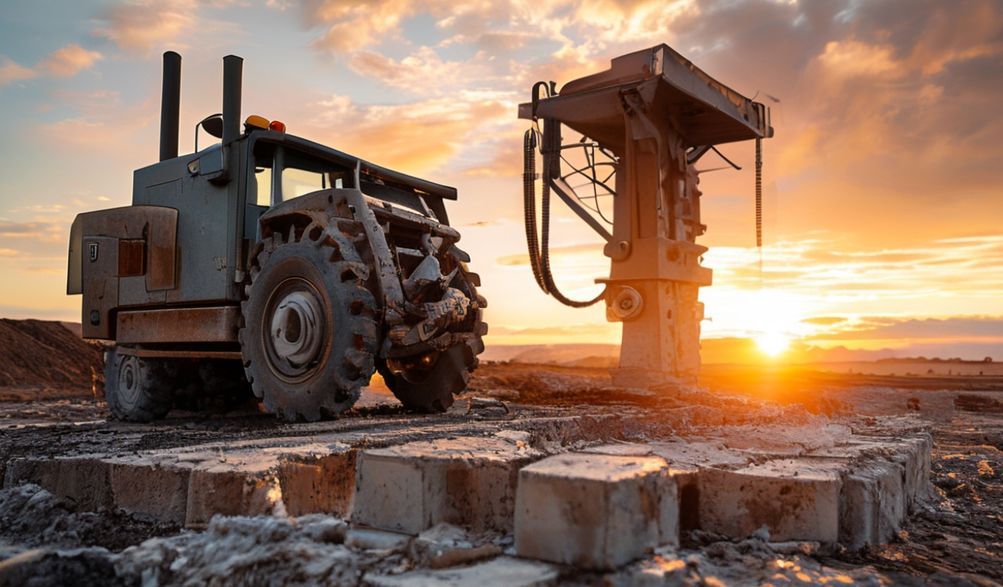
Panduan Lengkap Mesin Pembuat Blok Telur Diesel: Analisis Kecekapan & Kos
Pengenalan
Bayangkan ini: Anda mempunyai projek pembinaan yang berpotensi di kawasan luar bandar atau pinggir bandar yang sedang membangun. Permintaan untuk perumahan mampu milik adalah tinggi, tetapi begitu juga dengan kos batu bata tradisional. Menyebabkan keadaan lebih rumit, grid elektrik sama ada tidak wujud atau dilanda gangguan harian yang tidak dapat diramalkan. Mengangkut blok siap dari kilang yang jauh mengikis keuntungan anda yang sudah tipis. Senario ini adalah realiti harian bagi ramai usahawan dan pemaju pembinaan berskala kecil hingga sederhana di seluruh dunia.
Jika ini selari dengan anda, panduan komprehensif ini adalah sumber penting anda. Kami akan memberikan analisis mendalam dan tidak berat sebelah tentang alat penting untuk pembinaan luar grid dan berjimat kos:Mesin pembuatan blok peletakan telur dieselDisusun daripada spesifikasi industri terperinci, data pengeluar langsung, dan pandangan operasi praktikal yang ditapis, panduan ini direka untuk menembusi hingar pemasaran.
Matlamat kami mudah: melengkapkan anda dengan pengetahuan yang diperlukan untuk membuat keputusan pelaburan yang yakin dan berinformasi. Kami tidak akan mempromosikan jenama tertentu. Sebaliknya, kami akan mengkaji secara teliti kebaikan, keburukan, kos operasi sebenar, dan kriteria pemilihan penting untuk mesin-mesin teguh ini. Pada akhirnya, anda akan tahu sama adamesin blok peletakan telur berkuasa dieseladakah enjin yang betul untuk andakos efektif, pembinaan luar gridusaha.
Apakah itu Mesin Pembuat Blok Peletakan Telur Diesel?
Pada terasnya, mesin ini adalah sebuah kilang mudah alih dan berkuasa sendiri untuk menghasilkan blok konkrit. Ia menggabungkan enjin diesel dengan sistem pembentukan blok yang unik, mencipta penyelesaian serba boleh untuk pengeluaran bahan binaan penting di tapak.
Fungsi Teras dan Mekanisme "Bertelur" Dijelaskan
Nama "bertelur" adalah analogi yang sempurna untuk operasinya. Berbeza dengan mesin pembuat blok pegun yang memerlukan palet kayu atau keluli untuk membawa dan mengawet setiap blok, mesin ini membentuk blok dan kemudian meletakkannya terus ke atas permukaan tanah yang rata dan disediakan—seperti seekor ayam bertelur.
Inilah proses asasnya:
1. Campuran konkrit (simen, pasir, agregat, air) dimasukkan secara manual ke dalam corong mesin.
Campuran itu diangkut ke dalam acuan (berbentuk blok tertentu) yang dipasang di atas meja bergetar.
Enjin diesel yang berkuasa menggerakkan penggetar, yang memadatkan campuran konkrit dengan frekuensi dan amplitud yang tinggi.
Serentak, satu ram hidraulik atau mekanikal mengenakan tekanan dari atas.
5. Setelah dipadatkan, acuan diangkat secara menegak, meninggalkan blok yang baru dibentuk dengan kemas di atas tanah.
Mesin itu kemudiannya digerakkan secara manual atau ditarik ke hadapan ke tempat seterusnya, dan kitaran itu berulang.
Sistem tanpa palet ini adalah kunci kepada kesederhanaan, kos permulaan yang lebih rendah, dan kebolehalihan.
Peranan Enjin Diesel
Enjin diesel adalah jantung kebebasan mesin ini. Ia berfungsi untuk dua tujuan:
* Sumber Kuasa Utama:Ia menyediakan semua tenaga mekanikal yang diperlukan untuk mengendalikan sistem hidraulik, memacu penggetar, dan menggerakkan mekanisme suapan bahan. Ini menghapuskan sebarang kebergantungan pada grid elektrik tiga fasa atau satu fasa.
* Tork Tinggi untuk Kualiti:Enjin diesel terkenal dengan keluaran tork yang tinggi, terutamanya pada RPM rendah. Ini menghasilkan getaran yang konsisten dan berkuasa, penting untuk menghasilkan blok padat dan berkekuatan tinggi dengan liang yang minima. Kuasa konsisten ini amat penting untuk kualiti blok yang seragam sepanjang proses pengeluaran.
Output Biasa dan Jenis Blok
Mesin peletak telur diesel standard sangat serba boleh. Dengan hanya menukar acuan, ia boleh menghasilkan pelbagai jenis bongkah, termasuk:
* Blok Berongga: The most common output (e.g., 4″, 5″, 6″ thickness).
* Blok Pejal: For foundations and high-load applications.
* Paving Blocks / Interlocking Pavers:Untuk jalan masuk, laluan pejalan kaki, dan landskap.
* Curved Blocks and other specialty shapes.
The machine’s output is typically measured in blocks per cycle (e.g., 3-4 blocks) and cycles per hour, leading to common production figures like 800-1500 blocks per standard 8-hour shift, depending on model and labor efficiency.
Key Advantages of Choosing a Diesel-Powered Model
Choosing a diesel engine over an electric model is a strategic decision that offers several compelling benefits, particularly in specific operational environments.
Unmatched Operational Independence
This is the paramount advantage. A Mesin pembuatan blok peletakan telur diesel is completely immune to power cuts, low voltage issues, or the complete absence of an electrical grid. This makes it the undisputed champion for:
* Remote rural construction projects.
* Regions with unreliable infrastructure.
* Disaster recovery and rapid deployment construction.
Your production schedule depends on fuel availability, not the utility company.
Robust Power and Consistent Performance
Diesel engines are built for heavy-duty, continuous operation. They deliver:
* High Compression Force: Ensures blocks are well-compacted from the first to the last of the day.
* Stable Vibration: The engine’s consistent RPM under load leads to uniform vibration frequency, which is critical for the structural integrity and aesthetic finish of every block.
* Ketahanan: Well-maintained diesel engines (e.g., Lister-type, Changfa) are known for decades of service, outlasting many electric motors in harsh, dusty site conditions.
Portability and On-Site Production
The combination of a diesel engine (no power cords) and the egg laying design creates unparalleled mobility. You can produce blocks exactly where they are needed. This eliminates:
* Transport costs for finished blocks from a central plant.
* Handling damage during transit.
* Logistical delays.
The machine can be towed by a tractor or truck to different locations on a large site or between projects.
Long-Term Durability and Lower Maintenance (When Properly Serviced)
While the initial maintenance regimen is strict, the fundamental mechanics of a diesel engine are robust. With proper, timely servicing—regular oil changes, filter replacements, and coolant management—the core power unit can have a very long operational life with relatively predictable maintenance costs compared to complex electrical systems that can be vulnerable to moisture and dust.
Important Considerations and Potential Drawbacks
A trustworthy analysis must present a balanced view. Understanding these challenges is key to successful ownership.
Higher Operational Noise and Emissions
- Noise: Diesel engines are loud. Operating one in a densely populated urban area may lead to noise complaints and is often regulated. Ear protection for operators is mandatory.
- Emissions: The machine produces exhaust fumes. Adequate ventilation is crucial if operating in semi-enclosed spaces, and it is an environmental consideration.
Fuel Cost and Availability Factors
Your operational cost is directly tied to the diesel market.
* Price Volatility: Fluctuating diesel prices can impact your block production cost and profit margins.
* Supply Chain: You must ensure a reliable, on-site fuel supply. Running out of fuel halts production immediately. Secure storage for fuel is also a safety requirement.
Manual Handling and Labor Requirements
Do not mistake “semi-automatic” for “fully automatic.” These machines require significant manual labor:
* Feeding raw materials (sand, aggregate, cement) into the hopper.
* Mixing the concrete (often done in a separate pan mixer).
* Handling and stacking the freshly laid “green” blocks for curing.
* Moving the machine after each cycle (on some models).
A typical setup requires 3-4 workers for efficient, continuous operation.
Initial Investment and Comparison with Electric Models
Generally, the diesel version of an egg laying machine has a higher upfront cost than its equivalent electric model due to the cost of the engine itself. The decision is a trade-off:
* Electric Model: Lower upfront cost, lower per-hour “fuel” cost (electricity), but total dependence on a stable, powerful grid.
* Diesel Model: Higher upfront cost, higher per-hour fuel cost, but complete operational independence.
The right choice is purely determined by your site conditions and access to reliable, affordable electricity.
How to Choose the Right Machine for Your Project
Selecting the correct machine is where due diligence pays off for years. Use this framework for your evaluation.
Assessing Your Production Capacity Needs (Blocks Per Hour/Day)
Match the machine to your project’s scale and timeline.
* Small Projects/Startups: A machine producing 600-800 blocks/8-hour shift may suffice.
* Medium-Scale Commercial Projects: Look for models in the 1000-1500 blocks/shift range.
* Soalan Utama: Does the supplier’s claimed output account for realistic manual feeding and handling times, or is it a theoretical maximum?
Evaluating Diesel Engine Specifications
The engine is your primary investment. Scrutinize it.
* Jenama & Reputasi: Established brands (e.g., Changfa, Deutz, Lombardini) often have better parts availability.
* Horsepower (HP): 12HP to 24HP is common. More HP generally means more vibration power and the ability to handle stiffer mixes for faster demolding.
* Silinder: Single-cylinder engines are simpler; multi-cylinder engines often run smoother.
* Cooling System: Air-cooled is simpler; water-cooled may offer better temperature regulation in very hot climates.
Critical Machine Components to Inspect
Look beyond the engine. The machine’s construction determines block quality and longevity.
* Sistem Getar: It should be a high-frequency, externally mounted eccentric vibrator. Ask about the bearing quality.
* Kulat: Check the steel thickness and hardness. Thicker, hardened steel molds resist wear and deformation, ensuring consistent block dimensions for thousands of cycles.
* Frame & Chassis: Must be heavy-duty welded steel to withstand constant vibration without cracking.
* Sistem Pencampuran: If it includes a mixer, check the paddle design and gearbox. Many operators prefer a separate, dedicated pan mixer for better mix consistency.
Verifying Supplier Reputation and After-Sales Support
This is the most critical step to mitigate risk.
* History: How long has the supplier/manufacturer been in business? Can they provide client references?
* Alat Ganti: Are wear-and-tear parts (molds, vibrator bearings, engine filters) readily available? Request a spare parts list and price catalog.
* Jaminan: What is covered (engine vs. machine frame)? What are the terms and duration?
* Sokongan Teknikal: Do they offer installation guidance, operational training, and troubleshooting help? A reputable supplier will be willing to video call to help diagnose an issue.
Operational Best Practices and Maintenance Checklist
Success lies in daily discipline. Following these procedures will maximize uptime and machine life.
Daily Startup and Shutdown Procedures
- Startup: Check all fluid levels (engine oil, coolant, hydraulic oil). Ensure no tools or debris are in or around the mold. Run the engine at idle for a few minutes to warm up before engaging the vibrator.
- Shutdown: Let the engine idle for a minute to cool down. Clean all concrete residue from the mold, hopper, and feed system with water immediately after the last block. A hardened mix is incredibly difficult to remove.
Essential Routine Maintenance for the Diesel Engine
Follow the engine manufacturer’s manual strictly. Key tasks include:
* Checking and changing engine oil at recommended intervals.
* Cleaning or replacing air filters frequently (dusty sites demand daily checks).
* Replacing fuel filters.
* Checking coolant levels and belt tension.
* Draining water from the fuel sediment bowl.
Maintaining the Block Making Mechanism
- Daily: Clean and lightly oil the mold interior and lifting mechanism to prevent rust.
- Weekly: Grease all lubrication points (zerk fittings) on the vibration table, guide rods, and moving parts.
- Monthly: Inspect bolts and nuts for tightness (vibration loosens them). Check the vibrator mounts for cracks.
Optimal Concrete Mix Design for Quality Blocks
The machine can only compact what you feed it. A poor mix leads to weak blocks.
* Standard Ratio: A common, strong mix is 1 part cement : 6 parts combined aggregate (a blend of sand and 3/8″ crushed stone).
* Water Content: This is critical. The mix should be just wet enough to bind when squeezed in your hand, with no excess water bleeding out. A too-wet mix will cause blocks to slump or crack during demolding.
* Konsistensi: Use a consistent, measured mix for every batch. Variability is the enemy of uniform block strength.
Soalan Lazim (FAQ)
What is the average production output of a standard diesel egg laying machine?
A typical machine, operated by a crew of 3-4, can produce between 800 and 1500 blocks (of 4″ or 5″ size) in an 8-hour shift. Output depends on crew efficiency, mix preparation speed, and the specific machine model.
How much diesel fuel does it consume per hour or per 1000 blocks?
Consumption varies by engine size (HP) and load. A rough estimate is 1.5 to 2.5 liters of diesel per hour. Based on average output, this translates to approximately 10-20 liters of fuel per 1000 blocks produced.
Can this machine produce interlocking paving blocks or only hollow blocks?
Yes, it can produce interlocking paving blocks. You simply need to purchase and install the specific mold for the desired paver shape (e.g., zigzag, cobblestone, rectangle). The machine’s vibration and compaction process is the same.
What is the typical price range, and what factors cause variation?
Prices can range from $4,500 to $12,000+ (USD). Variation is driven by:
* Engine brand and power (HP).
* Build quality (steel thickness, component quality).
* Level of automation (e.g., hydraulic feed vs. manual).
* Included accessories (e.g., is a mixer included?).
* Supplier location and shipping costs.
What are the most common operational challenges, and how can I solve them?
- Block Breakage During Demolding: Usually caused by a concrete mix that is too dry or insufficient vibration time. Adjust water content slightly and ensure the vibrator runs for the full cycle.
- Poor Surface Finish/Weak Blocks: Caused by a mix that is too wet, insufficient cement, or a weak vibrator. Check the mix design and ensure the vibrator is functioning at full power.
- Machine Struggling to Lift Mold: Often due to a concrete mix that is too stiff (low water) or an underpowered hydraulic system. Adjust the mix and ensure the engine is at full operating RPM when engaging the lift.
Kesimpulan
TheMesin pembuatan blok peletakan telur diesel stands as a powerful, independent solution for a specific set of challenges. Its ideal use case is clear: off-grid, remote, or power-unreliable construction projects where robust, on-site production is a necessity, not a luxury.
As we’ve outlined, this is a significant investment where the formidable advantages of fuel-based independence and portability must be carefully weighed against ongoing fuel costs, manual labor requirements, and a disciplined maintenance regimen.
Our final, most crucial recommendation is this: Prioritize a reputable supplier with proven after-sales support over the allure of the lowest price alone. A slightly more expensive machine from a partner who provides training, spare parts, and technical support will save you immense cost and frustration in the long run.
Use this guide as your checklist. Visit suppliers, inspect the machines, ask for client references, and, most importantly, request a live demonstration using your own local sand and aggregate. Seeing the machine produce a stack of solid blocks from your materials is the ultimate test of its suitability for your venture.
<