
Trouver une usine de fabrication de machines à blocs de béton de bonne qualité : un examen approfondi de FUDA
Pour les entreprises de construction et les fabricants de blocs, la quête de machines fiables et de haute qualité est une décision cruciale qui influence directement la productivité, l'intégrité des produits et la rentabilité à long terme. Dans un secteur où les temps d'arrêt équivalent à des pertes financières importantes, le choix de votre usine d'équipement est aussi critique que les spécifications de la machine elle-même. La poussée mondiale des demandes en infrastructures et en logement a rendu les machines automatisées de fabrication de blocs de béton des actifs indispensables. Cependant, le marché est saturé d'options, ce qui rend difficile de distinguer la qualité authentique des promesses superficielles.
Ce guide analysera les caractéristiques fondamentales qui définissent une usine de machines à fabriquer les blocs de béton véritablement « de bonne qualité ». Nous irons au-delà du langage marketing pour explorer les facteurs tangibles – de l'expertise en fabrication à l'intégrité du service après-vente – qui garantissent la solidité de votre investissement. Pour ancrer ces principes dans un contexte réel, nous prendrons comme exemple la réputéeUsine de fabrication de blocs FUDAEn tant qu'étude de cas principale, en examinant comment ses opérations s'alignent sur les références d'excellence de l'industrie. Les perspectives présentées ici sont compilées à partir d'analyses sectorielles, de revues de spécifications techniques et de meilleures pratiques établies, conçues pour vous doter d'un cadre fiable afin de prendre une décision éclairée.
Qu'est-ce qui définit une usine de machines à fabriquer des blocs de béton de « bonne qualité » ?
Choisir une usine, c'est s'associer à la source même de votre capacité de production. Une usine de qualité est un écosystème alliant prouesses techniques, science des matériaux et contrôle rigoureux des processus. Voici les piliers non négociables qui distinguent les leaders de l'industrie de tous les autres.
Expertise en fabrication et compétence technique
Les bases d’une machine de qualité sont posées sur la planche à dessin et dans le département d’ingénierie. Une usine supérieure investit profondément dans la recherche et le développement (R&D) interne.
- Cela permet une innovation continue dans les systèmes de vibration, les circuits hydrauliques et les logiciels de contrôle, conduisant à des machines plus efficaces et durables.
- Recherchez une équipe composée d'ingénieurs mécaniques, électriques et civils qualifiés qui comprennent non seulement l'assemblage des machines, mais aussi la science des matériaux du béton.
- Le respect des normes internationales en matière de sécurité mécanique, de pressions hydrauliques et de systèmes électriques (comme la certification CE) est un minimum requis, non un luxe. Cela témoigne d'un engagement envers une fiabilité intégrée dès la conception.
Intégrité des matériaux et contrôle de la chaîne d’approvisionnement
Une machine n'est aussi forte que son composant le plus faible. Les usines de qualité supérieure exercent un contrôle rigoureux sur leur chaîne d'approvisionnement.
- La structure doit être fabriquée à partir de tôle d'acier de haute qualité et résistante à l'usure pour résister aux vibrations et aux charges constantes.
- Les composants critiques, tels que les pompes hydrauliques de marques reconnues (par exemple, Rexroth, Kawasaki), les automates programmables industriels (API) de qualité industrielle et les moteurs à vibrations haut de gamme, doivent être approvisionnés auprès de fournisseurs certifiés.
- Les usines transparentes spécifieront ces marques de composants, car cela est directement lié au temps de fonctionnement des machines et à la densité constante des blocs.
Processus de contrôle de la qualité de la fonderie à la finition
La qualité ne peut pas être inspectée dans un produit ; elle doit être intégrée à chaque étape. Un protocole de contrôle de qualité en plusieurs étapes est essentiel.
- Inspection des matières entrantesVérification des certificats de matériaux et des dimensions pour tous les composants en acier et achetés.
- Vérifications en cours de traitement :Surveillance des processus critiques tels que le soudage (pour la pénétration et l'absence de porosité), les tolérances d'usinage et l'alignement des sous-ensembles.
- Tests préalables à la livraison : Every machine should undergo rigorous testing, including dry-run cycles to check mechanical movement, hydraulic pressure tests to ensure leak-free performance, and vibration system calibration.
Production Capacity and Technological Modernization
Scale and modernity are often indicators of consistency and precision.
- A factory with significant production capacity is more likely to have standardized processes that reduce variability between units.
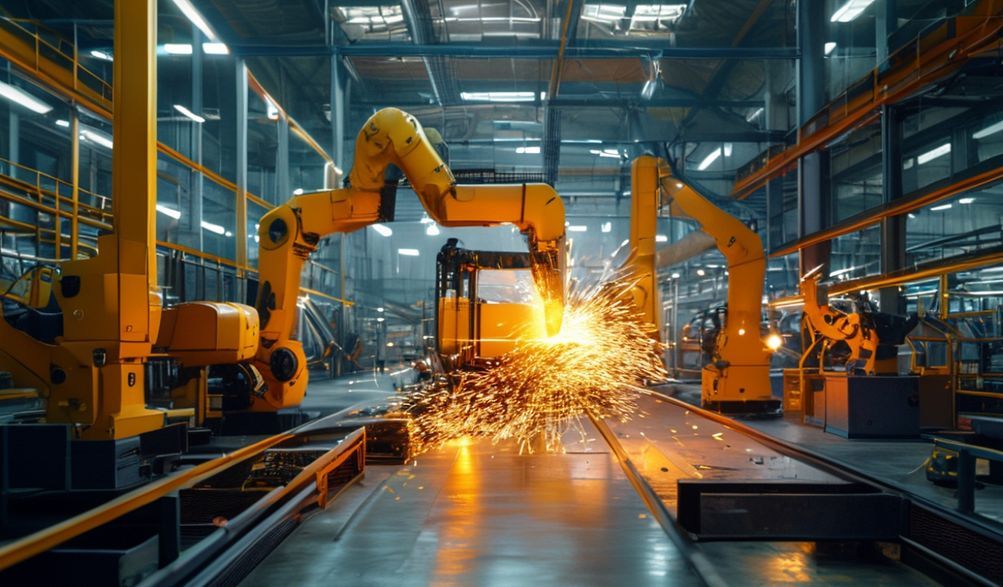
- The use of Computer Numerical Control (CNC) plasma cutters, robotic welding arms, and automated painting lines ensures part interchangeability, structural integrity, and a finish that resists corrosion.
- Modern factories can also reliably fulfill large orders and maintain inventory of common spare parts, which is crucial for your business continuity.
Deep Dive: Evaluating the FUDA Block Making Factory
As a prominent name in the block machinery sector, FUDA serves as a relevant example to apply our quality framework. Let’s evaluate its offerings against the established criteria.
Company Background and Industry Standing
FUDA Machinery Manufacturing Co., Ltd. is a Chinese-based manufacturer with a stated history of over two decades in construction machinery. The company positions itself as an integrated enterprise involved in R&D, production, and sales.
- Its market presence is global, with exports to regions including Africa, Southeast Asia, the Middle East, and South America—indicating an ability to adapt machines to diverse market needs and climatic conditions.
- Participation in international trade fairs (a common practice for manufacturers like FUDA) is a positive signal of its engagement with the global market and commitment to showcasing its technological developments.
Analysis of FUDA’s Machine Range and Technical Specifications
FUDA typically offers a wide product portfolio, which is a strength for catering to different business scales. Key categories often include:
- Machines manuelles/semi-automatiques : Lower-cost entry points for small-scale startups.
- Machines à blocs stationnaires entièrement automatiques : The core of most medium to large plants, featuring automatic material feeding, molding, and pallet return systems.
- Machines à blocs mobiles : For on-site production, a popular solution in many developing markets.
When examining technical specs from their published materials, a discerning buyer should focus on:
- Temps de cycle : How many blocks per hour/day can a specific model produce? Compare this against the power consumption for efficiency.
- Pressure Force (Kn): A key indicator of the machine’s ability to produce high-density, load-bearing blocks.
- Système de Vibration : The configuration (e.g., table vibration, combined mold vibration) and motor power determine how well the concrete is compacted and voids are eliminated.
- Niveau d'automatisation : Does it use a PLC with a user-friendly touchscreen? Is there an automatic pallet feeder and stacker?
Assessing FUDA’s Manufacturing and Quality Assurance
Publicly available information from FUDA highlights a focus on manufacturing infrastructure. They often emphasize:
- A large factory space equipped with modern machining centers.
- A stated commitment to QC with processes like ultrasonic testing for welds.
- Assembly lines dedicated to different machine models.
Implication This suggests a production environment geared towards volume and standardization. For a buyer, this translates to potential benefits in terms of consistent build quality and the ability to handle sizable orders. However, it underscores the necessity of verifying these claims through evidence like factory audit reports or customer testimonials specific to long-term machine performance.
After-Sales Support and Service Network
This is the ultimate test of a factory’s trustworthiness and long-term partnership value. FUDA, like many exporters, typically structures its support around:
- Garantie : Usually a 12-month warranty on the main frame and key components, which is industry-standard. The clarity of warranty terms (what’s included/excluded) is vital.
- Pièces de rechange : Availability of a comprehensive parts catalog and a commitment to supplying wear parts (like mold liners, springs, seals) is critical.
- Support technique : Provision of installation drawings, electrical diagrams, and operation manuals in English (or your required language). The availability of remote video support or on-site installation supervision (often at an extra cost) is a key differentiator.
- Formation : Offering training videos or manuals for operators and maintenance personnel reduces your startup risks.
Key Factors to Compare When Choosing Your Factory Partner
Armed with a general framework, your final decision requires a side-by-side comparison tailored to your unique situation.
Machine Performance vs. Your Project Requirements
A quality factory is one that provides the right machine for Votre needs, not just their best-selling model.
- Capacité de sortie : Match the machine’s daily production (e.g., 10,000 blocks vs. 50,000 blocks) to your sales forecasts and storage capacity.
- Types de blocs : Ensure the factory can provide molds for the specific block types (hollow, solid, paver, interlocking) demanded in your local market.
- Matériaux bruts : Confirm the machine is compatible with the aggregate sizes and cement types available in your region.
Total Cost of Ownership (TCO) Analysis
The purchase price is just the entry ticket. A quality factory saves you money over 5-10 years.
- Efficacité énergétique : Compare the total connected load (KwH) of shortlisted models. A slightly more expensive but efficient machine can have a significantly lower operating cost.
- Coûts d'entretien : Machines with standardized, readily available parts and accessible design for servicing will have lower downtime and maintenance expenses.
- Expected Lifespan: A machine built with 10mm steel plate and premium hydraulics from a quality factory will outlast a cheaper alternative by years, dramatically improving ROI.
Verifying Credentials and Seeking Proof
Trust, but verify. Due diligence is non-negotiable.
- Certifications : Request copies of ISO, CE, or other relevant quality management system certifications.
- References: Ask for contact information for 2-3 previous clients in a region similar to yours. Speak to them directly about machine performance and after-sales service.
- Visual Evidence: Request a live video tour of the factory floor, focusing on the assembly area for the model you’re interested in. Ask for close-up photos of weld points, the hydraulic station, and the control panel.
- Documentation: Review the product manual avant purchasing. Its clarity and detail are strong indicators of technical professionalism.
The Importance of Clear Communication and Customization
Evaluate the factory’s responsiveness and technical dialogue during the inquiry stage.
- Are they asking detailed questions about your project?
- Can they provide knowledgeable technical consultation on optimizing your production line?
- Are they willing and able to offer minor customizations, such as a different pallet size or a specific voltage requirement? This flexibility is a hallmark of a true partner.
Foire aux questions (FAQ)
Q1: What is the typical lead time for a machine from a factory like FUDA?
A : Lead times vary significantly based on model complexity, level of customization, and current order backlog. For a standard model, it can range from 30 to 60 days after down payment. A reputable factory will provide a clear, written production and shipping schedule upon order confirmation.
Q2: How can I verify the quality claims of a block machine factory remotely?
A : Beyond references, request: 1) High-resolution videos of a machine under test production, 2) Macro photos of welds and surface treatment, 3) Copies of component supplier certificates, 4) A virtual meeting with their head engineer to discuss your technical concerns.
Q3: Are machines from factories like FUDA suitable for starting a small block business?
A : Yes, quality factories typically offer scalable solutions. Starting with a robust manual or semi-automatic model from a reputable manufacturer is often smarter than buying a cheap, fully automatic line from an unknown source. It allows you to build capital and expertise, often with the option to upgrade within the same brand’s ecosystem later.
Q4: What after-sales support should I insist on before purchasing?
A : Secure a written agreement covering: 1) A detailed warranty certificate, 2) A complete spare parts price list, 3) Commitment to supply installation drawings and manuals, 4) Access to designated technical support contacts (email/WhatsApp), and 5) The option for paid on-site installation guidance if needed.
Conclusion
In conclusion, identifying a “good quality” concrete block making machine factory requires looking beyond glossy brochures to assess the synergy of robust engineering, transparent manufacturing processes, and unwavering post-purchase support. It is a holistic evaluation where material integrity, controlled production, and a proven service network are the true indicators of long-term value.
Factories like FUDA present a strong profile in the market, with an established product range and significant export experience that speaks to a certain level of capability. However, their suitability for your project is not automatic. The ultimate decision must be grounded in a thorough, side-by-side comparison against your specific checklist of quality benchmarks, applied equally to all shortlisted suppliers.
We encourage you to use this outline as a practical due diligence framework. Contact multiple factories with detailed, technical questions. Request concrete evidence of their claims. Prioritize the long-term partnership value and Total Cost of Ownership over the lowest initial price. By doing so, you invest not just in a machine, but in the reliable foundation of your block manufacturing business for years to come.
<