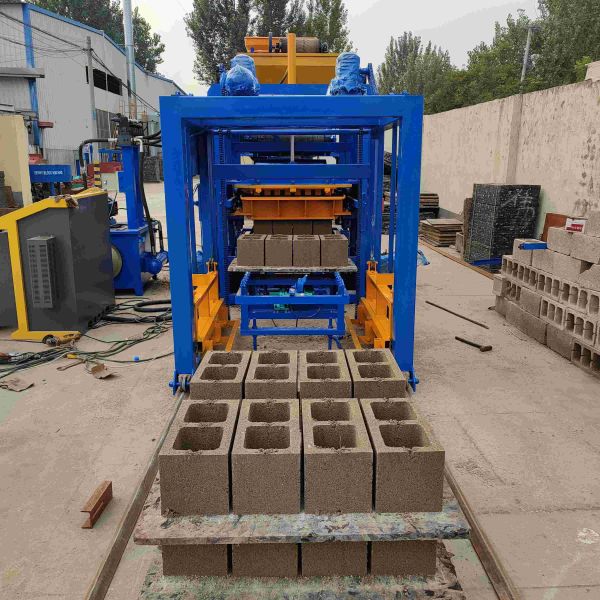
Technologie de fabrication de briques de cendres volantes
Introduction
Dans le paysage en évolution des matériaux de construction durables, les machines à fabriquer des briques de cendres volantes sont devenues une technologie essentielle, représentant la confluence de la responsabilité environnementale, de l'efficacité économique et de l'innovation industrielle. Pour les distributeurs, les concessionnaires et les spécialistes en approvisionnement, comprendre cette catégorie d'équipement spécifique est crucial pour répondre à la demande croissante du marché pour des solutions de construction écologiques. Contrairement aux machines conventionnelles axées uniquement sur les granulats, les machines à briques de cendres volantes sont conçues pour utiliser un sous-produit industriel — les cendres pulvérisées de la combustion du charbon — comme matière première principale.
Définition fondamentale et science des matériaux de base
Une machine à fabriquer des briques de cendres volantes est une presse industrielle spécialisée conçue pour produire des blocs de construction de haute qualité en utilisant les cendres volantes comme constituant principal, généralement combinées avec un plus faible pourcentage de chaux, de gypse, de ciment et d'eau. Son fonctionnement repose sur la réaction pouzzolanique, un processus chimique distinct de la prise purement hydraulique du béton ordinaire.
- La Réaction Pouzzolanique : Le Moteur Chimique
- Le principe scientifique fondamental est la réaction entre les cendres volantes—un matériau siliceux et alumineux—et la chaux (hydroxyde de calcium) en présence d’humidité. Cette réaction forme des hydrates de silicate de calcium (C-S-H) et des hydrates d’aluminate de calcium stables, qui sont les mêmes gels liants que l’on trouve dans le ciment Portland. Ce processus, connu sous le nom de réaction pouzzolanique, confère à la brique sa résistance structurelle et sa durabilité dans le temps. Le rôle de la machine est de créer les conditions physiques optimales (densité, contact intime des particules) pour que cette réaction se déroule efficacement.
- Les cendres volantes en tant que composant améliorant la performance
- Fly ash is not merely a filler; its spherical particle morphology improves the workability and packing density of the mix, allowing for lower water demand. The fineness of the ash contributes to the formation of a dense micro-structure within the brick, resulting in low permeability, high ultimate strength, and excellent resistance to sulfate attack and alkali-silica reaction. The machinery must be precisely calibrated to harness these inherent material properties.
- Contrast with Traditional Fired Clay and Concrete Processes
- This technology diverges from two established paths: it eliminates the energy-intensive firing process of clay bricks and significantly reduces the Portland cement content compared to standard concrete blocks. The bricks are cured through steam or water misting at elevated temperatures (around 60-80°C) to accelerate the pozzolanic reaction, not through ambient hydration or kiln firing. This “autoclave-like” or accelerated curing is a key differentiator in the production cycle.
System Design and Operational Mechanics
Fly ash brick machinery is engineered to handle the specific characteristics of fine, powdery materials and to facilitate the necessary curing regime. The system is often a cohesive line integrating several stages.
- Raw Material Handling and Precision Batching
- Due to the fine, dusty nature of fly ash, the system requires enclosed or semi-enclosed material handling. This includes silos for fly ash and other powders (lime, cement), often with screw conveyors or pneumatic transfer systems to minimize dust emission. Precision weighing or volumetric batching is critical, as the chemical balance between fly ash and lime/cement is paramount for consistent strength development.
- The Mixing Phase: Achieving Homogeneity
- A high-intensity mixer, such as a pan mixer or a paddle mixer, is essential. It must thoroughly blend the dry powders (fly ash, lime/cement, possibly crushed bottom ash as filler) before adding a precise amount of water. The goal is to achieve a uniform, semi-dry mix with just enough moisture to initiate the pozzolanic reaction and allow for compaction, but not so much as to cause sticking or deformation.
- The Compaction Process: High-Pressure Densification
- This is the heart of the machine. A high-tonnage hydraulic press (often in the range of 80 to 300+ tons) applies immense pressure to the semi-dry mix in a steel mold. The pressure, significantly higher than that used for some conventional concrete blocks, achieves several goals:
- It compacts the fine particles to a very low void ratio, creating a dense matrix.
- It brings the reactive particles (fly ash and lime) into intimate contact.
- It forms the green brick with sufficient handling strength for transfer to curing.
Vibration is less commonly used than in aggregate-based machines, as the fine material responds best to direct static pressure.
- This is the heart of the machine. A high-tonnage hydraulic press (often in the range of 80 to 300+ tons) applies immense pressure to the semi-dry mix in a steel mold. The pressure, significantly higher than that used for some conventional concrete blocks, achieves several goals:
- The Curing System: Accelerated Strength Gain
- Post-compaction, the green bricks are not air-cured like standard concrete blocks. They are transferred to a curing chamber or stacked and covered with a curing blanket. Steam or warm water mist is applied at controlled temperatures and humidity for a period typically ranging from 18 to 24 hours. This elevated temperature curing rapidly accelerates the pozzolanic reaction, allowing the bricks to gain up to 70-80% of their final strength within a day, enabling rapid turnover and dispatch.
Product Characteristics and Market Advantages
Bricks produced from this technology possess a unique set of properties that define their market positioning.
- Superior Technical Specifications
- Résistance à la compression élevée : Can consistently exceed 10 MPa and reach up to 25 MPa, suitable for multi-story load-bearing construction.
- Faible absorption d'eau Typically below 15%, and often as low as 6-8%, leading to excellent durability, reduced efflorescence, and better thermal insulation.
- Dimensional Accuracy and Smooth Finish: The fine material and high-pressure compaction yield bricks with sharp edges, uniform size, and a smooth surface that can reduce plastering costs.
- Light Weight: Compared to clay bricks of similar strength, fly ash bricks are lighter, reducing dead load on structures and easing handling.
- Compelling Economic and Environmental Propositions
- Rentabilit The primary raw material (fly ash) is often a low-cost or negatively-priced industrial waste, substantially reducing input costs. Lower cement consumption also contributes to savings.
- Durabilité environnementale : The process utilizes a waste product, conserving topsoil (unlike clay excavation) and reducing landfill burden. It also avoids the CO2 emissions associated with clay brick firing and significant cement production, aligning with green building certifications.
- Efficacité énergétique : The low-temperature steam curing consumes far less energy than operating a high-temperature kiln for clay bricks.
Strategic Considerations for Deployment and Investment
For distributors advising clients, several factors are crucial for successful project implementation.
- Proximity to Fly Ash Source and Quality Assurance
- The economic model hinges on reliable, consistent, and cost-effective access to fly ash, typically from a nearby thermal power plant. The chemical composition (Class F or Class C) and consistency of the ash must be verified, as variability can affect brick quality. Establishing a quality control protocol for incoming fly ash is non-negotiable.
- Machine Selection Based on Scale and Product Mix
- Machines range from semi-automatic stationary presses suitable for small to medium enterprises (SMEs) to fully automatic lines with robotic handling for large-scale production. The choice must align with target output and whether the client plans to produce standard bricks, interlocking blocks, or pavers (requiring different mold sets).
- Integration into the Circular Economy
- This technology can be positioned as a turnkey solution for power plants or industrial clusters looking to manage their fly ash output responsibly. It represents a clear case of waste-to-wealth, offering an attractive proposition for environmentally conscious investors and governments promoting sustainable industries.
Conclusion
The fly ash brick making machine is a sophisticated response to modern challenges of resource efficiency and sustainable construction. It is a specialized system that transforms an industrial by-product into a high-performance building material through precise engineering and controlled chemistry. For the knowledgeable distributor, this technology represents a significant opportunity to cater to a growing niche focused on green building solutions, cost-effective production, and regulatory compliance. Success in this domain requires moving beyond general equipment knowledge to a deep understanding of pozzolanic chemistry, localized material supply chains, and the specific curing infrastructure. By providing clients with holistic solutions that encompass the right machinery, technical know-how, and quality control frameworks, distributors can play a leading role in advancing sustainable construction practices while building profitable and resilient businesses for their partners.
Foire aux questions (FAQ)
Q1: Is a fly ash brick machine the same as a concrete block machine?
A : While they share similarities (hydraulic pressing), they are designed for fundamentally different material systems. A machine à briques de cendres volantes is optimized for fine, powdery mixes, employs very high pressure, and is integrated with a controlled curing system (steam/heat). A standard machine à blocs de béton is designed for granular aggregates, often uses vibration, and relies on ambient or simple water curing. Retrofitting one to do the other’s job effectively is usually not feasible.
Q2: What are the main quality checks for incoming fly ash?
A : Critical parameters include:
- Loss on Ignition (LOI): Measures unburned carbon content. High LOI can impair strength and increase water demand.
- Fineness: Affects reactivity and water requirement.
- Chemical Composition: Specifically the silica, alumina, and calcium oxide content, which determine its pozzolanic class and reactivity.
- Cohérence : Batch-to-batch uniformity is vital for stable production.
Q3: Can these bricks be used for foundation and external wall construction?
A : Absolutely. High-quality fly ash bricks with low water absorption and high compressive strength (e.g., above 10-12 MPa) are perfectly suitable for load-bearing applications, including foundations, plinths, and external walls. Their durability and resistance to moisture penetration make them an excellent choice for these critical structural elements, provided they are produced to relevant national standards.
Q4: What is the typical energy consumption for the steam curing process?
A : Energy consumption varies with scale and insulation efficiency of the curing chamber. Modern, well-insulated steam curing systems can be quite efficient. The energy required to raise bricks to 60-80°C and maintain humidity is a fraction of the energy needed to fire clay bricks to over 900°C. The total energy footprint of the finished brick, including curing, is significantly lower than that of a fired clay counterpart.
Q5: How does the cost structure of a fly ash brick plant differ from a clay brick kiln?
A : The cost profiles are inverted:
- Fly Ash Plant: High initial capital in machinery and curing infrastructure, but very low variable cost for raw materials (cheap/free ash, less cement). Labor costs are moderate, and energy costs are focused on curing, not firing.
- Clay Brick Kiln: Lower initial capital for basic kilns, but very high variable costs for fuel (coal, gas), substantial cost for clay (topsoil), and often higher labor. The fly ash model offers better long-term margin stability once the capital is amortized.