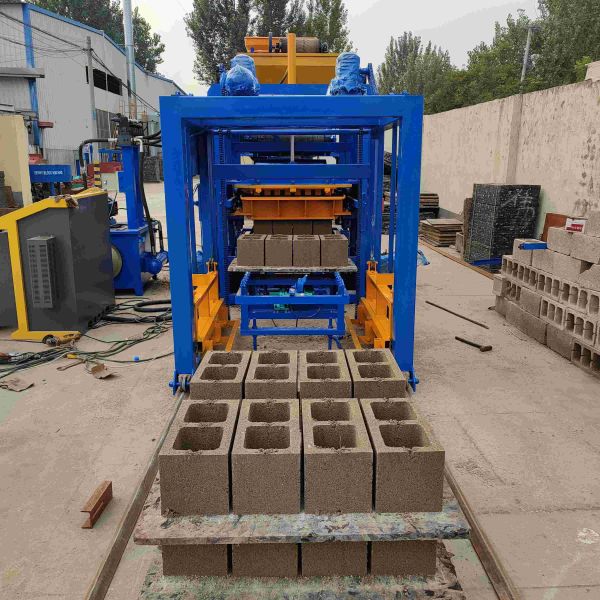
Công Nghệ Sản Xuất Gạch Từ Tro Bay
Giới thiệu
Trong bối cảnh phát triển của vật liệu xây dựng bền vững, máy móc sản xuất gạch tro bay đã nổi lên như một công nghệ then chốt, đại diện cho sự hội tụ của tinh thần trách nhiệm với môi trường, hiệu quả kinh tế và đổi mới công nghiệp. Đối với các nhà phân phối, đại lý và chuyên gia thu mua, việc hiểu rõ nhóm thiết bị đặc thù này là điều cần thiết để đáp ứng nhu cầu thị trường ngày càng tăng đối với các giải pháp xây dựng thân thiện với môi trường. Khác với máy móc thông thường chỉ tập trung vào cốt liệu, máy sản xuất gạch tro bay được thiết kế để sử dụng một sản phẩm phụ công nghiệp - tro nhiên liệu nghiền mịn từ quá trình đốt than - làm nguyên liệu chính.
Định Nghĩa Cơ Bản và Khoa Học Vật Liệu Cốt Lõi
Máy sản xuất gạch tro bay là một loại máy ép công nghiệp chuyên dụng, được thiết kế để sản xuất các khối xây dựng chất lượng cao với thành phần chính là tro bay, thường kết hợp với một tỷ lệ nhỏ vôi, thạch cao, xi măng và nước. Nguyên lý hoạt động của nó dựa trên phản ứng pozzolan, một quá trình hóa học khác biệt so với quá trình đông kết thủy lực thuần túy của bê tông thông thường.
- Phản Ứng Pozzolan: Động Cơ Hóa Học
- Nguyên lý khoa học cốt lõi là phản ứng giữa tro bay - một vật liệu chứa silic và nhôm - với vôi (canxi hydroxit) trong điều kiện có độ ẩm. Phản ứng này tạo thành các hydrat silicat canxi (C-S-H) và hydrat aluminat canxi ổn định, vốn là các gel kết dính tương tự như trong xi măng Portland. Quá trình này, được gọi là phản ứng pozzolan, mang lại cho viên gạch độ bền cấu trúc và khả năng chịu đựng theo thời gian. Vai trò của máy móc là tạo ra các điều kiện vật lý tối ưu (độ đặc, tiếp xúc hạt mật thiết) để phản ứng này diễn ra hiệu quả.
- Tro bay như một thành phần tăng cường hiệu suất
- Tro bay không chỉ là chất độn; hình thái hạt hình cầu của nó cải thiện tính công tác và mật độ đóng gói của hỗn hợp, cho phép giảm nhu cầu nước. Độ mịn của tro góp phần hình thành cấu trúc vi mô dày đặc trong gạch, mang lại độ thấm thấp, cường độ cuối cùng cao và khả năng chống lại sự tấn công của sunfat và phản ứng kiềm-silica tuyệt vời. Máy móc phải được hiệu chuẩn chính xác để khai thác các đặc tính vốn có của vật liệu này.
- 对比传统烧制粘土和混凝土工艺
- This technology diverges from two established paths: it eliminates the energy-intensive firing process of clay bricks and significantly reduces the Portland cement content compared to standard concrete blocks. The bricks are cured through steam or water misting at elevated temperatures (around 60-80°C) to accelerate the pozzolanic reaction, not through ambient hydration or kiln firing. This “autoclave-like” or accelerated curing is a key differentiator in the production cycle.
System Design and Operational Mechanics
Fly ash brick machinery is engineered to handle the specific characteristics of fine, powdery materials and to facilitate the necessary curing regime. The system is often a cohesive line integrating several stages.
- Raw Material Handling and Precision Batching
- Due to the fine, dusty nature of fly ash, the system requires enclosed or semi-enclosed material handling. This includes silos for fly ash and other powders (lime, cement), often with screw conveyors or pneumatic transfer systems to minimize dust emission. Precision weighing or volumetric batching is critical, as the chemical balance between fly ash and lime/cement is paramount for consistent strength development.
- The Mixing Phase: Achieving Homogeneity
- A high-intensity mixer, such as a pan mixer or a paddle mixer, is essential. It must thoroughly blend the dry powders (fly ash, lime/cement, possibly crushed bottom ash as filler) before adding a precise amount of water. The goal is to achieve a uniform, semi-dry mix with just enough moisture to initiate the pozzolanic reaction and allow for compaction, but not so much as to cause sticking or deformation.
- The Compaction Process: High-Pressure Densification
- This is the heart of the machine. A high-tonnage hydraulic press (often in the range of 80 to 300+ tons) applies immense pressure to the semi-dry mix in a steel mold. The pressure, significantly higher than that used for some conventional concrete blocks, achieves several goals:
- It compacts the fine particles to a very low void ratio, creating a dense matrix.
- It brings the reactive particles (fly ash and lime) into intimate contact.
- It forms the green brick with sufficient handling strength for transfer to curing.
Vibration is less commonly used than in aggregate-based machines, as the fine material responds best to direct static pressure.
- This is the heart of the machine. A high-tonnage hydraulic press (often in the range of 80 to 300+ tons) applies immense pressure to the semi-dry mix in a steel mold. The pressure, significantly higher than that used for some conventional concrete blocks, achieves several goals:
- The Curing System: Accelerated Strength Gain
- Post-compaction, the green bricks are not air-cured like standard concrete blocks. They are transferred to a curing chamber or stacked and covered with a curing blanket. Steam or warm water mist is applied at controlled temperatures and humidity for a period typically ranging from 18 to 24 hours. This elevated temperature curing rapidly accelerates the pozzolanic reaction, allowing the bricks to gain up to 70-80% of their final strength within a day, enabling rapid turnover and dispatch.
Product Characteristics and Market Advantages
Bricks produced from this technology possess a unique set of properties that define their market positioning.
- Superior Technical Specifications
- Độ Bền Nén Cao: Can consistently exceed 10 MPa and reach up to 25 MPa, suitable for multi-story load-bearing construction.
- Khả năng hấp thụ nước thấp Typically below 15%, and often as low as 6-8%, leading to excellent durability, reduced efflorescence, and better thermal insulation.
- Dimensional Accuracy and Smooth Finish: The fine material and high-pressure compaction yield bricks with sharp edges, uniform size, and a smooth surface that can reduce plastering costs.
- Light Weight: Compared to clay bricks of similar strength, fly ash bricks are lighter, reducing dead load on structures and easing handling.
- Compelling Economic and Environmental Propositions
- Hiệu quả Chi phí: The primary raw material (fly ash) is often a low-cost or negatively-priced industrial waste, substantially reducing input costs. Lower cement consumption also contributes to savings.
- Tính Bền vững Môi trường: The process utilizes a waste product, conserving topsoil (unlike clay excavation) and reducing landfill burden. It also avoids the CO2 emissions associated with clay brick firing and significant cement production, aligning with green building certifications.
- Hiệu suất Năng lượng: The low-temperature steam curing consumes far less energy than operating a high-temperature kiln for clay bricks.
Strategic Considerations for Deployment and Investment
For distributors advising clients, several factors are crucial for successful project implementation.
- Proximity to Fly Ash Source and Quality Assurance
- The economic model hinges on reliable, consistent, and cost-effective access to fly ash, typically from a nearby thermal power plant. The chemical composition (Class F or Class C) and consistency of the ash must be verified, as variability can affect brick quality. Establishing a quality control protocol for incoming fly ash is non-negotiable.
- Machine Selection Based on Scale and Product Mix
- Machines range from semi-automatic stationary presses suitable for small to medium enterprises (SMEs) to fully automatic lines with robotic handling for large-scale production. The choice must align with target output and whether the client plans to produce standard bricks, interlocking blocks, or pavers (requiring different mold sets).
- Integration into the Circular Economy
- This technology can be positioned as a turnkey solution for power plants or industrial clusters looking to manage their fly ash output responsibly. It represents a clear case of waste-to-wealth, offering an attractive proposition for environmentally conscious investors and governments promoting sustainable industries.
Conclusion
The fly ash brick making machine is a sophisticated response to modern challenges of resource efficiency and sustainable construction. It is a specialized system that transforms an industrial by-product into a high-performance building material through precise engineering and controlled chemistry. For the knowledgeable distributor, this technology represents a significant opportunity to cater to a growing niche focused on green building solutions, cost-effective production, and regulatory compliance. Success in this domain requires moving beyond general equipment knowledge to a deep understanding of pozzolanic chemistry, localized material supply chains, and the specific curing infrastructure. By providing clients with holistic solutions that encompass the right machinery, technical know-how, and quality control frameworks, distributors can play a leading role in advancing sustainable construction practices while building profitable and resilient businesses for their partners.
Các Câu Hỏi Thường Gặp (FAQ)
Q1: Is a fly ash brick machine the same as a concrete block machine?
A: While they share similarities (hydraulic pressing), they are designed for fundamentally different material systems. A fly ash brick machine is optimized for fine, powdery mixes, employs very high pressure, and is integrated with a controlled curing system (steam/heat). A standard máy sản xuất khối bê tông is designed for granular aggregates, often uses vibration, and relies on ambient or simple water curing. Retrofitting one to do the other’s job effectively is usually not feasible.
Q2: What are the main quality checks for incoming fly ash?
A: Critical parameters include:
- Loss on Ignition (LOI): Measures unburned carbon content. High LOI can impair strength and increase water demand.
- Fineness: Affects reactivity and water requirement.
- Chemical Composition: Specifically the silica, alumina, and calcium oxide content, which determine its pozzolanic class and reactivity.
- Tính nhất quán Batch-to-batch uniformity is vital for stable production.
Q3: Can these bricks be used for foundation and external wall construction?
A: Absolutely. High-quality fly ash bricks with low water absorption and high compressive strength (e.g., above 10-12 MPa) are perfectly suitable for load-bearing applications, including foundations, plinths, and external walls. Their durability and resistance to moisture penetration make them an excellent choice for these critical structural elements, provided they are produced to relevant national standards.
Q4: What is the typical energy consumption for the steam curing process?
A: Energy consumption varies with scale and insulation efficiency of the curing chamber. Modern, well-insulated steam curing systems can be quite efficient. The energy required to raise bricks to 60-80°C and maintain humidity is a fraction of the energy needed to fire clay bricks to over 900°C. The total energy footprint of the finished brick, including curing, is significantly lower than that of a fired clay counterpart.
Q5: How does the cost structure of a fly ash brick plant differ from a clay brick kiln?
A: The cost profiles are inverted:
- Fly Ash Plant: High initial capital in machinery and curing infrastructure, but very low variable cost for raw materials (cheap/free ash, less cement). Labor costs are moderate, and energy costs are focused on curing, not firing.
- Clay Brick Kiln: Lower initial capital for basic kilns, but very high variable costs for fuel (coal, gas), substantial cost for clay (topsoil), and often higher labor. The fly ash model offers better long-term margin stability once the capital is amortized.