
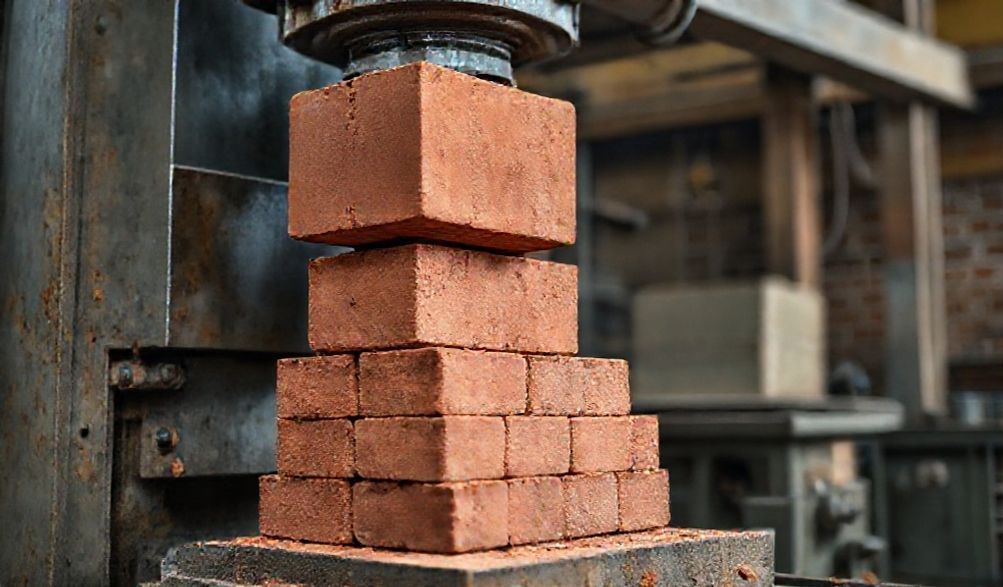
Le guide complet de la fabrication de briques par machine : efficacité, types et processus
Introduction
L'industrie mondiale de la construction pose plus de 1 500 milliards de briques annuellement, une demande fondamentale qui a catalysé une transition profonde du moulage manuel traditionnel vers la production mécanisée. Ce guide de lamachine à fabriquer des briquesest compilé à partir de décennies d'expérience collective dans l'industrie, de spécifications techniques et de données opérationnelles provenant d'usines performantes à travers le monde. Ici, nous définissons la « fabrication de briques par machine » comme le processus automatisé ou semi-automatisé de production de briques à l'aide de machines spécialisées, une méthode qui a révolutionné la constance, l'échelle et l'économie dans le secteur de la construction.
Que vous soyez un entrepreneur évaluant la production sur site, un chef d'entreprise en construction développant vos activités, un ingénieur civil spécifiant des matériaux ou un gestionnaire de projet optimisant les coûts, ce guide constitue votre ressource complète. Nous analyserons les avantages, explorerons les principaux types de machinerie, détaillerons le processus de production étape par étape et fournirons un cadre critique pour la sélection et l'entretien des équipements. Notre objectif est de vous doter des connaissances nécessaires pour prendre des décisions éclairées et rentables pour vos projets et entreprises.
Pourquoi choisir des briques fabriquées à la machine ? Avantages par rapport aux méthodes manuelles
La transition de la production manuelle à la production mécanisée de briques n'est pas simplement un changement d'échelle; c'est une amélioration fondamentale de la qualité, de l'économie et des capacités. Comprendre ces avantages est essentiel pour justifier l'investissement.
Cohérence et qualité inégalées
Les briques fabriquées à la machine sont synonymes de précision. Le processus garantit :
* Précision dimensionnelle :Chaque brique respecte des spécifications précises de longueur, largeur et hauteur, ce qui simplifie la pose et réduit l'utilisation de mortier.
* Compactage uniforme :La pression hydraulique ou mécanique compacte la matière première uniformément dans toute la brique, éliminant les points faibles.
* Intégrité structurelle constante :Cette densité uniforme se traduit par une résistance à la compression fiable, lot après lot, garantissant des performances prévisibles dans les murs porteurs.
Augmentation spectaculaire de la production
La vitesse est là où la machinerie laisse le travail manuel derrière. La production se mesure en briques par heure, non par jour.
* Une presse manuelle de base pourrait produire entre 500 et 1 000 briques lors d’un quart de travail de 8 heures.
* Une machine semi-automatique peut produire de 2 000 à 5 000 briques dans la même période.
* Une usine entièrement automatisée peut produire plus de 20 000 briques par jour avec une intervention humaine minimale.
Cette efficacité vous permet de respecter les délais serrés des projets et d'accepter des contrats plus importants.
Économies importantes de main-d'œuvre et de coûts
Bien que l'investissement initial soit plus élevé, les avantages économiques à long terme sont convaincants.
* Réduction de la dépendance à la main-d'œuvre qualifiéeLa machine standardise la compétence, réduisant la dépendance envers les mouleurs hautement expérimentés.
* Coût unitaire inférieur :À grande échelle, le coût de production par brique chute considérablement grâce à une production accrue et une main-d'œuvre optimisée.
* Retour sur investissement à long terme :Le retour sur investissement est réalisé grâce à une production constante et à grand volume, remboursant souvent le coût de la machine en quelques années pour les opérations actives.
Contrôle amélioré des matériaux et polyvalence
Les machines offrent un contrôle supérieur sur les variables de production.
* Contrôle précis du mélange :Vous pouvez reproduire avec précision les mélanges pour le ciment, le sable, les granulats ou l'argile, en garantissant une résistance et une durabilité optimales.
* Adaptabilité :Avec un simple changement de moule, une seule machine peut produire divers produits : blocs pleins, blocs creux, briques à emboîtement pour empilage à sec ou dalles de pavage. Cette flexibilité vous permet de répondre à divers besoins du marché.
Types de machines à fabriquer des briques
Choisir la bonne machine dépend de la compréhension des catégories disponibles. Chaque type correspond à une échelle opérationnelle et à un modèle d'affaires spécifique.
Machines à fabriquer des briques entièrement automatiques
Ce sont des chaînes de production complètes et intégrées.
* Description :Ils automatisent l'ensemble du processus, de l'alimentation et du mélange des matières premières au transport, au moulage, à la cuisson, et parfois même au palettisation. Ils utilisent souvent des automates programmables (PLC) pour le fonctionnement.
* Cas d'utilisation idéaux :Grandes usines de fabrication de briques, fournisseurs commerciaux de blocs à grand volume et projets d'infrastructure majeurs disposant d'un site de production permanent et dédié.
Machines à fabriquer des briques semi-automatiques
The perfect balance between automation and affordability.
* Description : The core molding and compaction process is mechanized (often via a hydraulic system), but certain steps like feeding the raw material into the hopper or removing and stacking “green” bricks require operator assistance.
* Cas d'utilisation idéaux : Medium-scale enterprises, growing construction businesses, and entrepreneurs looking to scale up from manual production without the capital outlay for a full automatic line.
Manual (Hand-Operated) Brick Press Machines
The entry point into mechanized production.
* Description : These are lever-operated or small hydraulic press machines where the operator provides the physical force or controls a manual hydraulic pump to compact the material in a mold.
* Cas d'utilisation idéaux : Small startups, community-led projects, rural construction with limited electricity, and operations with very low daily brick requirements. They are low-cost and portable.
Machines à fabriquer des briques mobiles
Production on wheels, for maximum logistical efficiency.
* Description : These are compact, trailer-mounted units (often semi-automatic) that can be towed directly to a construction site.
* Cas d'utilisation idéaux : Remote construction sites (like dams or roads), large housing projects where transporting finished bricks is costly, and businesses that serve multiple, dispersed locations. They slash transportation costs dramatically.
The Step-by-Step Machine Brick Making Process
A deep dive into the process reveals the engineering behind a simple brick. This procedural knowledge is crucial for quality control.
Stage 1: Raw Material Selection and Preparation
The foundation of a quality brick lies in its raw materials.
* Selection: The primary material varies—it could be clay, a cement-sand-aggregate mix, or fly ash. Soil testing for clay (checking composition, plasticity) is essential.
* Préparation : Raw materials are crushed (if needed), screened to remove debris and oversized particles, and then proportioned according to a precise mix design.
Stage 2: Mixing and Conditioning
Consistency is born here.
* The proportioned materials are fed into a mixer—a pan mixer or paddle mixer is common.
* Water is added gradually to achieve the optimal moisture content (typically 8-10% for cement-based blocks). The goal is a homogenous, workable mix that will compact well without being soggy.
Stage 3: Molding and Compaction
This is the heart of machine à fabriquer des briques.
* The conditioned mix is fed into the machine’s hopper.
* It is then conveyed into a mold cavity (the shape of the final brick).
* A hydraulic ram or mechanical press applies intense pressure (often measured in tons) to compact the mix, forming a dense, coherent “green brick.”
* The mold is then lifted or opened, and the green brick is ejected onto a pallet or conveyor.
Stage 4: Curing and Drying
Strength development happens in this critical phase.
* For Cement Bricks (Curing): Green bricks are moved to a curing chamber or area where they are kept moist and at a controlled temperature for 14-28 days. This allows the cement to hydrate fully and achieve its design strength.
* For Clay Bricks (Drying & Firing): Green bricks must be dried slowly to prevent cracking before being fired in a kiln at high temperatures (900°C – 1200°C) to achieve hardness and durability.
Stage 5: Storage and Palletizing
- Once fully cured or fired, bricks are stacked on pallets using forklifts or manual labor.
- They should be stored in a flat, dry area, with stacks stable and not exceeding safe heights to prevent toppling and edge damage.
Key Factors When Selecting a Brick Making Machine
Choosing equipment is a strategic decision. This framework will guide your evaluation.
Évaluer vos besoins en capacité de production
- Calcul. Analyze your current and projected project pipelines. How many bricks do you need per day or per month? Always choose a machine with a capacity 20-30% above your calculated need to account for growth and maintenance downtime.
Understanding Raw Material Availability
- Match Machine to Material: Is your region rich in clay? Then a clay brick machine (possibly with a kiln) is suitable. Is cement and sand more accessible? Opt for a concrete block machine. Some machines are specifically designed for fly ash or recycled aggregates.
Power Source Considerations: Electric, Diesel, or Hybrid?
- Électrique : Cleaner, quieter, and lower operating cost, but requires a reliable grid connection.
- Diesel: Offers complete independence and mobility, ideal for remote sites, but has higher fuel costs and emissions.
- Hybride : Some models offer the flexibility to switch between power sources, providing excellent adaptability.
Budget Analysis: Machine Cost vs. Total Investment
The machine’s price tag is just one component. Factor in:
* Upfront machine cost
* Installation and foundation costs
* Auxiliary equipment (mixer, conveyor, pallets)
* Cost of raw material handling equipment
* Maintenance budget and spare parts
* Operator training costs
Supplier Reputation and After-Sales Support
This is perhaps the most critical factor for long-term success and directly impacts Fiabilité.
* Choose a supplier with a proven track record and technical expertise.
* Verify the availability of spare parts and the responsiveness of their service team.
* A solid warranty and the provision of comprehensive training (installation, operation, maintenance) are non-negotiable for protecting your investment.
Maintaining Your Brick Making Machine for Longevity
Regular maintenance is the cheapest insurance policy. It prevents costly breakdowns and ensures consistent brick quality.
Daily and Weekly Maintenance Checklists
- Daily: Clean the machine thoroughly at the end of each shift, especially the mold cavity and hopper. Check hydraulic oil levels and look for leaks. Visually inspect all components.
- Weekly: Lubricate all moving parts as per the manual. Check and tighten all bolts and nuts. Inspect the mold for wear or damage.
Troubleshooting Common Operational Issues
- Cracked Bricks: Often caused by incorrect moisture content (too wet or too dry) in the mix or excessive vibration during ejection.
- Poor Compaction/Weak Bricks: Insufficient hydraulic pressure, incorrect mix proportions, or overly dry material.
- Sticking in Mold: Worn mold liners, insufficient release agent, or a mix that is too wet.
- Hydraulic Leaks: Check and replace worn seals or hoses immediately.
Seasonal Maintenance Tips
- Humid/Rainy Seasons: Protect electrical components from moisture. Cover the machine when not in use. Consider using rust-preventative sprays on exposed metal.
- Freezing Conditions: If using water in the mix, ensure all lines are drained to prevent freezing and cracking. Store the machine in a sheltered location if possible.
Frequently Asked Questions (FAQ) About Machine Brick Making
Q1: What is the average cost of setting up a small-scale brick making machine plant?
Costs vary widely based on automation. A basic manual press setup can start from $2,000 – $5,000. A semi-automatic operation with a mixer and basic equipment might range from $15,000 to $50,000. Fully automatic plants begin at $100,000+. Key variables are machine type, power source, and required auxiliary equipment.
Q2: Can brick making machines use recycled materials like fly ash or construction waste?
Absolutely. Fly ash brick machines are specifically designed to use this industrial byproduct, creating an eco-friendly product. Certain concrete block machines can also incorporate processed construction and demolition (C&D) waste as aggregate, supporting circular economy principles in construction.
Q3: How many workers are needed to operate a semi-automatic brick making machine?
Typically, a crew of 3-5 is efficient. Roles include: 1-2 workers feeding the mixer and hopper, 1 operator controlling the machine, and 1-2 workers removing and stacking green bricks for curing.
Q4: What is the typical payback period for an investment in a brick making machine?
The payback period can range from 1 to 3 years for a well-managed operation. It depends heavily on local brick market prices, your production volume and utilization rate, operational efficiency, and raw material costs. High-demand areas with efficient production see faster returns.
Q5: Are machine-made bricks as strong as traditional fired clay bricks?
Yes, and often stronger. While high-quality fired clay bricks are excellent, machine-made cement concrete blocks or compressed earth blocks can be engineered to meet or exceed standard compressive strength requirements (e.g., ASTM C90 for concrete masonry units). The key is proper mix design, compaction, and curing.
Conclusion
Machine brick making represents a transformative leap for the construction sector, delivering unparalleled consistency, scalability, and cost-effectiveness. Success in this endeavor, however, hinges on two pillars: deep knowledge of the process and a strategic partnership with reliable equipment and suppliers.
By understanding the types of machines, the science of the production process, and the critical factors in selection and maintenance, you are equipped to make a decision that will build the foundation for your projects—and your business—for years to come. This investment is not just in metal and hydraulics; it’s an investment in precision, efficiency, and growth.
Ready to move from theory to action? Contact our industry specialists today for a personalized consultation to match the ideal brick making machine to your specific production goals, budget, and local material conditions.
<