
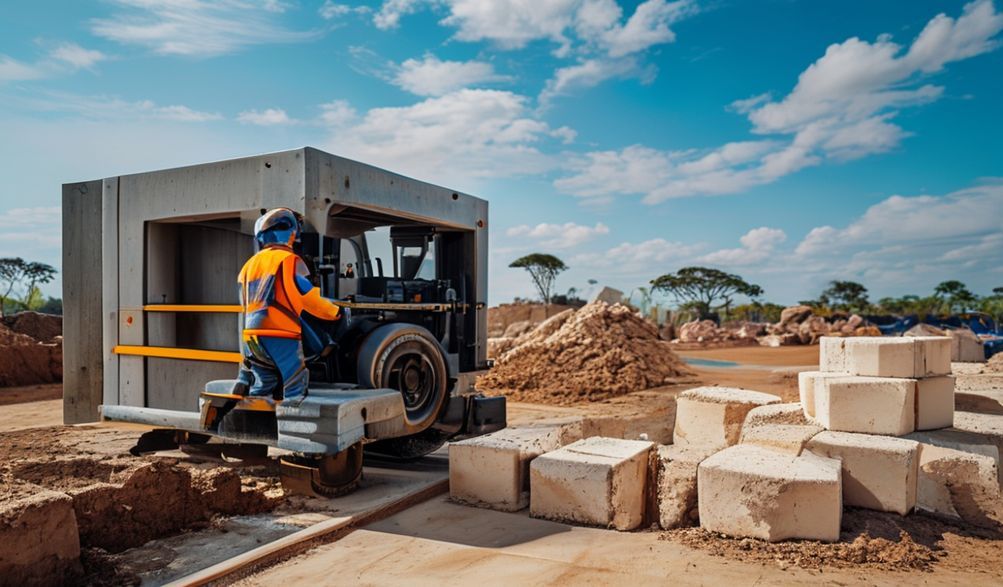
Votre Guide Ultime pour l'Achat d'une Machine à Fabriquer des Blocs de Ciment au Kenya | Conseils d'Experts de l'Usine FUDA
Introduction
Le secteur de la construction au Kenya est un moteur économique, contribuant à plus de 6,5 % du PIB national et affichant un taux de croissance impressionnant. Au cœur de cet essor se trouve un composant de construction fondamental : le modeste parpaing. La qualité, la régularité et le coût de ces blocs déterminent directement la solidité de nos maisons, la durabilité de nos bureaux et le rythme du développement national.
Pourtant, pour de nombreux constructeurs, entrepreneurs et aspirants chefs d'entreprise, atteindre cette qualité est un combat permanent. Le marché est truffé de défis : des blocs de qualité inférieure qui compromettent l'intégrité structurelle, des coûts de production exorbitants qui grignotent les marges, et le cauchemar récurrent des machines peu fiables qui interrompent les projets et font perdre de l'argent. Le rêve d'une entreprise de production de blocs rentable et efficace peut sembler hors de portée.
C'est là que l'expertise fait la différence. S'appuyant sur des décennies d'expérience technique spécialisée de FUDA dans la technologie de fabrication de blocs, ce guide complet est conçu pour aller à l'essentiel. Nous ne sommes pas seulement un fournisseur ; nous sommes votre partenaire technique. Ici, nous allions savoir-faire industriel et connaissance terrain pour vous permettre de réaliser un investissement intelligent et éclairé.
Que vous recherchiez un robusteMachine à fabriquer des blocs de ciment à vendre au KenyaPour alimenter un grand développement ou démarrer une petite entreprise, cet article éclairera la voie. Notre objectif est de vous fournir les connaissances impartiales nécessaires pour choisir la machine parfaite parmi lesUsine de fabrication de blocs FUDAou de tout autre fournisseur de confiance, correspondant parfaitement à vos besoins spécifiques, à votre budget et à votre vision de croissance.
Comprendre les Machines à Blocs de Ciment : Types et Applications
Naviguer dans l'univers des machines de fabrication de blocs commence par comprendre les technologies fondamentales disponibles. Le choix idéal dépend de votre échelle de production, de votre budget et de votre niveau d'automatisation.
Manuel vs Semi-Automatique vs Entièrement Automatique : Machines à Fabriquer des Blocs
-
Machines à blocs manuelles :
- Opération :Entièrement actionné par l'homme. L'opérateur mélange, alimente et compacte le mélange de béton dans un moule avant d'éjecter manuellement le bloc.
- Coût :Investissement initial très faible.
- Sortie :Faible (généralement 200 à 500 blocs par équipe de 8 heures).
- Travail :Élevée. Physiquement exigeant et nécessite plusieurs opérateurs pour une production significative.
- Idéal Pour :Micro-entreprises, très petits projets personnels, ou régions avec des coûts de main-d'œuvre et de capital extrêmement bas. Non adapté à une production commerciale.
-
Machines semi-automatiques de fabrication de blocs :
- Opération :Le processus de compactage et de moulage du noyau est motorisé (généralement par électricité ou diesel), utilisant souvent un système de vibration et hydraulique. Les opérateurs alimentent manuellement la matière première et retirent les blocs finis.
- Coût :Modéré. Offre le meilleur équilibre entre abordabilité et efficacité pour la plupart des PME kényanes.
- Sortie :Moyen à Élevé (peut varier de 1 000 à plus de 4 000 blocs par poste de 8 heures, selon le modèle).
- Travail :Modéré. Nécessite moins d'effort physique que les machines manuelles, mais exige toujours des opérateurs attentifs.
- Idéal Pour :Le point idéal pour la plupart des entreprises kényanes. Parfait pour les entreprises de construction en pleine croissance, les chantiers de fabrication de blocs dédiés et les projets de coopératives de logement.
-
Machines à fabriquer des blocs entièrement automatiques :
- Opération :Les systèmes contrôlés par ordinateur gèrent l'alimentation, le mélange, le moulage, la cuisson et l'empilage avec une intervention humaine minimale. Ils font souvent partie d'une ligne de production complète.
- Coût :Investissement initial en capital élevé.
- Sortie :Très élevée (peut produire de 8 000 à plus de 20 000 blocs par poste).
- Travail : Low. Primarily for machine supervision, quality control, and maintenance.
- Idéal Pour : Large-scale block selling businesses, industrial parks, and major contractors supplying city-sized projects. Justified by very high, consistent demand.
Popular Block Types and Their Machine Requirements
The machine you choose must be capable of producing the blocks the market demands. In Kenya, several types are prevalent:
- Blocs creux : The most common for wall construction. Machines need strong vibration to ensure proper compaction around the hollow cores. Mold quality is critical for consistent wall thickness.
- Blocs Pleins : Used for foundations and heavy-load areas. Require machines with high pressure and vibration to achieve maximum density and strength.
- Interlocking Blocks (Soil-Cement or Concrete): Gaining popularity for cost-effective, mortar-less construction. Machines require precision molds to ensure the locking mechanism is accurate every time.
- Paving Bricks (Kerbstones, Grass Pavers): For landscaping, driveways, and roadways. Machines often have multi-cavity molds and may include special color-feeding systems.
A versatile machine from a supplier like FUDA will offer interchangeable molds, allowing you to pivot between block types as market opportunities shift.
Key Machine Components and Why Quality Matters
Never judge a machine by its paint job. Long-term performance depends on the quality of its core components:
- Le Moule : The heart of the machine. It must be made from high-grade, abrasion-resistant steel (like #45 steel) and precision-engineered. A poor-quality mold wears quickly, leading to misshapen blocks and costly, frequent replacements.
- Système de Vibration : Responsible for compacting the concrete mix and eliminating air pockets. Look for a system with adjustable frequency and amplitude. Powerful, balanced vibrators driven by quality motors (not just any motor) are essential for producing dense, strong blocks.
- Système Hydraulique : In semi- and fully-automatic machines, this provides the pressing force. A robust system with reliable pumps, valves, and cylinders ensures consistent block height and smooth operation. Leaky, underpowered hydraulics are a primary source of downtime.
- Cadre et Structure : The machine must be built from heavy-duty steel plate and channel to withstand constant vibration and shock loads without warping. A flimsy frame will lead to misalignment and breakdowns.
At FUDA, our manufacturing standard dictates the use of certified materials and CNC machining for critical parts. This engineering rigor is what transforms a simple machine into a durable asset.
Why Choose a FUDA Cement Block Making Machine in Kenya?
In a market with numerous options, partnership and proven performance are key differentiators. Here’s what sets a FUDA investment apart.
Excellence en Ingénierie et Conception Robuste
Our philosophy is built on over twenty years of focused expérience in block machinery design. Each FUDA machine is a product of iterative engineering:
- Test rigoureux : Components and assembled machines undergo stress tests far exceeding normal operating conditions.
- Matériaux de qualité supérieure : We specify industrial-grade bearings, sealed vibrator motors, and hardened steel for high-wear parts, ensuring longevity.
- Modular Design: This simplifies maintenance and repair. Critical components can be accessed and replaced without dismantling the entire machine, minimizing downtime.
Tailored for the Kenyan Market and Environment
We don’t sell generic machines; we provide solutions adapted for local realities:
- Power Flexibility: Our machines are configurable for Kenya’s 240V/50Hz single/three-phase grid. For areas with unstable power, we offer robust diesel-engine-driven models.
- Polyvalence des matériaux : They are engineered to perform optimally with locally available aggregates, including quarry dust, river sand, and pozzolana cement. Our technical team provides proven mix design ratios.
- Dust and Ruggedness: Enhanced sealing on bearings and electrical components protects against the fine dust prevalent in block yards, while corrosion-resistant treatments combat the elements.
Fueling Kenyan Business: From Employment to Entrepreneurship
Our greatest measure of success is your success. We have equipped numerous Kenyan clients, from individual entrepreneurs in Nakuru to large contractors in Nairobi.
- Testimonial – Mombasa: “Our FUDA semi-automatic machine runs 10 hours a day, six days a week. The consistency of the blocks has become our selling point. FUDA’s training got our team operational in days.” — Jamal, Coastal Builders Ltd.
- Impact : By providing reliable, efficient technology, we enable job creation, skills development, and the growth of local enterprises that form the backbone of the construction ecosystem.
Comprehensive After-Sales Support: Parts, Service, and Training
Our relationship begins at purchase, but our commitment is long-term. This is the cornerstone of our fiabilitéetAutorité.
- Detailed Training: We provide comprehensive operator and maintenance training, either through on-site guidance during installation or via clear video manuals and diagrams.
- Pièces de rechange authentiques : We maintain an inventory of critical spare parts, ensuring you are not sidelined for weeks waiting for a replacement.
- Technical Support Hotline: Our engineers are accessible to troubleshoot issues, helping you resolve minor problems quickly over the phone or video call.
Facteurs Critiques à Considérer Avant d'Acheter
Arm yourself with this checklist to evaluate your needs and any potential supplier.
Assessing Your Production Needs: Output Capacity (Blocks Per Hour)
Don’t just buy the biggest machine. Calculate realistically:
1. Current Demand: How many blocks do your ongoing projects require per week?
2. Growth Projection: What is your business target for the next 1-2 years?
3. Machine Cycle Time: A machine rated at 1,200 blocks per hour doesn’t account for loading, curing, and breaks. A practical output is 70-80% of the theoretical maximum.
Match the machine’s real-world output to your calculated demand with room for growth.
Power Source: Electric, Diesel, or Hybrid?
- Électrique : Cleaner, quieter, and lower operational cost where grid power is stable and affordable. Ideal for urban and peri-urban settings.
- Diesel : Higher fuel cost but offers complete independence from the grid. Essential for remote sites or areas with frequent power outages. Offers high torque.
- Hybride : Some models offer the flexibility to switch between power sources, providing a valuable contingency.
Space, Layout, and Operational Workflow
A machine is just one node in a production line. Plan for:
* Baie des Matières Premières: Storage for sand, aggregate, and cement, protected from the rain.
* Mixing Area: Space for a pan or drum mixer, typically close to the machine hopper.
* Production Floor: A hard, level surface (concrete slab) for the machine.
* Curing Area: A shaded, well-ventilated space to store freshly made blocks for 7-14 days. This area is often the largest.
Total Cost of Ownership: Beyond the Sticker Price
The machine price is just the entry ticket. A smart buyer budgets for:
* Capital Costs: Machine price, shipping (CIF Mombasa), customs clearance & duty, and installation.
* Coûts opérationnels : Electricity/Diesel, routine maintenance (grease, filters), labor, and raw materials.
* Contingency Costs: Budget for genuine spare parts (mold liners, vibrator motors) as part of annual upkeep.
Navigating the Purchase Process with Confidence
How to Verify Supplier and Machine Credibility
- Request Certifications: Ask for ISO quality management certificates, test reports for components like motors, and business licenses.
- Seek Evidence: Demand real photos and videos of the machine in operation, not just catalog images. A live video call to the factory floor is a great trust-builder.
- Check References: Ask for contact information for past clients in East Africa. Follow up with them.
Essential Questions to Ask Your Supplier
- “What is the exact composition and hardness of the steel used for the mold?”
- “What is the brand and model of the vibrator motor and hydraulic pump? Are they standard brands I can source locally if needed?”
- “Can you provide a detailed breakdown of the warranty—what is covered, for how long, and what is the process?”
- “What is included in the delivery (FOB/ CIF)? Are installation manuals and basic tools included?”
- “Do you have an agent or recommended technician in Kenya for support?”
Understanding Shipping, Customs, and Installation in Kenya
Work with a supplier experienced in exporting to Kenya. They should handle:
* Professional export packaging (wooden crate).
* All shipping documentation (Bill of Lading, Commercial Invoice, Packing List).
* Guidance on the necessary customs processes at the Port of Mombasa. You will typically need a Clearing Agent. Factor in port charges and Kenya Revenue Authority (KRA) import duty.
Financing and ROI Projections for Your Investment
While direct financing varies, consider:
* Business Loans: Approach local banks with a solid business plan.
* Supplier Arrangements: Some suppliers offer phased payment plans.
* ROI Calculation:
* Revenue: (Selling Price per Block – Cost of Raw Materials per Block) x Monthly Production.
* Costs: Subtract monthly operational costs (power, labor, maintenance) and loan repayments.
* Période de récupération : Divide the total initial investment by your average monthly profit. A well-run block yard with a semi-automatic machine can often see a payback period of 12-24 months.
Foire aux Questions (FAQ)
Q1: What is the price range for a cement block making machine in Kenya?
A: Prices vary significantly based on automation and capacity. A basic manual press can start from KES 80,000, a quality semi-automatic machine from a brand like FUDA typically ranges between KES 800,000 to KES 3.5 million, while large fully automatic lines can be KES 5 million+. Always request a detailed quotation based on your specific required output and configuration.
Q2: Can FUDA machines use local Kenyan materials like quarry dust and pozzolana cement?
A: Absolutely. FUDA machines are engineered for material flexibility and robustness. Our technical team provides optimal mix design ratios for locally sourced materials like quarry dust, river sand, and pozzolana cement to ensure you achieve the required block strength (e.g., NCA Class 15/20) while maximizing cost-efficiency.
Q3: What kind of training and technical support does FUDA offer after purchase?
A: Our support package includes detailed operation and maintenance manuals, instructional videos, and comprehensive remote guidance during installation. We also offer on-site technician dispatch for major installations and maintain a dedicated technical support hotline and email for prompt troubleshooting.
Q4: How do I maintain my block making machine to ensure longevity?
A: Key daily and weekly routines include: cleaning all concrete residue, checking and tightening bolts/nuts, lubricating all moving parts as per the manual, and inspecting the hydraulic system for leaks. The most critical rule is to use only genuine or manufacturer-recommended spare parts to avoid causing damage.
Q5: What is the typical lead time from order to delivery in Kenya?
A: For standard models, the lead time is typically 4-6 weeks after order confirmation. This includes manufacturing, testing, packing, and sea freight to Mombasa. Delivery to your site thereafter depends on local transport and customs clearance, which we guide you through. Customized machines may have a longer lead time.
Conclusion
Choosing the right cement block making machine is a pivotal decision that impacts the quality of your builds, the efficiency of your operations, and the profitability of your venture. The journey starts with a clear assessment of your production needs, a thorough understanding of machine types, and an unwavering focus on the quality of core components and after-sales support.
Investing in robust, reliable machinery from a reputable partner is not merely a purchase; it’s an investment in the foundation of your business’s future. It empowers you to deliver superior quality consistently, meet demanding project timelines, and build a reputation for excellence in Kenya’s vibrant construction landscape.
Ready to transform your block production capability?
Contact the FUDA engineering team today for a free, no-obligation consultation. Let’s discuss your specific project requirements, and we will provide you with a detailed quotation and technical specifications tailored for success in the Kenyan market. Download our comprehensive machine catalog to explore our range of proven solutions. Partner with FUDA—where engineering expertise meets a commitment to your growth.