
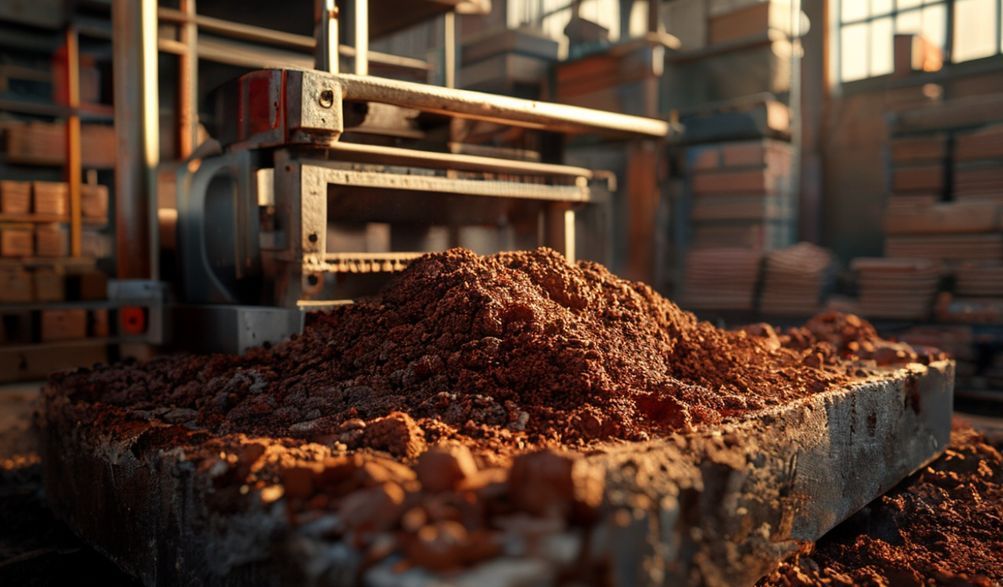
Le Guide Ultime des Machines à Blocs de Terre Automatiques : L'Efficacité Rencontre la Durabilité
Le monde moderne de la construction et de l'agriculture se trouve à un carrefour. Il existe une demande croissante et urgente pour des matériaux de construction qui soient non seulement efficaces et économiques, mais aussi respectueux de notre planète. Au milieu de l'océan de béton et d'acier, une solution ancienne connaît une renaissance puissante : les blocs de terre comprimée (BTC). Ces blocs, fabriqués principalement à partir de la terre même sous nos pieds, offrent une masse thermique remarquable, une régulation naturelle de l'humidité et une empreinte carbone considérablement réduite. Pendant des siècles, leur potentiel a été limité par un obstacle majeur : l'effort physique intense et l'incohérence de la production manuelle.
Mettre à l'échelle un projet de construction durable avec des blocs faits à la main est une tâche monumentale, entravée par une qualité variable, une production lente et des coûts de main-d'œuvre élevés. C'est là que la technologie intervient pour débloquer le véritable potentiel. La machine automatique de fabrication de blocs de terre émerge comme l'outil révolutionnaire qui comble cet écart, transformant la terre locale brute en blocs de construction précis et durables à un rythme industriel. Sur ce marché en évolution, des fabricants commeUsine de fabrication de blocs FUDAsont devenus des acteurs notables, concevant les machines qui rendent cette durabilité évolutive possible.
Ce guide est conçu pour être votre ressource complète et impartiale. Nous allons décortiquer comment unmachine à fabriquer des blocs de terre automatiquefonctionne, explore ses avantages indéniables et fournit les connaissances essentielles dont vous avez besoin—de la préparation du sol au choix du fabricant—pour prendre une décision éclairée pour votre projet de construction ou votre entreprise.
Qu'est-ce qu'une machine automatique à fabriquer des blocs de terre ?
Une machine automatique de fabrication de blocs de terre est un système mécanisé conçu pour automatiser l'ensemble du processus de production de blocs de terre comprimée (BTC). Elle prend de la terre brute, souvent stabilisée, et, grâce à une pression importante, la façonne en blocs denses, uniformes et structurellement solides, prêts pour la construction. Cette automatisation remplace le processus laborieux et irrégulier du compactage ou du pressage manuel, apportant fiabilité et capacité de production à grande échelle à la construction durable.
Au cœur de son fonctionnement, la machine repose sur un principe de compression à haute pression, généralement obtenu grâce à un système hydraulique robuste. Cette force compacte les particules de sol, éliminant les poches d'air et créant un bloc doté d'une haute résistance à la compression, directement comparable aux unités de maçonnerie conventionnelles.
Composants clés et leur fonctionnement en synergie
Comprendre l'anatomie de la machine démystifie son fonctionnement. Les composants clés incluent :
- Hopper :Le point d'entrée pour la matière première (sol et stabilisant).
- Chambre de mélange :Là où le sol et le stabilisateur (comme un faible pourcentage de ciment ou de chaux) sont parfaitement mélangés, souvent via un système de vis sans fin.
- Moules de Compression/Matrices:Le cœur de la machine. Il s'agit de la cavité façonnée qui définit la taille et la forme du bloc final (par exemple, rectangulaire, à emboîtement).
- Système Hydraulique : Comprising a pump, cylinders, and valves, this system generates the immense pressure (measured in tons) required to compact the soil.
- Panneau de configuration : The user interface for operating the machine, which in fully automatic models, can program cycles and monitor functions.
- Système d'éjection : Mechanically or hydraulically pushes the freshly pressed block out of the mold onto a pallet or conveyor.
From Raw Soil to Finished Block: The Automated Process
The automation creates a seamless, repeatable cycle:
- Alimentation : Pre-screened soil and a measured amount of stabilizer are loaded into the hopper.
- Mélange : The material is conveyed and homogenized in the mixing chamber, ensuring consistent composition for every block.
- Compression : The mixture is fed into the compression mold. The hydraulic ram then applies immense, calibrated pressure for a set duration.
- Éjection : The ram retracts, and the newly formed, solid block is pushed out of the mold.
- Guérison : The blocks are stacked and kept moist for a period (often 14-28 days) to allow the stabilizer to fully hydrate and achieve maximum strength.
Why Choose Automation? Key Benefits of Auto Soil Block Presses
Moving from manual to automated production isn’t just a minor upgrade; it’s a transformative leap that impacts every aspect of your project.
Efficacité et Vitesse de Production Inégalées
The numbers speak for themselves. While a skilled manual laborer might produce 100-200 blocks in a day, a mid-range automatic press can produce 800 to 2,000 blocks in an 8-hour shift. High-capacity stationary models can exceed 5,000 blocks daily. This speed translates directly into faster project timelines, allowing you to complete walls in days instead of weeks or months. For housing projects or commercial ventures, this efficiency is the difference between feasibility and impracticality.
Superior Consistency and Block Quality
Human-powered production is inherently variable. Automation guarantees it is not. Every block that comes out of the machine has:
* Identical dimensions for perfect coursing.
* Uniform density for consistent load-bearing capacity.
* Repeatable compressive strength, ensuring structural integrity across the entire building.
This precision simplifies construction, reduces mortar use, and gives engineers and architects reliable performance data to work with.
Significant Labor and Cost Reduction
While the initial machine investment is a factor, the long-term economics are compelling:
* Travail : One or two operators can manage an automatic machine, replacing a large manual crew.
* Waste: Consistent quality means far fewer rejected or substandard blocks.
* Time: Faster building enclosure reduces overall financing and supervision costs.
The Return on Investment (ROI) is often realized quickly through reduced labor overhead and accelerated project completion, not to mention the value of using ultra-low-cost raw material—soil.
Supporting Sustainable Construction Goals
This technology is a cornerstone of green building. It enables:
* Hyper-local material sourcing: Use on-site or locally quarried soil, slashing transportation emissions.
* Low embodied energy: The production process uses a fraction of the energy required to fire clay bricks or produce concrete blocks.
* Natural material benefits: The finished walls offer excellent thermal mass (reducing heating/cooling needs) and breathability, creating healthier indoor environments.
An auto soil block machine turns sustainable ambition into a practical, scalable reality.
Critical Considerations Before You Buy
Investing in this machinery requires careful forethought. This section guides you through the essential technical and practical questions.
Assessing Your Soil: Is It Suitable?
Not all dirt is created equal. The ideal soil is a “loam” with a balanced mix of:
* Argile (15-30%): Acts as the natural binder.
* Silt: Fills voids.
* Sand and Gravel (50-80%): Provides structural skeleton and reduces shrinkage.
Action Step: Conduct a simple jar test or, better yet, a professional lab analysis. Most soils can be adapted by blending or adding stabilizers like:
* Ciment (5-10%) : For higher strength and water resistance.
* Lime (3-10%): Improves plasticity and long-term durability.
Capacity and Output Requirements
Match the machine to your project’s scale:
* Portable/Small Machines: Ideal for small farms, DIY projects, or pilot studies. Output: 300-800 blocks/day.
* Medium Stationary Machines: Suited for small-to-medium housing projects, eco-resorts, or block-making businesses. Output: 1,500-3,500 blocks/day.
* Large Fully Automatic Lines: For large-scale housing developments or commercial block yards. Output: 5,000+ blocks/day.
Power Source: Electric, Diesel, or Hybrid?
- Électrique : Cleaner, quieter, and lower operating cost. Requires reliable grid or substantial generator power.
- Diesel : High torque and fully mobile for remote sites. Higher fuel cost and emissions.
- Hybride : Offers flexibility but at a higher initial cost.
Spécifications clés des machines à examiner attentivement
When comparing models, look beyond the price tag. Focus on:
* Force de Pression : The core of performance. Ranges from ~20 tons for small blocks to 100+ tons for large, high-strength blocks. More pressure generally means denser, stronger blocks.
* Block Dimensions & Shapes: Does it produce standard rectangles, interlocking blocks (for dry-stacking), or specialty shapes?
* Niveau d'automatisation : Semi-automatic (operator feeds each cycle) vs. Fully automatic (continuous feed and cycling).
* Motor Power & Build Quality: Heavy-duty steel frames, reputable hydraulic components, and powerful motors indicate durability and longevity.
Spotlight on Manufacturers: Evaluating Your Options
Choosing the right partner is as crucial as choosing the right machine specs.
What to Look for in a Reputable Manufacturer
Prioritize companies that demonstrate:
* Proven Experience: Several years, if not decades, in heavy machinery manufacturing.
* Quality Engineering: Use of standardized components (e.g., Siemens, Schneider electrics; reputable hydraulic brands).
* Comprehensive Support: Clear warranty terms, ready availability of spare parts, and detailed technical documentation.
* Customer Evidence: Willingness to provide references or case studies from previous clients in similar climates or applications.
Understanding the Role of FUDA Block Making Factory
In the global landscape of block machinery manufacturers, Usine de fabrication de blocs FUDA is one established name. They specialize in a range of brick and block making equipment, including machines suitable for soil block production. Like other reputable manufacturers, they cater to an international market, offering various models with different automation levels and capacities. When evaluating options, it’s prudent to consider manufacturers like FUDA alongside other global and regional players, comparing not just brochures, but the total package of machine durability, part availability, and local service support.
The Importance of After-Sales Service and Support
The machine’s arrival is just the beginning. Your long-term productivity depends on:
* Installation & Formation : Does the supplier offer on-site setup and operator training?
* Assistance technique : Is there a responsive, knowledgeable team available for troubleshooting?
* Parts Supply Chain: How quickly can you get a replacement hydraulic seal or motor?
A slightly cheaper machine from a supplier with poor support can become the most expensive asset you own due to downtime.
Practical Applications of Auto-Made Soil Blocks
The versatility of machine-made CEBs is vast:
- Affordable Housing and Community Projects: The low material cost and high speed make CEBs ideal for large-scale social housing, delivering quality, durable homes efficiently.
- Eco-Resorts, Sustainable Homes, and Green Buildings: A perfect match for the ethos of natural building, creating beautiful, high-performance walls with a minimal ecological footprint.
- Agricultural Buildings: For constructing barns, equipment sheds, storage units, and sturdy boundary walls using on-farm soil.
- Landscape and Public Infrastructure: Building aesthetically pleasing and functional retaining walls, garden features, park benches, and even public pavilions.
Frequently Asked Questions (FAQ)
Q1: What is the typical cost range for an automatic soil block making machine?
A: Prices vary dramatically based on capacity and features. Small portable units can start around \$5,000-\$15,000. Mid-range production machines typically fall between \$20,000 and \$40,000. Large, fully automatic production lines can reach \$50,000 to over \$100,000. Always budget for shipping, import duties, and initial stabilizer costs.
Q2: Can I use any soil from my property with these machines?
A: While you can use many soils, optimal results require proper composition. A simple soil test is essential. Most site soils will work but may require blending with sand or clay, and almost always benefit from the addition of a stabilizer (like 5-8% cement) for weather-resistant, load-bearing blocks.
Q3: How durable are soil blocks compared to fired bricks or concrete blocks?
A: Properly made and cured stabilized compressed earth blocks (CSEBs) have compressive strengths that meet or exceed many building code requirements for single and multi-story load-bearing construction. They are highly durable, with examples centuries old. Their key advantages over fired bricks are superior thermal performance and humidity regulation, creating more comfortable interiors.
Q4: What is the maintenance routine for an auto soil block press?
A: Regular maintenance is key:
* Daily: Thoroughly clean the mold, hopper, and mixing chamber to prevent material buildup.
* Weekly: Check and tighten bolts/nuts; inspect hydraulic hoses for leaks; check oil levels.
* Periodically (per manufacturer schedule): Replace hydraulic filters and seals; grease all bearings and pivot points. Always follow the specific manual provided by your manufacturer.
Q5: Where can I get training to operate and maintain this machinery?
A: Reputable manufacturers often include basic operational training upon purchase. For broader best practices in CEB construction, seek workshops from sustainable building organizations (like Earthship Biotecture, Auroville Earth Institute), consult with experienced CEB builders, and utilize online resources and forums dedicated to natural building.
Conclusion
The automatic soil block making machine represents a powerful convergence of tradition and innovation. It solves the historical constraints of earth construction, delivering the efficiency, consistency, and scale needed for the 21st century while steadfastly upholding principles of sustainability and resilience.
Your journey should begin with thorough research: test your soil, clearly define your project needs, and calculate realistic outputs. When evaluating manufacturers and models, prioritize valeur totale—considering machine robustness, the quality of support, and long-term reliability over the allure of a low upfront price alone.
This technology is more than just a piece of equipment; it’s an investment in a future of cost-effective, environmentally conscious, and beautiful construction. We encourage you to take the next step: consult with a structural engineer familiar with earth building, request live demonstrations or visit operational sites of potential suppliers, and feel free to share your project ideas or questions below to continue the conversation.
<