
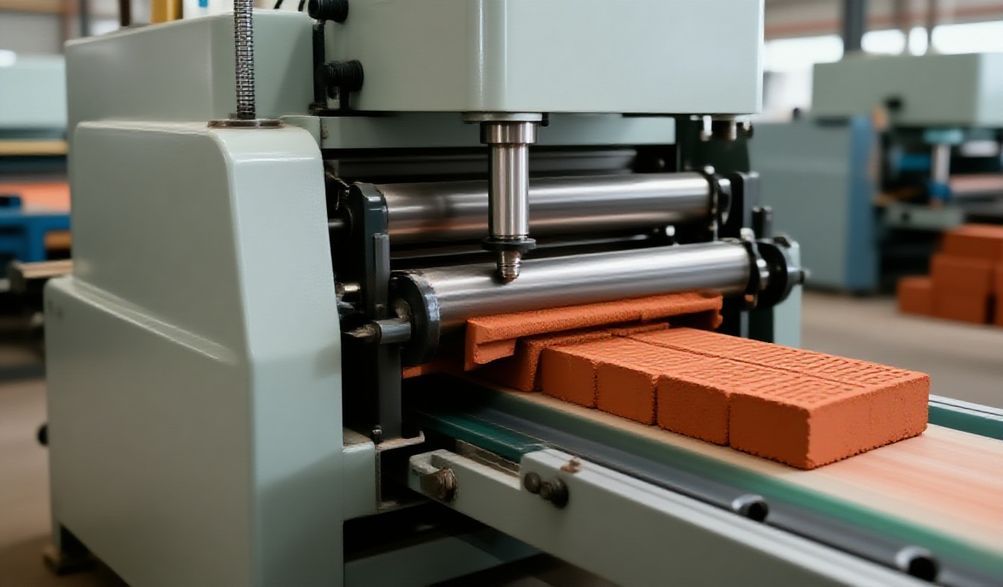
Votre Guide Ultime des Fournisseurs de Machines à Fabriquer des Briques en Argile à Pune : Focus sur l'Usine de Fabrication de Blocs FUDA
La ligne d'horizon de Pune témoigne d'une croissance incessante. En tant que pierre angulaire de l'essor industriel et de la construction en Inde, la demande de la ville en matériaux de construction robustes et de haute qualité n'a jamais été aussi forte. Au cœur de cette demande se trouve la brique en terre cuite, modeste mais indispensable. Mais pour les entreprises de construction, les propriétaires de briqueteries et les entrepreneurs ambitieux, le parcours de l'argile brute à une brique fiable et prête pour le marché est jalonné d'une décision cruciale : choisir la bonne machinerie.
Le marché est inondé d'options, mais trouver un fournisseur fiable de machines à fabriquer des briques en terre cuite à Pune peut s'avérer une tâche ardue. Les problèmes courants incluent une qualité de machine inconstante entraînant des pannes fréquentes, des garanties vagues offrant peu de protection réelle et un manque flagrant de support technique et après-vente. Ces défis ne causent pas seulement des maux de tête opérationnels ; ils impactent directement votre rentabilité à travers des retards de production et des coûts de maintenance en spirale.
C'est là que le rôle de fournisseurs spécialisés et réputés devient primordial. Ce ne sont pas de simples vendeurs ; ce sont des partenaires de long terme pour votre productivité. Dans le paysage industriel dynamique de Pune, des noms commeUsine de Fabrication de Blocs FUDAsont devenus des acteurs majeurs, particulièrement reconnus pour leur concentration sur la technologie de fabrication de blocs. Ce guide est élaboré à partir d'une analyse approfondie du secteur et d'un engagement à fournir des conseils pratiques et exploitables. Notre objectif est de vous doter des connaissances nécessaires pour naviguer en toute confiance dans le paysage des fournisseurs à Pune, faire un investissement éclairé et jeter les bases d'une réussite durable en matière de production.
Comprendre la Machinerie de Fabrication de Briques en Terre Cuite
Avant de commencer à évaluer les fournisseurs, il est crucial de comprendre les outils du métier. Les machines de fabrication de briques en terre cuite varient considérablement en complexité, en production et en investissement.
Types de Machines : Du Manuel au Entièrement Automatique
La machine adaptée pour vous dépend entièrement de votre échelle, de votre budget et de vos objectifs de production.
-
Machines Manuelles et Semi-Automatiques :Idéal pour les jeunes pousses à petite échelle, les entrepreneurs ruraux ou la production artisanale spécialisée.
- Presses manuelles :Nécessite une main-d'œuvre importante pour le mélange, l'alimentation et le pressage. Coût en capital le plus bas, mais aussi production la plus faible.
- Machines semi-automatiques :Mécaniser le processus de pressage ou de moulage, souvent avec un système hydraulique, mais peut nécessiter un chargement manuel et un retrait manuel des briques. Ils offrent un bon équilibre entre coût et productivité pour les opérations de moyenne envergure.
-
Usines de fabrication de briques en terre cuite entièrement automatiques :Les moteurs de la production à haut volume, constante et rentable. Ces systèmes intégrés sont conçus pour une intervention humaine minimale.
- Ils intègrent généralement des processus automatisés pour l'alimentation en matière première, le mélange, l'extrusion ou le pressage, la découpe et l'empilage.
- Les avantages incluent une densité et une uniformité supérieures des briques, une production nettement plus élevée (des milliers de briques par heure) et une réduction des coûts de main-d'œuvre.
-
Types de machines spécifiques dans une ligne de production :
- Concasseurs et Broyeurs d'Argile :Préparez l'argile brute en brisant les mottes pour obtenir un mélange homogène.
- Malaxeurs & Broyeurs à meules :Homogénéiser l'argile avec des additifs (comme du sable ou des cendres volantes) et de l'humidité pour obtenir la plasticité parfaite pour le moulage.
- Extrudeuses :Forcer l'argile préparée à travers une filière pour former une colonne continue d'argile, qui est ensuite découpée au fil en briques individuelles.
- Presses hydrauliques :Utiliser une pression immense dans un moule pour former des briques de haute densité, souvent utilisées pour le pavage ou les blocs d'argile technique.
Principales spécifications techniques à prendre en compte
Ne vous contentez pas de regarder la machine ; examinez ses spécifications. Ces chiffres révèlent la véritable histoire de ses capacités.
- Capacité de production :Toujours calculer en fonction debriques par heure (BPH)dans des conditions standard. Une machine « 2000 BPH » n’a aucun sens si elle ne peut pas maintenir ce rythme. Faites correspondre cela à votre demande actuelle et à vos projections de croissance future.
- Exigences en matière d'alimentation électrique :La machine est-elle purement électrique, hydraulique ou hybride ? Connaître la tension (par exemple, 415 V, triphasé) et la charge totale connectée. Cela affecte directement l’infrastructure électrique de votre usine et les coûts d’exploitation.
- Flexibilité de la taille et de la forme des briquesLa machine peut-elle produire plusieurs tailles de briques (par exemple, standard, modulaire, géante) ou des formes spéciales (perforées, courbes) ?Personnalisation de mouleest un service clé offert par les fournisseurs de qualité.
- Niveau d'automatisation et contrôle : Does it have a Programmable Logic Controller (PLC) system for precise operation? Are there safety interlocks and user-friendly touch panels? Higher automation improves consistency and reduces operator error.
The Industrial Hub: Why Pune for Brick Making Machinery?
Pune isn’t just a random location; it’s a strategic epicenter for manufacturing, making it a prime destination for sourcing industrial machinery.
Pune’s Manufacturing and Construction Ecosystem
Pune has solidified its reputation as the “Detroit of India” and a major IT hub, driving unprecedented urban and industrial construction. This creates a self-sustaining ecosystem:
* High Local Demand: The constant construction activity ensures a ready market for bricks, supporting local machinery suppliers.
* Competitive Supplier Market: Numerous manufacturers and dealers cluster in and around Pune, fostering competition that benefits buyers in terms of price, innovation, and service.
* Ancillary Industry Support: Easy access to spare parts, skilled technicians, and raw material suppliers streamlines your entire operation.
Advantages of Partnering with Pune-Based Suppliers
Sourcing locally within Pune offers tangible, logistical advantages that importers or distant suppliers cannot match.
- Factory Audits and Inspections: You can personally visit the supplier’s manufacturing unit to inspect build quality, workshop practices, and material inventory before placing an order.
- Local Raw Material Understanding: Pune-region suppliers often have experience with the characteristics of local clay deposits. They can advise on or adapt their machines to handle specific plasticity, sand content, or shrinkage rates.
- Robust Support Networks: Proximity means faster response times for breakdowns, easier scheduling of maintenance visits, and readily available spare parts. This minimizes costly production downtime.
Evaluating Clay Bricks Making Machine Suppliers in Pune
With many options available, a systematic evaluation separates the credible partners from the rest.
Core Criteria for Supplier Selection
Use this checklist as your fundamental evaluation framework:
- Expérience et parcours avéré : How long have they been in business? Ask for a client portfolio with contactable references, preferably in your region or for a similar scale of operation. A history of successful installations is a strong positive indicator.
- Technical Expertise & Innovation: Do they have in-house engineering and R&D? Are they able to discuss technical modifications or provide solutions for specific production challenges? A supplier that only sells catalog items may not be ideal for custom needs.
- Manufacturing Quality & Standards: Inspect the quality of steel used in frames, the brand of hydraulic pumps and electrical components (like Siemens, Schneider), and the finish of welding. Adherence to basic industrial safety standards is a must.
- Service Après-Vente & Support : This is non-negotiable. Clarify:
- Warranty period and scope (what’s covered?).
- Availability of a comprehensive spare parts catalog.
- Commitment time for service visits (e.g., 24-72 hours).
- Provision of installation supervision and operator training.
Red Flags to Avoid When Choosing a Supplier
Steer clear if you encounter these warning signs:
- No Physical Footprint: A supplier with only a PO Box or vague address, and no visible manufacturing facility or showroom.
- Ambiguous Warranties and Contracts: Service terms that are not clearly documented in writing.
- Unwillingness to Share References: Refusal or hesitation to connect you with existing customers.
- Neglect of Safety and Training: Machines lacking basic safety guards or a supplier who does not emphasize the importance of proper training.
Spotlight on a Key Player: FUDA Block Making Factory
As you research suppliers in Pune, you will likely encounter Usine de Fabrication de Blocs FUDA. It’s important to analyze such players objectively based on publicly available information and direct inquiry.
Company Profile and Industry Standing
- Spécialisation : FUDA positions itself as a manufacturer focused on block and brick making machinery. Their prominence in online searches and industrial directories suggests a significant presence in the Maharashtra market.
- Position sur le marché : They are often cited among the local suppliers catering to the construction material manufacturing sector. Note importante : This overview is based on their market visibility. We strongly encourage you to verify all claims through independent due diligence, client testimonials, and personal visits.
Product Range and Technological Capabilities
Based on their promotional material, FUDA’s offerings typically include:
* Automatic Brick Making Plants: Designed for high-output production of clay and concrete bricks/blocks.
* Machines à blocs de béton : Highlighting versatility for various block types like hollow, solid, and paving blocks.
* Key Promoted Features: These often include high automation levels with PLC control, robust hydraulic systems, and options for customization of molds and output capacity.
Assessing FUDA’s Value Proposition
A balanced assessment is key. Their potential strengths likely include local manufacturing presenceetproduct specialization. However, as with any supplier, the onus is on you, the buyer, to probe deeper.
Questions to Ask FUDA (or Any Similar Supplier):
1. “Can I visit your factory to see a machine similar to my requirement being assembled or tested?”
2. “What is your specific experience with machinery for the argile brick industry, as distinct from concrete?”
3. “Can you provide contact details for 2-3 clients who have been using your clay brick machine for over 2 years?”
4. “What is the exact breakdown of your warranty for the hydraulic system, electrical panel, and structural frame?”
5. “Do you offer a trial with our own clay material to test brick quality before purchase?”
Making the Right Investment: A Buyer’s Checklist
Treat this purchase as a strategic capital investment, not just a transaction.
Pre-Purchase Questions for Your Shortlisted Suppliers
Prepare this list for your meetings:
* Technical: What is the expected brick density and strength (MPa)? What is the moisture tolerance range for the input clay? Is training provided for maintenance?
* Commercial: What is the delivery and installation timeline? What is excluded from the quoted price (e.g., freight, foundation work, taxes)? What are the payment terms?
* Service: What is the guaranteed response time for a breakdown? Is there an annual maintenance contract (AMC) available? How long are spare parts guaranteed to be available?
Total Cost of Ownership (TCO) Analysis
Look beyond the sticker price. The real cost includes:
* Coût initial : Machine price, taxes, installation, and commissioning.
* Operational Cost: Power consumption per 1000 bricks, labor required, and cost of wear-and-tear parts.
* Maintenance & Downtime Cost: Cost of scheduled servicing, price of critical spares, and the profit lost during unplanned downtime. A slightly more expensive, reliable machine often has a lower TCO.
The Importance of Site Visits and Machine Trials
Never skip this step.
1. Visit the Supplier’s Factory: Assess their capability, quality control, and professionalism.
2. Visit a Client’s Site: Speak to the machine operators and owners. Ask about real-world production, service support, and challenges. Seeing the machine run is the ultimate test.
Foire aux Questions (FAQ)
Q1: What is the average price range for a clay brick making machine in Pune?
A: Prices vary immensely. A small semi-automatic machine can start from a few lakh rupees, while a fully automatic plant can range from tens of lakhs to over a crore. The key is to get detailed quotations from multiple suppliers and compare them based on Coût Total de Possession (CTP), not just the initial price.
Q2: Can machines be customized for specific brick sizes or clay types?
A: Absolutely. Reputable suppliers should offer mold customization for different brick sizes and profiles. Crucially, they should be willing to test a sample of your specific clay to recommend any process adjustments or machine settings to ensure optimal brick quality.
Quel type de service après-vente et de garantie puis-je attendre ?
A: Expect a comprehensive warranty of at least 1 year on the entire machine, with longer coverage (2+ years) on critical components like the hydraulic power pack. Ensure the warranty terms, list of covered parts, and service response time commitments are clearly stated in your purchase contract.
Q4: How do I evaluate the build quality and durability of the machine?
A: During a factory visit, inspect: the thickness and grade of structural steel, the brand and quality of hydraulic cylinders/pumps, the organization and branding of the electrical control panel, and the finish of welds (should be smooth and clean). Request material certifications if available.
Q5: Are there government regulations or certifications required for these machines?
A: While there may not be a single “brick machine certification,” suppliers should adhere to general industrial safety standards. It is your responsibility to check with local pollution control boards and factory inspectorates regarding any specific consents or regulations for setting up a brick manufacturing unit in your location.
Conclusion
Choosing the right clay bricks making machine supplier in Pune is a multi-step process that demands diligence. It begins with understanding your own production needs and the machinery that meets them. It leverages Pune’s dynamic industrial ecosystem to find local, responsive partners. It requires rigorously evaluating each supplier against core criteria of experience, expertise, and service commitment—exemplified in our analysis framework and the pointed questions to ask a company like FUDA Block Making Factory.
Ultimately, this decision is about forming a strategic partnership. Prioritize Expérience (a proven track record), Expertise (deep technical knowledge), Autorité (a strong reputation among peers), and Fiabilité (transparent, service-backed dealings). These principles are your compass.
Your Call to Action: Use this guide as your structured framework. Shortlist 3-5 suppliers in the Pune region, prepare your detailed checklist, and insist on factory and client site visits. By investing this time upfront, you are not just buying a machine; you are investing in the reliable, profitable future of your brick production enterprise.
<