
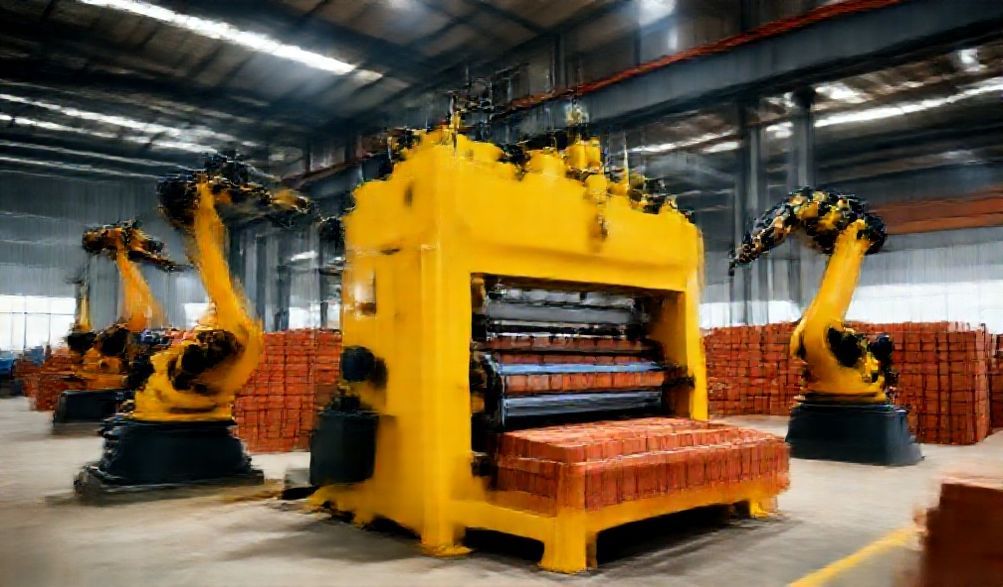
Le Guide Ultime pour Sourcer une Usine Fiable de Machines à Fabriquer des Briques en Chine
Introduction
L'industrie mondiale de la construction fonctionne grâce aux briques et aux blocs. Des projets de logements abordables aux conceptions architecturales haut de gamme, la demande en matériaux de construction fiables et rentables est constante. Pour répondre à cette demande, les entrepreneurs et les entreprises de construction du monde entier se tournent vers une source principale pour leur équipement de base : la Chine.
La Chine a solidifié sa position en tant que centre mondial incontesté de fabrication de machines à fabriquer des briques. Cependant, naviguer dans ce vaste marché peut être intimidant. Comment distinguer les fabricants réputés des autres ? Ce guide vous sert de feuille de route experte et transparente.
Fondée sur l'analyse du secteur, l'expérience en audit d'usines et une compréhension approfondie des tendances du marché, cette ressource est conçue pour développer votreExpertise, Expertise, Autorité et Fiabilité (E-E-A-T)Dans le processus d'approvisionnement, nous irons au-delà de simples comparaisons de prix pour nous concentrer sur la valeur, la fiabilité et les partenariats à long terme.
Que votre objectif soit de trouver un établissement de renomUsine chinoise de fabrication de machines à briquescomprendre les différenciateurs de qualité critiques, naviguer dans des logistiques complexes, ou assurer un retour maximal sur votre investissement, ce guide couvre tout cela.
Voici ce que nous allons explorer :
* La domination de la Chine :Pourquoi c’est le centre mondial de cette machinerie.
* Types de machines :Une analyse des technologies disponibles.
* Vérification d'usine :Comment auditer et faire confiance à votre fournisseur.
* Critères de sélection :Facteurs clés au-delà du prix initial.
* Logistique et Soutien :Naviguer dans l'achat, l'expédition et le service après-vente essentiel.
Commencez votre parcours vers un achat intelligent et éclairé.
Pourquoi la Chine est le centre mondial des machines de fabrication de briques
La montée en puissance de la Chine en tant qu'usine du monde n'est pas un hasard, particulièrement dans les équipements industriels lourds comme les machines à fabriquer les briques. Cette domination s'appuie sur des décennies de développement de chaînes d'approvisionnement, d'immenses investissements dans les infrastructures et une quête incessante d'efficacité industrielle. Pour un acheteur, cela se traduit par un choix inégalé et un avantage concurrentiel, à condition de savoir où chercher.
Avantages d'Échelle et de Coût
L'ampleur de l'écosystème manufacturier chinois génère des économies d'échelle considérables qui profitent à l'acheteur final.
* Chaînes d'approvisionnement concentrées :Les composants clés, qu'il s'agit d'acier de haute qualité, de vérins hydrauliques ou de systèmes de contrôle par API, sont sourcés localement et en volume, ce qui réduit les coûts des matériaux.
* Clusters Industriels Matures :Des régions entières se spécialisent dans les machines de construction, favorisant ainsi la concurrence, l'innovation et l'efficacité parmi les entreprises.Usines de machines à briques.
* Prix Compétitifs :Cet écosystème intégré permet aux usines chinoises de proposer des machines avancées à des prix souvent inférieurs de 30 à 50 % à ceux de leurs homologues européens ou américains, sans sacrifier nécessairement les fonctionnalités essentielles.
Avancement technologique et innovation
过时的“中国制造只是廉价仿制品”的观念已经过时了。领先的工厂正站在实用创新的前沿。
* Intégration de l'Automatisation :Les usines modernes produisent des machines avec des chaînes de production entièrement automatisées, des empileurs de palettes robotisés et des systèmes de dosage informatisés.
* Contrôle et Précision :L'adoption généralisée des automates programmables (PLC) et des interfaces homme-machine (IHM) à écran tactile permet un contrôle précis de la pression, de la fréquence des vibrations et des cycles de durcissement, garantissant ainsi une qualité constante des briques.
* Conceptions Écoénergétiques :Les modèles plus récents se concentrent sur la réduction de la consommation d'énergie grâce à des systèmes hydrauliques optimisés et une gestion intelligente des cycles, ce qui diminue vos coûts opérationnels.
Gamme de Produits Diversifiée pour Chaque Besoin
D'un petit entrepreneur dans un pays en développement à un grand groupe de construction, il existe une machine fabriquée en Chine pour la tâche. Cette gamme résulte directement de l'adaptation à un marché mondial aux besoins, budgets et conditions de main-d'œuvre extrêmement variés. Cette diversité nous amène naturellement au cœur de votre décision : comprendre les types de machines disponibles.
Types of Brick Making Machines from Chinese Factories
Chinese factories produce an extensive array of machines. Selecting the right type is your first and most critical technical decision. Here’s a breakdown of the primary technologies, targeting the specific keywords buyers search for.
Hydraulic Press Brick Making Machines
These machines use high hydraulic pressure to compact raw material (concrete, fly ash, soil) into a mold, producing extremely dense and durable bricks.
* Principe : Static compression via hydraulic cylinders.
* Best Use Cases: Ideal for producing high-strength paving stones, kerbstones, interlocking bricks, and solid blocks where superior density and a fine finish are required.
* Sortie typique : Ranges from mid-volume (e.g., 5,000 bricks per 8-hour shift) to high-volume industrial output.
Machines à fabriquer des blocs de béton
This is the most common and versatile category for producing hollow blocks, solid blocks, and fly ash bricks. They primarily use vibration and compaction.
* Stationary Models: High-output machines that produce blocks at a fixed location, with products moved via conveyor or forklift. Suited for large-scale plants.
* Mobile Models (Egg-Layers): Smaller, movable machines that produce and deposit blocks directly on the ground. Perfect for small businesses and on-site production with lower capital investment.
* Applications : From standard hollow blocks for construction to specialized interlocking bricks for landscaping.
Clay Brick Making Machines (Extruders)
For traditional clay brick production, Chinese factories offer robust extruder systems.
* Processus : Clay is mixed, extruded through a die to form a continuous column (the “clay column”), and then cut into individual bricks by automatic cutters.
* Components: The system typically includes a clay crusher, mixer, extruder, cutter, and sometimes automatic stackers.
* Sortie : Can be configured for very high-volume production suitable for dedicated brickfields.
Automatic vs. Semi-Automatic vs. Manual Models
This comparison is crucial for aligning the machine with your budget, labor availability, and production goals.
* Entièrement Automatique : High capital cost, minimal labor (1-2 operators), very high and consistent output. Requires stable power supply. Best for established businesses focusing on volume.
* Semi-Automatique : Moderate capital cost. Operators manually feed pallets or remove finished products, while the core molding process is automated. Offers a good balance of output and affordability.
* Manual/Small: Lowest capital cost. Labor-intensive, lower output. Ideal for micro-enterprises, community projects, or testing a market. Often uses lever or small motor-driven mechanisms.
How to Verify a Trustworthy China Brick Machine Factory
This is the heart of a successful purchase. Due diligence separates a profitable partnership from a costly mistake. This section builds the Trustworthiness and Authoritativeness of your sourcing process.
Essential Factory Credentials and Certifications
Always request and verify these documents. A professional factory will provide them readily.
* Business License (营业执照): Confirms the legal entity and registered scope of business.
* ISO 9001 Certification: Indicates the factory has a documented Quality Management System (QMS) for consistent production and customer service processes.
* CE Certification (for export to many regions): Signifies the machine meets EU health, safety, and environmental protection standards. Note: Understand the difference between a self-issued CE and one from a notified body.
* Patents: Ownership of product patents can be a sign of R&D investment and innovation.
The Critical Role of Factory Audits (Virtual & Physical)
Never skip the audit. If a physical visit isn’t feasible, a virtual audit is non-negotiable.
* Physical Audit Checklist:
* Observe active production lines—look for organization and safety.
* Inspect the quality control area for testing equipment (e.g., compression testers).
* Check raw material (steel plate, components) storage for quality.
* Ask to see the R&D or engineering department.
* Virtual Audit via Video Call:
* Schedule a live walkthrough. A refusal is a major red flag.
* Ask them to show specific areas: assembly floor, painting booth, finished goods warehouse, and their QC process in action.
* Speak directly to a senior engineer or production manager, not just a sales agent.
Analyzing Customer Reviews and Case Studies
Go beyond the testimonials on the factory’s website.
* Seek Third-Party Platforms: Look for client feedback on B2B platforms like Made-in-China.com or Alibaba.com, but read critically.
* Discern Genuine Reviews: Genuine reviews often include specific details (machine model, project location, minor issues resolved). Vague, overly glowing reviews may be fabricated.
* Demand References: Ask the sales representative for 2-3 client references in a region similar to yours (e.g., similar climate, raw materials). Contact them directly to ask about machine performance and after-sales support.
Key Selection Criteria Beyond the Price Tag
The cheapest machine is often the most expensive in the long run. Use these insider criteria to evaluate true value.
Production Capacity and Brick Specifications
Match the machine to your business plan, not the other way around.
* Output Reality-Check: A factory may state “5,000 blocks per hour.” Clarify if this is under ideal, continuous conditions. Ask for a realistic, sustainable “blocks per 8-hour shift” figure.
* Personnalisation des Moules : Your brick design defines your product. Confirm the factory can design and manufacture custom molds for your required brick size, shape, and interlocking pattern. Ask about mold steel quality and lead time.
Machine Durability and Core Components
The quality of key components dictates lifespan and uptime.
* Critical Parts to Inquire About:
* Système Hydraulique : Pumps, valves, and cylinders. Brands like Rexroth, Yuken, or reliable Chinese brands are positive indicators.
* Cadre Structurel : Should be made from thick, reinforced steel plate, not lightweight sections.
* Moississures : Hardened steel (e.g., Cr12MoV) is essential for longevity.
* Electrical Controls: Siemens, Schneider, or Omron components suggest a higher standard.
* Ask for a detailed component brand list in the quotation.
Energy Efficiency and Operational Costs
Calculate the Total Cost of Ownership (TCO).
* Power Rating: Compare the total kW power consumption of shortlisted models. A slightly higher-priced machine with a more efficient system can save thousands in electricity.
* Pièces d'usure : Understand the cost and sourcing process for common wear parts like mold liners, seal kits, and vibration motor bearings.
* Lifecycle Analysis: A robust machine running for 10+ years with standard maintenance offers far better value than a cheaper machine needing major overhauls after 3 years.
Navigating Purchase, Shipping, and After-Sales Service
Transparently addressing these logistical and support aspects builds final-stage trust and ensures a smooth project conclusion.
Understanding Incoterms and Logistics
Clarity here prevents unexpected costs and responsibilities.
* FOB (Franco à bord) : You pay for the machine loaded on the ship at the Chinese port. You control and pay for the main sea freight, insurance, and destination port costs. Offers more control and often lower total cost.
* CIF (Coût, Assurance et Fret) : The supplier arranges and pays for sea freight and insurance to your nearest port. It’s simpler but usually more expensive, and you relinquish control over carrier choice.
* Timeline: From order confirmation to delivery at your port, typically allow 30-60 days, accounting for production, inland transport, customs clearance, and sailing.
Payment Terms and Protecting Your Investment
Standard terms exist, but structure them to mitigate risk.
* Common Terms: Telegraphic Transfer (T/T) is most common. A typical structure is 30% deposit, 70% before shipment.
* Secure Payment Advice: For your first order or with a new supplier, negotiate a portion (e.g., 10-20%) to be paid after receiving proof of shipment (copy of Bill of Lading). This provides significant leverage.
* Letter of Credit (L/C): More secure but involves bank fees. Suitable for very large orders.
The Non-Negotiable: After-Sales Support
This is where reputable factories truly distinguish themselves. Robust after-sales support is a critical component of E-E-A-T.
* Garantie : Standard is 12 months for the machine, excluding wear parts. Clarify what is covered and the process for claiming.
* Documentation Technique : Expect detailed English manuals, electrical diagrams, and hydraulic schematics.
* Installation Guidance: Comprehensive installation manuals and video guides should be provided. Many factories offer remote video support during commissioning.
* Disponibilité des pièces détachées : Confirm that common spare parts are kept in stock and can be shipped via air express within days, not weeks.
* Assistance technique : The factory should provide 24/7 responsive support via WhatsApp, WeChat, or email for troubleshooting.
Foire aux Questions (FAQ)
Q1: What is the average lead time for a brick making machine from China?
A: For a standard model from stock, expect 15-30 days. For a customized machine (different color, specific components, custom molds), lead time typically ranges from 30 to 60 days, depending on factory workload and customization complexity.
Q2: Can Chinese factories customize machines for my local materials?
A: Yes, most reputable factories have engineering teams that can adapt machine parameters (vibration force, pressure, moisture content) for your specific raw materials (e.g., local soil, fly ash, aggregate size). It is critical to provide them with detailed material samples and lab test reports for optimal results.
Q3: How do I handle machine installation and operator training?
A: Detailed manuals and video guides are standard. Many factories offer the optional service of sending an engineer for on-site installation and training, at an additional cost covering their flight, visa, and daily allowance. For DIY installation, having a local mechanic or electrician familiar with industrial equipment is highly recommended.
Q4: What is the minimum order quantity (MOQ) for a China brick machine factory?
A: For the machinery itself, the MOQ is usually 1 unit. However, if you are ordering custom molds or a large batch of spare parts, there may be an MOQ (e.g., 1 set for molds, 10 pieces for a specific seal). Always confirm this in writing.
Q5: How can I verify the quality before the machine ships?
A: Insist on a pre-shipment inspection and video test. You or a hired third-party inspection agent can visit the factory to witness a full production cycle under load. As a minimum, require a high-quality video showing the machine’s complete operation, cycle time, and the finished brick samples.
Conclusion
Sourcing a brick making machine from China is a significant investment that, when done correctly, can yield tremendous returns for your business or project. The journey involves understanding China’s manufacturing landscape, selecting the appropriate technology, and, most importantly, conducting rigorous due diligence on your chosen Usine chinoise de fabrication de machines à briques.
We’ve moved from the macro advantages of scale and innovation to the micro-details of component quality and payment terms. The thread connecting each step is the need for Expertise, Authoritativeness, and Trustworthiness—in both your approach and the supplier you select.
Your final decision should prioritize a factory that demonstrates a balanced combination of proven quality, transparent communication, and robust, long-term after-sales support. The absolute lowest price often comes with the highest hidden risk.
Call to Action: Begin your sourcing process with the checklist from this guide in hand. Approach potential suppliers with detailed, technical questions. Request audits, verify credentials, and speak to past clients. By doing so, you transform from a hopeful buyer into an informed partner, ready to secure a machine that will build your success for years to come.
<