
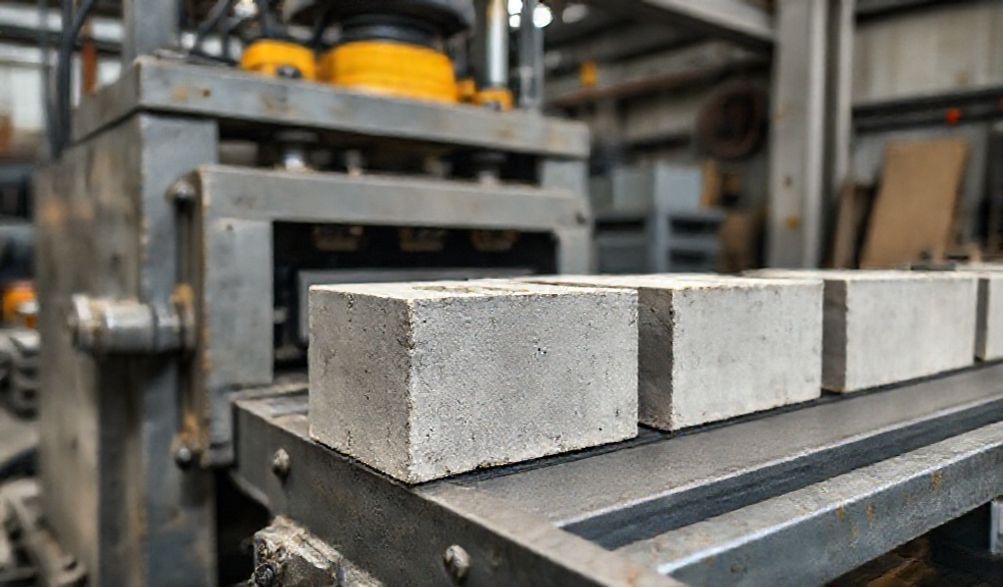
Prix des Machines à Fabriquer des Briques : Guide Complet de l'Acheteur 2024
Introduction
Imaginez que vous vous tenez sur un terrain pour votre prochain projet immobilier, ou peut-être êtes-vous dans un petit atelier en rêvant de développer votre entreprise de matériaux de construction. La vision est claire : produire vos propres briques promet un contrôle qualité, une indépendance de la chaîne d'approvisionnement et une nouvelle source de revenus. Mais alors, la question pratique se pose :Combien cela va-t-il coûter ?Une recherche rapide en ligne pour "prix machine à fabriquer des briques" révèle une gamme vertigineuse, allant de quelques milliers à plusieurs centaines de milliers de dollars. Comment s'y retrouver ?
En tant que professionnel chevronné de cette industrie, je peux vous affirmer que se concentrer uniquement sur le prix affiché est le moyen le plus rapide de faire un mauvais investissement. Le coût réel réside dans la valeur totale sur la durée de vie de la machine. Ce guide est le fruit d'années d'analyse des spécifications des fabricants, d'échanges avec des propriétaires d'entreprise et de compréhension de l'économie réelle de la production de briques. Notre objectif n'est pas simplement de lister des prix, mais de vous fournir le cadre nécessaire pour prendre une décision axée sur la valeur, en adéquation avec vos objectifs de production et votre budget.
Nous allons décomposer les facteurs qui déterminent le coût, fournir des fourchettes de prix transparentes pour 2024 selon les types de machines, révéler les dépenses cachées souvent négligées et, surtout, vous montrer comment calculer quand votre investissement sera rentabilisé. Bien que les prix spécifiques fluctuent avec les conditions du marché, les principes d'évaluation que nous aborderons resteront votre outil le plus précieux. Allons au-delà de l'étiquette de prix et jetons les bases d'un investissement rentable.
Comprendre les facteurs qui déterminent le prix des machines à fabriquer des briques
La variation des prix des machines à fabriquer des briques n'est pas arbitraire. Elle reflète directement l'ingénierie, les matériaux et les capacités. Comprendre ces composants est la première étape pour saisir la valeur.
Type de machine principal et niveau d'automatisation
C'est le principal facteur de coût. Le niveau d'automatisation détermine les besoins en main-d'œuvre, la vitesse de production et la complexité opérationnelle.
- Machines manuelles :Entièrement actionnées par la main-d'œuvre pour le mélange, l'alimentation et la compression. Elles disposent descoût initial le plus basmais lecoût de main-d'œuvre en cours le plus élevéet la sortie la plus basse.
- Machines semi-automatiques :Elles trouvent un équilibre. Elles automatisent le processus critique de compression et de moulage, souvent avec un système hydraulique ou mécanique, mais peuvent nécessiter un chargement manuel de la matière première ou le retrait des blocs finis. Cela augmente considérablement la production tout en maintenant l'investissement initial à un niveau abordable.
- Machines (ou Installations) entièrement automatiques :Ce sont des lignes de production complètes. Elles intègrent l'alimentation automatique des matières, le mélange, le moulage, le durcissement et parfois l'empilage/palettisation. La main-d'œuvre est principalement dédiée à la supervision et à la maintenance.investissement initial élevéest justifié par une production massive et des coûts de main-d'œuvre minimaux par bloc.
Capacité de production (Blocs/Heure) :Au sein de chaque catégorie d'automatisation, le prix évolue en fonction de la capacité. Une machine produisant 1 000 blocs par heure coûtera nettement moins cher qu'une machine en produisant 5 000 par heure, même si les deux sont semi-automatiques. Il est essentiel de toujours corréler le prix avec la capacité de production avérée.
Composants clés et qualité de construction
Deux machines peuvent sembler similaires, mais la qualité de leurs composants détermine leur longévité, la fréquence de maintenance et la régularité des briques.
- Qualité du Moule & Matériau :Le moule définit votre produit final. Les moules en acier allié à haute teneur en chrome résistent à l'abrasion du ciment et des granulats bien mieux que l'acier doux, durent des années de plus et produisent des briques aux arêtes plus nettes. Cette qualité a un coût supplémentaire.
- Système Hydraulique vs Système Mécanique :Les systèmes hydrauliques offrent un meilleur contrôle de la pression, ce qui permet de produire des briques plus denses et plus résistantes, et sont généralement plus durables en cas d'utilisation constante. Ils sont généralement plus coûteux que les systèmes purement mécaniques à levier/presse, mais offrent des performances et une constance supérieures.
- Cadre et Structure :Une machine conçue pour une production à grand volume nécessite un châssis robuste et résistant aux vibrations, souvent fabriqué à partir de plaques d'acier renforcées. Un châssis plus léger pourrait réduire les coûts initialement, mais entraînerait davantage de temps d'arrêt et de problèmes d'alignement.
Marque, Origine et Support Après-Vente
- Marques Internationales Premium vs. Fabricants Locaux Fiables :Les marques établies en Europe ou en Amérique du Nord imposent souvent des prix plus élevés en raison de leurs avancées en R&D, de leurs contrôles qualité stricts et de leur notoriété mondiale. Cependant, de nombreux fabricants dans des pays comme la Chine, l'Inde et la Turquie produisent désormaishigh-quality, reliable machines at a more competitive price point. The key is vetting the manufacturer thoroughly.
- The Real Cost of Support: A cheaper machine with no local technical support or a 6-month wait for spare parts can become a very expensive paperweight. The availability of on-site training, a comprehensive warranty (1+ years), and a ready inventory of spare parts is a critical part of the value equation. This support network has a cost built into the machine’s price.
Price Ranges for Different Types of Brick Making Machines
(Note: Prices are indicative for 2024 and can vary based on configuration, brand, and region. They are meant to provide a framework for budgeting.)
Manual & Small-Scale Machines (Economy Range: $1,000 – $10,000)
- Idéal pour : Entrepreneurs starting a small business, community projects, producing specialty bricks (like landscape pavers) in low volume, or for on-site production on a single construction project.
- À quoi s'attendre : These are often simple, mechanical press machines (like the popular “egg-laying” mobile types) or small stationary manual presses. Production is labor-intensive, with output ranging from 200 to 1,500 blocks per 8-hour day, depending on crew size.
- Exemple : A basic manual concrete interlocking block machine might cost between $2,500 and $5,000.
Semi-Automatic Machines (Mid-Range: $10,000 – $50,000)
- Idéal pour : Growing block yards, medium-scale construction companies supplying their own projects, and businesses looking to seriously enter commercial production with a balanced investment.
- À quoi s'attendre : This range includes robust stationary machines with hydraulic systems, automatic vibration and compression, and possibly automatic pallet feeders. Output can range from 800 to 3,000+ blocks per hour. You are paying for dramatically higher output and significantly reduced labor per block.
- Exemple : A quality semi-automatic hydraulic machine producing hollow blocks, with a production capacity of 2,000 blocks per hour, could fall in the $25,000 – $40,000 range.
Fully Automatic Stationary Plants (High Investment: $50,000 – $250,000+)
- Idéal pour : Large-scale commercial brick and block manufacturing plants, major infrastructure contractors, or businesses aiming to dominate regional supply.
- À quoi s'attendre : This is a complete factory in a line. It includes automatic batching plants, mixers, conveyor systems, the core brick machine, curing systems, and stackers. Labor is minimal (2-4 operators for the entire line). Production can easily exceed 5,000 to 10,000+ blocks per hour.
- Justifying the Cost: The ROI comes from unparalleled scale, minimal unit labor cost, and consistent, high-quality output that can secure large contracts.
Machines à Briques Mobiles
- Price Considerations: These specialized machines, mounted on a trailer for on-site production, typically fall into the $15,000 – $60,000 range. Their price is driven by their unique value: eliminating transport costs for finished blocks. A medium-capacity mobile hydraulic block maker might cost $30,000-$40,000.
The Hidden Costs of Owning a Brick Making Machine
The invoice price is just the beginning. A savvy buyer budgets for the total cost of ownership.
Installation, Foundation, and Utilities
- Site Preparation: A stationary plant, especially a large automatic one, requires a level, reinforced concrete foundation. This is a significant civil work cost.
- Exigences en matière d'alimentation électrique : Semi- and fully-automatic machines often require three-phase industrial power supply. Upgrading your site’s electrical infrastructure can be costly.
- Utilities: Factor in the ongoing cost of electricity and water for the production process.
Raw Material Handling Systems
The machine itself needs to be fed. Costs can include:
* Feeders and Hoppers
* Pan or Twin-Shaft Mixers ($3,000 – $20,000+)
* Conveyor Belts to transport raw material or finished blocks.
* Curing Racks or Chambers.
Operational Costs: Labor, Power, and Maintenance
- Travail : Even automatic plants need skilled operators and maintenance staff.
- Consommation d'énergie : Hydraulic systems and vibrators are power-hungry; calculate your local industrial electricity rate.
- Maintenance Préventive : Regular oil changes, filter replacements, and part inspections are essential to avoid catastrophic breakdowns.
Spare Parts and Consumables (Molds, Pallets)
- Moississures : Even the best molds wear out. Budget for replacement molds specific to your brick designs.
- Palettes : The steel or wooden pallets that bricks cure on undergo constant wear and need periodic replacement.
- Standard Spare Parts: Keep an inventory of common wear parts like hydraulic seals, vibration motor bearings, and springs.
How to Get the Best Value for Your Investment
Define Your Needs Clearly: A Self-Assessment
Answer these questions before you look at a single price:
* Production Volume: What is your daily/weekly block requirement now? In 2 years?
* Types de Briques : Do you need to produce solid, hollow, interlocking, or paving blocks?
* Matériaux bruts : Will you use concrete, fly ash, clay, or soil?
* Available Space & Power: What are the physical and electrical constraints of your site?
* Budget total : What is your realistic budget, including hidden costs (add 20-30% to machine price)?
Where to Source: Direct Manufacturers, Local Dealers, or Import?
- Direct from Manufacturer (Overseas): Often the lowest FOB price. Risks: Complex logistics, customs clearance, potential language barriers, and uncertain after-sales support.
- Local Dealer/Distributor: Higher price, but includes import handling, local warranty, technical support, and spare parts inventory. This is often the best value for security.
- Local Manufacturer: Supports the local economy and minimizes logistics headaches. Compare their quality and specs rigorously against international standards.
Key Questions to Ask Before You Buy
- “What is included in the quoted price? (Delivery, installation, training?)”
- “What is the warranty period and what does it specifically cover?”
- “What is the lead time for critical spare parts, and are they stocked locally?”
- “Can you provide contact information for 2-3 current customers in a similar climate/region?”
- “Do you offer installation supervision and operator training?”
The Importance of Seeing a Demo or Visiting a Plant
If possible, always see the machine running. A video is not enough. Witness the build quality, noise level, ease of operation, and the quality of the finished blocks. Visit an existing customer’s plant to hear unfiltered feedback.
Calculating ROI: When Will Your Machine Pay for Itself?
This is the most critical calculation for your business plan.
A Simple ROI Framework
The core question is: How long until my net profit from the machine covers its total cost?
Simplified Formula:
Payback Period (Months) = Total Investment Cost / (Monthly Gross Profit - Monthly Operational Costs)
- Total Investment Cost: Machine price + shipping + installation + initial spare parts.
- Monthly Gross Profit: (Number of blocks sold per month * Profit per block).
- Monthly Operational Costs: Labor + raw materials + power + maintenance.
Case Study Examples
-
Scenario A (Semi-Auto Machine):
- Investment: $35,000
- Monthly Net Profit (after all ops costs): $3,500
- Payback: $35,000 / $3,500 = 10 months.
-
Scenario B (Small Manual Machine):
- Investment: $5,000
- Monthly Net Profit: $800
- Payback: $5,000 / $800 = 6.25 months. (While faster, the absolute profit ceiling is much lower).
Factors That Accelerate ROI
- High Local Demand & Stable Pricing
- Low-Cost, Consistent Raw Material Supply
- Efficient Operation minimizing waste and downtime.
- Diversified Product Range (making multiple block types for different markets).
Frequently Asked Questions (FAQ) About Brick Making Machine Prices
Q1: What is the cheapest brick making machine available?
A: You can find small, manual press machines online for as low as $1,000-$2,000. However, “cheapest” is rarely the best value. Consider production limits and high physical labor costs. It’s better to define the minimum viable output you need and find the most reliable machine in that budget.
Q2: Is it cheaper to import a machine from overseas?
A: The FOB (Free on Board) price may be lower, but you must add shipping, insurance, import duties, customs clearance fees, and local agent charges to get the “landed cost.” Often, the 15-30% savings on the base price is erased by these fees and the long-term risk of poor local support.
Q3: Can I get a good quality machine under $5,000?
A: In this budget, you are firmly in the manual machine category. You can get a decent quality manual machine for producing concrete blocks or pavers. For any form of automatic operation, this budget is unrealistic. Focus on build quality and mold material from reputable small-scale manufacturers.
Q4: Does a higher price always mean better quality?
A: Generally, yes—you pay for better components, engineering, and support. However, it’s not an absolute rule. Always cross-reference the price with the specifications (hydraulic pressure, motor power, production capacity), component brands (e.g., known hydraulic pump brands), and the depth of after-sales service. A mid-priced machine with excellent support can be better value than a premium machine with none.
Q5: Are there financing options available for these machines?
A: Yes. Many established manufacturers offer in-house financing or leasing plans. Local banks also provide equipment loans for industrial machinery. Some government agricultural or small-business development schemes also offer grants or subsidized loans for such capital investments. Always inquire directly.
Conclusion
Navigating the world of brick making machine prices is less about finding the lowest number and more about identifying the highest long-term value. The “right” price is the one that aligns with your production goals, operational capacity, and growth trajectory, ensuring the machine is an asset that drives profit, not a liability that drains it.
Your path forward is clear. Use the self-assessment checklist in this guide to crystallize your needs. Get detailed, specification-based quotes from at least three reputable suppliers—comparing not just price, but warranty, support, and delivery terms. Prioritize those who offer robust after-sales service. If the numbers align, request a custom ROI projection based on your local market conditions.
Remember, this purchase is the foundation of your production capability. Investing time in thorough due diligence now will pave the way for a sustainable and profitable brick-making business for years to come. Take this guide, use it as your roadmap, and make your investment with confidence.
<