
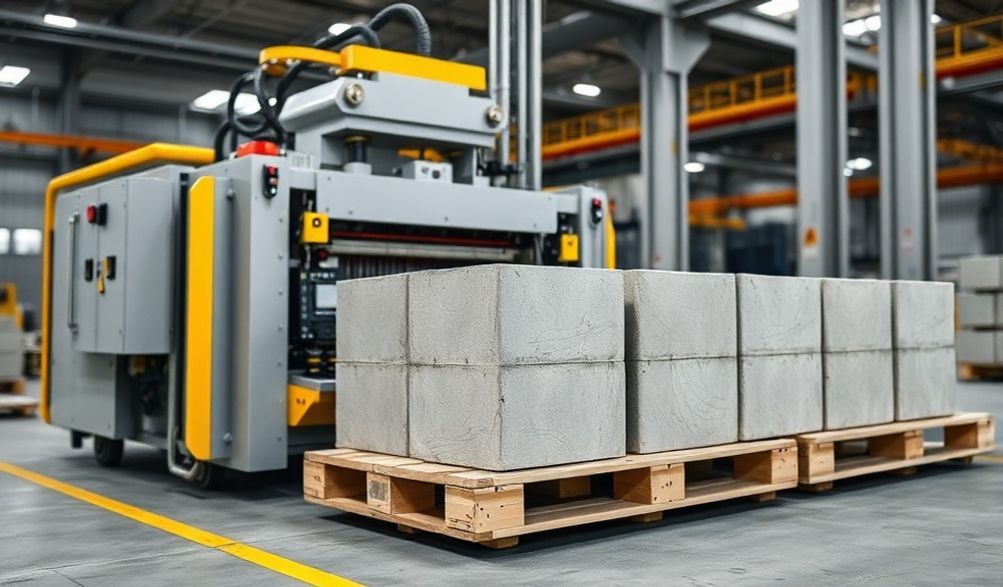
Prix des Machines à Blocs : Guide Complet d'Achat 2024
Trouver la bonne machine à fabriquer des blocs peut sembler accablant, surtout lorsque les prix varient de quelques milliers à plus de cent mille dollars. Comment savoir ce pour quoi vous payez réellement ? Une machine moins chère est-elle une bonne affaire ou un futur casse-tête ? Le nombre considérable d'options peut paralyser même l'entrepreneur le plus décidé.
Ce guide complet dissipe les confusions. Nous détaillerons les facteurs précis qui déterminent les prix des machines à fabriquer les blocs, comparerons les différents types et leurs fourchettes de coûts réalistes, et révélerons les coûts souvent cachés de la possession. Notre objectif est de vous transformer d'un acheteur perplexe en un investisseur averti, équipé pour prendre une décision qui maximise votre retour sur investissement (ROI) pour les années à venir.
À la fin de ce guide sur le « prix des machines à fabriquer des blocs », vous comprendrez clairement les principaux facteurs influençant les prix, serez capable de comparer avec précision les modèles et les fournisseurs, et pourrez établir un budget de projet qui reflète le coût réel de votre entreprise. Entrons dans le vif du sujet.
Facteurs clés déterminant les prix des machines à fabriquer des blocs
Le prix d'une machine à fabriquer des blocs n'est pas arbitraire. Il reflète directement ses capacités, sa durabilité et la technologie qu'elle intègre. Comprendre ces facteurs essentiels est la première étape pour faire un achat judicieux.
Capacité de Production et Rendement
Le principal facteur de prix est le nombre de blocs que la machine peut produire. Cela se mesure généralement en blocs par heure ou par poste de travail de 8 heures.
- Corrélation directe :Il existe une relation quasi linéaire entre la production et le prix. Une machine conçue pour produire 2 000 blocs par jour coûtera nettement moins cher qu'une machine construite pour en produire 10 000 par jour.
- Le Spectre des Échelles :Les machines manuelles peuvent produire quelques centaines de blocs par jour avec une équipe. Les machines semi-automatiques peuvent augmenter cette production à plusieurs milliers. Les lignes de production entièrement automatiques sont conçues pour des dizaines de milliers de blocs quotidiens, d'où leur prix élevé.
Niveau d'Automatisation
L'automatisation est le moteur à la fois de l'efficacité et des coûts. Le constat est clair :Manuel < Semi-automatique < Entièrement automatique.
- Machines manuelles :Coût initial le plus bas, coût de main-d'œuvre à long terme le plus élevé. Ils nécessitent un effort physique important pour le mélange, l'alimentation et le moulage.
- Machines semi-automatiques :Un investissement intermédiaire. Ils automatisent les processus critiques de compression et de vibration, souvent avec des systèmes hydrauliques, mais peuvent nécessiter l'alimentation manuelle en matière première ou le retrait des blocs finis.
- Machines entièrement automatiques :Le coût initial le plus élevé, mais ils transforment la dynamique de la main-d'œuvre. Ces systèmes intègrent le dosage, le mélange, le moulage, le durcissement et l'empilage automatisés des matériaux. Le compromis est clair : investir plus de capital au départ pour économiser substantiellement sur les coûts de main-d'œuvre et atteindre une cohérence de production inégalée.
Type de Machine & Spécifications des Blocs
Toutes les machines à blocs ne sont pas créées égales. Le type de bloc que vous devez produire dicte la conception et la complexité de la machine.
- Machines à Blocs Creux :Commun et souvent la base de tarification.
- Pavés, dalles et bordures : Machines de fabricationCeux-ci nécessitent des moules plus spécialisés et parfois des motifs de vibration différents, ce qui augmente le coût.
- Machines Polyvalentes :Les machines capables de produire plusieurs types de blocs en changeant de moules sont plus polyvalentes, mais aussi plus chères que les unités à usage unique.
- Complexité du moule :Les motifs complexes (par exemple, les pavés décoratifs) nécessitent des moules en acier trempé de précision, qui constituent une composante majeure des coûts.
- Caractéristiques spéciales :Des options comme les distributeurs automatiques de couleur pour les pavés ou les bétonnières intégrées viendront s’ajouter au prix de base.
Réputation de la marque et pays d'origine
La construction d'une machine et son fabricant impliquent un coût lié à la qualité perçue, à l'innovation et au support.
- Marques mondiales établies (par exemple, allemandes, italiennes, américaines)Commandez un prix premium. Vous investissez dans des décennies d'expertise en ingénierie, des matériaux de haute qualité, des tests rigoureux et (généralement) un réseau mondial pour le service après-vente et les pièces de rechange. Cela se traduit par une fiabilité et un temps d'arrêt minimisé.
- Emerging Market Manufacturers (e.g., Indian, Chinese, Turkish): Offer highly competitive pricing. The value proposition is strong, but due diligence is critical. The key is to vet the specific manufacturer for:
- Quality of components (hydraulics, electrical systems).
- Availability of detailed technical documentation.
- Responsiveness of their after-sales service and spare parts supply chain.
Block Making Machine Price Ranges by Type (2024 Estimates)
To ground our discussion, here are realistic price brackets for 2024. Remember, these are estimates—final pricing depends on the specific factors above and your supplier.
Machines manuelles & à petite échelle
- Gamme de prix :1 000 $ – 15 000 $
- Idéal Pour : Entrepreneurs starting a small business, community projects, or low-volume on-site production where labor costs are low.
- Exemples : Manual “egg-laying” type machines (which produce blocks in place), small stationary machines with simple vibration motors.
Machines Semi-Automatiques
- Gamme de prix :15 000 $ – 50 000 $
- Idéal Pour : Growing block-making businesses, medium-scale production for local construction companies, or municipal works.
- Exemples : Stationary machines with robust hydraulic systems for high-pressure compaction, possibly with automatic pallet feeders or block ejectors. Output can range from 1,000 to 5,000+ blocks per 8-hour shift.
Fully Automatic Machines & Production Lines
- Gamme de prix : $50,000 – $300,000+
- Idéal Pour : Large-scale commercial plants, industrial production supplying regional markets, or major infrastructure projects.
- Exemples : These are complete systems. They include high-speed machines with pallet circulators, automatic material handling robots, programmable logic controller (PLC) panels, and sometimes integrated curing racks. Output can easily exceed 10,000 blocks per shift.
Beyond the Sticker Price: The True Cost of Ownership
The purchase price is just the entry ticket. The real cost of owning and operating a block making machine includes several critical, often overlooked, expenses.
Shipping, Installation, and Commissioning
A machine sitting in a port isn’t making you money. Budget for getting it to your site and making it operational.
- Incoterms Matter: Know the difference between FOB (Franco à Bord)etCIF (Coût, Assurance et Fret). FOB means you own and are responsible for the goods once they’re loaded on the ship; you arrange and pay for the main shipping and insurance. CIF means the supplier arranges and pays for shipping to your port.
- Coûts Cachés : Don’t forget import duties, customs clearance fees, and local transport from the port to your factory.
- Technical Setup: Factor in the cost of foundation work, electrical hookup, and the potential need for a technician from the supplier for installation and commissioning. This service may be included or be an extra fee.
Operating Costs: Power, Labor, and Raw Materials
Your daily expenses will directly impact profitability.
- Consommation d'énergie : Fully automatic lines with multiple motors, hydraulics, and conveyors consume significant electricity. Request the machine’s power rating (in kW) to estimate this cost.
- Travail : This is where automation pays off. A semi-automatic machine may need 3-4 operators, while a fully automatic line might run with 1-2. Calculate your local wage costs over 5 years.
- Matériaux bruts : The cost and quality of your concrete mix (cement, aggregates, water) is your largest recurring expense. A consistent, high-quality mix is non-negotiable for producing sellable blocks and protecting your machine from wear.
Maintenance, Spare Parts, and Downtime
This is the ultimate test of your machine’s value. A cheap machine with frequent breakdowns can be more expensive than a costly, reliable one.
- Maintenance Préventive : Budget for regular oil changes, filter replacements, and wear-part inspections. A good supplier will provide a maintenance schedule.
- Critical Spare Parts: Identify and keep a small inventory of parts most prone to failure (e.g., specific hydraulic seals, vibration motor bearings, mold liners). The lead time to get these parts can mean days of lost production.
- The Cost of Downtime: When your machine stops, your revenue stops. The true value of a reliable brand or a supplier with excellent local service is measured in uptime.
How to Get the Best Value for Your Investment
Value isn’t about finding the lowest price; it’s about optimizing the balance between cost, performance, and reliability for your specific needs.
Accurately Assessing Your Needs
Start with a business plan, not a brochure. Ask yourself:
- What is my realistic daily and monthly production target in Year 1? Year 3?
- What specific block types (hollow, solid, paver) does my local market demand?
- What is the selling price for these blocks in my area?
- What is my available budget, including a 15-20% contingency for shipping and setup?
Vetting Suppliers and Requesting Quotes
Treat this like hiring a key business partner. Your supplier’s support is as important as the machine.
- Due Diligence Checklist:
- Request and contact customer references, especially those in a similar climate or region.
- Demanderdetailed videos of the machine in operation at their factory.
- Review the technical specification sheet line by line.
- Understand the warranty terms (duration, what’s covered, what’s not).
- Inquire about the availability and lead time for spare parts.
- Get Multiple Quotes: Ensure each quote is for the exact same specifications so you can make a true comparison.
Key Questions to Ask Before You Buy
Go beyond price. Use this script in your discussions:
- “Can you provide a performance guarantee for output (blocks per hour) and block strength?”
- “What is the standard and optional warranty? What is the process for making a claim?”
- “Do you provide on-site installation and operator training? Is it included or an extra cost?”
- “Can you share a list of recommended critical spare parts to keep in stock and their prices?”
- “What is the estimated power consumption of this model?”
Foire aux Questions (FAQ)
What is the cheapest block making machine available?
The absolute cheapest options are small, manual press machines, which can start around $1,000. However, it’s crucial to understand the trade-offs: extremely low output, high physical labor requirements, and limited block quality consistency. For a business, focusing on “value for money” rather than the “cheapest price” is a far more sustainable strategy.
Can I get a good automatic block machine under $20,000?
You need to set realistic expectations. A brand-new, high-quality, fully automatic production line is highly unlikely in this price range. However, a robust machine semi-automatique with good output or a basic automatic machine from certain emerging markets may fall within this bracket. The key is to intensify your supplier vetting—scrutinize build quality, component brands, and service promises.
How much profit can I make with a block making machine?
Profitability isn’t guaranteed by the machine alone; it’s determined by your market, efficiency, and management. A simplified way to think about it is your break-even volume. Calculate: Machine Total Investment / (Selling Price per Block - Production Cost per Block) = Number of blocks to break even. Your production cost includes raw materials, labor, power, and maintenance. Profit depends on how efficiently you can produce and sell blocks beyond this volume.
Are used block making machines a good option to save money?
They can be, but they carry risk. Avantages : Significantly lower upfront capital cost. Inconvénients : Potential for hidden mechanical issues, outdated technology, higher energy consumption, and likely no warranty. If considering used, it is highly recommended to have the machine inspected by an independent, qualified technician. Also, ensure critical spare parts are still available for that model.
Conclusion
Navigating the “block making machine price” landscape requires looking beyond the initial quote. As we’ve detailed, the final price is a direct function of production capacity, level of automation, machine type, and the brand’s reputation for support. The most cost-effective choice is rarely the cheapest one; it’s the machine that aligns perfectly with your production goals and offers the lowest total cost of ownership through reliability and efficiency.
Investing in a block making machine is a significant decision that forms the foundation of your business. By focusing on your specific needs, conducting thorough supplier due diligence, and planning for all associated costs, you can select equipment that becomes a profitable and reliable cornerstone of your operation for years to come.
Ready to move forward? Download our free Project Planning & Budget Worksheet to systematically organize your requirements, compare quotes, and build a realistic financial model for your block-making venture.
<