
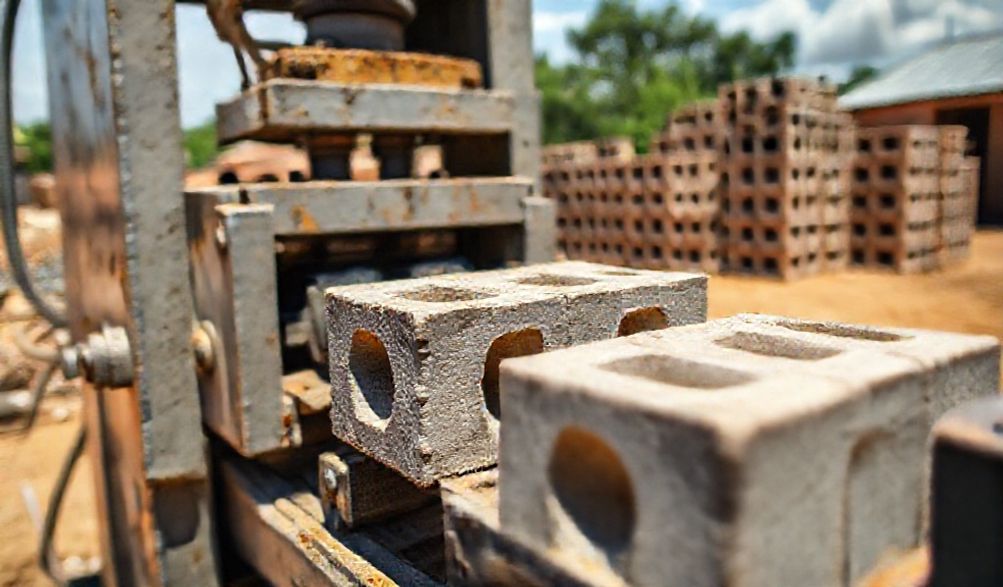
Prix des Machines à Fabriquer des Blocs de Béton en Ouganda : Guide d'Achat et Analyse du Marché pour 2026
Introduction
Le paysage urbain de l'Ouganda se transforme. Avec un taux de croissance annuel de la construction dépassant régulièrement 6 % et un déficit national de logements estimé à plusieurs millions, la demande en matériaux de construction abordables et fiables n'a jamais été aussi forte. Au cœur de cette révolution du bâtiment se trouve le modeste parpaing – un composant fondamental pour tout, des habitations résidentielles aux complexes commerciaux. Pour les entrepreneurs avisés et les entreprises de construction établies, cela représente une opportunité significative : investir dans une machine à fabriquer des blocs de béton. Mais avec des prix allant de quelques millions à plusieurs centaines de millions de shillings ougandais, comment naviguer dans cet investissement crucial ?
Sur la base d'études de marché approfondies et de consultations avec des fabricants locaux et des entreprises de construction à travers Kampala, Jinja et Mbarara, ce guide est conçu pour être votre ressource définitive. Nous ne nous contenterons pas de lister des prix. Vous acquerrez une compréhension complète des facteurs qui déterminent le coût, apprendrez à calculer votre véritable investissement et votre retour potentiel, et recevrez des conseils pratiques pour choisir un fournisseur fiable sur le marché dynamique de l'Ouganda. Considérez ceci comme votre feuille de route pour effectuer un achat éclairé et confiant qui stimulera la croissance de votre entreprise.
Comprendre le marché des blocs de béton en Ouganda
Avant de se plonger dans les spécifications des machines et les étiquettes de prix, il est crucial de comprendre les forces du marché en jeu. L'opportunité dans la production de blocs est directement liée à la trajectoire de développement plus large de l'Ouganda.
La demande de logements abordables et d'infrastructures
La Vision 2040 de l'Ouganda et le Troisième Plan National de Développement (NDPIII) accordent explicitement la priorité au développement des infrastructures et à l'urbanisation. L'accent mis par le gouvernement sur les routes, les écoles, les hôpitaux et les parcs industriels, associé à une migration urbaine rapide, génère une demande soutenue et de gros volume en matériaux de construction. Les blocs de béton sont privilégiés pour leur durabilité, leurs propriétés thermiques et leur rentabilité par rapport aux briques cuites traditionnelles. Cette demande, à la fois politique et démographique, offre un marché stable aux producteurs de blocs.
Avantages de Démarrer une Entreprise de Blocs de Béton en Ouganda
Lancer une entreprise de production de blocs en Ouganda présente des avantages uniques :
* Disponibilité des Matériaux Locaux :Les intrants principaux - granulats (pierre), sable et ciment - sont majoritairement sourcés localement. Cela minimise les risques et les coûts liés à la chaîne d'approvisionnement en matières premières.
* Potentiel de rentabilité élevé :Grâce à des opérations efficaces, la marge entre le coût de production et le prix de vente des blocs peut être substantielle, surtout lorsqu'il s'agit d'approvisionner des projets de construction en cours.
* Contribution économique :Vous contribuez directement à la création d'emplois locaux et à l'initiative « Fabriqué en Ouganda », en fournissant un produit essentiel pour la croissance du pays.
* Normalisation :Les blocs fabriqués à la machine offrent une taille, une forme et une résistance uniformes, ce qui est de plus en plus demandé par les ingénieurs et les entrepreneurs pour garantir la qualité.
Facteurs Clés Déterminant les Prix des Machines à Blocs de Béton en Ouganda
Le prix d'une machine à blocs n'est pas arbitraire. Il reflète directement ses capacités, sa complexité et son origine. Comprendre ces facteurs vous aidera à aligner votre budget sur les besoins de votre entreprise.
Type de Machine et Niveau d'Automatisation
C'est le déterminant de prix le plus important.
* Machines manuelles :Fonctionne entièrement par levier manuel. Coût initial le plus bas mais intensité de travail la plus élevée et production la plus faible.
* Machines semi-automatiques :Disposez d'un système de vibration électrique ou diesel pour compacter le béton. L'opérateur alimente en matériau et retire les blocs. Offre le meilleur équilibre entre prix, production et automatisation pour de nombreuses entreprises ougandaises.
* Machines entièrement automatiques :Systèmes contrôlés par ordinateur qui gèrent le mélange, l’alimentation, le compactage, le durcissement et l’empilage avec une intervention humaine minimale. Ils exigent un prix élevé mais offrent une productivité et une constance inégalées.
* Machines à blocs mobiles :Monté sur une remorque pour un transport facile vers les grands chantiers de construction. Élimine les frais de transport pour les blocs finis. Prix plus élevé que les modèles semi-automatiques fixes en raison de la mobilité ajoutée.
Capacité de Production (Blocs par Heure/Jour)
La capacité est un facteur déterminant des coûts. Une machine conçue pour 1 000 blocs par poste de 8 heures sera nettement moins coûteuse qu’une machine conçue pour 5 000 blocs. Soyez réaliste quant à la demande du marché et à vos projections de croissance. Surinvestir dans une capacité inutilisée immobilise du capital, tandis que sous-investir laisse des opportunités de profit inexploitées.
Marque et Pays d'Origine
La provenance de la machine influence fortement son prix, sa qualité et le coût de possession à long terme.
* Machines Chinoises :Dominant sur le marché ougandais en raison de prix compétitifs. La qualité peut varier considérablement d’un fabricant à l’autre. Une sélection rigoureuse des fournisseurs est essentielle.
* Machines IndiennesSouvent perçu comme un juste milieu, offrant une qualité de construction robuste à des prix légèrement supérieurs à ceux des équivalents chinois, avec une disponibilité des pièce généralement bonne.
* Machines européennes. Represent the premium tier with superior engineering, durability, and automation. Prices are significantly higher, and parts/service networks in East Africa may be limited.
* Locally Assembled/Manufactured: A growing segment. These machines may use imported components but are assembled in Uganda, potentially offering better after-sales support and understanding of local conditions.
Block Type and Mold Configuration
The type of block you plan to produce affects the machine’s complexity and price.
* Standard Hollow/Solid Blocks: The most common and typically the least expensive mold option.
* Blocs à Tenons et Mortaises : Require more precise molds and often stronger vibration, increasing cost.
* Paving Slabs, Kerbstones, and Designer Blocks: Specialized molds and sometimes different machine configurations are needed, raising the investment.
Power Source
Your site’s infrastructure will guide this choice.
* Électrique : Most common for semi and fully automatic stationary plants. Requires reliable grid or generator power.
* Diesel : Crucial for mobile machines or areas with unstable electricity. Higher operational fuel cost but ensures independence.
* Manuel : No power cost, but severely limits production scale.
Concrete Block Making Machine Price Ranges in Uganda (2026)
Avertissement important : The following price ranges are indicative estimates for 2026 based on current market trends, inflation projections, and supplier data. Final prices are subject to change based on specific supplier negotiations, exact specifications, shipping costs, customs duties at the time of import, and currency exchange rate fluctuations. Always request a detailed, itemized quotation from your shortlisted suppliers.
Machines à blocs manuelles
- Gamme de prix : UGX 1,500,000 – UGX 6,000,000
- Idéal pour : Individuals, very small-scale startups, community-based organizations, or for producing blocks for a single personal construction project. Output is low and physically demanding.
Machines à fabriquer des blocs semi-automatiques
- Gamme de prix : UGX 10,000,000 – UGX 45,000,000
- Idéal pour : The sweet spot for most growing small and medium enterprises (SMEs) in Uganda. Ideal for a dedicated block yard supplying local builders. Offers a strong balance between automation, output (500 – 3,000 blocks per day), and upfront cost.
Machines à fabriquer des blocs entièrement automatiques
- Gamme de prix : UGX 50,000,000 – UGX 250,000,000+
- Idéal pour : Large-scale commercial production plants aiming to supply major contractors, government projects, or distributors across regions. Requires significant space, stable three-phase power, and higher technical expertise to operate and maintain.
Machines à blocs mobiles
- Gamme de prix : UGX 25,000,000 – UGX 80,000,000
- Idéal pour : Construction companies undertaking large, long-duration projects (e.g., housing estates, factory complexes). Producing blocks directly on-site eliminates transport costs and block damage.
Beyond the Machine: Total Investment & Operational Costs
A seasoned operator in Namanve will tell you: the machine’s sticker price is just the beginning. Failing to budget for the total cost of ownership is a common pitfall for new entrants.
Hidden and Ancillary Costs
- Shipping, Customs Duty, and Taxes: If importing directly, factor in CIF (Cost, Insurance, Freight) charges, port clearing fees, and Uganda Revenue Authority (URA) import duties, which can add 25-35%+ to the ex-factory price.
- Fondation & Installation : A semi-automatic machine needs a solid, level concrete foundation. Installation may require a technician, sometimes at an extra cost.
- Équipement auxiliaire : You will likely need a pan or drum concrete mixer, a wheelbarrow or conveyor system, curing racks or pallets, and a reliable water source. These are separate costs.
Raw Material & Labor Costs
- Matériaux bruts : As of 2026 trends, calculate the cost per block based on cement, sand, and aggregate prices in your region. Building relationships with local quarry and sand suppliers is key to managing this variable cost.
- Travail : A semi-automatic operation may require 3-5 workers for material handling, mixing, operation, and curing. Factor in competitive wages for your area.
Calculating Your Return on Investment (ROI)
Here’s a simplified framework:
1. Calculate Cost Per Block: (Cost of Cement + Sand + Aggregate + Labor + Power + Machine Depreciation) per block.
2. Determine Selling Price: Research the current market price for blocks in your target area (e.g., 6-inch hollow blocks).
3. Estimate Gross Profit Per Block: Selling Price – Cost Per Block.
4. Project Daily/Monthly Output: Based on your machine’s capacity and operational hours.
5. Calculate Payback Period: (Total Machine Investment + Ancillary Costs) / (Gross Profit Per Block x Monthly Block Output).
Example Snapshot for a UGX 30M Semi-Auto Setup:
* Estimated Production Cost per Block: UGX 1,200
* Average Selling Price: UGX 1,800
* Gross Profit per Block: UGX 600
* Daily Output (Target): 1,000 blocks
* Monthly Gross Profit (25 days): UGX 15,000,000
* This is a simplified illustration. Your detailed business plan must account for all overheads, market fluctuations, and downtime.
How to Choose the Right Supplier in Uganda
Your supplier relationship is critical for long-term success. A common challenge reported in Kampala is the difficulty of getting timely spare parts or technical support after the sale.
Local Dealers vs. Direct Import: Pros and Cons
- Local Dealer: Higher machine price, but includes warranty, potential installation help, and (crucially) local after-sales support. They handle import complexities.
- Direct Import from Abroad: Lower ex-factory price, but you bear all shipping, customs, and logistics risks. After-sales support is often slow or non-existent. Recommended only for experienced importers.
Vetting a Supplier: Essential Checklist
- Physical Visit: Do they have a showroom or workshop you can visit?
- After-Sales Promise: Get warranty terms (typically 1 year on major parts) in writing. Ask about the availability of common spare parts (vibration motors, hydraulic seals, molds) in their local stock.
- Références clients : Insist on contacting 2-3 previous customers in Uganda. Ask about machine performance and the supplier’s responsiveness to issues.
- Demonstration: Can they show you a machine in operation, either at their yard or a client’s site?
Red Flags to Avoid
- Prices drastically lower than the market average.
- Suppliers who only communicate via WhatsApp with no verifiable physical address.
- Pressure to pay a large deposit before providing a detailed contract.
- Vague or unwilling answers about warranty and service.
Top Recommendations for Different Business Scales
Best Machine for a Small Startup/Individual
A manual or small semi-automatic machine (at the lower end of the UGX 10-20M range) is advisable. Focus on mastering the production process, building a local customer base, and generating cash flow before scaling up. A common recommendation from experienced owners is to start with a robust single-mold semi-automatic machine.
Best Machine for a Growing Construction Company
A medium-capacity semi-automatic machine (UGX 25-45M range) with options for multiple block molds (hollow, solid, interlocking) offers the flexibility to meet diverse project needs. Ensure it has a reliable diesel option if your site power is unstable.
Best Machine for a Large-Scale Block Production Plant
Investment in a Ligne de production entièrement automatique is justified. Partner with a reputable international brand that can provide commissioning support and training. Your focus should be on consistent high-volume output, supply contracts, and efficient logistics for distribution.
FAQ Section
Q1: What is the cheapest concrete block making machine available in Uganda?
The cheapest options are single-mold manual presses, which can be found from UGX 1.5 million upwards. However, consider your labor costs and output needs carefully.
Q2: Can I get a loan or financing for a block machine in Uganda?
Yes. Several financial institutions and SACCOs offer asset financing or business loans for equipment purchase. A solid business plan is essential for approval.
Q3: How much profit can I make per block?
Profit varies widely based on your location, material costs, and efficiency. Using the earlier framework, gross profits can range from UGX 300 to UGX 800 per standard block. Net profit is after deducting all overheads.
Q4: Are Chinese block machines in Uganda reliable?
They can be, but quality is not uniform. The key is the fournisseur, not just the country of origin. Choose a supplier with a long-term presence in Uganda and a proven track record of support.
Q5: What is the typical warranty period for these machines?
Typically 12 months on major components like the vibration motor, hydraulic system, and frame. Wear items like molds are often covered for a shorter period (e.g., 3-6 months).
Q6: How do I maintain my block making machine to avoid breakdowns?
Daily cleaning of concrete residue, regular checking and tightening of bolts, timely greasing of bearings, and ensuring the hydraulic oil is clean and at the correct level are the most critical routines.
Q7: Where are the main suppliers located in Uganda?
Most established suppliers and dealers are clustered in the industrial areas of Kampala (Namanve, Kisenyi, Bweyogerere)etJinja. Some also operate in larger regional towns like Mbarara and Gulu.
Conclusion
Investing in a concrete block making machine in Uganda is a strategic move into the backbone of the nation’s construction sector. As we’ve explored, the price is a function of automation, capacity, and brand, with total costs extending far beyond the initial purchase. The most critical step is partnering with a reputable supplier who will support your business long after the sale.
Use this guide as your foundation. Visit multiple suppliers, inspect their machines, talk to their past clients, and run your numbers meticulously. The potential for success is significant for those who combine a quality machine with sound business acumen and a commitment to serving Uganda’s growing built environment. Take the next step in your entrepreneurial journey with confidence.
<