
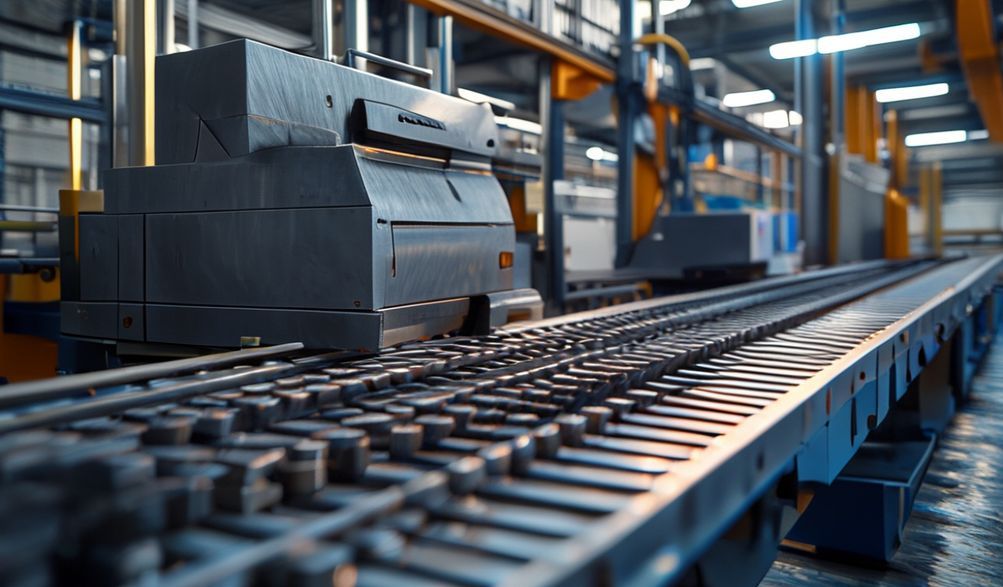
Recherche d'Usines de Fabrication de Machines à Briques de Bloc de Bonne Qualité : Focus sur l'Usine de Briques FUDA
Introduction
Dans le monde de la construction, les fondations de tout grand projet – au sens propre – commencent souvent par un simple bloc. La demande mondiale de matériaux de construction durables, abordables et uniformes n'a jamais été aussi forte, exerçant une pression immense sur les fabricants de briques et de parpaings. Au cœur de cette industrie se trouve une décision cruciale : le choix des machines qui produisent ces composants essentiels. Choisir la bonne usine de fabrication de machines à fabriquer des blocs de construction n'est pas simplement une tâche d'approvisionnement ; c'est un investissement stratégique qui dicte l'efficacité de la production, la qualité du produit, les coûts opérationnels à long terme, et finalement, la rentabilité et la réputation de votre entreprise.
Ce guide constitue une ressource complète pour les propriétaires d'entreprise, les chefs de projet et les spécialistes des achats qui naviguent sur le marché mondial complexe des machines de fabrication de briques. Nous analyserons les attributs fondamentaux qui distinguent les fabricants exceptionnels des autres et fournirons un cadre pratique d'évaluation. Comme étude de cas spécifique, nous porterons un regard analytique sur laUsine de fabrication de briques FUDAun nom fréquemment rencontré dans ce secteur, pour comprendre ce qu'il représente dans le paysage plus large.
Ce guide est compilé sur la base d'une analyse sectorielle, d'un examen des spécifications techniques et des principes de fabrication établis pour faciliter votre décision d'approvisionnement.Notre objectif est de vous doter des connaissances nécessaires pour identifierusines de fabrication de machines à blocs de briques de bonne qualitéet réalisez un investissement sûr et éclairé.
Qu'est-ce qui définit une "bonne qualité" d'usine de fabrication de machines à fabriquer des blocs de briques ?
Dépasser les allégations marketing nécessite une compréhension claire des facteurs tangibles qui constituent l'excellence manufacturière. Une usine de qualité se définit par ses processus, ses résultats et son engagement à long terme envers ses clients.
Normes d'Ingénierie et de Fabrication
L'épine dorsale de toute machine fiable se trouve sur le plancher de l'usine et dans le bureau d'ingénierie.
- Certifications :Recherchez le respect des normes internationales. La certification ISO 9001 est un indicateur fort d'une approche systématique de la gestion de la qualité. Pour les machines vendues sur de nombreux marchés mondiaux, le marquage CE démontre la conformité aux normes européennes de santé, de sécurité et d'environnement.
- Approvisionnement en Matériaux :Les machines de haute qualité utilisent des matériaux classés. Cela inclut de l'acier renforcé pour le châssis, des composants hydrauliques de précision provenant de marques réputées (comme Bosch Rexroth ou Parker) et des systèmes électriques fiables (Siemens, Schneider).
- Contrôle de la Qualité (CQ) :Un processus de contrôle qualité robuste est non négociable. Il doit s'étendre de l'inspection des matières premières entrantes aux contrôles en cours de processus pendant le soudage et l'assemblage, pour aboutir à des tests finaux rigoureux sous charge.
Performances des Machines et Métriques de Production
Les spécifications racontent l'histoire des capacités. Les indicateurs clés de performance (KPI) doivent être vérifiés.
- Capacité de production :Mesuré en blocs par heure ou par poste. Assurez-vous que la capacité indiquée correspond au type et à la taille de blocs spécifiques dont vous avez besoin.
- Temps de cycle :La vitesse d'un cycle de production complet. Un temps de cycle plus rapide et constant signifie une efficacité plus élevée.
- Polyvalence :La machine peut-elle produire plusieurs types de blocs (pleins, creux, pavés, imbriqués) en changeant simplement le moule ? Cette flexibilité ajoute une valeur considérable.
- Niveau d'automatisation :De l'alimentation manuelle aux systèmes entièrement automatiques avec manutention robotisée des palettes, le niveau d'automatisation influence directement les coûts de main-d'œuvre et la régularité de la production.
Innovation et investissement en R&D
Une usine qui investit dans la recherche et le développement investit dans votre efficacité future.
- Cet engagement peut se manifester par des conceptions écoénergétiques réduisant la consommation d'énergie, des systèmes de vibration améliorés pour une meilleure densité des blocs, ou l'intégration de systèmes API (Automate Programmable Industriel) pour une exploitation et des diagnostics facilités.
- L'innovation ne se résume pas toujours à l'IA ; elle peut être un moule plus intelligent qui réduit l'usure ou une disposition de maintenance plus accessible.
Durabilité et Support Après-Vente
Le véritable test de la qualité d'une usine commenceaprèsLa machine est expédiée.
- Garantie :Des conditions de garantie claires et complètes (généralement de 12 à 24 mois pour les composants principaux) sont essentielles. Comprenez ce qui est couvert et la procédure à suivre pour les réclamations.
- Pièces de rechange : Availability of a common parts inventory and a system for supplying wear-and-tear items (like mold liners, springs, seals) is critical to minimize downtime.
- Assistance technique : A quality factory provides structured support: detailed manuals, video guides, remote assistance via video call, and the option for on-site installation and training by their engineers.
Facteurs clés à évaluer lors du choix d'une usine
Armed with the “what,” you now need the “how.” Evaluating a potential partner requires a methodical approach.
Factory Audit and Site Inspection Checklist
If possible, visiting the factory is the single most revealing step.
- Workshop Organization: Is the production floor clean, organized, and safe? Chaos often correlates with poor quality control.
- Assembly Lines: Observe the workflow. Are there dedicated stations for welding, assembly, painting, and testing?
- Testing Procedures: Ask to witness a machine test. Is it run for an extended period under full load? Are the produced blocks measured for dimensional accuracy and strength?
- Worker Skill: Note the expertise of welders and technicians. High-skilled labor is reflected in the final product’s finish and reliability.
Analyzing Technical Specifications and Compliance
Learn to read between the lines of a spec sheet.
- Go beyond the headline numbers. Scrutinize the details: motor power (kW), hydraulic pressure (MPa), vibration frequency and amplitude, and the precise dimensions of the production table.
- Verify all claimed certifications. Request copies of certificates and, if in doubt, check with the issuing body.
- A common pitfall is focusing solely on block output while ignoring energy consumption, which is a major operational cost.
Assessing Client Portfolio and Testimonials
Past performance is the best predictor of future behavior.
- Request case studies or a client list, preferably with contacts in your region or a similar climate.
- Look for long-term clients—repeat business is a powerful testament to reliability and service.
- Don’t just accept curated testimonials. If possible, contact references directly and ask specific questions about machine performance, problem resolution, and parts support.
Total Cost of Ownership vs. Initial Price
The cheapest machine is often the most expensive in the long run.
- Initial Price: The FOB (Free On Board) or CIF (Cost, Insurance, Freight) price of the machine.
- Lifetime Costs: Include shipping, import duties, installation, foundation work, routine maintenance, spare parts consumption, energy usage, and potential production losses from downtime.
- A slightly more expensive machine from a quality factory with higher efficiency and lower failure rates will almost always offer a superior return on investment.
Spotlight: An In-Depth Look at FUDA Brick Making Factory
As a frequently searched supplier, FUDA serves as a useful case study for applying our evaluation framework. The following analysis is based on publicly available information and general industry positioning.
Company Overview and Market Position
FUDA is a brick and block making machinery manufacturer based in China. The company positions itself as an exporter of a range of construction machinery, with a focus on block making machines for international markets, particularly in Africa, Southeast Asia, and the Middle East. Their stated mission typically revolves around providing cost-effective machinery solutions to support infrastructure development.
FUDA’s Product Range and Technological Capabilities
FUDA’s catalog generally includes a variety of models to cater to different market segments:
- Machines Manuelles et Semi-Automatiques : Lower-cost options suitable for small-scale startups or projects with lower output requirements.
- Machines à fabriquer des blocs entièrement automatiques : These are stationary machines with automatic mixing, conveying, molding, and stacking systems, aimed at medium to larger-scale production.
- Machines à blocs mobiles : Often highlighted for their ability to produce bricks directly on-site, reducing material handling.
- Caractéristiques principales commonly advertised include robust vibration systems for compaction, the ability to use various raw materials (soil, cement, fly ash), and modular designs for easier maintenance.
Quality Assurance Processes at FUDA
While specific internal processes vary, factories like FUDA typically outline a standard QC protocol:
- Incoming inspection of purchased materials and components.
- Stage-by-stage inspection during fabrication (welding, machining).
- Pre-delivery testing, where the machine is assembled and run to verify performance against the order specifications.
- The critical step for any buyer is to define the acceptance testing criteria in the contract before production begins.
Strengths and Considerations
A balanced view is crucial for any sourcing decision.
Potential Strengths:
* Prix Compétitifs : Often a primary attraction, offering access to mechanized production at a lower capital entry point.
* Export Experience: Demonstrated experience in packaging and shipping machines to various international destinations.
* Gamme de produits : A wide selection allows buyers to choose a model that fits their budget and output needs.
Key Considerations for Buyers:
* Clarity of Communication: Ensure all technical requirements, warranty terms, and support details are documented clearly in English (or your language) to avoid misunderstandings.
* Depth of Local/Regional Support: Investigate the availability and capability of their after-sales agents or partners in your country. Proximity of support is vital for quick service.
* Customization vs. Standard Models: Be clear on what modifications are possible and how they affect price and lead time.
* Contract Specificity: As with any international supplier, the contract is your primary protection. It must be exhaustive.
How to Verify and Vet Any Brick Machine Factory (Including FUDA)
Empower yourself with due diligence. This process applies universally.
Conducting Due Diligence
- Vérifier la légitimité d'une entreprise : Request their business license and check their registration with local Chinese authorities via third-party verification services if needed.
- Contact Past Clients: Use the provided reference list. Ask specific questions: “What was your biggest challenge after installation?” and “How was the response time for technical support?”
- Check Certification Authenticity: Note the certification number from their documents and verify it on the issuer’s website if possible.
The Critical Role of Communication and Contract Clarity
The contract is your project’s blueprint.
- It must unambiguously detail: Spécifications techniques (attach approved drawings), Delivery Terms (Incoterms 2020), Payment Schedule (e.g., 30% deposit, 70% against copy of Bill of Lading), Garantie (scope, duration, claim process), and Force Majeure & Dispute Resolution clauses.
Requesting and Interpreting a Factory Quotation
A professional quote is a sign of a professional supplier.
- It should be itemized: Machine price, mold costs, spare parts package, tool kit, shipping costs, insurance.
- Clearly state the Trade Term (FOB Shanghai, CIF Durban, etc.).
- Include key technical data and reference drawings for approval before production.
- Specify packaging details (export wooden case) and the estimated lead time.
Foire aux Questions (FAQ)
Q1: What is the typical lead time for a brick making machine from a Chinese factory like FUDA?
A: Lead times vary significantly. A standard model might take 30-45 days after deposit, while a customized or large automatic line could require 60-90 days. Crucially, always get a written, date-bound guarantee in your contract, with penalties for delays.
Q2: How can I ensure the machine will work with my local raw materials (e.g., soil/cement type)?
A: This is a vital step. Provide 20-30kg of your representative raw materials (soil, sand, ash) to the factory before finalizing the order. They should conduct lab tests and a production trial, providing you with a mix formula and sample blocks for your approval.
Q3: What after-sales support should I expect from a quality factory?
A: Expect comprehensive support: 1) Detailed operation and maintenance manuals, 2) Remote guidance via video call for installation and troubleshooting, 3) The option for paid on-site engineer deployment, 4) Operator training, and 5) A responsive parts department with clear pricing and shipping timelines.
Q4: Are there red flags to watch out for when dealing with new suppliers?
A: Yes. Major red flags include: reluctance or refusal to provide client references, pressure to pay 100% upfront, vague or incomplete contracts, lack of technical drawings, inability to conduct a video call from their active workshop, and quotes that seem unrealistically low compared to the market.
Conclusion
Identifying a truly good quality block bricks making machine factory is a deliberate process that extends far beyond comparing online brochures and price lists. It demands a focus on fundamental manufacturing integrity, verifiable performance, and a proven framework for long-term support. As we’ve explored, factories like Usine de fabrication de briques FUDA represent a segment of the global supply market that offers accessible solutions, but they also underscore the universal necessity for meticulous buyer due diligence.
The principles outlined here—auditing standards, analyzing total cost, verifying claims, and insisting on crystal-clear contracts—are non-negotiable, regardless of the supplier’s location or brand. Use this guide as a structured checklist for your evaluation.
Your next step: Compile a shortlist of 3-5 factories that meet your initial criteria. Engage with them using the specific questions and requests detailed above. Request comprehensive, itemized proposals and, if feasible, plan site inspections. By investing time in this selection process, you are not just buying a machine; you are securing a cornerstone for your business’s productivity and growth for years to come.
<