
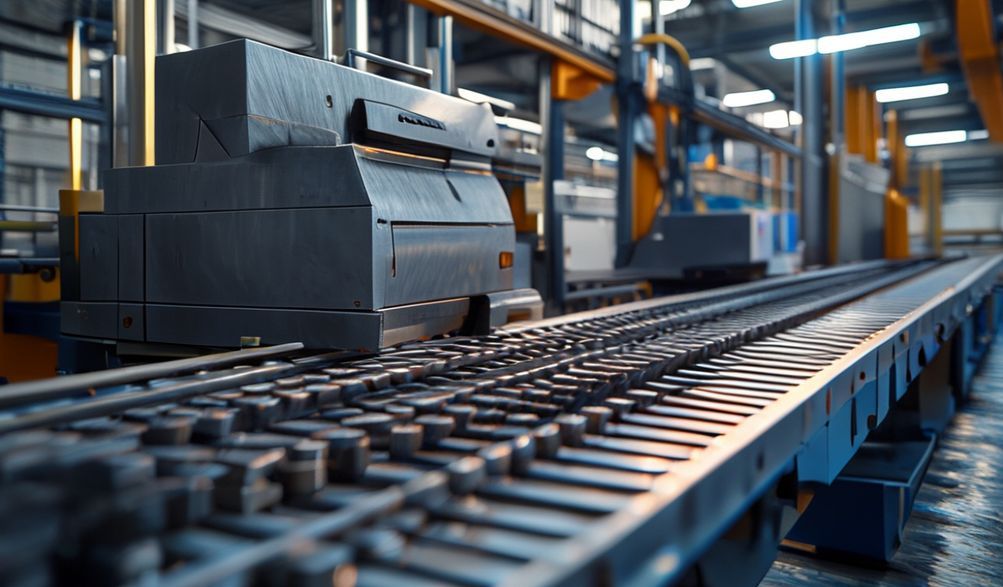
Ёфтани Корхонаҳои Саноатии Хуб барои Истеҳсоли Блокҳои Бетонӣ: Диққат ба Корхонаи Блоксозии FUDA
Муқаддима
Дар олами сохтмон, пояи ҳар лоиҳаи бузург - дар асл - одатан бо як блок оғоз меёбад. Талаботи ҷаҳонӣ барои материалҳои бозсозӣ, арзон ва устувор ҳеҷ гоҳ ба ин дараҷа баланд набуд, ки ба истеҳсолкунандагони хишт ва блок фишори бузург меоварад. Дар маркази ин саноат як қарорҳои муҳим мавҷуд аст: интихоби мошине, ки ин компонентҳои асосиро истеҳсол мекунад. Интихоби дурусти фабрикаи мошини сохтани блокҳо танҳо вазифаи таҳсил нест; ин сармоягузории стратегӣ аст, ки самаранокии истеҳсол, сифати маҳсулот, хароҷоти дарозмуддати амалиётӣ ва дар ниҳоят, фоидаоварӣ ва обрӯи тиҷорати шуморо муайян мекунад.
Ин дастур ҳамчун манбаи фарох барои соҳибкорони тиҷорат, мудирони лоиҳаҳо ва мутахассисони хариди мошинҳои истеҳсоли хурӯш дар бозори мураккаби ҷаҳонӣ хидмат мекунад. Мо хусусиятҳои асосиеро, ки истеҳсолкунандагони барҷастаро аз дигарон ҷудо мекунанд, таҳлил намуда ва чорчӯбаи амалиро барои арзёбӣ пешниҳод мекунем. Ҳамчун мисоли мушаххас, мо ба таҳлилиФабрикаи истеҳсоли хишти ФУДАноме, ки дар ин соҳа ба таври мутадовил вомехӯрад, то фаҳманд, ки он дар фазои васеътар чӣ чизро ифода мекунад.
Ин дастур барои кумак ба қарори шумо дар бораи манбаъҳо, аз рӯи таҳлили саноат, баррасии мушаххасоти техникӣ ва принсипҳои таъсисёфтаи истеҳсолот таҳия шудааст.Мақсади мо ин аст, ки шуморо бо дониши муайян кардан таъмин кунемфабрикаҳои истеҳсоли машинаҳои санги блокҳои сифатӣва сармоягузории боварӣ ва огоҳона кунед.
Чӣ чиз як корхонаи "сифати хуб" дар сохтани машинаҳои истеҳсоли блокҳои хиштро муайян мекунад?
Аз даъвоҳои маркетингӣ гузаштан ба фаҳмиши равшани омилҳои мушаххасе ниёз дорад, ки афзалиятҳои истеҳсолӣро ташкил медиҳанд. Корхонаи сифатӣ аз рӯи равандҳо, маҳсулоти истеҳсолӣ ва ифои ваъдаҳои дарозмуддати ба муштариён муайян мешавад.
Стандартҳои муҳандисӣ ва истеҳсолӣ
Пуштибони ҳар мошини боэътимод дар ошхонаи корхона ва дар дафтари муҳандисӣ ёфт мешавад.
- Сертификатҳо:Ҷустуҷӯи риояи стандартҳои байналмилалӣ. Сертификати ISO 9001 нишонаи қавӣ аз равиши систематикии идоракунии сифат аст. Барои мошинаҳое, ки дар бозорҳои гуногуни ҷаҳонӣ фурӯхта мешаванд, нишонагузории CE риояи стандартҳои аврупоии саломатӣ, бехатарӣ ва муҳити зистро нишон медиҳад.
- Сарчашмаҳои Маводӣ:Машинаҳои сифатӣ аз материалҳои дараҷабандӣ истифода мекунанд. Ин фреймҳои пӯшидаи пӯлодӣ, ҷузъҳои гидравликии муҳандисии дақиқ аз брендҳои эътибордор (масалан, Bosch Rexroth ё Parker) ва системаҳои электрикии боэътимод (Siemens, Schneider) -ро дар бар мегирад.
- Контроли сифат (QC): A robust QC process is non-negotiable. It should span from incoming raw material inspection to in-process checks during welding and assembly, culminating in rigorous final testing under load.
Machine Performance and Output Metrics
Specifications tell the story of capability. Key performance indicators (KPIs) must be verified.
- Иқтидори истеҳсолӣ: Measured in blocks per hour or per shift. Ensure the stated capacity is for the specific block type and size you need.
- Вақти даврӣ: The speed of one complete production cycle. A faster, consistent cycle time means higher efficiency.
- Бисёрҷиҳатӣ: Can the machine produce multiple block types (solid, hollow, paving, interlocking) by simply changing the mold? Flexibility adds tremendous value.
- Сатрҳои автоматӣ: From manual feed to fully automatic systems with robotic pallet handling, the level of automation directly impacts labor costs and output consistency.
Innovation and R&D Investment
A factory that invests in research and development is investing in your future efficiency.
- This commitment can manifest in energy-efficient designs that lower power consumption, improved vibration systems for better block density, or the integration of PLC (Programmable Logic Controller) systems for easier operation and diagnostics.
- Innovation isn’t always about AI; it can be a smarter mold design that reduces wear or a more accessible maintenance layout.
Durability and After-Sales Support
The true test of a factory’s quality begins пас the machine is shipped.
- Warranty: Clear, comprehensive warranty terms (typically 12-24 months for key components) are essential. Understand what is covered and the process for claims.
- Қисмҳои ивазшаванда: Availability of a common parts inventory and a system for supplying wear-and-tear items (like mold liners, springs, seals) is critical to minimize downtime.
- Дастгирии техникӣ: A quality factory provides structured support: detailed manuals, video guides, remote assistance via video call, and the option for on-site installation and training by their engineers.
Key Factors to Evaluate When Choosing a Factory
Armed with the “what,” you now need the “how.” Evaluating a potential partner requires a methodical approach.
Factory Audit and Site Inspection Checklist
If possible, visiting the factory is the single most revealing step.
- Workshop Organization: Is the production floor clean, organized, and safe? Chaos often correlates with poor quality control.
- Assembly Lines: Observe the workflow. Are there dedicated stations for welding, assembly, painting, and testing?
- Testing Procedures: Ask to witness a machine test. Is it run for an extended period under full load? Are the produced blocks measured for dimensional accuracy and strength?
- Worker Skill: Note the expertise of welders and technicians. High-skilled labor is reflected in the final product’s finish and reliability.
Analyzing Technical Specifications and Compliance
Learn to read between the lines of a spec sheet.
- Go beyond the headline numbers. Scrutinize the details: motor power (kW), hydraulic pressure (MPa), vibration frequency and amplitude, and the precise dimensions of the production table.
- Verify all claimed certifications. Request copies of certificates and, if in doubt, check with the issuing body.
- A common pitfall is focusing solely on block output while ignoring energy consumption, which is a major operational cost.
Assessing Client Portfolio and Testimonials
Past performance is the best predictor of future behavior.
- Request case studies or a client list, preferably with contacts in your region or a similar climate.
- Look for long-term clients—repeat business is a powerful testament to reliability and service.
- Don’t just accept curated testimonials. If possible, contact references directly and ask specific questions about machine performance, problem resolution, and parts support.
Total Cost of Ownership vs. Initial Price
The cheapest machine is often the most expensive in the long run.
- Initial Price: The FOB (Free On Board) or CIF (Cost, Insurance, Freight) price of the machine.
- Lifetime Costs: Include shipping, import duties, installation, foundation work, routine maintenance, spare parts consumption, energy usage, and potential production losses from downtime.
- A slightly more expensive machine from a quality factory with higher efficiency and lower failure rates will almost always offer a superior return on investment.
Spotlight: An In-Depth Look at FUDA Brick Making Factory
As a frequently searched supplier, FUDA serves as a useful case study for applying our evaluation framework. The following analysis is based on publicly available information and general industry positioning.
Company Overview and Market Position
FUDA is a brick and block making machinery manufacturer based in China. The company positions itself as an exporter of a range of construction machinery, with a focus on block making machines for international markets, particularly in Africa, Southeast Asia, and the Middle East. Their stated mission typically revolves around providing cost-effective machinery solutions to support infrastructure development.
FUDA’s Product Range and Technological Capabilities
FUDA’s catalog generally includes a variety of models to cater to different market segments:
- Дастӣ ва Нимаавтоматӣ Машинаҳо: Lower-cost options suitable for small-scale startups or projects with lower output requirements.
- Машинаҳои пурра худкор барои сохтани блокҳо: These are stationary machines with automatic mixing, conveying, molding, and stacking systems, aimed at medium to larger-scale production.
- Машинаҳои блоксозии мобилӣ: Often highlighted for their ability to produce bricks directly on-site, reducing material handling.
- Хусусиятҳои асосӣ commonly advertised include robust vibration systems for compaction, the ability to use various raw materials (soil, cement, fly ash), and modular designs for easier maintenance.
Quality Assurance Processes at FUDA
While specific internal processes vary, factories like FUDA typically outline a standard QC protocol:
- Incoming inspection of purchased materials and components.
- Stage-by-stage inspection during fabrication (welding, machining).
- Pre-delivery testing, where the machine is assembled and run to verify performance against the order specifications.
- The critical step for any buyer is to define the acceptance testing criteria in the contract before production begins.
Strengths and Considerations
A balanced view is crucial for any sourcing decision.
Potential Strengths:
* Нархгузории рақобатӣ: Often a primary attraction, offering access to mechanized production at a lower capital entry point.
* Export Experience: Demonstrated experience in packaging and shipping machines to various international destinations.
* Диапазони маҳсулот: A wide selection allows buyers to choose a model that fits their budget and output needs.
Key Considerations for Buyers:
* Clarity of Communication: Ensure all technical requirements, warranty terms, and support details are documented clearly in English (or your language) to avoid misunderstandings.
* Depth of Local/Regional Support: Investigate the availability and capability of their after-sales agents or partners in your country. Proximity of support is vital for quick service.
* Customization vs. Standard Models: Be clear on what modifications are possible and how they affect price and lead time.
* Contract Specificity: As with any international supplier, the contract is your primary protection. It must be exhaustive.
How to Verify and Vet Any Brick Machine Factory (Including FUDA)
Empower yourself with due diligence. This process applies universally.
Conducting Due Diligence
- Санҷиди эътибори тиҷоратӣ: Request their business license and check their registration with local Chinese authorities via third-party verification services if needed.
- Contact Past Clients: Use the provided reference list. Ask specific questions: “What was your biggest challenge after installation?” and “How was the response time for technical support?”
- Check Certification Authenticity: Note the certification number from their documents and verify it on the issuer’s website if possible.
The Critical Role of Communication and Contract Clarity
The contract is your project’s blueprint.
- It must unambiguously detail: Technical Specifications (attach approved drawings), Delivery Terms (Incoterms 2020), Payment Schedule (e.g., 30% deposit, 70% against copy of Bill of Lading), Кафолат (scope, duration, claim process), and Force Majeure & Dispute Resolution clauses.
Requesting and Interpreting a Factory Quotation
A professional quote is a sign of a professional supplier.
- It should be itemized: Machine price, mold costs, spare parts package, tool kit, shipping costs, insurance.
- Clearly state the Trade Term (FOB Shanghai, CIF Durban, etc.).
- Include key technical data and reference drawings for approval before production.
- Specify packaging details (export wooden case) and the estimated lead time.
Frequently Asked Questions (FAQ)
Q1: What is the typical lead time for a brick making machine from a Chinese factory like FUDA?
A: Lead times vary significantly. A standard model might take 30-45 days after deposit, while a customized or large automatic line could require 60-90 days. Crucially, always get a written, date-bound guarantee in your contract, with penalties for delays.
Q2: How can I ensure the machine will work with my local raw materials (e.g., soil/cement type)?
A: This is a vital step. Provide 20-30kg of your representative raw materials (soil, sand, ash) to the factory before finalizing the order. They should conduct lab tests and a production trial, providing you with a mix formula and sample blocks for your approval.
Q3: What after-sales support should I expect from a quality factory?
A: Expect comprehensive support: 1) Detailed operation and maintenance manuals, 2) Remote guidance via video call for installation and troubleshooting, 3) The option for paid on-site engineer deployment, 4) Operator training, and 5) A responsive parts department with clear pricing and shipping timelines.
Q4: Are there red flags to watch out for when dealing with new suppliers?
A: Yes. Major red flags include: reluctance or refusal to provide client references, pressure to pay 100% upfront, vague or incomplete contracts, lack of technical drawings, inability to conduct a video call from their active workshop, and quotes that seem unrealistically low compared to the market.
Conclusion
Identifying a truly good quality block bricks making machine factory is a deliberate process that extends far beyond comparing online brochures and price lists. It demands a focus on fundamental manufacturing integrity, verifiable performance, and a proven framework for long-term support. As we’ve explored, factories like Фабрикаи истеҳсоли хишти Фуда represent a segment of the global supply market that offers accessible solutions, but they also underscore the universal necessity for meticulous buyer due diligence.
The principles outlined here—auditing standards, analyzing total cost, verifying claims, and insisting on crystal-clear contracts—are non-negotiable, regardless of the supplier’s location or brand. Use this guide as a structured checklist for your evaluation.
Your next step: Compile a shortlist of 3-5 factories that meet your initial criteria. Engage with them using the specific questions and requests detailed above. Request comprehensive, itemized proposals and, if feasible, plan site inspections. By investing time in this selection process, you are not just buying a machine; you are securing a cornerstone for your business’s productivity and growth for years to come.
<