
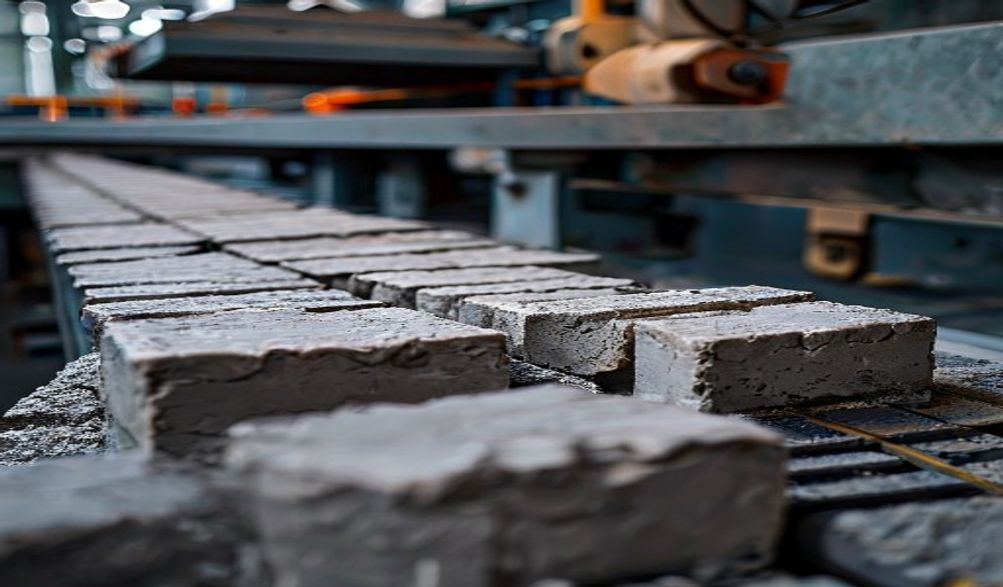
Comment Choisir une Machine à Fabriquer des Briques : Guide Complet d'Achat
Introduction
De la maison la plus modeste au gratte-ciel le plus imposant, les briques sont littéralement les éléments de base de notre monde. Pour les entrepreneurs, les entreprises de construction et les chefs de projet, le choix decommentLa production de ces briques est cruciale. Choisir la bonne machine à fabriquer des briques n'est pas simplement un achat ; c'est un investissement dans la qualité, l'efficacité et la rentabilité ultime de toute votre opération. Un mauvais choix peut entraîner des temps d'arrêt paralysants, des produits de qualité inférieure et des difficultés financières.
Ce guide constitue votre feuille de route définitive. Fort d'une expertise sectorielle, de connaissances techniques et d'une expérience opérationnelle pratique, il fait abstraction du bruit marketing. Nous vous fournirons un cadre clair et actionnable pour naviguer cette décision cruciale. À la fin, vous comprendrez non seulementcomment choisir une machine à fabriquer des briquesmais comment sélectionner leoptimalmachine pour vos objectifs spécifiques, vous permettant d'éviter les erreurs courantes et coûteuses.
Comprendre vos exigences de projet : la base de votre choix
Avant de consulter la moindre brochure de machine, vous devez vous tourner vers l'intérieur. Les besoins spécifiques de votre projet constituent le cahier des charges non négociable de votre sélection. Passer cette étape est le moyen le plus rapide d'acheter un presse-papiers coûteux.
Évaluer votre volume et votre échelle de production
Vos exigences de sortie sont le principal facteur de coût et de complexité. Soyez impitoyablement honnête dans vos projections.
-
Petite à Moyenne Échelle (Manuelle/Semi-Automatique) :
- Sortie :Jusqu'à 1 000 – 5 000 blocs par jour.
- Idéal Pour :Start-ups, petits projets de construction, entreprises communautaires ou entreprises testant le marché.
- Considération :Ces machines nécessitent plus de main-d'œuvre manuelle, mais elles représentent un investissement initial plus faible et une maintenance plus simple.
-
Production Commerciale à Grande Échelle (Entièrement Automatisée) :
- Sortie :8 000 à plus de 50 000 blocs par jour.
- Idéal Pour :Des briqueteries établies, fournisseurs de grandes entreprises de construction et de grands projets d'infrastructure.
- Considération :Les dépenses en capital élevées sont compensées par des coûts de main-d'œuvre par unité inférieurs et une qualité supérieure et constante.
Demandez-vous :S'agit-il d'un projet ponctuel avec une date limite fixe, ou du lancement d'une activité de production continue ? Votre réponse détermine si vous avez besoin d'un cheval de trait ou d'un champion de sprint.
Définition du type de briques ou de blocs requis
Toutes les briques ne sont pas créées égales, et il en va de même pour les machines qui les fabriquent. Le produit final souhaité restreint immédiatement votre recherche.
- Blocs de Béton Pleins et Creux :L'épine dorsale de la construction. Exige des machines dotées d'une forte vibration et d'une grande capacité de compression.
- Pavés autobloquants ou standards :Nécessite un compactage à haute densité pour la durabilité. Exige souvent des systèmes d'alimentation par palettes spécialisés.
- Briques d'argile (cuites ou non cuites)Utiliser une technologie d'extrusion ou de pressage entièrement différente de celle des machines à béton.
- Blocs Spécialisés :Les blocs de terre emboîtables, les blocs légers aérés ou les formes architecturales sur mesure exigent des capacités spécifiques de la machine et des conceptions de moule adaptées.
La règle est simple :Identifiez d'abord votre produit, puis trouvez la machine conçue pour le produire.
Analyse de la Disponibilité des Matières Premières
Votre machine doit être un partenaire de vos ressources locales, et non un concurrent.
- Machines à Base de Béton :Ce sont les plus courants. Ils utilisent un mélange de ciment, de sable, de granulats et d'eau. Assurez-vous d'avoir un accès régulier à des granulats de qualité.
- Machines à Briques en Terre Cuite :Idéal si vous disposez d'abondants gisements d'argile. Ils impliquent des procédés comme l'extrusion, la découpe et souvent une cuisson dans un four.
- Cendres Volantes ou Machines à Base de Sol :Options écologiques utilisant des sous-produits industriels ou des sols stabilisés. Idéal pour les régions promouvant la construction durable.
Adapter la machine à vos matières premières locales et économiques est une étape fondamentale pour une viabilité à long terme.
Principaux Types de Machines à Fabriquer des Briques Expliqués
Maintenant, traduisons vos besoins en catégories de machines. Comprendre ces types fondamentaux est essentiel.
Machines Manuelles et Semi-Automatiques
Ce sont les points d'entrée dans la production de briques.
- Comment ils fonctionnent :Les machines manuelles dépendent entièrement de la main-d'œuvre humaine pour le mélange, l'alimentation et le compactage (souvent via un levier). Les versions semi-automatiques utilisent une presse mécanique ou hydraulique actionnée par un opérateur, avec certains éléments automatisés comme la vibration.
- Avantages :
- Investissement initial très faible.
- Consommation minimale d'électricité.
- Facile à utiliser et à réparer.
- Très portable.
- Inconvénients :
- Faible rendement de production.
- Intensité de main-d'œuvre et coût élevés.
- Incohérence dans la densité et la résistance des briques si l'opération n'est pas effectuée avec soin.
- Verdict: Perfect for proof-of-concept, very small budgets, or regions with extremely low labor costs but unreliable power.
Fully Automatic Stationary Plants
These are the powerhouses of the industry, representing a turnkey production line.
- Comment ils fonctionnent : From batching and mixing to molding, curing, and stacking, the process is automated via conveyor belts and programmable logic controllers (PLCs). Human intervention is primarily for monitoring and maintenance.
- Avantages :
- Very high, consistent output.
- Exceptional and uniform product quality.
- Dramatically reduced labor requirements.
- Higher profit margins at scale.
- Inconvénients :
- Very high capital cost.
- Requires significant factory space and robust power supply (3-phase).
- Complex installation and need for skilled technicians for maintenance.
- Verdict: The choice for serious, large-volume commercial production where efficiency and quality are paramount.
Machines à Briques Mobiles
These offer a unique set of advantages for specific scenarios.
- Comment ils fonctionnent : Mounted on a trailer or truck bed, these machines can be driven to a construction site to produce bricks directly where they are needed.
- Avantages :
- Eliminates the cost and breakage of transporting finished bricks over long distances.
- Reduces the project’s carbon footprint.
- Provides flexibility for companies working on multiple remote sites.
- Inconvénients :
- Output is generally lower than large stationary plants.
- May have higher wear and tear due to constant movement.
- Still requires a source of raw materials and power on-site.
- Verdict: An excellent solution for large, remote infrastructure projects (dams, roads, rural housing) where transport costs are prohibitive.
Spécifications techniques critiques à évaluer
When comparing specific models, move beyond the glossy pictures and focus on these hard numbers and features.
Capacité de Production (Blocs par Heure/Jour)
Manufacturer claims are often based on ideal laboratory conditions.
- Look Deeper:Demandez pour letemps de cycle (how long to produce one batch) and the mold capacity (how many blocks per cycle). Multiply these for a theoretical maximum.
- Real-World Factor: Deduct 15-20% for real-world variables like material feeding, pallet changes, and minor stoppages. A machine claiming 1,000 blocks per hour might reliably produce 800-850.
Machine Power and Energy Consumption
This is a major operational cost center.
- Type d'alimentation : Electric is clean and efficient but requires stable grid power. Diesel is powerful and independent, suited for areas with unreliable electricity, but has higher fuel costs and emissions. Hybrid models offer flexibility.
- Due Diligence: Calculate your daily running cost. A 30kW machine running 8 hours a day at your local electricity rate will have a very different cost profile than a diesel-powered one. Don’t get surprised by the power bill.
Pressure and Vibration Systems
This is the heart of your brick’s strength. Proper compaction removes air pockets and ensures density.
- Vibration : Essential for concrete blocks. Look for high-frequency, dual-sided vibration that ensures even compaction throughout the mold.
- Pression : Hydraulic pressure systems provide immense, controllable force, crucial for high-density paving stones and interlocking blocks. Understand the compaction force (measured in kN or tons) – higher is generally better for strength.
- Combination Systems: The best machines often employ a “vibrate and press” method for superior results.
Mold Quality and Customization
The mold defines your product’s shape and wears out over time.
- Matériau : High-carbon, heat-treated steel molds last exponentially longer than mild steel ones. They resist abrasion and deformation. This is an area where cheaper machines cut corners.
- Personnalisation : If you plan to produce specialty blocks, confirm the manufacturer can design and supply custom molds. Ask about the lead time and cost for additional molds.
- Changeover: How easy is it to change molds? A system that allows for quick changeovers (under 30 minutes) increases your operational flexibility.
Beyond the Machine: Operational and Support Factors
The machine’s price tag is just the beginning. True cost and success lie in these operational realities.
Analyse du Coût Total de Possession
Make a spreadsheet. Account for every cost over a 5-year period:
* Coût initial : Machine price, shipping, import duties, installation.
* Coûts opérationnels : Energy/fuel, labor, raw materials.
* Coûts de maintenance : Routine service, replacement parts (wear parts like molds, mixer blades, hydraulic seals), and potential downtime costs.
* Training Costs: On-site training for your operators.
A slightly more expensive machine with a longer lifespan and lower maintenance can have a far lower total cost of ownership than a cheap machine that breaks down constantly.
Manufacturer Reputation and After-Sales Support
This is where your risk is managed. Your relationship with the manufacturer is as important as the machine itself.
- Establish Trust: Research their history. How long have they been in business? Look for client references and case studies – and actually contact them. Ask about machine performance and support responsiveness.
- Critical Support Elements:
- Garantie : What is covered, for how long, and what are the terms?
- Pièces de rechange : Is there a local parts depot? What is the typical shipping time for critical components? A machine is useless if you wait months for a spare.
- Assistance technique : Do they offer remote support (phone, video)? Can they dispatch technicians? Is there clear documentation (manuals, diagrams)?
Safety Features and Ease of Operation
Protect your people and your investment.
- Safety First: Look for essential guards on moving parts, emergency stop buttons, and two-hand operation controls on semi-automatic machines to prevent accidents.
- Facilité d'utilisation : A well-designed control panel, clear indicators, and logical workflow reduce operator error and training time. Good manufacturers provide comprehensive training.
A Step-by-Step Selection Checklist
Use this actionable list to guide your process from start to finish.
- Define Your Core Needs: Lock down your required production volume, brick types, raw materials, and realistic budget (including operational costs).
- Research & Create a Shortlist: Based on #1, identify 3-5 reputable manufacturers whose machine types align with your needs.
- Request & Scrutinize Detailed Quotes: Ask for formal quotes including full technical specs, FOB/CIF prices, delivery timelines, warranty details, and a list of recommended spare parts.
- Conduct Due Diligence: Ask each manufacturer for 2-3 customer references in a similar climate/region. If possible, visit a working installation to see the machine in action.
- Evaluate Support Structures: Compare warranty length, spare parts pricing and logistics, and the proposed training plan. Read the service contract carefully.
- Make Your Informed Decision: Weigh the complete package—machine performance, total cost of ownership, and the quality of manufacturer support. Choose the partner, not just the product.
Foire aux Questions (FAQ)
Q: What is the single most important factor when choosing a brick making machine?
A: There is no single factor. Success hinges on the precise alignment of three pillars: your specific production needs, your total available budget (including running costs)et lemachine’s proven capability backed by reliable support. The most powerful machine is a liability if you can’t afford its parts or power it.
Q: How much does a good brick making machine cost?
A: Prices have an enormous range. A simple manual machine can start at $2,000 – $5,000. A robust semi-automatic model may be $10,000 – $30,000. A fully automatic production line can range from $50,000 to over $500,000. Always analyze the Coût Total de Possessionpas seulement le prix d'achat.
Q: Can one machine produce different types of bricks?
A: Yes, versatility is common. However, it requires changing the mold. When evaluating a machine, check the cost, availability, and ease of changing molds. Some systems allow for quick changes, while others are more time-consuming.
Q: What are the most common mistakes first-time buyers make?
A:
1. Underestimating Requirements: Failing to account for needed space, power (3-phase vs. single-phase), and skilled labor.
2. Price Tunnel Vision: Choosing the absolute cheapest option, which often compromises on steel quality, leading to rapid wear and breakdowns.
3. Ignoring the Support Equation: Not planning for maintenance or verifying spare parts availability, leading to catastrophic downtime.
4. Overestimating Skill: Assuming operation is simple without investing in proper training for the team.
Conclusion
Choosing a brick making machine is a strategic decision that reverberates through your business for years. It demands a careful balance of technical understanding, financial planning, and foresight. By methodically working through your project requirements, understanding the types of machines available, scrutinizing technical specs, and, above all, prioritizing a partnership with a reputable manufacturer, you de-risk your investment.
Remember, you are not just buying a piece of equipment; you are investing in the foundation of your production capability. Prioritize long-term reliability, service, and total value over short-term savings. Use the checklist provided, compile your specific questions, and approach manufacturers not as a novice, but as an informed buyer ready for a detailed consultation. Your ideal machine is out there—now you have the blueprint to find it.
<